Legislation
This bill establishes programs to provide technical assistance and competitive grants to faith-based organizations, higher education institutions, and local governments to increase the supply of affordable rental housing on their property.
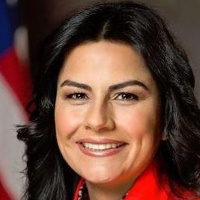
Nanette Barragán
Representative
CA
Nanette Barragán
Representative
CA
The Yes in God's Backyard Act establishes a new federal program to increase the supply of affordable rental housing on property owned by faith-based organizations and institutions of higher education. This initiative will provide technical assistance and competitive challenge grants to local governments and other entities to remove regulatory barriers to development. The goal is to facilitate the creation or preservation of housing targeted toward low-income, homeless, and special needs populations.
This bill redirects federal enforcement funding to significantly increase resources for local police departments through the COPS Hiring Program and the Byrne JAG Program.
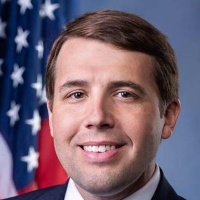
Chris Pappas
Representative
NH
Chris Pappas
Representative
NH
This bill, the PUBLIC SAFETY Act, redirects $2 billion from U.S. Immigration and Customs Enforcement (ICE) to significantly boost the COPS Hiring Program to support local law enforcement. It also allocates an additional $45 billion to the Edward Byrne Memorial Justice Assistance Grant (JAG) Program for local criminal justice initiatives. The legislation aims to increase federal funding available directly to local police departments for hiring and operations.
This bill establishes a five-year public awareness and education campaign, managed by the Secretary of Commerce, to improve public understanding and consumer literacy regarding artificial intelligence.
Nanette Barragán
Representative
CA
Nanette Barragán
Representative
CA
This bill establishes the Artificial Intelligence Public Awareness and Education Campaign Act, requiring the Secretary of Commerce to launch a five-year public campaign about AI. The campaign's goal is to increase public understanding of AI's role in daily life and improve consumer literacy regarding its capabilities and limitations. It mandates the development of multi-lingual resources, outreach to vulnerable populations, and annual reporting on performance metrics.
This Act mandates the translation of federal gun violence prevention materials and prioritizes grant funding for outreach to limited English proficient populations.
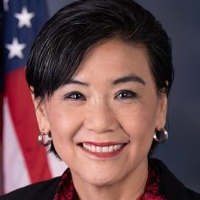
Judy Chu
Representative
CA
Judy Chu
Representative
CA
The Language Access to Gun Violence Prevention Strategies Act of 2026 mandates that federal agencies translate critical gun violence prevention materials into priority languages. It prioritizes federal grant funding for efforts that include targeted outreach to limited English proficient populations. The Act also establishes national public awareness campaigns by the DOJ and HHS specifically designed to increase language access to prevention strategies like Extreme Risk Protection Orders.
The Vets Connect Act establishes a secure, opt-in platform for verified veterans to reconnect based on service history while strictly protecting personal contact information.
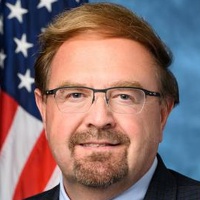
Charles (Chuck) Edwards
Representative
NC
Charles (Chuck) Edwards
Representative
NC
The Vets Connect Act establishes a secure, opt-in platform for verified veterans to reconnect with former service members based on shared service details. This system prioritizes veteran privacy by restricting the sharing of personal contact information unless explicitly authorized by the user. The platform strictly prohibits the use of veteran data for solicitation, marketing, or commercial purposes.
This bill awards a Congressional Gold Medal to Frank Siller for his leadership in founding the Tunnel to Towers Foundation and honoring the legacy of first responders and military service members.
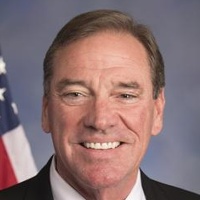
Neal Dunn
Representative
FL
Neal Dunn
Representative
FL
This bill proposes awarding a Congressional Gold Medal to Frank Siller in recognition of his tireless work through the Tunnel to Towers Foundation. The foundation honors his brother's sacrifice by supporting first responders, military service members, and their families. This legislation formally recognizes Siller's leadership in promoting patriotism, gratitude, and remembrance for America's heroes.
This bill mandates a citizenship question on the decennial census, excludes noncitizens from congressional apportionment counts, and limits post-apportionment congressional redistricting.
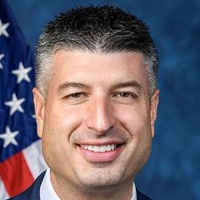
Tom Barrett
Representative
MI
Tom Barrett
Representative
MI
The Make It Count Act mandates the inclusion of a detailed citizenship question on the 2030 and future decennial censuses. It then excludes noncitizens from the population counts used for congressional apportionment and the allocation of electoral votes. Finally, the bill restricts states from redrawing congressional districts between decennial apportionments, except by court order.
The TRACK ICE Act mandates increased public transparency for certain aircraft flights conducted by federal agencies for immigration enforcement purposes, including the disclosure of flight data and passenger details.

Jasmine Crockett
Representative
TX
Jasmine Crockett
Representative
TX
The TRACK ICE Act aims to increase transparency regarding certain immigration enforcement flights. It removes privacy protections for private aircraft used by agencies like ICE or CBP for detaining or deporting individuals. The bill mandates the Department of Homeland Security to publicly report specific flight data, including passenger demographics and restraint usage, within 72 hours of these operations.
This bill prohibits the Department of Homeland Security from using private contractors for activities like skip tracing, surveillance, or location verification in civil immigration enforcement.
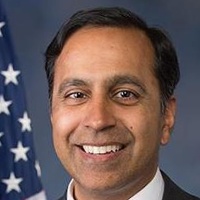
Raja Krishnamoorthi
Representative
IL
Raja Krishnamoorthi
Representative
IL
This bill, the "No Private Bounty Hunters for Immigration Enforcement Act," prohibits the Department of Homeland Security (DHS) from using private contractors for activities like skip tracing, surveillance, or location verification in civil immigration enforcement. It mandates the termination or amendment of all existing contracts that involve these practices. Furthermore, the legislation generally bans paying private entities on a per-person or bonus basis for locating individuals subject to civil immigration detainers.
This bill expands grant programs to support critical access hospitals, rural health clinics, and new rural emergency hospitals through funding for quality improvement, technical assistance, and service transformation.
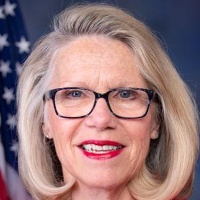
Carol Miller
Representative
WV
Carol Miller
Representative
WV
The Rural Hospital Flexibility Act of 2025 expands federal support for rural healthcare providers through the Medicare rural hospital flexibility program. This bill authorizes new grants to support quality improvement, behavioral health integration, and transformation to new care models like rural emergency hospitals. It also revises existing grant structures to better assist small rural hospitals through State Offices of Rural Health. Overall, the legislation aims to enhance the sustainability and service delivery capabilities of critical access hospitals and other rural health entities.
This bill modernizes veteran readiness and employment benefits by allowing non-degree flight training, streamlining counseling requirements, improving outreach, and setting deadlines for program extension decisions.
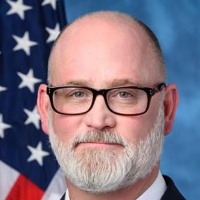
Derrick Van Orden
Representative
WI
Derrick Van Orden
Representative
WI
The Veterans Readiness and Employment Improvement Act of 2025 streamlines VA counseling requirements and expands vocational rehabilitation options for disabled veterans by allowing approval of non-degree flight training. The bill also enhances the Veteran Readiness and Employment (VRE) program by establishing dedicated contact points and mandating timely 30-day decisions on program extension requests. Finally, it includes a minor extension of certain pension payment limits.
This bill disallows certain tax deductions and imposes an excise tax on single-family home sales by large investors, while prohibiting federal mortgage assistance to these entities, with collected funds supporting low-income housing.
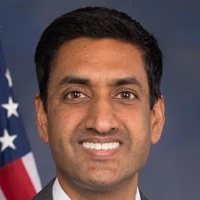
Ro Khanna
Representative
CA
Ro Khanna
Representative
CA
The Stop Wall Street Landlords Act of 2026 aims to curb large corporate ownership of single-family homes. It disallows key tax deductions, such as mortgage interest and depreciation, for investors holding over $100 million in assets who own these properties. The bill also imposes a full excise tax on the sale of these homes by such investors. Finally, it prohibits Fannie Mae, Freddie Mac, and Ginnie Mae from financing mortgages held by these specified large investors.
The Know Before You Drive Act mandates clear consumer education, labeling, and disclosure requirements for manufacturers and dealers regarding the actual capabilities and limitations of partially automated driving systems in vehicles.
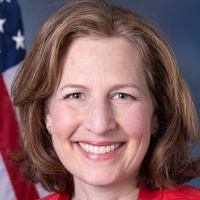
Kim Schrier
Representative
WA
Kim Schrier
Representative
WA
The Know Before You Drive Act aims to prevent consumer confusion regarding automated driving technology by prohibiting misleading claims about partially automated systems. This legislation mandates clear, conspicuous notices detailing system capabilities and limitations for new vehicle purchasers and owners receiving software updates. Furthermore, it requires standardized new vehicle labeling to clearly outline what tasks the driver must still perform. Enforcement authority is granted to NHTSA, the FTC, and state attorneys general.
This resolution condemns the decision to export advanced AI chips to the UAE amidst concerns over a secret, large-scale financial deal with the Trump family's crypto company.
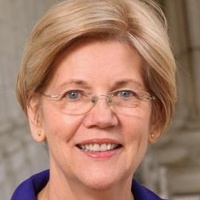
Elizabeth Warren
Senator
MA
Elizabeth Warren
Senator
MA
This resolution condemns the decision to export advanced AI chips to the United Arab Emirates, citing significant national security risks. It highlights a potential conflict of interest stemming from a recent, large financial deal between the UAE and a Trump family crypto company. The resolution calls for the immediate reversal of the chip export approval.
This bill prohibits the Department of Veterans Affairs from selling veterans' sensitive personal information and mandates that all VA contracts involving this data include clauses preventing its monetization or misuse by contractors.
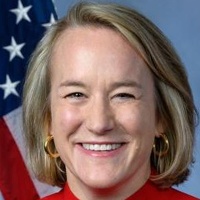
Nicole (Nikki) Budzinski
Representative
IL
Nicole (Nikki) Budzinski
Representative
IL
The Protect Veterans from the THIEF Act prohibits the Department of Veterans Affairs from selling sensitive personal information held by the VA. This legislation mandates that all VA contracts involving personal data must include clauses preventing contractors from selling or misusing that information. Furthermore, the VA must issue guidance to employees and contractors on identifying and preventing such misuse within one year of enactment.
This joint resolution disapproves the EPA's rule extending deadlines for effluent limitations guidelines for the steam electric power generating industry.
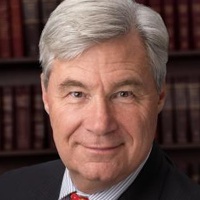
Sheldon Whitehouse
Senator
RI
Sheldon Whitehouse
Senator
RI
This joint resolution seeks to disapprove the Environmental Protection Agency's rule that grants deadline extensions for effluent limitations guidelines for the steam electric power generating industry. If enacted, this resolution would nullify the EPA's extension rule, meaning the existing standards would remain in full effect without the granted delays.
This bill recognizes the historic significance of the Greensboro Four sit-in, which launched a nationwide movement against racial inequality, and encourages its inclusion in educational curricula.
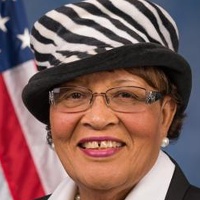
Alma Adams
Representative
NC
Alma Adams
Representative
NC
This bill recognizes the historic 1960 Greensboro Four sit-in, honoring the students whose peaceful protest launched a nationwide movement against segregation. It designates February 1, 2026, as the 66th anniversary, coinciding with the start of Black History Month. Furthermore, the bill encourages states to include the Greensboro Four's contributions in educational curricula.
The VOTE Act establishes minimum notification requirements for voters when their assigned polling place changes for a federal election.
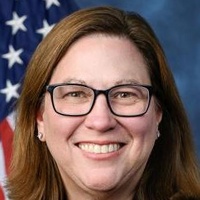
Julie Johnson
Representative
TX
Julie Johnson
Representative
TX
The VOTE Act establishes minimum notification requirements for voters when their assigned polling place changes for a federal election. It mandates that states notify affected voters through mail, phone, text, and email at least seven days before the election. The bill also sets specific notification rules for jurisdictions using vote centers and for locations that are no longer serving as polling places.
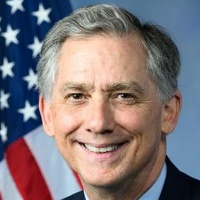
This bill updates the U.S. interagency strategy to counter the evolving threat of Captagon and other narcotics trafficking networks across the Middle East following the fall of the Assad regime.
J. Hill
Representative
AR
J. Hill
Representative
AR
This bill updates the national strategy to counter the production and trafficking of Captagon and other amphetamine-type stimulants in the Middle East following the fall of the Assad regime. It mandates a comprehensive, unclassified assessment of shifting drug patterns across the U.S. Central Command area. The strategy must detail interdiction efforts, partner nation capacity, and recommendations to dismantle these destabilizing narcotics networks.
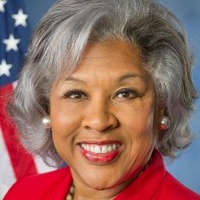
This act reauthorizes and expands funding for the WISEWOMAN program to provide additional heart health preventive services to low-income women.
Joyce Beatty
Representative
OH
Joyce Beatty
Representative
OH
The Women’s Heart Health Expansion Act of 2026 reauthorizes the WISEWOMAN program through fiscal year 2031, securing significant funding for women's health initiatives. This legislation allows for supplemental grants to expand preventive health services, such as blood pressure and cholesterol screenings, to low-income women. These services will be integrated with existing breast and cervical cancer screening programs.