Legislation
This Act establishes and reauthorizes federal financial assistance programs to fund water storage projects, groundwater recharge, and natural water retention initiatives across Reclamation States to enhance drought resilience.

Ruben Gallego
Senator
AZ
Ruben Gallego
Senator
AZ
The Water Security and Drought Resilience Act aims to enhance water availability across Reclamation States through federal financial assistance. It expands funding for water storage projects and reauthorizes and modifies the small storage grant program. Additionally, the Act establishes a new grant program to support natural water retention and release projects within critical watersheds.
This bill directs the Secretary of the Interior to conduct a cost-shared feasibility study for the Dakota Mainstem Regional Water Supply Project within two years.
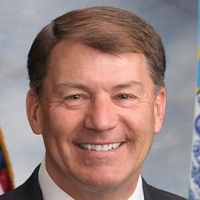
Mike Rounds
Senator
SD
Mike Rounds
Senator
SD
This Act directs the Secretary of the Interior to conduct a feasibility study for the Dakota Mainstem Regional Water System project. The study will assess the viability of supplying municipal, rural, and industrial water across South Dakota, Iowa, Nebraska, and Minnesota. The Federal government will cost-share the study equally (50/50) with the non-Federal entity, Dakota Mainstem Regional Water System, Inc.
This bill permanently authorizes an emergency grant program to fund safety and security improvements for public housing agencies.

Dan Goldman
Representative
NY
Dan Goldman
Representative
NY
This bill permanently authorizes an emergency safety and security grant program for public housing agencies. The program provides dedicated federal funding to improve security measures, such as cameras and lighting, and address critical health and safety needs like fire and temperature control. Public housing agencies can apply for grants to purchase, install, or repair these essential safety improvements.
This bill establishes that the maximum annual percentage rate (APR) for consumer credit transactions is capped by the highest rate permitted under the laws of the consumer's state of residence.
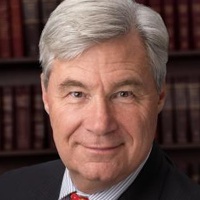
Sheldon Whitehouse
Senator
RI
Sheldon Whitehouse
Senator
RI
This act establishes that the maximum annual percentage rate (APR) for consumer credit transactions will be determined by the laws of the consumer's state of residence. It amends the Truth in Lending Act to ensure state consumer protection laws regarding interest rates take precedence. This effectively caps interest rates based on the strongest applicable state standard.
This bill mandates a feasibility study for expanding the Lewis & Clark Regional Water System across Iowa, Minnesota, and South Dakota, with a report to Congress detailing construction recommendations and cost-sharing.
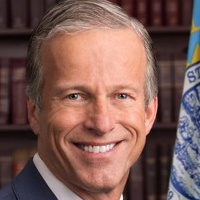
John Thune
Senator
SD
John Thune
Senator
SD
This Act mandates the Secretary of the Interior to conduct a comprehensive feasibility study for expanding the Lewis Clark Regional Water System across Iowa, Minnesota, and South Dakota. The study will evaluate the project's engineering, economic, and environmental aspects, culminating in a report to Congress with a construction recommendation. The federal government will cover up to 50% of the study's cost, which is authorized up to $10 million.
This bill directs the Secretary of the Interior to conduct a feasibility study for a proposed Missouri River water supply project for Western South Dakota, with cost-sharing between the federal government and the Western Dakota Regional Water System, Inc.
John Thune
Senator
SD
John Thune
Senator
SD
This Act authorizes the Secretary of the Interior to conduct a feasibility study for a proposed rural water supply project in Western South Dakota. The study, conducted in partnership with the Western Dakota Regional Water System, Inc., will determine the project's viability and recommend federal authorization for construction. The resulting report must also outline the non-Federal cost share, which must be at least 25% of construction costs.
This bill prohibits the use of federal election administration funds in states that permit third parties, other than specified exceptions, to collect and transmit mail ballots.
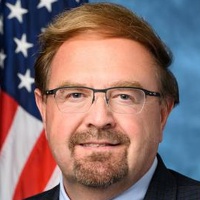
Charles (Chuck) Edwards
Representative
NC
Charles (Chuck) Edwards
Representative
NC
This bill, the No Federal Funds for Ballot Harvesting Act, prohibits the use of federal election administration funds in any state that permits third parties to collect and transmit absentee ballots. It mandates that states must ban the practice commonly known as "ballot harvesting" to remain eligible for federal election funding. Exceptions are made for election officials, mail carriers, and immediate family or caregivers of the voter.
This bill renames and significantly expands the national organic certification cost-share program while establishing new grant funding for nonprofits to support the transition, resilience, and supply chain development for organic producers.
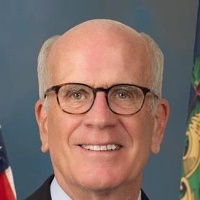
Peter Welch
Senator
VT
Peter Welch
Senator
VT
The Opportunities in Organic Act renames and significantly expands the existing national organic certification cost-share program. It establishes new grant funding for nonprofits to provide technical assistance, capacity building, and direct support for farmers transitioning to or maintaining organic certification. The bill also increases resources for technical assistance and mandates comprehensive reporting on the program's impact and participant demographics.
This bill prohibits certain high-level federal officials and their acting counterparts from simultaneously holding or performing the duties of any other federal position.
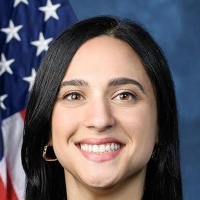
Yassamin Ansari
Representative
AZ
Yassamin Ansari
Representative
AZ
The Dual Hatting Limitation Act of 2026 prohibits certain key federal officials and their acting counterparts from simultaneously holding or performing the duties of any other federal position. This restriction specifically applies to the Directors of OPM and OGE, the Special Counsel, the Archivist, and all Level I Executive Schedule appointees. The bill also prevents the President from directing an individual to serve as an acting official in a vacant office if they are already serving in another acting capacity.
The RARE Act narrows the 7-year market exclusivity for orphan drugs from covering an entire rare disease to covering only the specific approved use or indication.

Tammy Baldwin
Senator
WI
Tammy Baldwin
Senator
WI
The RARE Act amends the Federal Food, Drug, and Cosmetic Act to narrow the scope of 7-year market exclusivity for orphan drugs. This change limits exclusivity to the specific approved use or indication, rather than the entire rare disease or condition. These new limitations apply to all currently designated orphan drugs.
This act establishes a program to provide veterans with diet-related chronic conditions and food insecurity with prescriptions for purchasing fruits and vegetables.
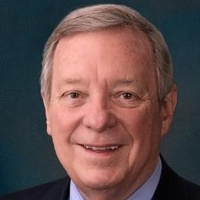
Richard Durbin
Senator
IL
Richard Durbin
Senator
IL
The Produce Prescriptions for Veterans Act establishes produce prescriptions as a covered medical service for eligible veterans. This service provides veterans with diet-related chronic conditions who are also food-insecure with vouchers or direct benefits to purchase fruits and vegetables. The goal is to improve their health outcomes through better nutrition.
This bill establishes the Office of the Chief Economist within the CFTC to provide economic analysis and advice, granting the office specialized staffing authority.
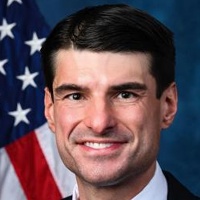
Robert Bresnahan
Representative
PA
Robert Bresnahan
Representative
PA
This bill establishes the Office of the Chief Economist within the Commodity Futures Trading Commission (CFTC) to serve as the agency's primary economic advisor. The Office will be responsible for conducting economic analysis, regulatory cost-benefit assessments, and specialized research. Furthermore, the legislation grants the CFTC authority to hire specialized staff for the Office outside of the standard competitive service hiring process.
This bill prohibits the sale of sensitive veteran data by the Department of Veterans Affairs and mandates new contract requirements to prevent third-party actors from monetizing or misusing veteran information.
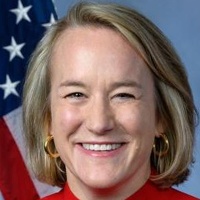
Nicole (Nikki) Budzinski
Representative
IL
Nicole (Nikki) Budzinski
Representative
IL
The Veteran Data Accountability for Third-party Actors (Veteran DATA) Act prohibits the Department of Veterans Affairs (VA) from contracting for the sale of sensitive veteran information. This legislation mandates that all VA contracts involving veteran data must include clauses preventing contractors from selling or misusing that information. Furthermore, the VA Secretary must issue guidance and report to Congress on the implementation of these new data protection requirements within one year.
This Act establishes a national system for tracking and publicly reporting judgments and settlements related to law enforcement misconduct across federal, state, and local agencies.
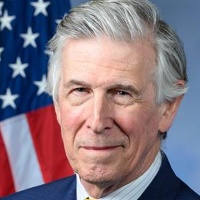
Donald Beyer
Representative
VA
Donald Beyer
Representative
VA
The Cost of Police Misconduct Act of 2026 establishes a national system for tracking and publicly reporting all financial judgments and settlements related to law enforcement misconduct. This requirement applies to federal, state, and local agencies, mandating detailed annual data collection on allegations, officer demographics, and payment sources. The collected information will be compiled into a public, searchable database maintained by the Department of Justice. Non-compliant state and local jurisdictions face potential reductions in federal grant funding.
This bill mandates improved staffing coordination and reporting for Center Weather Service Units to enhance aviation safety.
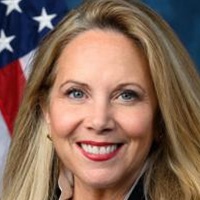
Laura Gillen
Representative
NY
Laura Gillen
Representative
NY
The Aviation Weather Safety Improvement Act focuses on enhancing aviation safety by ensuring adequate staffing at Center Weather Service Units. It mandates coordination between the Department of Transportation, the National Weather Service, the FAA, and employee unions to meet staffing needs for safe air commerce. The bill also requires annual reports to Congress detailing the implementation of these new staffing coordination requirements.
This bill establishes a pilot program to test and fund home delivery of food packages for low-income seniors participating in the Commodity Supplemental Food Program, prioritizing rural areas.
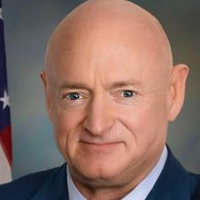
Mark Kelly
Senator
AZ
Mark Kelly
Senator
AZ
The Delivering for Rural Seniors Act of 2026 establishes a pilot program to test and evaluate the home delivery of food packages for low-income seniors participating in the Commodity Supplemental Food Program (CSF Program). This initiative provides competitive grants to State agencies to fund local entities that implement these delivery services, with a priority on serving rural areas. The Act authorizes $10 million annually for fiscal years 2027 through 2029 to support these projects and requires detailed reporting on their effectiveness.
The Streamlining Federal Grants Act of 2026 aims to simplify federal grant application and reporting processes, improve service delivery, and enhance coordination between agencies and non-federal entities.
Gary Peters
Senator
MI
Gary Peters
Senator
MI
The Streamlining Federal Grants Act of 2026 aims to significantly improve the effectiveness and performance of federal grant programs by simplifying application and reporting requirements. It establishes a new Grants Council and mandates that agencies designate senior officials to oversee reforms and better coordinate with non-Federal entities. Ultimately, the law seeks to improve service delivery, especially for organizations historically underserved by federal funding.
This act establishes grants for states to develop standardized training and materials for implementing extreme risk protection orders.
Brittany Pettersen
Representative
CO
Brittany Pettersen
Representative
CO
The Community Risk Training and Response Act of 2026 establishes a federal grant program to help states develop standardized training and materials for implementing extreme risk protection orders. These grants, ranging from \$200,000 to \$500,000, will support technical assistance for law enforcement, courts, and healthcare providers. The goal is to ensure consistent, evidence-based processes for crisis intervention programs nationwide.
The GRAD Act expands existing grant programs for HBCUs and PBIs to include institutions offering specific master's degree programs and adjusts the distribution of leftover funds.
Jennifer McClellan
Representative
VA
Jennifer McClellan
Representative
VA
The Growing Reputable Academic Departments (GRAD) Act expands eligibility for existing federal grant programs benefiting Historically Black Colleges and Universities (HBCUs) and Predominantly Black Institutions (PBIs). This expansion specifically targets institutions offering qualified master's degree programs. The bill also updates the formula for distributing leftover funds within these grant programs.
This act mandates a public report from the FBI and State Department detailing responsibility for the death of Shireen Abu Akleh and any U.S. involvement.
André Carson
Representative
IN
André Carson
Representative
IN
The Justice for Shireen Act mandates that the FBI Director and Secretary of State submit a comprehensive, unclassified report to Congress within 30 days regarding the death of Shireen Abu Akleh. This report must identify responsible parties and any U.S. materials implicated in the incident. The findings will also be made publicly available on the Department of State's website.