Legislation
The Virtual Currency Tax Fairness Act excludes small gains or losses of $200 or less from virtual currency transactions from taxable income.
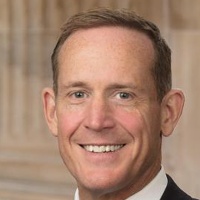
Ted Budd
Senator
NC
Ted Budd
Senator
NC
The Virtual Currency Tax Fairness Act proposes an exemption from taxable income for small gains or losses resulting from virtual currency transactions. Under this bill, transactions involving $200 or less would be excluded from tax reporting requirements, effective for transactions made after December 31, 2026. This threshold will be subject to annual inflation adjustments starting in 2028.
The AFTER Act of 2026 mandates that federal research facilities establish formal programs to facilitate the adoption and retirement of animals no longer needed for scientific research.

Susan Collins
Senator
ME
Susan Collins
Senator
ME
The AFTER Act of 2026 mandates that federal research facilities establish formal programs to facilitate the adoption and retirement of animals no longer needed for research. By partnering with qualified nonprofit organizations and sanctuaries, this legislation ensures that suitable animals are transitioned into permanent homes rather than euthanized.
The Educational Visa Transparency Act of 2026 mandates that colleges and universities receiving federal funding report all non-citizen students, faculty, and staff to the Student and Exchange Visitor Information System (SEVIS).
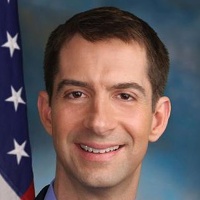
Tom Cotton
Senator
AR
Tom Cotton
Senator
AR
The Educational Visa Transparency Act of 2026 mandates that federally funded colleges and universities electronically report all non-citizen students, faculty, and administrators to the Student and Exchange Visitor Information System (SEVIS). This legislation requires institutions to categorize these individuals by visa type and submit updated reports following each academic registration period. The collected data will be accessible to the Departments of Education, Justice, Homeland Security, and State to support their official oversight duties.
The SILVER Act mandates geographic diversification of precious metals storage facilities to enhance market liquidity, reduce systemic risk, and lower costs for participants.
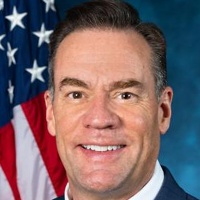
Russ Fulcher
Representative
ID
Russ Fulcher
Representative
ID
The SILVER Act (System Integrity through Licensed Vault Expansion and Resilience Act) aims to enhance market liquidity and reduce systemic risk by diversifying the geographic storage locations for precious metals used in futures contracts. The bill mandates that derivatives clearing organizations establish transparent selection criteria for depositories and ensure that approved storage facilities are distributed across all four U.S. time zones. By promoting competition and reducing geographic concentration, this legislation seeks to lower costs and improve market access for participants nationwide.
The Student Protection and Success Act holds colleges accountable for student loan repayment by establishing performance-based eligibility for federal aid, implementing institutional risk-sharing payments, and creating a bonus program to reward institutions that effectively serve low-income students.
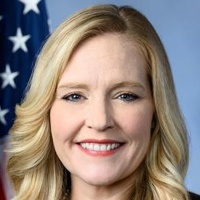
Erin Houchin
Representative
IN
Erin Houchin
Representative
IN
The Student Protection and Success Act aims to improve higher education outcomes by holding colleges accountable for student loan repayment rates. Under this legislation, institutions with low repayment rates risk losing eligibility for federal student aid programs, while high-performing schools can receive bonus grants to support low- and moderate-income students. Additionally, the bill introduces a risk-sharing payment system for colleges and mandates increased transparency regarding student service expenditures.
This bill establishes a $50 million grant program to provide stabilization payments to farm, meat processing, and grocery workers during times of disaster.
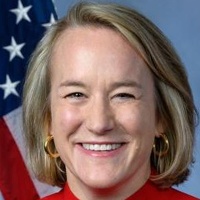
Nicole (Nikki) Budzinski
Representative
IL
Nicole (Nikki) Budzinski
Representative
IL
The Grocery, Farm, and Food Worker Stabilization Grant Program Act of 2026 establishes a $50 million grant program to provide financial stabilization payments to essential food, farm, and grocery workers during disasters. Administered by the Secretary of Agriculture, the program distributes funds through labor unions and membership organizations to support these workers when they are most vulnerable.
The Working Americans’ Tax Cut Act establishes a 25.5% maximum federal income tax rate for low- and middle-income earners while implementing a new progressive tax surcharge on high-income individuals.
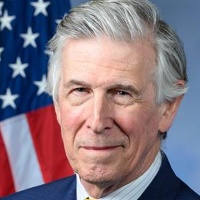
Donald Beyer
Representative
VA
Donald Beyer
Representative
VA
The Working Americans’ Tax Cut Act aims to provide tax relief to low- and middle-income earners by capping their federal income tax at 25.5% for income exceeding a cost-of-living exemption. To offset this, the bill introduces a new graduated tax surcharge on high-income individuals earning over $1 million. These changes are set to take effect for taxable years beginning after December 31, 2025.
The Shall Not Be Infringed Act of 2026 conditions federal law enforcement funding on a state or local government's willingness to face civil liability for damages occurring within designated "gun-free zones."
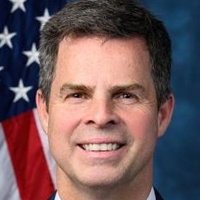
John McGuire
Representative
VA
John McGuire
Representative
VA
The Shall Not Be Infringed Act of 2026 mandates that state and local governments allow civil lawsuits against them if a person is harmed by a firearm within a designated "gun-free zone." To remain eligible for federal Byrne-JAG and COPS law enforcement grants, jurisdictions must permit individuals authorized to carry firearms to sue for damages if they could have averted harm in such zones. Failure to comply with these requirements will result in a reduction of up to 99 percent of federal grant funding.
This act directs the Department of Energy to establish a network of open-access bioindustrial technology maturation facilities to accelerate the commercial scale-up of biotechnology and strengthen domestic supply chains.
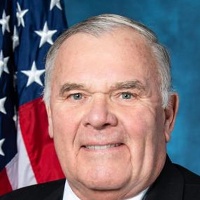
James Baird
Representative
IN
James Baird
Representative
IN
The Bioindustrial Scale-Up for Supply Chains and Energy Resiliency Act of 2026 aims to strengthen U.S. biotechnology by establishing a network of open-access, federally supported manufacturing facilities. These centers will help companies bridge the gap between laboratory research and commercial-scale production, addressing critical infrastructure shortages. By fostering innovation in bioindustrial manufacturing, the bill seeks to secure domestic supply chains, promote energy resiliency, and accelerate the market readiness of new biobased products.
The SAFE Pathways Act amends the Federal Power Act to require federal agencies to consider the threat of invasive species when mandating the construction of fishways.
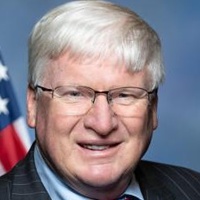
Glenn Grothman
Representative
WI
Glenn Grothman
Representative
WI
The SAFE Pathways Act amends the Federal Power Act to require federal agencies to account for the threat of invasive species when mandating the construction of fishways. This legislation ensures that environmental protections are balanced by requiring consultation with state authorities to prevent the spread of harmful aquatic species.
The Say No to Warrantless Searches Act requires federal immigration officers to obtain a judicial warrant before searching private property, except in cases of consent or exigent circumstances.
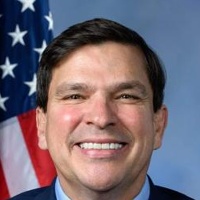
Vicente Gonzalez
Representative
TX
Vicente Gonzalez
Representative
TX
The "Say No to Warrantless Searches Act" mandates that federal law enforcement obtain a judicial warrant before conducting searches of private property during immigration enforcement activities. The bill includes narrow exceptions for instances where lawful consent is provided or exigent circumstances exist. This legislation reinforces Fourth Amendment protections within the scope of immigration enforcement.
The Safe Staffing Saves Lives Act establishes federal minimum staffing requirements for Medicare and Medicaid-certified nursing facilities to improve resident care and safety.

Lloyd Doggett
Representative
TX
Lloyd Doggett
Representative
TX
The Safe Staffing Saves Lives Act establishes federal minimum staffing requirements for Medicare and Medicaid-certified nursing facilities, mandating at least 4.1 hours of nursing care per resident per day by 2029. The bill includes strict enforcement mechanisms, such as payment denials and increased inspections, for facilities that fail to meet these standards. Additionally, it mandates public disclosure of staffing compliance and requires periodic reporting to ensure these measures improve resident safety and quality of care.
The Workforce Investments Accountability Act modernizes performance metrics, reporting standards, and accountability measures for workforce development programs while mandating that local areas allocate at least 50 percent of their funding toward training services.
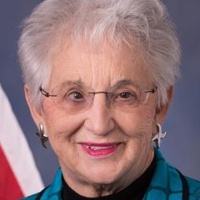
Virginia Foxx
Representative
NC
Virginia Foxx
Representative
NC
The Workforce Investments Accountability Act modernizes the performance accountability system for workforce programs by updating key metrics, improving data transparency, and establishing a tiered structure for performance-based sanctions. The bill also mandates that local workforce areas dedicate at least 50 percent of their allocated funds toward direct training services. These reforms aim to enhance program effectiveness, increase accountability, and ensure better outcomes for participants.
This bill repeals recent modifications to the calculation of adjusted taxable income, restoring previous standards for business interest expense deductions starting in 2026.
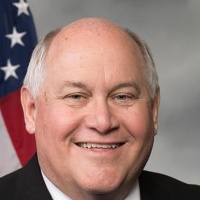
Ron Estes
Representative
KS
Ron Estes
Representative
KS
The Ensuring Better Interest Treatment and Deductibility (EBITDA) Act repeals recent modifications to the calculation of adjusted taxable income regarding business interest limitations. By removing these specific constraints, the bill aims to restore previous tax treatment standards for businesses starting in the 2026 tax year.
The DEATH BETS Act prohibits the listing or clearing of financial contracts based on war, terrorism, assassination, or the death of an individual.
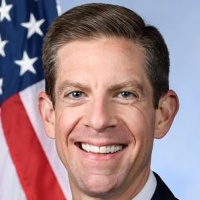
Mike Levin
Representative
CA
Mike Levin
Representative
CA
The DEATH BETS Act amends the Commodity Exchange Act to prohibit the listing or clearing of event contracts involving sensitive subjects such as terrorism, war, assassination, or an individual's death. This legislation aims to prevent the financial exploitation of tragedies by banning trading entities from offering contracts based on these harmful activities.
This bill directs the Joint Committee of Congress on the Library to commission and place a permanent statue of Shirley Chisholm within the United States Capitol.
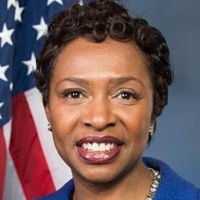
Yvette Clarke
Representative
NY
Yvette Clarke
Representative
NY
This bill directs the Joint Committee of Congress on the Library to commission and install a statue of Shirley Chisholm within the United States Capitol. It mandates that the statue be placed in a permanent, public location within two years of the law's enactment and authorizes the necessary funding to complete the project.
This bill establishes the Communications Equity and Diversity Council within the FCC to advise on promoting equitable access, affordability, and diversity in communication services.
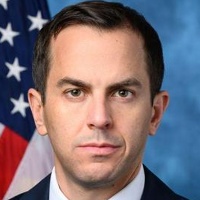
Robert Menendez
Representative
NJ
Robert Menendez
Representative
NJ
The Communications Equity and Diversity Council Act establishes an advisory committee within the Federal Communications Commission (FCC) to promote equitable access to communication services. The Council will provide recommendations to the FCC on issues such as digital discrimination, service affordability, and industry diversity. Comprised of diverse stakeholders, the Council is tasked with fostering competition and ensuring historically underserved communities have a voice in the telecommunications sector.
The Pay TSA Act of 2026 establishes a dedicated trust fund to ensure consistent, protected funding for TSA personnel, operations, and security technology, even during government shutdowns.
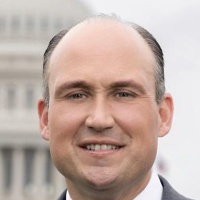
Nicholas Langworthy
Representative
NY
Nicholas Langworthy
Representative
NY
The Pay TSA Act of 2026 establishes a dedicated Transportation Security Trust Fund to ensure that passenger security fees are used exclusively for aviation security, personnel support, and infrastructure modernization. By preventing these funds from being diverted for other government purposes, the bill guarantees a stable funding stream for the TSA. Additionally, the legislation ensures that critical security operations and personnel compensation continue uninterrupted during government shutdowns.
The No Lifeline for the Dead Act mandates federal eligibility verification, requires proof of citizenship or qualified alien status, and necessitates a Social Security number for all Lifeline program participants.
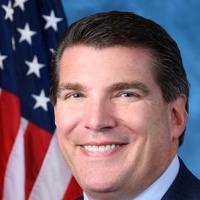
Jay Obernolte
Representative
CA
Jay Obernolte
Representative
CA
The "No Lifeline for the Dead Act" mandates stricter federal oversight for the Lifeline program by requiring all applicants to undergo verification through centralized national databases. The bill also introduces new eligibility criteria, requiring participants to provide a Social Security number and prove their status as a U.S. citizen or qualified alien. Additionally, it mandates a re-verification process for existing enrollees to ensure program integrity and compliance with these new standards.
The Small AI Innovators Empowerment Act mandates a comprehensive study to identify and address the unique funding, regulatory, and operational challenges faced by small U.S.-based artificial intelligence businesses.
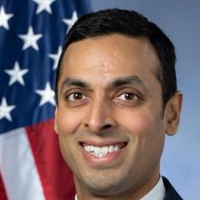
Suhas Subramanyam
Representative
VA
Suhas Subramanyam
Representative
VA
The Small AI Innovators Empowerment Act mandates a comprehensive study to identify the unique challenges faced by small U.S.-based artificial intelligence businesses. This study will analyze critical barriers—including funding, regulatory uncertainty, talent acquisition, and infrastructure access—to provide actionable recommendations for supporting their growth and competitiveness.