Legislation
This resolution designates the first Wednesday of May as Maternal Mental Health Day to raise awareness about the prevalence and impact of maternal mental health conditions.

Roger Marshall
Senator
KS
Roger Marshall
Senator
KS
This resolution designates the first Wednesday of May as Maternal Mental Health Day to raise critical awareness about maternal mental health conditions, which affect a significant number of new mothers. It recognizes these disorders as common but often untreated complications of pregnancy and childbirth that impact family well-being. The day aims to highlight the importance of support, research, and treatment for mothers across the country.
This bill bans the use of federal funds for gender transition procedures on minors and establishes a grant program to support individuals seeking to reverse such procedures.
Roger Marshall
Senator
KS
Roger Marshall
Senator
KS
The Safeguarding The Overall Protection of Minors Act (STOP Act) prohibits the use of federal funds for gender transition procedures on minors under 18, with specific medical exceptions. It establishes civil penalties for performing these procedures and creates a private right of action for individuals harmed by violations. Furthermore, the Act establishes a grant program to support organizations that assist individuals seeking to reverse prior gender transition procedures.
This Act restricts unauthorized legal entities, primarily large corporations and investment funds, from owning agricultural land, requiring compliance affidavits and imposing strict penalties for violations.
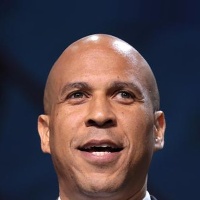
Cory Booker
Senator
NJ
Cory Booker
Senator
NJ
The Farmland for Farmers Act of 2026 restricts unauthorized legal entities, such as large corporations and investment funds, from owning or acquiring agricultural land. The bill defines "authorized entities" as small operations where all owners are natural persons actively engaged in farming. It establishes strict compliance requirements, including mandatory affidavits, and authorizes the Attorney General to seek divestiture and impose severe civil and criminal penalties for violations.
This bill prohibits the sale or importation of connected vehicles, software, and hardware originating from or controlled by North Korea, China, Russia, or Iran due to national security risks.
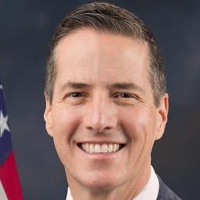
Bernie Moreno
Senator
OH
Bernie Moreno
Senator
OH
The Connected Vehicle Security Act of 2026 prohibits the sale or importation of connected vehicles, their parts, and related software originating from or controlled by covered adversarial countries (North Korea, China, Russia, or Iran). Enforced by the Secretary of Commerce, this law aims to mitigate national security risks associated with foreign adversary access to sensitive vehicle data and control systems. The Act establishes phased bans starting in 2027 for vehicles and software, and 2030 for hardware, while setting up processes for compliance, authorization, and enforcement.
This act enhances criminal penalties for crimes specifically targeting veterans of any age.
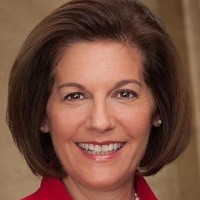
Catherine Cortez Masto
Senator
NV
Catherine Cortez Masto
Senator
NV
The Veterans Protection from Fraud Act of 2026 enhances penalties for crimes committed against veterans. This legislation specifically amends federal law to include "targeted veterans of any age" as a category of vulnerable victims. Consequently, offenders who target veterans will face stricter punishments under existing statutes.
This bill updates mammography quality standards to formally include artificial intelligence and machine-learning systems in the interpretation and review processes.
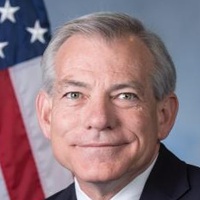
David Schweikert
Representative
AZ
David Schweikert
Representative
AZ
This bill updates federal quality standards for mammography facilities to formally integrate artificial intelligence (AI) and machine-learning systems into the image review process. It amends existing law to allow these systems to perform mammography interpretations alongside physicians. The legislation also removes signature requirements for certain documents to accommodate the use of AI technology.
This bill establishes a new program to provide crop loss payments to producers of seasonal and perishable specialty crops when import-related price drops occur below a set reference price.
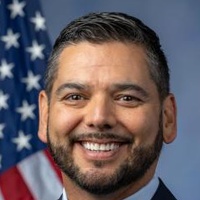
Raul Ruiz
Representative
CA
Raul Ruiz
Representative
CA
This bill amends the Specialty Crops Competitiveness Act of 2004 to establish a new Seasonal and Perishable Crop Loss Program. Starting in 2027, this program will provide crop loss payments to producers of seasonal and perishable crops when import surges cause market prices to drop below a set reference price. Payments will be based on the difference between the effective price and the reference price, multiplied by recent production averages.
This bill temporarily suspends the federal gasoline excise tax when prices exceed \$3.99 per gallon while simultaneously prohibiting certain tax deductions and credits for oil and gas companies during those periods.
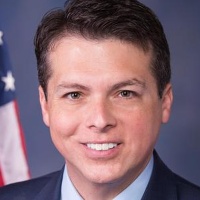
Brendan Boyle
Representative
PA
Brendan Boyle
Representative
PA
This bill temporarily suspends the federal excise tax on gasoline when the national average price exceeds \$3.99 per gallon, with the reduction matching the amount the price is over the threshold. To offset lost revenue, the general fund will reimburse the Highway Trust Fund and the Leaking Underground Storage Tank Trust Fund. Furthermore, during these high-price periods, certain tax deductions and credits for oil and gas companies will be suspended.
This bill permits states to mandate and collect boating-related fees, such as those for safety or invasive species control, as a condition for issuing vessel numbers.
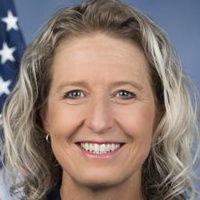
Jennifer Kiggans
Representative
VA
Jennifer Kiggans
Representative
VA
This bill authorizes states to collect specific boating-related fees, such as those for search and rescue or invasive species control, when issuing vessel numbers. These collected funds must be dedicated solely to improving recreational boating, safety, access, and waterway management. The legislation allows states to bundle these new fees with existing vessel numbering fees for streamlined collection.
This Act temporarily waives most federal and state restrictions on fireworks displays through the end of 2026 to commemorate America's 250th anniversary, while preserving all local government authority.
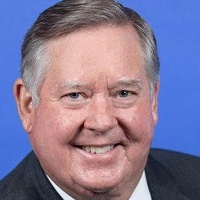
Ken Calvert
Representative
CA
Ken Calvert
Representative
CA
The Fireworks for Freedom Act temporarily suspends most federal and state regulations concerning the operation of fireworks displays through December 31, 2026, to encourage celebration for America's 250th anniversary. This waiver specifically excludes federal authority over manufacturing, sales, and transportation, while explicitly preserving all local government authority to permit, restrict, or prohibit displays. The Act ensures that while celebration is streamlined, safety standards and local control remain intact.
This bill mandates the installation and maintenance of enhanced air traffic situational awareness tools, like Airborne Position Reference Tools and Standard Terminal Automation Replacement Systems, at FAA contract towers, including retroactive funding for prior installations.
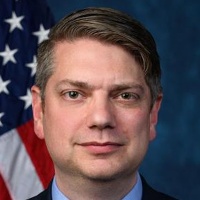
Nicholas Begich
Representative
AK
Nicholas Begich
Representative
AK
The Air Traffic Situational Awareness Enhancement Act mandates the installation of certified Airborne Position Reference Tools and Standard Terminal Automation Replacement Systems at eligible FAA contract air traffic control towers within one year. This legislation also establishes a training program for controllers on using this new technology and provides retroactive funding for towers that previously installed similar situational awareness equipment. The goal is to significantly improve safety and operational awareness at these facilities.
This act allows states to request the redesignation of an ozone nonattainment area to attainment if pollution originating outside the state is proven to be the cause of the failure to meet federal standards.
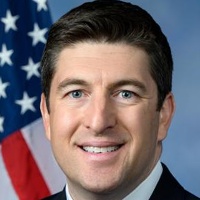
Bryan Steil
Representative
WI
Bryan Steil
Representative
WI
The Fair Air Standards Act allows states to request that an area currently failing to meet federal ozone standards be redesignated as compliant. This redesignation is possible if the state can prove that the failure to meet the standard was caused by pollution originating from outside the state or a foreign country. The EPA Administrator must review the state's evidence and officially redesignate the area if the claim is substantiated.
This act prohibits naming any federal property after Donald J. Trump and mandates the removal of any existing federal naming honors.
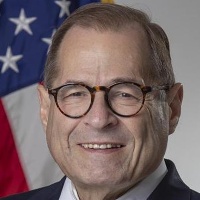
Jerrold Nadler
Representative
NY
Jerrold Nadler
Representative
NY
The PROTECT Act prohibits naming any federal building, land, or asset after Donald J. Trump and bans the use of federal funds for such designations. Furthermore, any federal property currently named after him must revert to its original, legally established name.
The Second Look Act of 2026 establishes a process for federal inmates serving over ten years to petition the court for sentence reduction based on demonstrated rehabilitation and reduced community danger.
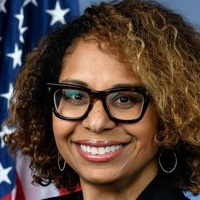
Sydney Kamlager-Dove
Representative
CA
Sydney Kamlager-Dove
Representative
CA
The Second Look Act of 2026 establishes a process for individuals serving long federal prison sentences to petition a court for a sentence reduction after serving at least 10 years. Courts must consider factors like rehabilitation and community safety when deciding on a modification. The bill also creates a rebuttable presumption for release for defendants aged 50 and older and mandates annual reporting by the U.S. Sentencing Commission.
This act mandates no-cost coverage for annual screening mammograms for women over 29 under Medicare, Medicaid, and private insurance, beginning in 2026.
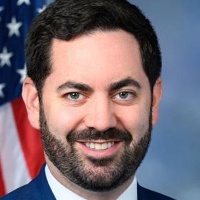
Michael Lawler
Representative
NY
Michael Lawler
Representative
NY
The Early Access to Screening Act aims to standardize and improve access to annual screening mammograms. It mandates that Medicare, Medicaid, and private insurance plans cover annual screening mammography for women over the age of 29, beginning in 2026. Furthermore, the bill prohibits cost-sharing (deductibles, copayments, etc.) for these preventative services under these programs.
This bill establishes a legal presumption that certain diseases are caused by employment for federal workers exposed to toxic burn pits during overseas military operations.
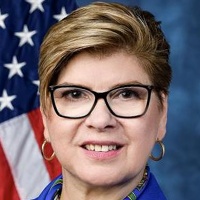
Nellie Pou
Representative
NJ
Nellie Pou
Representative
NJ
The Kenya Merritt Renewing our PACT Act of 2026 establishes a legal presumption that certain diseases are proximately caused by employment for federal workers exposed to toxic burn pits during overseas military operations. This means qualifying federal employees who served in designated locations will automatically have covered illnesses considered work-related for disability or death claims. The bill mandates that the list of covered diseases aligns with the Department of Veterans Affairs' list.
The No WAR Act establishes a point of order preventing the use of budget reconciliation to fund unauthorized military hostilities against Iran.
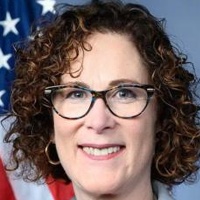
Valerie Hoyle
Representative
OR
Valerie Hoyle
Representative
OR
The No WAR Act establishes a procedural barrier, a "point of order," in Congress to prevent funding for unauthorized military action against Iran through the budget reconciliation process. This means that any reconciliation bill providing budget authority for hostilities against Iran will be out of order unless Congress has first formally authorized that military force. The Act ensures that funding for military conflict against Iran requires explicit prior congressional approval.
This act prohibits involuntary workforce reductions and separations at the Department of the Interior and the U.S. Forest Service through September 30, 2030, without specific congressional committee approval.
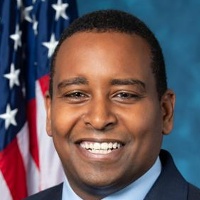
Joe Neguse
Representative
CO
Joe Neguse
Representative
CO
The Public Lands Workforce Stability Act prohibits the Department of the Interior and the U.S. Forest Service from implementing involuntary layoffs or reductions in force for most career employees through September 30, 2030. This measure prevents the use of federal funds for such actions unless specific congressional committee approval is obtained. Separations are only permitted for cause, such as misconduct or poor performance.
This bill amends the Social Security Act to allow skilled nursing facilities to provide intravenous immune globulin (IVIG) treatment for primary immune deficiency disease to Medicare beneficiaries starting October 1, 2026.
Adrian Smith
Representative
NE
Adrian Smith
Representative
NE
The PI Post Acute Access Act aims to improve healthcare access for patients with primary immunodeficiency disease. This legislation amends the Social Security Act to allow skilled nursing facilities to provide intravenous immune globulin (IVIG) treatments and related services to Medicare beneficiaries. This change is set to take effect starting October 1, 2026.
The PROTECT Act mandates the Department of Homeland Security to regularly issue and distribute guidance on best practices for safeguarding personally identifiable information (PII) for government agencies and relevant private sector organizations.
J. Hill
Representative
AR
J. Hill
Representative
AR
The PROTECT Act mandates the Department of Homeland Security (DHS) to develop and regularly update best practice guidance for safeguarding personally identifiable information (PII). This guidance must be distributed to federal, state, and local government agencies, as well as relevant private sector organizations. Furthermore, it must outline steps personnel can take to protect their own safety regarding their PII.