Legislation
This resolution expresses support for designating July 2026 as National Sarcoma Awareness Month to raise awareness about this rare cancer.

Ron Johnson
Senator
WI
Ron Johnson
Senator
WI
This resolution expresses support for designating July 2026 as National Sarcoma Awareness Month. The goal is to raise public awareness about this rare bone and soft tissue cancer. This designation aims to encourage earlier diagnosis and greater access to treatment for those affected by sarcoma.
This bill expresses support for designating June 12, 2026, as "Women Veterans Appreciation Day" to honor the expanding roles and contributions of women in the U.S. Armed Forces.
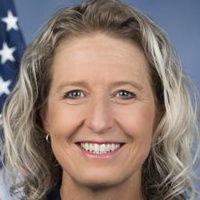
Jennifer Kiggans
Representative
VA
Jennifer Kiggans
Representative
VA
This bill expresses the House of Representatives' support for designating June 12, 2026, as "Women Veterans Appreciation Day." The designation aims to recognize the expanding roles and significant contributions of women in the U.S. Armed Forces. It honors all women veterans for their dedicated military service throughout American history.
This bill directs more resources toward high-risk states for plant pest and disease management, permanently increases annual funding for related programs to \$150 million, and raises the disaster prevention spending cap to \$12 million.
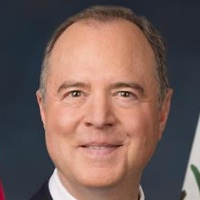
Adam Schiff
Senator
CA
Adam Schiff
Senator
CA
This act aims to strengthen defenses against agricultural threats by directing more resources toward states highly vulnerable to plant pests and diseases. It establishes a permanent annual funding level of $150 million for key management programs starting in fiscal year 2027. Additionally, the bill increases the spending cap for disaster prevention activities from $5 million to $12 million.
This Act formalizes the commitment to strengthen trilateral cooperation between the US, Japan, and South Korea and establishes a formal Inter-Parliamentary Dialogue to deepen engagement.
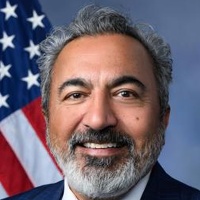
Ami Bera
Representative
CA
Ami Bera
Representative
CA
This Act formalizes and strengthens the trilateral partnership between the United States, Japan, and the Republic of Korea to promote a free and open Indo-Pacific. It expresses Congressional support for continuing the strategic alignment established at the Camp David summit. Crucially, it mandates the establishment of a formal US-Japan-ROK Inter-Parliamentary Dialogue to deepen legislative engagement between the three nations.
This Act permanently establishes E-Verify, mandates its use by all employers for employment eligibility verification, and significantly increases penalties for non-compliance and hiring unauthorized workers.
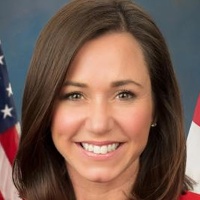
Katie Britt
Senator
AL
Katie Britt
Senator
AL
The Mandatory E-Verify Act of 2026 establishes a permanent, mandatory electronic employment verification system for all U.S. employers, building upon the existing E-Verify program. This legislation phases in requirements for all businesses to use the system to confirm employee work authorization, imposing significantly enhanced civil and criminal penalties for non-compliance or hiring unauthorized workers. The Act also establishes an individual self-check tool and mandates federal agencies to share necessary records to ensure system accuracy and security.
This Act establishes the Commission on American Leadership in Robotics to examine robotics' role in commerce, competitiveness, and national security, and to issue recommendations to Congress.
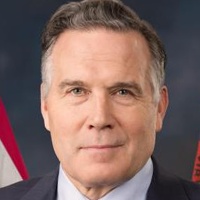
Dave McCormick
Senator
PA
Dave McCormick
Senator
PA
This Act establishes the National Commission on American Leadership in Robotics to examine the role of robotics in U.S. commerce, competitiveness, and national security. The Commission, composed of 18 experts, is tasked with reviewing advancements and providing recommendations to Congress. It must submit an interim report within one year and a final report with findings within two years. The Commission will terminate 18 months after submitting its final report.
This Act mandates the Comptroller General to assess and report on the greatest vulnerabilities to the integrity of federally funded programs administered by states.
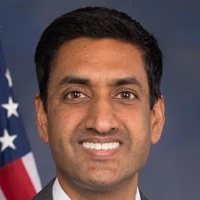
Ro Khanna
Representative
CA
Ro Khanna
Representative
CA
This Act requires the Comptroller General to conduct regular assessments identifying the greatest risks to the integrity of federal funds administered by state and local governments. These reports will pinpoint systemic weaknesses that lead to waste, fraud, and improper payments. The findings will include recommendations for improving federal tools, technical assistance, and administrative practices to strengthen program integrity.
This Act restructures the State Department to strengthen economic diplomacy by creating new high-level economic and energy positions, establishing specialized bureaus, and bolstering economic expertise across foreign policy functions.

Young Kim
Representative
CA
Young Kim
Representative
CA
The PROFIT Act of 2026 significantly restructures the State Department to prioritize economic diplomacy. It establishes a new Under Secretary for Economic Growth, Energy, and the Environment to oversee key economic functions, alongside creating new Assistant Secretary roles for Sanctions Policy, Energy Security, and Water/Environment/Space Affairs. The bill also bolsters economic expertise within the Department and establishes an International Technology Security and Innovation Fund.
This bill expands the federal tax deduction for vehicle loan interest payments to include certain recreational vehicles, campers, and trailers for loans taken out after December 31, 2025.

Todd Young
Senator
IN
Todd Young
Senator
IN
This bill amends the Internal Revenue Code to expand the federal deduction for interest paid on certain vehicle loans. Specifically, it adds recreational vehicles, campers, and trailers to the list of qualifying vehicles. This change will apply only to loans taken out after December 31, 2025.
This resolution honors the victims and survivors of the December 13, 2025, Brown University shooting, commends first responders, and calls for Congressional action to end gun violence.
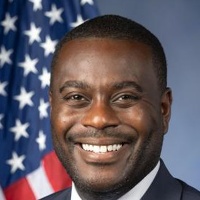
Gabe Amo
Representative
RI
Gabe Amo
Representative
RI
This resolution formally honors the victims and survivors of the tragic December 13, 2025, mass shooting at Brown University. It recognizes the bravery of the first responders and condemns this senseless act of violence. The bill expresses solidarity with the affected community and calls for Congressional action to end gun violence.
This Act prohibits federal agencies from providing contracts, grants, or financial assistance to individuals convicted of specific federal fraud and corruption felonies, and to businesses they substantially own or control, for three years following conviction.
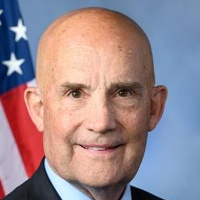
Keith Self
Representative
TX
Keith Self
Representative
TX
The Federal Program Integrity and Fraud Prevention Act of 2026 prohibits federal agencies from awarding contracts or grants to individuals convicted of specific federal fraud and corruption felonies for three years following their conviction. This ban also extends to businesses substantially owned or controlled by the convicted individual. The law mandates updating the System for Award Management (SAM.gov) upon conviction, though agency heads retain limited authority to issue case-by-case waivers.
This bill shifts the regulation of laboratory developed tests (LDTs) entirely to CLIA standards, establishes new validity requirements, mandates a centralized database, and updates CLIA regulations to reflect modern laboratory science.
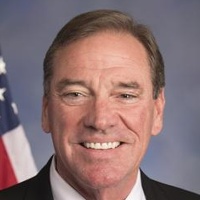
Neal Dunn
Representative
FL
Neal Dunn
Representative
FL
The Enhancing CLIA Act of 2026 fundamentally shifts the regulation of Laboratory Developed Tests (LDTs) from the FDA's medical device framework entirely under the CLIA framework administered by HHS. This legislation establishes new standards for analytical and clinical validity for LDTs and mandates the creation of a centralized database for transparency. Furthermore, the Act requires updates to CLIA specialties to reflect modern laboratory science and mandates greater public input on regulatory guidance.
The Women in Criminal Justice Reform Act comprehensively reforms policing, bail, sentencing, prison, and reentry practices to be gender-responsive, trauma-informed, and focused on family reunification to reduce recidivism.
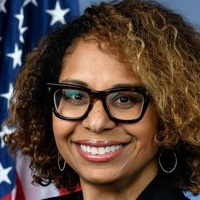
Sydney Kamlager-Dove
Representative
CA
Sydney Kamlager-Dove
Representative
CA
The Women in Criminal Justice Reform Act aims to create a more equitable and trauma-informed justice system for women and families. It establishes new standards for policing, prioritizes family reunification during pretrial detention and foster care, and creates gender-responsive alternatives to incarceration. The bill also reforms sentencing and prison policies to address the specific needs and histories of incarcerated women, focusing on trauma, health care, and successful reentry.
This bill establishes the Veteran Scam Victims Foundation as a private, nonprofit entity focused on educating and supporting veterans against scams.
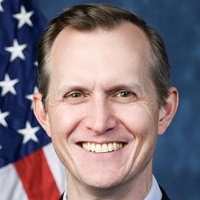
George Whitesides
Representative
CA
George Whitesides
Representative
CA
The Veteran Scam Victims Foundation Act establishes a private, nonprofit foundation dedicated solely to protecting veterans and their beneficiaries from scams through education and support. Governed by a board including the Secretary of Veterans Affairs and various federal appointees, the Foundation can accept and manage private gifts to fund its anti-scam efforts. It is tax-exempt, but the U.S. government is not liable for its actions, and it must report annually to Congress.
This Act prohibits connected vehicles originating from, designed in, or significantly owned by entities from covered countries (China, Russia, Iran, North Korea) from entering the U.S., with limited exceptions for authorized testing or security-vetted entry.
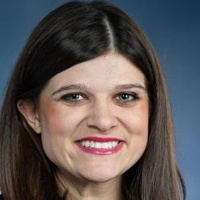
Haley Stevens
Representative
MI
Haley Stevens
Representative
MI
The Protecting America from Chinese Cars Act of 2026 prohibits connected vehicles from entering the U.S. if they originate from, were designed in, or are significantly owned by entities from covered countries (China, Russia, Iran, or North Korea). This ban includes exceptions for testing and evaluation, and allows for entry if the Secretary of Commerce determines the vehicle poses no undue national security risk after a Congressional review period. The Act mandates the establishment of authorization procedures and the public listing of any approved vehicles.
This bill ensures that Critical Access Hospitals will not lose their designation solely due to changes in road or transportation infrastructure that affect their distance requirements.
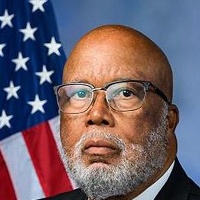
Bennie Thompson
Representative
MS
Bennie Thompson
Representative
MS
The Critical Access Hospital RIP Act of 2026 aims to protect critical access hospital (CAH) status for facilities that might otherwise lose it due to new or improved roadways. Specifically, it ensures that a CAH retains its designation if it only fails the distance requirement because of a transportation infrastructure improvement completed after the hospital was initially designated. This prevents necessary roadwork from inadvertently jeopardizing essential rural healthcare access.
The FRESH Act establishes a grant program to help schools purchase and install new milk cold storage equipment or dispensers.
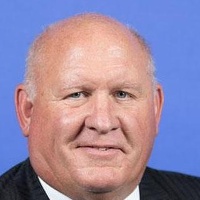
Glenn Thompson
Representative
PA
Glenn Thompson
Representative
PA
The FRESH Act establishes a competitive grant program, administered by the Secretary of Agriculture, to help schools purchase and install essential milk cold storage equipment and dispensers. This initiative aims to improve the storage and serving of milk in elementary and secondary schools nationwide. The program is authorized with $4 million annually from fiscal years 2027 through 2031.
The ZOMBIE Act reforms federal payment integrity laws to focus agency monitoring, reporting, and risk assessments exclusively on improper payments that result in an actual financial loss to the government.
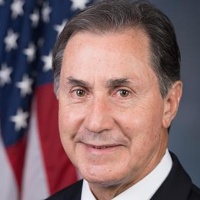
Gary Palmer
Representative
AL
Gary Palmer
Representative
AL
The Zeroing Out Monetary Benefits Improperly Expended Act (ZOMBIE Act) reforms federal payment integrity laws to focus exclusively on improper payments that result in an actual financial loss to the government. This legislation tightens definitions, shifts agency monitoring to a risk-based approach, and lowers the frequency of some reporting requirements. The bill mandates enhanced fraud prevention efforts and requires agencies to estimate and justify financial losses in their annual budget submissions.
This Act establishes a new Inspector General for Fraud, Accountability, and Recovery within the Treasury Department and restructures the Fiscal Service to enhance governmentwide data analysis and coordination for preventing fraud and improper payments across federal programs.
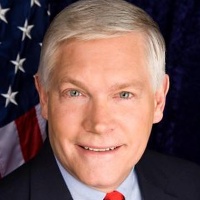
Pete Sessions
Representative
TX
Pete Sessions
Representative
TX
The Fraud Prevention and Accountability Act restructures the Treasury Department to enhance fraud detection and financial integrity across federal spending. It establishes a new, independent Inspector General for Fraud, Accountability, and Recovery to oversee "covered funds" and mandates a governmentwide data analysis program within the Fiscal Service. This legislation aims to centralize data sharing and analytical capabilities to proactively prevent improper payments and combat fraud in major federal programs.
This Act establishes the authority for federal agencies to temporarily pause, condition, or segment payments showing elevated fraud risk for review and corrective action.

James Comer
Representative
KY
James Comer
Representative
KY
The Stopping Fraudulent Payments Act grants federal agencies the authority to temporarily pause, condition, or segment payments that show elevated signs of fraud or improper risk. This action can be initiated by agency heads or triggered by the Treasury Secretary using the Do Not Pay system. Agencies must notify payees, allow them to contest the pause, and issue the payment within 30 days if the review finds no high risk.