Legislative Activity
Track George's sponsored bills, co-sponsored legislation, and voting record
This bill mandates the revision of the Standard Occupational Classification system to establish a distinct code for Direct Support Professionals to better recognize their critical role in supporting individuals with disabilities.
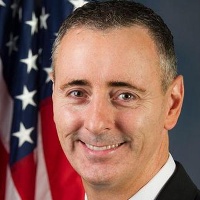
Brian Fitzpatrick
Representative
PA
Brian Fitzpatrick
Representative
PA
The Recognizing the Role of Direct Support Professionals Act aims to address the critical shortage and high turnover among Direct Support Professionals (DSPs) who assist individuals with intellectual and developmental disabilities. The bill mandates that the Office of Management and Budget review and revise the Standard Occupational Classification system to establish a distinct code for DSPs. This change will allow for more accurate labor market data collection to better support these essential workers. The Act does not authorize any new funding.
The First Responders’ Care Expansion Act of 2025, or FORCE Act, establishes an early Medicare enrollment option at age 57 for eligible first responders with at least ten years of service.
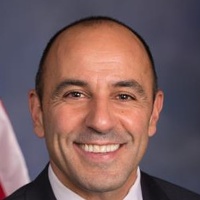
Jimmy Panetta
Representative
CA
Jimmy Panetta
Representative
CA
The First Responders’ Care Expansion Act of 2025, or FORCE Act, establishes an early enrollment option for Medicare coverage for eligible first responders starting at age 57, provided they have ten or more years of service. This allows qualified individuals to access standard Medicare benefits (Parts A, B, and D) years before the traditional age of 65. Premiums paid under this option will be deposited into a newly created Medicare First Responder Trust Fund. The Act also mandates revisions to Medigap standards to ensure guaranteed acceptance for these early enrollees.
This act repeals specific sections of a prior reconciliation act to restore previous laws affecting American families and farmers.
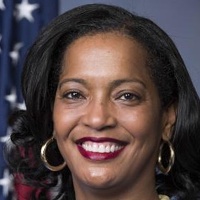
Jahana Hayes
Representative
CT
Jahana Hayes
Representative
CT
The Restoring Food Security for American Families and Farmers Act of 2025 aims to strengthen domestic food security by repealing specific sections of a prior reconciliation act. This action effectively revives the original laws that were previously amended by the repealed provisions. The bill seeks to revert existing agricultural and food-related statutes to their pre-amendment status.
This act establishes the Green Star Service Flag to honor the next of kin of veterans who died by suicide after September 11, 2001.
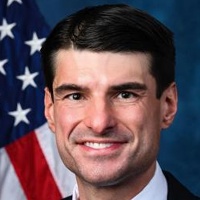
Robert Bresnahan
Representative
PA
Robert Bresnahan
Representative
PA
The Sgt. Walter F. Hartnett IV Green Star Veterans Service Act establishes the "Green Star Service Flag" to honor the next of kin of veterans who died by suicide on or after September 11, 2001. The Secretary of Veterans Affairs is required to design and designate this flag for eligible next of kin to display. The Act also sets regulations for manufacturing and selling the authorized flag.
The VA Work-Study Improvement Act expands eligible work-study activities, clarifies minimum wage standards, mandates electronic timesheets, and requires annual publication of program data.
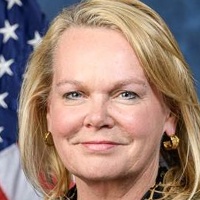
April McClain Delaney
Representative
MD
April McClain Delaney
Representative
MD
The VA Work-Study Improvement Act expands approved work-study locations to include state/local government agencies and nonprofits that benefit veterans. It establishes a clear standard for the minimum hourly wage paid to participants and mandates the use of electronic timesheets. Furthermore, the bill requires the VA to annually publish detailed data regarding the work-study program's activities and participants.
This Act establishes an interagency task force, led by the FTC and DOJ, to develop and implement a national strategy to combat scams through coordination, education, and enforcement.
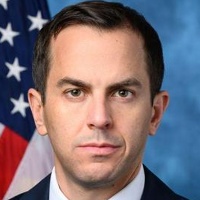
Robert Menendez
Representative
NJ
Robert Menendez
Representative
NJ
This Act establishes the **Strategic Task Force on Scam Prevention**, an interagency group led by the FTC and DOJ, to combat fraud. The task force is charged with developing and implementing a national strategy that includes public education, industry coordination, and enhanced enforcement actions. It will also coordinate with international partners and report annually on its efforts to reduce financial losses from scams.
This bill establishes a five-year pilot program to expand work-study allowance eligibility for student veterans enrolled at least half-time and mandates annual reporting on participant outcomes.
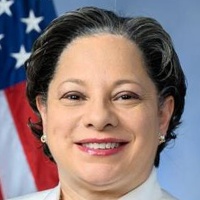
Jennifer McClellan
Representative
VA
Jennifer McClellan
Representative
VA
The Student Veteran Work Study Modernization Act establishes a five-year pilot program to expand eligibility for the VA work-study allowance to veterans pursuing certain educational or training programs at a half-time enrollment level. This allows more student veterans to benefit from work-study opportunities without meeting the current three-quarter-time enrollment requirement. Additionally, the Secretary of Veterans Affairs is required to submit annual reports detailing participation and outcomes for veterans in the work-study program.
This act mandates that all states allow eligible individuals to register and vote on the same day during federal elections, beginning in November 2026.
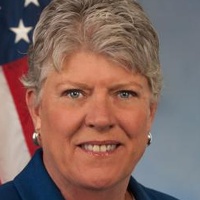
Julia Brownley
Representative
CA
Julia Brownley
Representative
CA
The Same Day Registration Act of 2025 mandates that all states allow eligible individuals to register to vote and cast a ballot on the same day during any federal election, including early voting periods. This requirement applies starting with the November 2026 general election. States without any voter registration requirement for federal elections are exempt from this mandate.
This act ensures the Federal Emergency Management Agency (FEMA) can continue essential disaster relief operations and retain necessary staff using existing Disaster Relief Fund money during a government funding lapse.
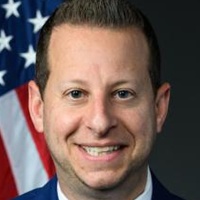
Jared Moskowitz
Representative
FL
Jared Moskowitz
Representative
FL
The Federal Emergency Management Continuity Act of 2025 ensures that the Federal Emergency Management Agency (FEMA) can continue essential disaster relief operations during a government funding lapse. This act authorizes the FEMA Administrator to use existing, previously appropriated funds from the Disaster Relief Fund (DRF) to maintain critical Stafford Act programs. Furthermore, necessary staff will be retained as "excepted employees" to manage these ongoing life-saving and property-protecting activities.
This bill, the Healthy Meals Help Kids Learn Act of 2025, increases federal reimbursement rates for school lunches and breakfasts starting in late 2025.
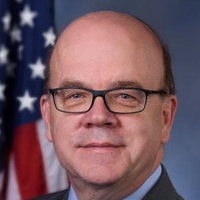
James McGovern
Representative
MA
James McGovern
Representative
MA
The Healthy Meals Help Kids Learn Act of 2025 aims to increase federal reimbursement rates for school meals. Specifically, it provides an additional 45 cents per lunch and 28 cents per breakfast served by school food authorities starting November 1, 2025. These adjusted rates will be subject to future inflation adjustments.
The School Food Modernization Act provides federal loan guarantees, grants, and training to upgrade school food facilities and improve staff skills for serving healthier meals.
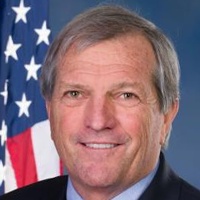
Mark DeSaulnier
Representative
CA
Mark DeSaulnier
Representative
CA
The School Food Modernization Act aims to improve school meal programs by providing financial assistance for facility upgrades and equipment purchases through loan guarantees and grants. It also establishes a new grant program to fund third-party training for school food service staff on nutrition standards and efficiency. Finally, the bill requires reports to Congress on program implementation and a study on how states use administrative funds for workforce training.
This bill mandates that the House of Representatives convene daily during a government shutdown, requiring recorded quorum calls with fines for non-attendance.
Jared Moskowitz
Representative
FL
Jared Moskowitz
Representative
FL
This bill mandates that the House of Representatives must convene daily during a government shutdown, limiting their ability to adjourn. It requires recorded quorum calls on session days, imposing escalating fines on members who fail to check in electronically for two consecutive days. These fines must be paid by the member personally, with procedures established for appeals and automatic salary deduction for non-payment.
This bill authorizes the Federal Government to reimburse states for using their own funds to maintain WIC program operations during a lapse in federal appropriations.
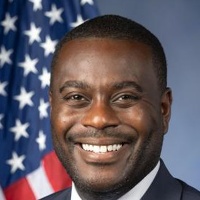
Gabe Amo
Representative
RI
Gabe Amo
Representative
RI
This bill ensures that states are reimbursed by the Federal Government for any state funds they use to maintain essential operations of the Special Supplemental Nutrition Program for Women, Infants, and Children (WIC) during a lapse in federal appropriations. It provides a mechanism for the Federal Government to pay back states that cover WIC costs during a government shutdown. This protects state budgets while keeping vital nutrition assistance running.
This resolution expresses Congressional support for designating October 4-10, 2025, as World Space Week to celebrate space science and technology's benefits to life on Earth.

Debbie Dingell
Representative
MI
Debbie Dingell
Representative
MI
This resolution expresses the official support of Congress for designating the week of October 4–10, 2025, as World Space Week. It recognizes the importance of space science and technology for improving life on Earth and driving innovation across various sectors. The bill specifically encourages public and student participation in events celebrating the 2025 theme, "Living in Space."
This act automatically reinstates Department of Energy financial assistance awards that were previously canceled based on the May 15, 2025 Secretarial Memorandum.
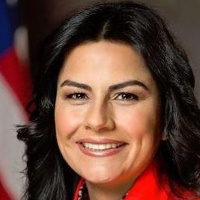
Nanette Barragán
Representative
CA
Nanette Barragán
Representative
CA
The Stop the Trump Electricity Price Hikes Act immediately reinstates financial assistance awards previously canceled by the Department of Energy (DOE). This action specifically reverses cancellations based on the May 15, 2025 Secretarial Memorandum. The bill ensures these awards continue as if they had never been terminated.
This Act waives the 10% early withdrawal penalty on Thrift Savings Plan distributions up to $30,000 during a federal government shutdown and provides special provisions for TSP hardship withdrawals and loan payments affected by the lapse in appropriations.
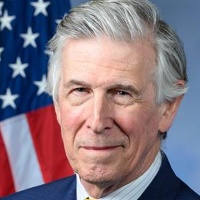
Donald Beyer
Representative
VA
Donald Beyer
Representative
VA
The Emergency Relief for Federal Workers Act of 2025 provides financial relief to federal employees affected by government shutdowns. This bill waives the 10% early withdrawal penalty on Thrift Savings Plan (TSP) distributions up to $30,000 during a qualifying shutdown. Additionally, it allows affected employees greater access to TSP hardship withdrawals and loans, and prevents missed TSP loan payments due to a shutdown from being treated as a taxable distribution.
This bill ensures federal firefighters receive uninterrupted pay during fiscal year 2026 budget delays and protects them from layoffs during government shutdowns.
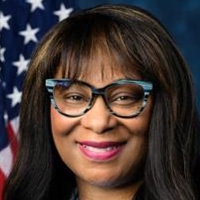
Janelle Bynum
Representative
OR
Janelle Bynum
Representative
OR
The Federal Firefighter Paycheck Protection Act ensures that federal firefighters continue to receive their pay and allowances if Congress delays passing the budget for fiscal year 2026. This legislation also prohibits the reduction in force or layoffs of federal firefighters specifically due to government shutdowns caused by funding lapses. Essentially, this bill protects the paychecks and employment stability of federal firefighters during budget uncertainty.
The Wildfire Recovery Act ensures the federal government covers at least 75% of eligible fire management assistance costs and updates policies to allow pre-disaster reimbursement for pre-staged domestic assets.
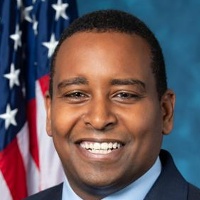
Joe Neguse
Representative
CO
Joe Neguse
Representative
CO
The Wildfire Recovery Act ensures the federal government covers at least 75% of eligible fire management assistance costs for newly appropriated funds. It also mandates new rulemaking to establish clear standards for increasing federal disaster cost-sharing based on measurable financial impact. Finally, the bill updates FEMA policy to allow state, local, and Tribal governments to seek reimbursement for pre-staging their own equipment before a disaster is officially declared.
This Act ensures that members of the Armed Forces, DoD civilian employees, and necessary contractors receive pay and allowances for fiscal year 2026 if a full budget has not been enacted by October 1, 2025.
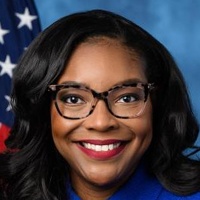
Emilia Sykes
Representative
OH
Emilia Sykes
Representative
OH
The Pay Our Military Act ensures that members of the Armed Forces continue to receive their pay and allowances if a full budget for fiscal year 2026 has not been enacted. This continuing appropriation provides necessary funds for active duty, reserves, and essential civilian support staff. This automatic funding remains in effect until a full appropriation is passed or until January 1, 2027.
The LAUNCH Act streamlines commercial space regulations, establishes a digital licensing system, creates a dedicated Commercial Space Transportation Administration, and improves oversight for launch, reentry, and remote sensing activities.
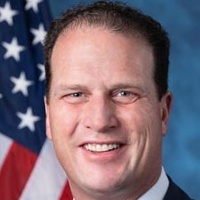
August Pfluger
Representative
TX
August Pfluger
Representative
TX
The LAUNCH Act aims to significantly streamline and modernize the regulatory framework for the commercial space industry, covering both launch/reentry and remote sensing systems. It mandates a review of current space launch regulations, establishes a new digital tracking system for applications, and creates the Commercial Space Transportation Administration (CSTA) within the DOT. Furthermore, the bill encourages innovation by easing licensing requirements and improving interagency coordination on flight safety analysis.