
Legislative Activity
Track Mark's sponsored bills, co-sponsored legislation, and voting record
This bill allows unpaid family caregivers who meet specific criteria to make additional "catch-up" contributions to their retirement accounts.

Susan Collins
Senator
ME
Susan Collins
Senator
ME
The Catching Up Family Caregivers Act of 2026 aims to support unpaid family caregivers by allowing them to make additional "catch-up" contributions to their retirement accounts. This provision expands existing retirement savings rules to include individuals who provide significant unpaid care for a family member or dependent while working limited paid hours. Caregivers can utilize this benefit for up to five total tax years, providing a crucial opportunity to bolster their retirement savings.
This bill allows qualifying family caregivers to make additional retirement contributions to their 401(k)s and IRAs, and permits those with minimal employment income to contribute fully to a Roth IRA.
Susan Collins
Senator
ME
Susan Collins
Senator
ME
The Improving Retirement Security for Family Caregivers Act of 2026 aims to boost retirement savings for unpaid family caregivers. It allows qualifying caregivers to make additional catch-up contributions to retirement accounts like 401(k)s and IRAs, regardless of age. Furthermore, it permits caregivers with minimal paid employment to contribute the full annual limit to a Roth IRA. These provisions are designed to offset lost retirement savings due to caregiving responsibilities.
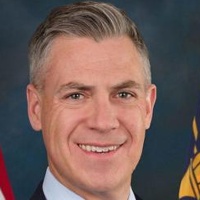
Tyler’s Law mandates a federal study and subsequent guidance on the implementation of routine fentanyl testing for patients treated in hospital emergency departments for drug overdoses.
Jim Banks
Senator
IN
Jim Banks
Senator
IN
Tyler’s Law directs the Department of Health and Human Services to conduct a comprehensive study on the current practices, costs, and benefits of fentanyl testing in hospital emergency departments. Following this study, the Secretary will issue formal guidance to help hospitals improve their testing protocols for patients experiencing overdoses. This legislation aims to enhance clinical responses to the fentanyl crisis and improve patient health outcomes.
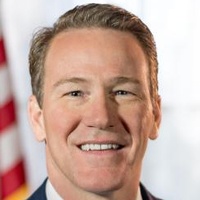
Sammy’s Law requires large social media platforms to provide parents and guardians with tools and API access to third-party safety software to monitor and manage their children's online accounts.
Jon Husted
Senator
OH
Jon Husted
Senator
OH
Sammy’s Law requires large social media platforms to provide parents and guardians with free tools to monitor and manage their children's accounts, including private messages, content, and privacy settings. The legislation mandates that platforms offer secure API access to authorized third-party safety software to help facilitate this oversight. Additionally, the bill establishes federal enforcement through the FTC to ensure these safety standards are upheld consistently across the country.
This resolution honors the historical and contemporary contributions, leadership, and resilience of American Indian, Alaska Native, and Native Hawaiian women across all sectors of American society.

Lisa Murkowski
Senator
AK
Lisa Murkowski
Senator
AK
This resolution honors the historic and contemporary contributions of American Indian, Alaska Native, and Native Hawaiian women across all sectors of society, including military service, business, science, and public leadership. It celebrates their resilience and vital role in shaping the nation while calling for continued investment to address the unique challenges they face.
The "Love Lives On Act of 2025" restores benefits to surviving spouses of veterans who remarry, including educational benefits, Dependency and Indemnity Compensation, Survivor Benefit Plan payments, and TRICARE eligibility.

Jerry Moran
Senator
KS
Jerry Moran
Senator
KS
The "Love Lives On Act of 2025" modifies eligibility rules for Dependency and Indemnity Compensation (DIC) and Survivor Benefit Plan (SBP) payments for surviving spouses who remarry. It allows remarried surviving spouses to receive certain educational benefits and DIC, and it continues annuity payments to surviving spouses who remarry, particularly those whose spouses died on active duty. Additionally, the Act expands the definition of "dependent" under the TRICARE program to include remarried widows or widowers whose subsequent marriage has ended.
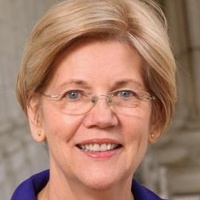
The Failed Bank Executives Clawback Act mandates that executives of large failed banks return up to three years of compensation to the Deposit Insurance Fund.
Elizabeth Warren
Senator
MA
Elizabeth Warren
Senator
MA
The Failed Bank Executives Clawback Act mandates that executives and controlling stakeholders of large failed banks (with assets over $10 billion) return up to three years of compensation to the FDIC. This legislation ensures accountability by requiring recovered funds to be deposited into the Deposit Insurance Fund. Additionally, it clarifies the FDIC's authority to oversee the orderly liquidation of failed financial companies.
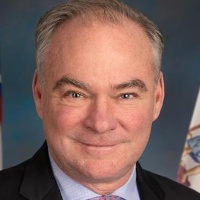
The Reclaim Trade Powers Act repeals the President's authority under the Trade Act of 1974 to impose import restrictions based on balance-of-payments deficits.
Timothy Kaine
Senator
VA
Timothy Kaine
Senator
VA
The Reclaim Trade Powers Act repeals Section 122 of the Trade Act of 1974, effectively removing the President's authority to unilaterally impose import restrictions based on balance-of-payments deficits. This legislation aims to restore greater congressional oversight by eliminating this specific executive trade power.
The Fiscal Commission Act establishes a bipartisan congressional commission tasked with developing legislative recommendations to improve the federal government's long-term fiscal health and provides expedited procedures for Congress to consider those proposals.

John Curtis
Senator
UT
John Curtis
Senator
UT
The Fiscal Commission Act establishes a bipartisan, 16-member commission tasked with developing legislative recommendations to improve the federal government's long-term fiscal health and reduce the national debt. The bill mandates that the Commission’s approved proposals be submitted to Congress for expedited consideration through a fast-track process that prohibits amendments. This initiative aims to address the nation's fiscal condition and ensure the long-term solvency of federal trust funds.
The Democracy Is Strengthened by Casting Light On Spending in Elections Act of 2026 enhances election integrity by closing foreign funding loopholes, increasing transparency in political and judicial spending, and mandating clear disclosure requirements for political advertisements.

Sheldon Whitehouse
Senator
RI
Sheldon Whitehouse
Senator
RI
The **Democracy Is Strengthened by Casting Light On Spending in Elections (DISCLOSE) Act of 2026** aims to increase transparency and accountability in U.S. elections by closing loopholes that allow foreign spending and requiring greater disclosure of political donors. The legislation mandates that organizations report significant political expenditures, forces leaders to take personal responsibility for political advertisements, and streamlines the legal process for campaign finance challenges. Ultimately, these reforms seek to provide voters with clearer information about who is funding political campaigns and judicial nominations.
The Direct File Act of 2026 establishes a permanent, free, government-operated online tax filing system while prohibiting agreements that restrict the IRS from providing direct tax preparation services.
Elizabeth Warren
Senator
MA
Elizabeth Warren
Senator
MA
The Direct File Act of 2026 establishes a permanent, free, and user-friendly online tax filing program operated directly by the IRS. The bill prohibits the Treasury from entering into agreements that restrict government-provided filing services and mandates the development of a seamless, accessible platform for federal and state tax returns. This initiative aims to simplify the filing process for taxpayers while ensuring the government maintains full control over its own tax preparation software.
The Medical Nutrition Therapy Act of 2026 expands Medicare coverage for medical nutrition therapy services to include a broader range of chronic conditions and increases the types of healthcare providers authorized to order these services.
Susan Collins
Senator
ME
Susan Collins
Senator
ME
The Medical Nutrition Therapy Act of 2026 expands Medicare coverage to include medical nutrition therapy for a broader range of chronic conditions, such as obesity, hypertension, and cancer. The bill also increases access to these services by allowing a wider variety of healthcare professionals to order them. Additionally, it establishes a five-year pilot program to evaluate the impact of these services on patient health outcomes and overall Medicare spending.
This legislation strengthens the cybersecurity posture of the healthcare sector by mandating federal coordination, establishing incident response protocols, enforcing stricter security standards, and providing grants and workforce training to improve resiliency.
Bill Cassidy
Senator
LA
Bill Cassidy
Senator
LA
The Health Care Cybersecurity and Resiliency Act of 2026 aims to strengthen the cybersecurity posture of the healthcare sector by mandating closer coordination between the Department of Health and Human Services (HHS) and the Cybersecurity and Infrastructure Security Agency (CISA). The bill establishes new cybersecurity standards for healthcare entities, including requirements for multifactor authentication and encryption, while creating a grant program to assist organizations in adopting these protections. Additionally, it enhances breach reporting transparency, provides specialized cybersecurity guidance for rural health providers, and directs the development of a strategic plan to grow the healthcare cybersecurity workforce.
This resolution supports the goals of Career and Technical Education Month by recognizing its vital role in preparing a skilled workforce for in-demand careers.
Timothy Kaine
Senator
VA
Timothy Kaine
Senator
VA
This resolution officially designates February 2026 as Career and Technical Education (CTE) Month to celebrate and support CTE programs nationwide. It recognizes CTE's vital role in preparing a skilled workforce for high-demand careers and boosting American economic competitiveness. The resolution encourages promotion of CTE as a respected educational pathway for students.
This bill strengthens the Community Development Financial Institutions (CDFI) Fund by improving bond guarantee programs, enhancing liquidity assistance, and establishing a new relending program to expand homeownership opportunities for Native communities.
Steve Daines
Senator
MT
Steve Daines
Senator
MT
The Access to Fair Financing for Opportunity and Resilient Development Act strengthens Community Development Financial Institutions (CDFIs) by improving the bond guarantee program and establishing new liquidity and capitalization initiatives. The bill also creates a dedicated relending program to expand homeownership opportunities within Native American, Alaska Native, and Native Hawaiian communities. Additionally, it mandates increased congressional oversight and reporting regarding the effectiveness of these federal financial programs.
This Act establishes the Julius Rosenwald and Rosenwald Schools National Historical Park and a national network to preserve and interpret the legacy of Julius Rosenwald and the historic Rosenwald Schools program.

Richard Durbin
Senator
IL
Richard Durbin
Senator
IL
The Julius Rosenwald and Rosenwald Schools National Historical Park Act establishes a new National Park unit to preserve and interpret the legacy of philanthropist Julius Rosenwald and the historic Rosenwald Schools program. The legislation creates a national park across multiple sites—including a headquarters in Chicago—to honor the partnership that built thousands of schools for African American children in the segregated South. Additionally, the Act establishes the Rosenwald Schools National Network to provide research, educational resources, and financial assistance for the preservation of these historic sites nationwide.
The ROTOR Act reforms transparency and oversight for rotorcraft operations by narrowing exceptions to ADS-B Out requirements, mandating ADS-B In installation on certain aircraft, and establishing new FAA-DOD safety coordination and reporting mechanisms.

Ted Cruz
Senator
TX
Ted Cruz
Senator
TX
The ROTOR Act focuses on enhancing aviation safety and transparency, primarily by reforming exceptions that allow aircraft to disable their ADS-B Out tracking systems. It mandates that the FAA require most aircraft to install and use ADS-B In technology for improved situational awareness. Furthermore, the bill establishes new coordination offices and requires comprehensive safety reviews of airspace operations, particularly around major airports, involving both civil and military aviation.
The Tariff Refund Act of 2026 mandates that U.S. Customs and Border Protection issue interest-bearing refunds for import duties collected under the International Emergency Economic Powers Act that were deemed unlawful by the Supreme Court.

Ron Wyden
Senator
OR
Ron Wyden
Senator
OR
The Tariff Refund Act of 2026 mandates that U.S. Customs and Border Protection issue interest-bearing refunds for import duties collected under the International Emergency Economic Powers Act that were subsequently ruled unlawful. The bill prioritizes small businesses in the refund process and requires that larger entities pass these savings on to their customers. All refunds must be processed within 180 days of enactment, with regular progress reports provided to Congress.
This Act establishes an independent expert panel to review the FAA's Safety Management System (SMS) and mandates the FAA to act upon the panel's findings and report progress to Congress.

Maria Cantwell
Senator
WA
Maria Cantwell
Senator
WA
The FAA SMS Compliance Review Act of 2026 establishes an independent expert panel to conduct a comprehensive review of the Federal Aviation Administration's (FAA) Safety Management System (SMS). This panel will assess the SMS's effectiveness, compliance, and integration across the agency. The FAA Administrator is required to act on the panel's findings and report progress on implementation to Congress.
This bill mandates a study by the Comptroller General to assess the fiscal and economic harm that federal workforce reductions inflict upon state and local governments.

Angela Alsobrooks
Senator
MD
Angela Alsobrooks
Senator
MD
This bill mandates a comprehensive study by the Comptroller General to assess the economic fallout of federal workforce reductions on state and local governments. The study will analyze lost wages, decreased tax revenue, and increased demand for public assistance in affected areas. The resulting report will provide Congress with findings and policy recommendations to address these fiscal harms.