Legislative Activity
Track Debbie's sponsored bills, co-sponsored legislation, and voting record
The Jewish American Security Act aims to combat rising antisemitism through enhanced security grants, new protections for Jewish students in education, and increased transparency requirements for online platforms regarding hate speech.

Dan Goldman
Representative
NY
Dan Goldman
Representative
NY
The Jewish American Security Act addresses the rising threat of antisemitism across the nation. This bill mandates new protections for Jewish students in educational settings and significantly increases funding and administrative support for securing Jewish community institutions. Furthermore, it requires increased transparency from large online platforms regarding their moderation of antisemitic content and mandates federal assessments of domestic and transnational antisemitic threats.
The Careworker Visa Act of 2026 establishes a new "W" nonimmigrant visa category to address labor shortages by allowing qualified foreign nationals to work in the U.S. as childcare, eldercare, or disability support providers.
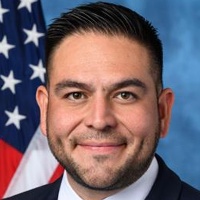
Gabriel (Gabe) Vasquez
Representative
NM
Gabriel (Gabe) Vasquez
Representative
NM
The Careworker Visa Act of 2026 establishes a new "W" nonimmigrant visa category to address the critical national shortage of childcare, eldercare, and disability support workers. This program allows families and small caregiving businesses to sponsor qualified foreign nationals for temporary employment while ensuring robust wage protections and workplace rights. The bill also includes comprehensive whistleblower protections to prevent exploitation and provides a structured pathway for eligible careworkers to maintain and renew their legal status.
This Act expands the geographic scope and duties of the Presidential Envoy for the Abraham Accords to include Central Asia and the Caucasus, leveraging existing authorities without new funding.
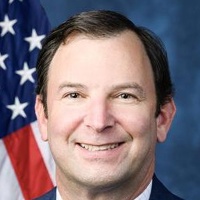
Craig Goldman
Representative
TX
Craig Goldman
Representative
TX
The Abraham Accords Expansion Act of 2026 formally expands the mission of the Presidential Envoy for the Abraham Accords to include Central Asia and the Caucasus. This legislation directs the Envoy to promote normalization and integration efforts in these strategically important regions, aligning with U.S. national security and economic interests. The Act utilizes existing authorities and funding to carry out these expanded duties.
This bill expresses support for designating June 5, 2026, as "National Gun Violence Awareness Day" and June 2026 as "National Gun Violence Awareness Month" to honor victims and promote awareness of gun violence.
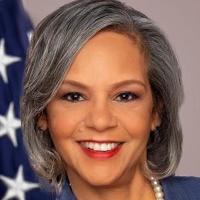
Robin Kelly
Representative
IL
Robin Kelly
Representative
IL
This bill expresses support for designating June 5, 2026, as "National Gun Violence Awareness Day" and the entire month of June 2026 as "National Gun Violence Awareness Month." The designations aim to honor the nearly 47,000 people killed by gunfire each year and raise public awareness about the devastating impact of gun violence. The resolution encourages the public to wear orange on that day and focus on community efforts to promote gun safety.
This act appropriates \$3.5 billion in emergency funding for block grants to states to compensate agricultural producers for losses caused by the March 2026 freeze.
C. Franklin
Representative
FL
C. Franklin
Representative
FL
This act appropriates \$3.5 billion in emergency funding to the USDA to provide block grants to states for agricultural losses caused by the March 2026 freeze. These funds are specifically designated to compensate producers for lost revenue, quality, or production of crops, trees, bushes, and vines in designated disaster counties. The Secretary of Agriculture must report on the implementation of this assistance quarterly.
This act amends federal law to require labeling of foods containing gluten-containing grains as a major food allergen.
Emanuel Cleaver
Representative
MO
Emanuel Cleaver
Representative
MO
The Celiac Safety Act of 2026 amends federal law to officially classify gluten-containing grains (wheat, rye, and barley) as a major food allergen. This change mandates that foods containing these grains must be clearly labeled as such, similar to existing major allergens like peanuts or milk. This new labeling requirement will take effect 18 months after the Act's enactment.
The PANA Act of 2026 establishes the Venezuela Restoration Fund, using forfeited assets from individuals tied to the Maduro regime to support democracy, human rights, and anti-corruption efforts in Venezuela.
Maria Salazar
Representative
FL
Maria Salazar
Representative
FL
The PANA Act of 2026 establishes the Venezuela Restoration Fund, which will hold assets forfeited from individuals or entities connected to the Chávez or Maduro regimes. This fund authorizes the Secretary of State to spend the money without further congressional approval to strengthen democracy, defend human rights, support independent media, and fight corruption in Venezuela. The Treasury Secretary must report annually to Congress on the fund's deposits and expenditures.
The Provider Reimbursement Stability Act of 2026 reforms Medicare physician payment policies by updating budget neutrality thresholds, establishing a correction process for utilization estimates, mandating periodic updates to practice expense data, and limiting annual conversion factor fluctuations.
Gregory Murphy
Representative
NC
Gregory Murphy
Representative
NC
The Provider Reimbursement Stability Act of 2026 aims to improve the accuracy and predictability of Medicare physician payments. The bill reforms budget neutrality calculations, mandates periodic updates to practice expense cost data, and establishes a 2.5% cap on annual conversion factor fluctuations. These measures are designed to ensure more stable reimbursement rates for healthcare providers.
This bill disapproves the Department of Education's final rule on federal student loan programs, preventing its implementation.
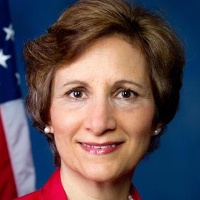
Suzanne Bonamici
Representative
OR
Suzanne Bonamici
Representative
OR
This bill seeks to disapprove the Department of Education's final rule regarding the "Reimagining and Improving Student Education-Federal Student Loan Program." By utilizing the Congressional Review Act, this legislation prevents the new regulations from taking legal effect. Consequently, the Department of Education cannot implement the changes outlined in that specific rule.
This bill authorizes the minting and sale of commemorative gold and silver coins to honor the 25th anniversary of the September 11, 2001, terrorist attacks, with surcharges supporting the National September 11 Memorial and Museum.
Dan Goldman
Representative
NY
Dan Goldman
Representative
NY
This bill authorizes the Secretary of the Treasury to mint and issue commemorative gold and silver coins marking the 25th anniversary of the September 11, 2001, terrorist attacks. The coins will honor the victims, first responders, and survivors, with designs selected in consultation with the National September 11 Memorial and Museum. All surcharges from the sale of these coins will be paid directly to the Memorial and Museum to support its operations and maintenance.
This bill prohibits using federal funds for specific settlement payments, particularly those related to the *Trump, et al. v. IRS, et al.* case, and restricts certain compromise settlements from the Judgment Fund to high-ranking officials and specific types of claims.
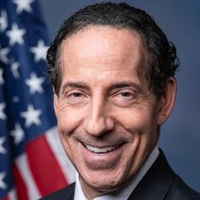
Jamie Raskin
Representative
MD
Jamie Raskin
Representative
MD
This Act prohibits the use of federal funds for specific settlement payments, including those related to the *Trump, et al. v. IRS, et al.* case. It places new restrictions on the Judgment Fund, barring payments to high-ranking officials, their relatives, and certain entities for specific types of claims. The bill also establishes strict reporting and notification requirements for large government compromise settlements.
This resolution congratulates the Jewish War Veterans on their 130th anniversary and honors their long-standing commitment to Jewish veterans, combating antisemitism, and advocating for all service members.
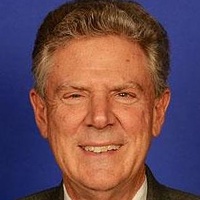
Frank Pallone
Representative
NJ
Frank Pallone
Representative
NJ
This resolution congratulates the Jewish War Veterans of the United States on their 130th anniversary. It honors their long history of service, advocacy for veterans' rights, and commitment to combating antisemitism. The bill recognizes the organization's vital role in preserving military history and promoting tolerance.
This bill directs the President to remove U.S. Armed Forces from hostilities against Iran within 30 days, pursuant to the War Powers Resolution.
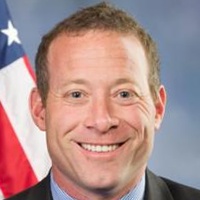
Josh Gottheimer
Representative
NJ
Josh Gottheimer
Representative
NJ
This bill directs the President to remove all U.S. Armed Forces from hostilities against Iran within 30 days, utilizing the authority granted by the War Powers Resolution. Congress asserts this action is necessary as it has not formally declared war or authorized military force against Iran. The resolution explicitly preserves the ability of the U.S. to defend itself, its allies, and its facilities from imminent attack, and does not interfere with intelligence-gathering activities.
This bill establishes the Combating Organized Retail Crime Act of 2025 to enhance federal prosecution tools against organized retail and supply chain crime and create a DHS-led coordination center to align law enforcement efforts.
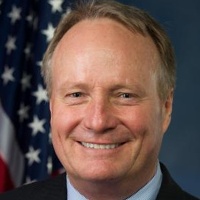
David Joyce
Representative
OH
David Joyce
Representative
OH
The Combating Organized Retail Crime Act of 2025 aims to combat sophisticated, cross-jurisdictional organized retail and supply chain theft. It achieves this by strengthening federal laws regarding money laundering and stolen property offenses, including lowering monetary thresholds for prosecution. Furthermore, the bill establishes a dedicated Center within the Department of Homeland Security to coordinate federal, state, and local enforcement efforts against these criminal organizations.
This resolution condemns antisemitic rhetoric from prominent online figures like Hasan Piker and Candace Owens and urges platforms and leaders to address this hate speech.
Josh Gottheimer
Representative
NJ
Josh Gottheimer
Representative
NJ
This resolution condemns the antisemitic rhetoric spread by prominent online personalities, citing specific examples from Hasan Piker and Candace Owens. It urges social media platforms and public leaders to denounce this hate-filled content and take action against its dissemination. The bill emphasizes that such online narratives contribute to real-world harm against Jewish communities.
This bill mandates stricter federal and state regulation of utility rate-setting by establishing lower return-on-equity ranges and banning numerous non-operational costs from being passed on to consumers.
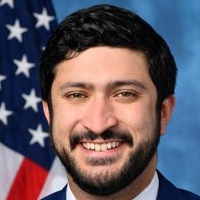
Gregorio Casar
Representative
TX
Gregorio Casar
Representative
TX
The Lowering Utility Bills Act aims to reduce consumer energy costs by establishing stricter federal and state guidelines for how electric transmission providers and investor-owned utilities calculate their allowed rate of return. The bill mandates using the lowest reasonable return on equity based on market data and explicitly bans passing numerous lobbying, administrative, and political expenses onto customers. Furthermore, it requires utilities to prioritize lower-cost, grid-enhancing technologies when planning new capital expenditures.
This bill mandates reasonable efforts to keep siblings together in foster care and establishes a grant program to support specialized placements for large or complex sibling groups.
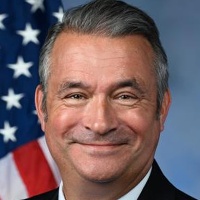
Don Bacon
Representative
NE
Don Bacon
Representative
NE
This bill mandates that state child welfare agencies make reasonable efforts to keep siblings together in foster care and ensure ongoing contact if they are separated. It also establishes a competitive grant pilot program to fund specialized foster care programs designed to successfully place large, widely-aged, or complex-needs sibling groups together. The goal is to prioritize and improve sibling connections while in state care.
This bill nullifies three specific Department of State rules regarding foreign assistance, effectively voiding their implementation and preventing enforcement of similar future policies.

Grace Meng
Representative
NY
Grace Meng
Representative
NY
This Act nullifies three specific Department of State rules concerning foreign assistance, effectively treating them as if they never existed. It prohibits any federal agency from implementing or enforcing these rules, or any substantially similar future policies. The legislation aims to prevent the enforcement of rules related to "Protecting Life," "Discriminatory Equity Ideology," and "Gender Ideology" in foreign aid.
The PRIMATE Act generally bans the importation of live nonhuman primates into the U.S., with a narrow exception for accredited zoos and aquariums that certify the animals will not be used for experiments or testing.
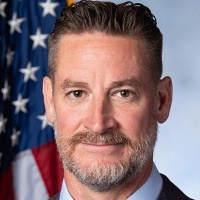
W. Steube
Representative
FL
W. Steube
Representative
FL
The PRIMATE Act generally bans the importation of live nonhuman primates into the United States to prevent toxic exposures. This prohibition includes a narrow exception allowing importation only by AZA-accredited facilities under strict conditions regarding the animal's future use. Violations of this ban are subject to significant civil penalties and forfeiture of the illegally imported primates.
This Act mandates a comprehensive report to Congress detailing emerging military, cyber, and political threats to the Baltic states and recommending strategies to enhance their security and U.S. partnership.
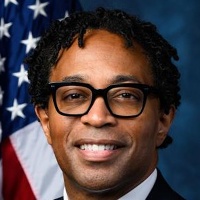
Wesley Bell
Representative
MO
Wesley Bell
Representative
MO
The Baltic Security Assessment Act of 2025 affirms the critical importance of Estonia, Latvia, and Lithuania to U.S. national security amidst Russian aggression. This bill mandates that the Secretary of State and Secretary of Defense deliver a comprehensive report to Congress detailing emerging military, cyber, and political threats to the Baltic states. The report must also recommend specific actions to enhance U.S. and NATO defense cooperation and bolster Baltic resilience.