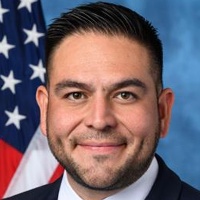
Legislative Activity
Track Gabriel's sponsored bills, co-sponsored legislation, and voting record
The "DOC Access Act of 2025" aims to improve dental and vision care coverage by ensuring fair payment practices, protecting providers' choices, and upholding state regulatory authority.
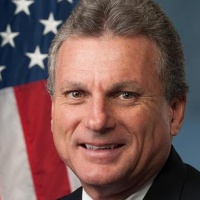
Earl Carter
Representative
GA
Earl Carter
Representative
GA
The "DOC Access Act of 2025" aims to enhance health care coverage under vision and dental plans by ensuring fair payment practices, protecting doctors' choices in labs and suppliers, and respecting state laws. It allows optometrists and dentists to charge their standard rate for non-covered services if the plan's payment is unreasonable, while ensuring they can only charge the contracted rate for dental cleanings. The bill also gives doctors more control over agreement extensions with limited benefit plans and allows them to opt out of certain provisions. Ultimately, this act seeks to balance federal guidelines with state oversight in regulating health insurance issuers and dental or vision benefit plans.
The "MODERN WIC Act of 2025" expands remote access to WIC benefits by allowing virtual certification appointments, remote benefit issuance, and requires a report to Congress on the use of remote technologies within the WIC program.
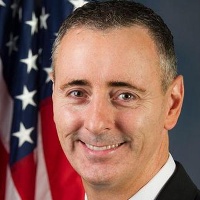
Brian Fitzpatrick
Representative
PA
Brian Fitzpatrick
Representative
PA
The MODERN WIC Act of 2025 aims to modernize the WIC program by expanding options for remote certification appointments, including telephone and video calls, and allowing for remote delivery of food benefits. It requires state agencies to offer various formats for certification appointments, ensuring accessibility for individuals with disabilities. The Act also mandates a report to Congress on the use of remote technologies in WIC, focusing on their impact and best practices.
The Public Safety Employer-Employee Cooperation Act establishes collective bargaining rights for public safety officers nationwide, ensuring fair labor practices and cooperation between employers and employees.
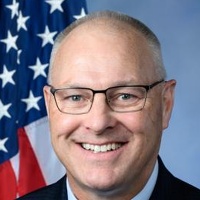
Pete Stauber
Representative
MN
Pete Stauber
Representative
MN
The Public Safety Employer-Employee Cooperation Act establishes a framework for collective bargaining rights for public safety officers (law enforcement, firefighters, and emergency medical services personnel) at the state level. It directs the Federal Labor Relations Authority to determine if states substantially protect these rights, and if not, the Authority will establish collective bargaining procedures. The Act aims to promote cooperation between public safety employers and employees while respecting existing state laws and prohibiting strikes and lockouts. This law does not override state laws that provide similar or stronger protections for public safety officers.
The "Sporting Goods Excise Tax Modernization Act" clarifies that marketplace providers are responsible for excise taxes on certain imported sporting goods sold through their platforms.
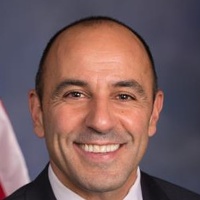
Jimmy Panetta
Representative
CA
Jimmy Panetta
Representative
CA
The "Sporting Goods Excise Tax Modernization Act" modifies excise tax regulations by treating marketplace providers as the importer and seller for excise tax purposes on taxable sporting goods sold through their platform if the goods are shipped from outside the U.S. This applies when the marketplace provider lists the product, collects payments, and the manufacturer is not the marketplace provider. The regulations will be applied to sales in calendar quarters starting 60 days after the enactment of this Act.
The "Make American Flags in America Act of 2025" mandates that U.S. flags displayed on Federal property or bought by Federal agencies be made entirely in the U.S., and requires a study on country-of-origin labeling enforcement for flags.
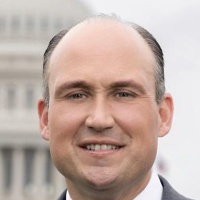
Nicholas Langworthy
Representative
NY
Nicholas Langworthy
Representative
NY
The "Make American Flags in America Act of 2025" mandates that U.S. flags displayed on Federal property or bought by Federal agencies be entirely manufactured in the U.S. using 100% U.S.-made materials, in accordance with international agreements. It also directs the Federal Trade Commission to study and report on country-of-origin labeling enforcement for U.S. flags, aiming to improve enforcement and deter violations.
The bill modifies and extends funding for the World Trade Center Health Program, expands the types of healthcare providers who can certify mental health conditions, and requires a report to Congress on the program's budget.
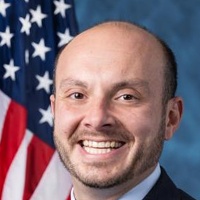
Andrew Garbarino
Representative
NY
Andrew Garbarino
Representative
NY
The 9/11 Responder and Survivor Health Funding Correction Act of 2025 amends the Public Health Service Act to improve the World Trade Center (WTC) Health Program by expanding the types of healthcare providers who can conduct mental health evaluations, modifying provider credentialing, clarifying enrollment calculations, and extending the time frame for adding health conditions for WTC responders. The act adjusts the funding formula for fiscal years 2026 through 2090 and requires the Secretary of Health and Human Services to report to Congress on the program's budget, including projected needs through 2090 and recommendations for changes to the funding formula. It also stipulates that remaining funds in the Supplemental Fund, Special Fund, and Pentagon-Shanksville Fund will revert to the Treasury.
The Secure Rural Schools Reauthorization Act of 2025 extends federal funding and program authorities for states and counties containing national forest land through 2026.
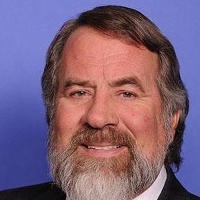
Doug LaMalfa
Representative
CA
Doug LaMalfa
Representative
CA
The Secure Rural Schools Reauthorization Act of 2025 extends critical federal funding for states and counties containing national forest land through 2026. This legislation ensures the continuation of essential community services and maintains the authority for resource advisory committees and local special projects.
This act authorizes the creation of the Smithsonian National Museum of the American Latino on the National Mall, ensuring diverse representation in its exhibits and programs.
Nicole Malliotakis
Representative
NY
Nicole Malliotakis
Representative
NY
The Smithsonian National Museum of the American Latino Act authorizes the creation of the Smithsonian National Museum of the American Latino on the National Mall. It ensures the museum's exhibits and programs accurately represent the diverse cultures, histories, events, and values of Hispanic and Latino communities, seeking guidance from diverse sources. The Act also mandates regular reports to Congress on the museum's efforts to meet these diversity requirements.
This bill establishes the Land Port of Entry Modernization Trust Fund, funded by specific border-related fees, to finance the construction, improvement, and staffing of U.S. land ports of entry upon Congressional appropriation.
Henry Cuellar
Representative
TX
Henry Cuellar
Representative
TX
The LPOE Modernization Trust Fund Act establishes a dedicated fund within the U.S. Treasury sourced from specific border-related fees and surcharges. This fund is intended to finance the modernization, construction, and staffing of U.S. Land Ports of Entry. Access to these funds requires annual appropriation by Congress, and an oversight board will advise on project prioritization.
The "Navajo Nation Rio San José Stream System Water Rights Settlement Act of 2025" resolves Navajo Nation water rights claims in the Rio San José Stream System by ratifying an agreement, establishing a trust fund, and authorizing funding for water infrastructure and management.
Teresa Leger Fernandez
Representative
NM
Teresa Leger Fernandez
Representative
NM
The Navajo Nation Rio San José Stream System Water Rights Settlement Act of 2025 seeks to resolve Navajo Nation water rights claims in the Rio San José Stream System by ratifying a settlement agreement between the Navajo Nation, the State of New Mexico, and other parties. The Act establishes a trust fund for the Navajo Nation to manage and utilize for water-related projects and infrastructure, while also defining the scope and limitations of the Navajo Nation's water rights. It also addresses the water rights of individual allottees and allows for the expansion of the Navajo-Gallup Water Supply Project service area. The Act includes waivers and releases of certain claims, and requires specific actions by the Secretary of the Interior and the State of New Mexico to ensure the agreement's enforceability.
The "Ohkay Owingeh Rio Chama Water Rights Settlement Act of 2025" settles water rights claims for the Ohkay Owingeh Pueblo in the Rio Chama Stream System, establishes a trust fund for water projects, and ratifies an agreement between the Pueblo, the State of New Mexico, and the United States.
Teresa Leger Fernandez
Representative
NM
Teresa Leger Fernandez
Representative
NM
The Ohkay Owingeh Rio Chama Water Rights Settlement Act of 2025 authorizes and ratifies a settlement of water rights claims for the Ohkay Owingeh Pueblo within the Rio Chama Stream System, establishing a trust fund to support water infrastructure, resource management, and economic development for the Pueblo. The Act defines Pueblo water rights, outlines the process for managing and distributing funds from the trust, and requires specific waivers and releases of claims from the Pueblo and the United States. It also sets forth the conditions for the Act's enforceability, including necessary funding, legal changes by the State of New Mexico, and judicial approval of the settlement.
The "Rio San José and Rio Jemez Water Settlements Act of 2025" resolves water rights disputes for the Pueblos of Acoma, Laguna, Jemez, and Zia in New Mexico by ratifying settlement agreements, establishing trust funds, and defining water rights.
Teresa Leger Fernandez
Representative
NM
Teresa Leger Fernandez
Representative
NM
This bill resolves water rights disputes in New Mexico for the Pueblos of Acoma, Laguna, Jemez, and Zia by ratifying existing agreements and establishing trust funds to manage settlement money. It clarifies and protects the water rights of each Pueblo, ensuring long-term access to water resources, and requires the Pueblos to waive certain claims in exchange for the settlement benefits. The legislation allocates specific funding for water infrastructure, watershed protection, and economic development, contingent upon meeting key conditions and timelines for implementation. By settling these disputes, the bill aims to enhance water security and support economic development for the Pueblos.
The "BEST Facilitation Act" establishes an image technician pilot program within U.S. Customs and Border Protection to enhance border security and trade efficiency through advanced image analysis of cargo and conveyances.
Juan Ciscomani
Representative
AZ
Juan Ciscomani
Representative
AZ
The "BEST Facilitation Act" establishes an image technician pilot program within U.S. Customs and Border Protection's Office of Field Operations, where trained technicians review non-intrusive inspection images to identify contraband and other illicit activities, and then refer them to CBP officers. The Act mandates specific training, assessment, and reporting requirements to evaluate the program's effectiveness in improving border security and trade facilitation. This pilot program will operate for five years, after which the image technicians may be transferred to other comparable positions within the agency.
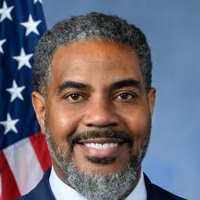
The "Tipped Income Protection and Support Act" eliminates the lower minimum wage for tipped employees, ensuring they receive the standard minimum wage while retaining all tips, and introduces a tax deduction for reported cash tips for eligible employees.
Steven Horsford
Representative
NV
Steven Horsford
Representative
NV
The Tipped Income Protection and Support (TIPS) Act eliminates the subminimum wage for tipped employees, requiring employers to pay the standard minimum wage before tips. It ensures that all tips go to the employees, allowing for traditional tip pooling. The bill also introduces a tax deduction for qualified cash tips for employees earning up to $112,500 annually, effective for taxable years after 2025.
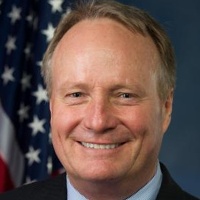
The I CAN Act removes practice and billing barriers for Nurse Practitioners, CRNAs, and CNMs across Medicare and Medicaid while increasing transparency in federal health program coverage decisions.
David Joyce
Representative
OH
David Joyce
Representative
OH
The "I CAN Act" is comprehensive legislation designed to remove existing practice and billing barriers for various Advanced Practice Registered Nurses (APRNs)—including Nurse Practitioners, CRNAs, and CNMs—within Medicare and Medicaid. It aims to expand patient access to care by allowing these qualified professionals to supervise, order, and bill for services to the full extent of their state-defined scope of practice. Furthermore, the bill enhances transparency and accountability for Medicare's local coverage decisions affecting APRN services. Overall, this act seeks to integrate APRNs more fully into federal healthcare programs, improving efficiency and service delivery.
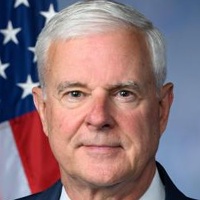
This resolution expresses Congressional opposition to imposing new performance fees or royalties on local radio stations and businesses for broadcasting or playing music.
Steve Womack
Representative
AR
Steve Womack
Representative
AR
The Local Radio Freedom Act expresses Congressional opposition to imposing new performance fees, taxes, or royalties on local radio stations and businesses for playing music. It argues that the current system of free airplay provides essential promotional value to artists and that new fees would threaten the financial viability of local broadcasters and the vital community services they provide.
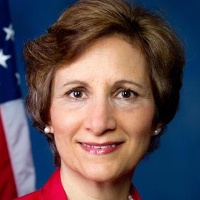
Reauthorizes and modifies the Recovery Housing Program to prioritize funding for states with the greatest need based on unemployment, labor force participation, overdose deaths, and homelessness rates, while also emphasizing coordination and support services.
Suzanne Bonamici
Representative
OR
Suzanne Bonamici
Representative
OR
The "START Housing Act of 2025" reauthorizes and extends the Recovery Housing Program through 2031, prioritizing funding for states with the greatest need based on unemployment, labor force participation, drug overdose deaths, and unsheltered homelessness rates. It requires states to supplement existing funding and consult with relevant agencies to support individuals in stable housing, and allows HUD to use up to 2% of funds for technical assistance and best practices.
This bill directs the Forest Service to expand the use of strategic livestock grazing on federal lands as a tool to reduce wildfire risks and manage invasive fuels.
Doug LaMalfa
Representative
CA
Doug LaMalfa
Representative
CA
The Grazing for Wildfire Risk Reduction Act directs the Forest Service to expand the use of livestock grazing as a strategic tool to mitigate wildfire hazards. By streamlining environmental reviews and increasing the use of targeted grazing, the bill aims to reduce hazardous fuels and invasive grasses across federal lands. This initiative also provides greater flexibility for permit holders to manage livestock during natural disasters and post-fire recovery efforts.
Protects water and wastewater treatment facilities from CERCLA liability for PFAS releases if they comply with applicable laws and are not grossly negligent.
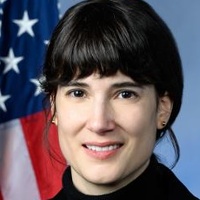
Marie Gluesenkamp Perez
Representative
WA
Marie Gluesenkamp Perez
Representative
WA
The "Water Systems PFAS Liability Protection Act" shields water and wastewater treatment facilities from CERCLA liability for PFAS releases if they comply with applicable laws and handle PFAS during or after water treatment. This protection covers specific non-polymeric PFAS and applies to public water systems, treatment works, and related entities. The exemption does not apply in cases of gross negligence or willful misconduct.
This Act allows schools participating in the National School Lunch Program to offer organic or non-organic whole milk alongside other options, while clarifying saturated fat accounting and restricting milk sourcing from China state-owned enterprises.
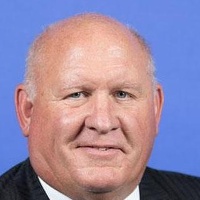
Glenn Thompson
Representative
PA
Glenn Thompson
Representative
PA
The Whole Milk for Healthy Kids Act of 2025 expands milk options available to students in the National School Lunch Program by allowing schools to offer organic or non-organic whole milk. This legislation provides greater flexibility for schools in providing fluid milk choices while maintaining accommodations for students with special dietary needs. Importantly, the saturated fat content of these offered milk options will not count toward the meal's overall saturated fat limits.