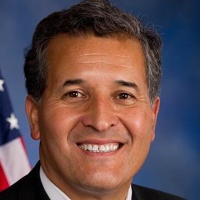
Legislative Activity
Track Juan's sponsored bills, co-sponsored legislation, and voting record
The "Children’s Health Insurance Program Permanency Act" permanently extends funding and support for key children's health programs, including CHIP, and allows states to expand Medicaid and CHIP eligibility.
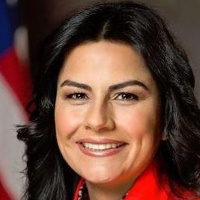
Nanette Barragán
Representative
CA
Nanette Barragán
Representative
CA
The Children's Health Insurance Program Permanency Act (CHIPP Act) permanently extends funding for the Children's Health Insurance Program (CHIP) and other related programs. It also makes permanent several programs and demonstration projects under the Social Security Act, such as the Pediatric Quality Measures Program and the Express Lane Eligibility Option. Additionally, the act provides states with the option to increase children's eligibility for Medicaid and CHIP by allowing them to cover children whose family income exceeds the state's current maximum income level.
The "Mamas and Babies in Underserved Communities Act of 2025" aims to improve maternal healthcare and reduce disparities in underserved communities by providing grants to healthcare providers for expanded and enhanced services.
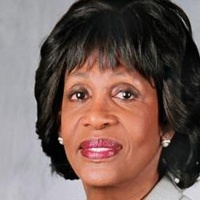
Maxine Waters
Representative
CA
Maxine Waters
Representative
CA
The "Mamas and Babies in Underserved Communities Act of 2025" aims to improve maternal health outcomes and reduce disparities in underserved communities by providing grants to healthcare providers. These grants will support the expansion and enhancement of maternal health services, including prenatal, postnatal care for infants, and postpartum care for mothers. Priority is given to entities serving minority, low-income, or medically underserved areas, particularly those led by community members. The act allocates necessary funds from 2026 to 2030 to facilitate these improvements.
The Farewell to Foam Act of 2025 bans the sale and distribution of expanded polystyrene food service ware, loose fill packaging, and coolers starting January 1, 2028, with escalating fines for non-compliance.

Lloyd Doggett
Representative
TX
Lloyd Doggett
Representative
TX
The Farewell to Foam Act of 2025 bans the sale and distribution of expanded polystyrene (Styrofoam) food service ware, loose fill packaging, and coolers starting January 1, 2028. The bill clearly defines these targeted foam products and the roles of manufacturers, distributors, and retailers involved in their supply chain. Enforcement begins with a written warning for first-time violations, followed by escalating fines for repeat offenses. The Administrator of the EPA is granted the authority to issue necessary regulations to implement the Act.
The JUDGES Act of 2025 addresses judicial understaffing by creating new district judgeships in multiple states over the next decade, adjusting court organization in Texas and California, mandating GAO reports on workload measures and detention space, and ensuring public accessibility of judgeship recommendation reports.
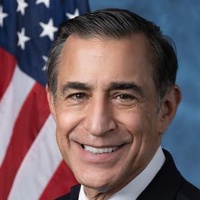
Darrell Issa
Representative
CA
Darrell Issa
Representative
CA
The JUDGES Act of 2025 aims to address the increasing caseloads in district courts by creating new judgeships in multiple states over the next decade, as well as a temporary judgeship in the Eastern District of Oklahoma. It also authorizes appropriations to support these new positions and adjusts the organization of district courts in Texas and California. Additionally, the Act mandates Government Accountability Office (GAO) reports to evaluate workload measures, judicial activities, and the effectiveness of policies regarding senior judges, as well as the needs and efforts to acquire federal detention space. Finally, the Act ensures public accessibility to the Judicial Conference's recommendations for Article III judgeships by requiring the Administrative Office of the U.S. Courts to publish these reports on its website.
This bill restricts political appointees and special government employees from accessing Social Security data, establishes civil damages for unauthorized access, mandates Inspector General investigations, and requires a GAO study on the changes.
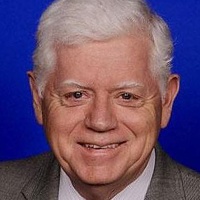
John Larson
Representative
CT
John Larson
Representative
CT
The Protecting Americans’ Social Security Data Act restricts political appointees and special government employees from accessing sensitive Social Security beneficiary data systems. It establishes a right for individuals to sue the government or responsible parties for unauthorized access or disclosure of their private Social Security information, including specified minimum damages. Furthermore, the bill mandates the Inspector General to investigate such violations and report findings to Congress within 30 days. Finally, it requires the GAO to conduct a comprehensive study on the impact of these new privacy and enforcement measures.
The "Keeping Our Field Offices Open Act" prevents the Social Security Administration from closing or limiting access to field offices, hearing offices, and resident stations, ensuring continued service availability for the public.
John Larson
Representative
CT
John Larson
Representative
CT
The "Keeping Our Field Offices Open Act" prevents the Social Security Administration (SSA) from closing or consolidating field offices, hearing offices, and resident stations, ensuring continued access to services. It requires the SSA Commissioner to justify any planned closures to Congress with detailed analysis and cost-benefit assessments, considering the impact on vulnerable populations. The bill mandates public notice, hearings, and a final report to Congress before any changes, allowing appeals and maintaining the number of offices at or above the January 20, 2025 level, excluding temporary emergency closures.
The John R. Lewis Voting Rights Advancement Act of 2025 aims to strengthen and update the Voting Rights Act of 1965 by addressing vote dilution and denial, establishing updated criteria for federal oversight of states and political subdivisions with a history of voting rights violations, and promoting transparency in election-related changes.
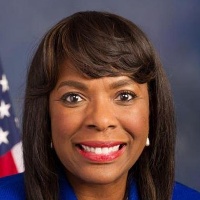
Terri Sewell
Representative
AL
Terri Sewell
Representative
AL
The John R. Lewis Voting Rights Advancement Act of 2025 amends the Voting Rights Act of 1965 to address vote dilution, denial, and abridgment claims, and to update which states and political subdivisions are subject to federal oversight based on a history of voting rights violations. It broadens the types of violations that allow a court to retain jurisdiction over a case, clarifies the Attorney General's authority to assign observers, and ensures transparency in voting-related changes. The Act also authorizes the Attorney General to demand documents and information to enforce voting rights and provides grants to small jurisdictions to assist with notification requirements.
This bill allows homeowners to exclude from their gross income any payments they receive from state programs designed to help them improve their property to mitigate damage from disasters like windstorms, earthquakes, or wildfires.
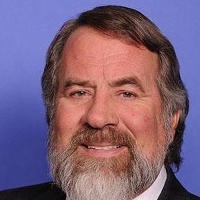
Doug LaMalfa
Representative
CA
Doug LaMalfa
Representative
CA
The Disaster Mitigation and Tax Parity Act of 2025 allows individuals to exclude from their gross income any payments or benefits they receive from state-based catastrophe loss mitigation programs designed to help homeowners protect their properties from disasters such as windstorms, earthquakes, or wildfires. These payments will not affect the property's basis, and the exclusion is applicable retroactively for taxable years starting after December 31, 2020, allowing individuals to claim the exclusion retroactively.
The Richard L. Trumka Protecting the Right to Organize Act of 2025 strengthens protections for workers' rights to organize and collectively bargain by modernizing labor laws, addressing unfair labor practices, and enhancing enforcement mechanisms.
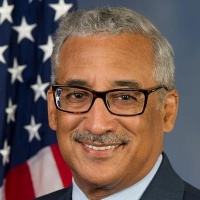
Robert Scott
Representative
VA
Robert Scott
Representative
VA
This bill, the Richard L. Trumka Protecting the Right to Organize Act of 2025, seeks to amend the National Labor Relations Act and other labor laws to strengthen protections for workers' rights to organize and collectively bargain. It aims to modernize labor regulations by clarifying definitions, addressing unfair labor practices, enhancing enforcement, and increasing transparency in labor-management relations. The bill introduces measures such as electronic voting in union elections, strengthens whistleblower protections, and mandates studies on collective bargaining practices. Ultimately, the goal is to ensure fair treatment of workers and promote equitable labor practices.
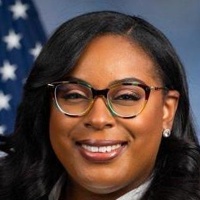
The MERIT Act mandates the reinstatement of federal probationary employees affected by mass terminations occurring between January 20, 2025, and the Act's enactment, providing back pay and benefits.
LaMonica McIver
Representative
NJ
LaMonica McIver
Representative
NJ
The MERIT Act requires federal agencies to reinstate probationary employees who were terminated as part of a mass termination event between January 20, 2025, and the Act's enactment date, providing them with back pay and benefits. The Act also mandates reports on government employee terminations and the reinstatement process. It defines key terms such as "affected probationary employee" and "mass termination" to clarify the scope and applicability of the Act. This act ensures that affected employees are treated as involuntarily separated without cause and outlines the process for determining back pay and providing notice to eligible employees.
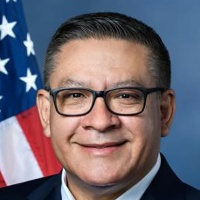
The "Child Care Availability and Affordability Act" aims to make child care more accessible and affordable by expanding employer-provided child care credits, increasing tax-free dependent care assistance, and enhancing the household and dependent care tax credit.
Salud Carbajal
Representative
CA
Salud Carbajal
Representative
CA
The Child Care Availability and Affordability Act aims to improve access to affordable child care by expanding employer-provided child care credits, increasing tax-free dependent care assistance, and creating a refundable household and dependent care tax credit. The employer provided child care credit is increased from 25% to 50% of qualified expenses, and the maximum credit amount is raised from $150,000 to $500,000. The amount of tax-free employer-provided dependent care assistance is increased from $5,000 to $7,500. A new tax credit is created for employment-related expenses paid for household and dependent care, with the applicable percentage starting at 50% and decreasing based on income, and the maximum creditable expenses are $5,000 for one qualifying individual and $8,000 for two or more.
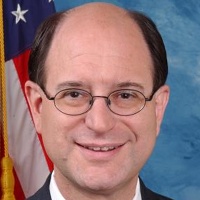
The "Peace on the Korean Peninsula Act" promotes diplomatic engagement to formally end the Korean War, encourages humanitarian travel to North Korea, and suggests establishing liaison offices between the U.S. and North Korea, while reaffirming the U.S. troop presence in South Korea.
Brad Sherman
Representative
CA
Brad Sherman
Representative
CA
The "Peace on the Korean Peninsula Act" seeks to promote diplomatic engagement to formally end the Korean War by replacing the Armistice Agreement with a peace agreement. It requires the Secretary of State to review travel restrictions to North Korea for humanitarian reasons and to develop a plan for achieving a permanent peace agreement, including the potential establishment of liaison offices between the U.S. and North Korea. The act emphasizes that it does not affect the status of U.S. troops stationed in South Korea or elsewhere.
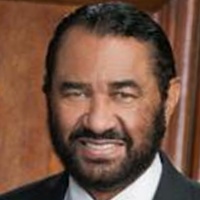
The Original Black History Month Resolution of 2025 recognizes February as Black History Month, honoring the theme "African Americans and Labor" and the essential contributions of Black workers throughout U.S. history.
Al Green
Representative
TX
Al Green
Representative
TX
The "Original Black History Month Resolution of 2025" officially recognizes February 2025 as Black History Month with the theme "African Americans and Labor." The resolution honors the essential contributions of Black workers to the U.S. economy from enslavement to the present day while highlighting the ongoing struggle for labor equality. It encourages all Americans to celebrate these achievements and acknowledge the historical and systemic challenges still faced by Black workers today.
The "Roberto Clemente Commemorative Coin Act" directs the Treasury to mint coins in 2027 honoring Roberto Clemente, with surcharges benefiting the Roberto Clemente Foundation.
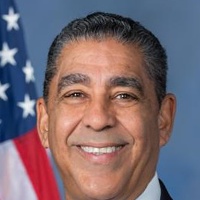
Adriano Espaillat
Representative
NY
Adriano Espaillat
Representative
NY
The Roberto Clemente Commemorative Coin Act directs the Department of Treasury to mint and issue gold, silver, and half-dollar coins in 2027 to commemorate the life and legacy of Roberto Clemente. The coins' designs will represent Clemente's life, including his baseball achievements and humanitarian work. Surcharges from the coin sales will benefit the Roberto Clemente Foundation, supporting their educational programs, youth sports initiatives, disaster relief efforts, and historic preservation projects. The Act ensures that the coin program will not incur any net cost to the United States government.
The United States-Abraham Accords Cooperation and Security Act of 2025 aims to strengthen international oversight of FDA-regulated products by establishing an Abraham Accords Office within the FDA to provide technical assistance and facilitate communication between the FDA and Abraham Accords countries.
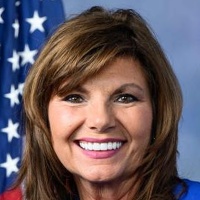
Diana Harshbarger
Representative
TN
Diana Harshbarger
Representative
TN
The United States-Abraham Accords Cooperation and Security Act of 2025 directs the FDA to establish an Abraham Accords Office to strengthen international oversight of FDA-regulated products by providing technical assistance and facilitating communication between the FDA and Abraham Accords countries. Within two years, the Secretary of Health and Human Services must select a location for the office in an Abraham Accords country. The Secretary must submit a report to Congress within three years on the Abraham Accords Office. This act aims to align regulatory requirements and improve coordination between the FDA and entities in Abraham Accords countries.
The "Safe Schools Improvement Act" amends the Elementary and Secondary Education Act of 1965, requiring states to establish policies that prevent and prohibit bullying and harassment in schools based on protected characteristics, ensuring a safe and inclusive learning environment for all students.
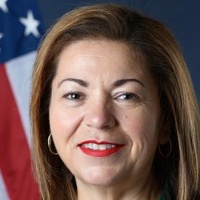
Linda Sánchez
Representative
CA
Linda Sánchez
Representative
CA
The Safe Schools Improvement Act aims to reduce bullying and harassment in schools by requiring states to establish policies prohibiting such conduct based on various characteristics, including race, sex, religion, and disability. It mandates annual notifications, data collection on incidents, biennial evaluations of programs, and regular reports to Congress to ensure accountability and effectiveness. This act does not infringe on existing nondiscrimination laws or freedom of speech but seeks to create a safer, more inclusive learning environment for all students.
The PAST Act of 2025 significantly strengthens the Horse Protection Act by increasing penalties, banning specific action devices, and mandating licensed inspectors to combat the practice of horse soring.
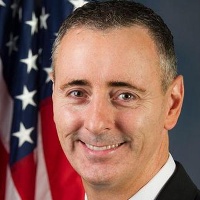
Brian Fitzpatrick
Representative
PA
Brian Fitzpatrick
Representative
PA
The PAST Act of 2025 significantly strengthens the Horse Protection Act to combat the painful practice of soring in specific horse breeds. This bill increases penalties for violations, establishes stricter licensing and oversight for inspectors, and explicitly bans the use of "action devices" designed to cause unnatural gaits. The legislation aims to enhance enforcement, ensure fairer competition, and hold violators accountable through increased fines and disqualifications.
This resolution reaffirms the United States' commitment to Mexican sovereignty and condemns the use of unilateral military action in Mexico without the Mexican government's consent and explicit congressional authorization.
Joaquin Castro
Representative
TX
Joaquin Castro
Representative
TX
This resolution reaffirms the United States' commitment to respecting Mexico’s sovereignty and condemns the use of unilateral military action without Mexico's consent and explicit congressional authorization. It emphasizes that transnational criminal activities, such as drug trafficking, do not constitute an armed attack justifying military force under international or U.S. law. Ultimately, the bill advocates for continued bilateral cooperation to address shared security challenges rather than military intervention.
This bill regulates large capacity ammunition feeding devices, making it illegal to import, sell, manufacture, transfer, or possess them, with certain exceptions for law enforcement and other entities, and allows for Byrne grants to be used for buy-back programs.

Diana DeGette
Representative
CO
Diana DeGette
Representative
CO
The "Keep Americans Safe Act" aims to regulate large capacity ammunition feeding devices by making it illegal to import, sell, manufacture, transfer, or possess magazines holding more than 15 rounds, with exceptions for law enforcement, government entities, and devices lawfully possessed before the law's enactment. It also permits the use of Byrne grants for buy-back programs of these devices and mandates that newly manufactured devices be marked with identifying information. Violators of this Act will face penalties under existing provisions of Title 18 of the U.S. Code.
This bill officially renames the Robert E. Lee Memorial as the Arlington House National Historic Site.
Donald Beyer
Representative
VA
Donald Beyer
Representative
VA
This bill officially redesignates the site currently known as the Robert E. Lee Memorial as the "Arlington House National Historic Site." It mandates that all official U.S. records, maps, and documents be updated to reflect this new name and repeals the previous joint resolutions that established the former designation.