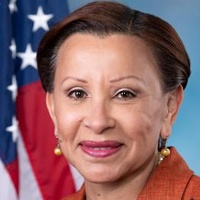
Legislative Activity
Track Nydia's sponsored bills, co-sponsored legislation, and voting record
This bill establishes mandatory minimum humanitarian standards for health screening, water, sanitation, food, and shelter for all individuals in ICE and CBP custody.
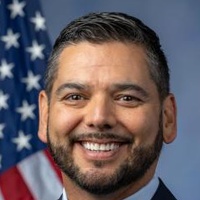
Raul Ruiz
Representative
CA
Raul Ruiz
Representative
CA
The Humanitarian Standards for Individuals in ICE and CBP Custody Act establishes minimum standards for health screening, nutrition, sanitation, and shelter for individuals detained by ICE and CBP. This bill mandates specific protocols for medical care, facility conditions, and personnel training to ensure humane treatment. It also requires regular inspections and public reporting on compliance and sexual abuse complaints.
This resolution condemns federal workforce reductions at FEMA that threaten national preparedness, response, and recovery capabilities, and expresses concern over proposed future staffing cuts.
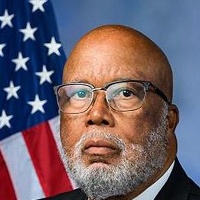
Bennie Thompson
Representative
MS
Bennie Thompson
Representative
MS
This resolution condemns current and proposed staffing cuts at the Federal Emergency Management Agency (FEMA), arguing they undermine national preparedness and disaster response capabilities. It highlights that workforce reductions endanger the ability to effectively manage increasingly severe disasters and critical counterterrorism programs. The bill expresses concern that these cuts compromise institutional knowledge and slow vital assistance to communities recovering from events like recent hurricanes. Ultimately, it commits Congress to supporting a stable and adequately resourced FEMA workforce.
This bill establishes new structures within the Financial Stability Oversight Council and mandates updated guidance for banking regulators and the Federal Insurance Office to assess and mitigate climate-related financial risks across the U.S. financial system.
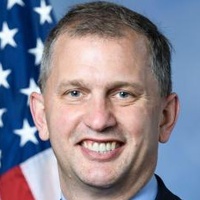
Sean Casten
Representative
IL
Sean Casten
Representative
IL
The Addressing Climate Financial Risk Act of 2026 establishes new structures within the Financial Stability Oversight Council to identify and mitigate climate-related risks to the U.S. financial system. It mandates updated supervisory guidance for large financial institutions and requires comprehensive annual reports assessing these risks. Furthermore, the bill directs the Federal Insurance Office to report on climate risks in the insurance sector and collect detailed homeowners insurance data.
This bill seeks to disapprove and nullify the Department of Veterans Affairs' final rule regarding "Reproductive Health Services."
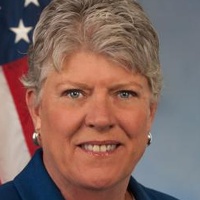
Julia Brownley
Representative
CA
Julia Brownley
Representative
CA
This resolution seeks to disapprove the Department of Veterans Affairs' final rule concerning "Reproductive Health Services" issued in September 2024. If enacted, this disapproval, made under the Congressional Review Act, would prevent the VA rule from taking legal effect.
This bill mandates the removal of U.S. Armed Forces from Venezuela unless explicitly authorized by Congress.
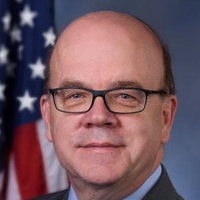
James McGovern
Representative
MA
James McGovern
Representative
MA
This bill mandates the President to withdraw all United States Armed Forces from Venezuela. This action is required unless Congress has formally declared war or passed specific legislation authorizing the use of military force in that country.
This resolution expresses the House's sense that protecting women's rights and leadership is critical for Haiti's stability while condemning current failures in centering their needs and calling for urgent human rights measures.
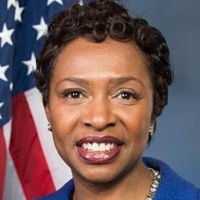
Yvette Clarke
Representative
NY
Yvette Clarke
Representative
NY
This resolution asserts that advancing the rights of women and girls in Haiti is crucial for the nation's stability and successful transition from crisis. It condemns the widespread gender-based violence and the exclusion of women from leadership roles in the transitional government. The bill calls for urgent measures to center women's needs, ensure their representation in government, and prioritize funding for survivor services and accountability for violence.
This bill abolishes immigration detention and electronic monitoring while redirecting funds to establish a grant program for community-based wrap-around social services.
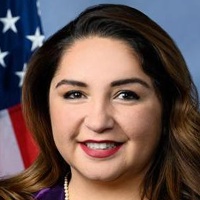
Delia Ramirez
Representative
IL
Delia Ramirez
Representative
IL
This bill aims to end immigration detention and electronic monitoring by abolishing detention authority and terminating related contracts within a set timeframe. It mandates the release of all currently detained individuals and prohibits future use of federal funds for monitoring programs. Finally, the legislation redirects funding toward a new grant program providing voluntary, comprehensive wrap-around social services through community-based organizations.
This bill prohibits political appointees from managing NIH programs or participating in NIH funding decisions, and prevents the NIH from unilaterally canceling existing research agreements without documented findings of mismanagement or fraud.

Diana DeGette
Representative
CO
Diana DeGette
Representative
CO
The Follow the Science Act aims to insulate the National Institutes of Health (NIH) from political influence by prohibiting most political appointees from working on or managing NIH programs. This legislation specifically bars political employees from participating in the review, selection, or awarding of NIH grants and contracts. Furthermore, it restricts the NIH Director from canceling or delaying existing funding agreements unless specific findings of mismanagement or fraud are documented and reported to Congress.
This act increases the sole source contract dollar threshold from $\$7$ million to $\$10$ million for specific small business contracting programs.
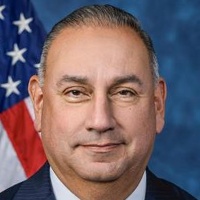
Gilbert Cisneros
Representative
CA
Gilbert Cisneros
Representative
CA
The Streamlining Small Business Contracts Act of 2026 increases the dollar threshold for sole source contracts available to certain small business concerns. This legislation raises the limit from \$7 million to \$10 million for contracts awarded under the 8(a), HUBZone, Service-Disabled Veteran-Owned, and Women-Owned Small Business programs. The goal is to simplify and expand opportunities for these specific small businesses.
This bill enhances financial stability research and oversight by granting the Director of the Office of Financial Research independent control over its budget and staffing, and by establishing minimum staffing and funding levels for the Financial Stability Oversight Council (FSOC).
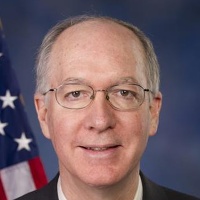
Bill Foster
Representative
IL
Bill Foster
Representative
IL
This bill, the Enhancing Financial Stability Research and Oversight Act, aims to strengthen the independence of the Office of Financial Research (OFR) by granting its Director sole control over the office's budget and staffing, with guaranteed minimum funding levels. It also establishes minimum staffing and funding requirements for the Financial Stability Oversight Council (FSOC). The legislation specifically protects the OFR's funding from Congressional appropriations review and Treasury influence.
The PARK Act prohibits waiving or reducing entrance fees to National Parks and Wildlife Refuges to celebrate a sitting President's birthday, unless that day is already a Federal holiday.
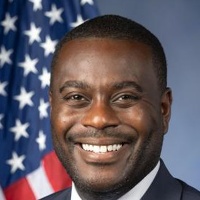
Gabe Amo
Representative
RI
Gabe Amo
Representative
RI
The PARK Act, or Protecting Americas Resources from Kings Act, amends existing law to prohibit the waiving or reduction of entrance fees at National Parks and Wildlife Refuges to celebrate a sitting President's birthday. This restriction applies unless the birthday also falls on a recognized Federal holiday.
This act requires states and local governments to stop charging fees for public access to specific law enforcement camera footage to remain eligible for major federal grants.
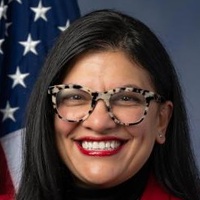
Rashida Tlaib
Representative
MI
Rashida Tlaib
Representative
MI
The Stop Body Camera Paywalls Act requires states and local governments to stop charging the public fees to access or obtain copies of specific law enforcement camera footage, including body-worn and dash camera video. To receive funding from major federal law enforcement grant programs, applicants must certify they comply with this requirement. Non-compliant governments will be ineligible for these federal grants.
This bill impeaches Secretary of Homeland Security Kristi Lynn Arnold Noem for high crimes and misdemeanors, citing willful refusal to comply with oversight law, violating the Impoundment Control Act, directing unlawful ICE misconduct, and misusing federal funds for personal gain.
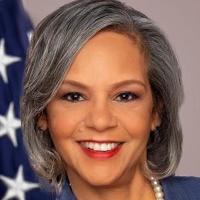
Robin Kelly
Representative
IL
Robin Kelly
Representative
IL
This resolution initiates impeachment proceedings against Secretary of Homeland Security Kristi Lynn Arnold Noem for high crimes and misdemeanors. The articles of impeachment charge her with willfully refusing to comply with Congressional oversight laws and violating the Impoundment Control Act by improperly withholding funds. Further articles allege she directed widespread misconduct by ICE agents that violated federal law and constitutional rights, and misused taxpayer funds for personal gain through improper contracting.
This bill modifies deposits into the Crime Victims Fund by excluding certain False Claims Act recoveries and mandates an Inspector General audit of the Fund's sustainability.
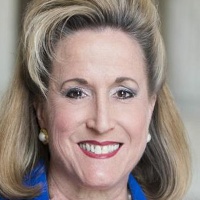
Ann Wagner
Representative
MO
Ann Wagner
Representative
MO
This bill amends the Victims of Crime Act of 1984 to temporarily exclude certain False Claims Act recoveries from being deposited into the Crime Victims Fund through fiscal year 2029. It also mandates a comprehensive audit by the Department of Justice Inspector General on the Fund's sustainability and the impact of recent legislative changes. The resulting report will provide recommendations for improving the Fund's effectiveness and oversight.
This resolution recognizes the 15th anniversary of the 2011 Tucson shooting, honoring the victims, survivors, and the ongoing advocacy of Gabby Giffords.
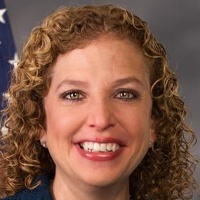
Debbie Wasserman Schultz
Representative
FL
Debbie Wasserman Schultz
Representative
FL
This resolution commemorates the 15th anniversary of the tragic January 8, 2011, Tucson shooting, honoring the six lives lost and the thirteen injured. It specifically commends the courage and ongoing advocacy of gun violence survivor and former Congresswoman Gabby Giffords. The resolution also recognizes the resilience of the community and reaffirms a commitment to ending political violence.
This bill mandates regular federal reporting on the air quality, water usage, and electricity consumption impacts of data centers across the United States.
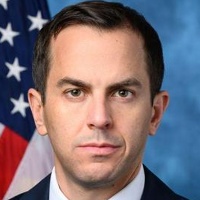
Robert Menendez
Representative
NJ
Robert Menendez
Representative
NJ
The Data Center Transparency Act establishes new federal reporting requirements to monitor the environmental and energy impacts of data centers across the United States. This legislation mandates regular reports from the EPA detailing data center water consumption, reuse, and pollution discharge, as well as reports from the EIA on total electricity consumption broken down by state. These measures aim to provide transparency regarding how data centers affect local air quality, water resources, and household energy costs.
This act mandates that all large data centers must generate 100% of their annual electricity consumption on-site, with increasing requirements for clean energy sources starting in 2035.
Robert Menendez
Representative
NJ
Robert Menendez
Representative
NJ
The **Preventing Rate Inflation in Consumer Energy (PRICE) Act** mandates that all large data centers in the U.S. must generate 100% of the electricity they consume annually. This requirement includes escalating clean energy benchmarks, demanding 75% clean energy generation by 2035 and 100% by 2040. Non-compliance will result in significant daily civil penalties.
This bill expresses support for designating a week in September as "National Hispanic-Serving Institutions Week" to recognize their achievements and goals.
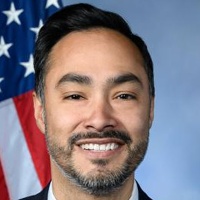
Joaquin Castro
Representative
TX
Joaquin Castro
Representative
TX
This bill officially designates the week of September 15 through September 21, 2024, as "National Hispanic-Serving Institutions Week." It recognizes the significant achievements and goals of these vital institutions across the nation. The resolution encourages public observance with appropriate activities to demonstrate support for Hispanic-Serving Institutions during Hispanic Heritage Month.
This Act imposes sanctions on Salvadoran officials and entities involved in corruption or human rights abuses, restricts U.S. financial support through international institutions, and requires a report on the government's use of cryptocurrency.
James McGovern
Representative
MA
James McGovern
Representative
MA
The El Salvador Accountability Act of 2025 mandates sanctions, including asset blocking and travel bans, against senior Salvadoran officials and others engaged in corruption or gross human rights violations. The bill also prohibits most U.S. financial support to the Government of El Salvador through international institutions and blocks direct Congressional funding. Furthermore, it requires detailed reporting on sanctioned individuals and an examination of the government's use of cryptocurrency for potential corruption.
This Act establishes a national certification program, administered by the Secretary of Labor, to recognize employers who provide comprehensive benefits supporting work-life balance, including paid family leave, childcare subsidies, and flexible work options.

Grace Meng
Representative
NY
Grace Meng
Representative
NY
The Honoring Family-Friendly Workplaces Act establishes a national certification program, administered by the Secretary of Labor, to recognize employers who support work-life balance. To qualify, employers must meet rigorous standards, including offering at least 12 weeks of paid family leave and providing childcare assistance and flexible work options. This certification aims to encourage and publicly acknowledge businesses that actively help employees manage family responsibilities.