Legislative Activity
Track David's sponsored bills, co-sponsored legislation, and voting record
The MAGA Act mandates a Department of Defense study and report on the prevalence of foreign-made or foreign-owned small arms and light weapons used by the U.S. military, along with recommendations for increasing domestic sourcing.
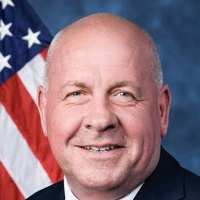
David Taylor
Representative
OH
David Taylor
Representative
OH
The Make American Guns Again (MAGA) Act of 2025 requires the Secretary of Defense to study the prevalence of foreign-made or foreign-owned small arms and light weapons used by the U.S. military. Within 180 days, the Secretary must report these findings to Congress and the President. This report must also include recommendations for increasing the procurement of domestically manufactured and owned small arms.
This bill clarifies compliance standards for clean water permits by defining what constitutes adherence to permit terms, even for unlisted pollutants identified during the application process, and sets new requirements for adding water quality-based limitations.
David Taylor
Representative
OH
David Taylor
Representative
OH
The Confidence in Clean Water Permits Act clarifies when a facility is considered compliant with its clean water permit under Section 402 of the Federal Water Pollution Control Act. It broadens compliance to cover pollutants identified during the permit application process, even without specific numerical limits listed. Furthermore, the bill establishes clear requirements for the EPA Administrator when imposing additional water quality-based limitations on permits.
This bill mandates that direct-to-consumer advertisements for prescription drugs covered by Medicare or Medicaid must clearly disclose the 30-day Wholesale Acquisition Cost (WAC) if it exceeds $35.
David Taylor
Representative
OH
David Taylor
Representative
OH
The Drug-price Transparency for Consumers Act of 2025 mandates that direct-to-consumer advertisements for prescription drugs covered by Medicare or Medicaid must disclose the Wholesale Acquisition Cost (WAC) for a 30-day supply, provided the cost exceeds $35. This aims to increase consumer awareness of drug pricing, as current advertising practices often drive demand for expensive, newly approved medications without providing cost transparency. Failure to comply with this new disclosure requirement will result in significant civil monetary penalties.
Connor's Law mandates that commercial motor vehicle operators must demonstrate the ability to read and speak English sufficiently to perform essential driving and reporting tasks, or face immediate out-of-service orders.
David Taylor
Representative
OH
David Taylor
Representative
OH
Connor's Law establishes a mandatory English language proficiency requirement for all commercial motor vehicle (CMV) operators seeking a Commercial Driver's License (CDL). This ensures drivers can effectively communicate, understand traffic signs, and complete necessary documentation in English. Failure to meet this standard will result in an immediate out-of-service order for the driver.
The USA CAR Act allows taxpayers to take an above-the-line federal income tax deduction for interest paid on loans used to purchase automobiles assembled in the United States.
David Taylor
Representative
OH
David Taylor
Representative
OH
The United States Automobile Consumer Assistance and Relief Act (USA CAR Act) introduces a new federal income tax deduction for interest paid on loans used to purchase automobiles assembled in the United States. This "qualified automobile interest" can be deducted "above-the-line," reducing a taxpayer's Adjusted Gross Income (AGI). These provisions apply to loans taken out on or after the date the Act is enacted.
This Act prohibits federal funding for solar projects on prime farmland and removes various federal tax credits for solar energy property placed on that same high-quality agricultural land.
David Taylor
Representative
OH
David Taylor
Representative
OH
The Protecting American Farmland Act prohibits federal agencies from funding solar energy projects that convert prime farmland. Furthermore, the bill eliminates several key federal tax credits—including the residential clean energy credit and various production/investment credits—for solar energy facilities constructed on land defined as prime farmland. These restrictions apply to projects placed into service after the law's enactment date.
This Act establishes a new program to provide technical assistance and training grants to organizations that help rural entities secure and implement broadband deployment through Department of Agriculture programs.
David Taylor
Representative
OH
David Taylor
Representative
OH
The Rural Broadband Assistance Act establishes a new program to provide technical assistance and training for rural broadband projects. This initiative allows the Secretary to award grants to qualified organizations that will help eligible rural entities prepare applications, secure funding, and manage broadband facilities. The goal is to streamline the process of bringing high-speed internet access to underserved rural communities.
This act establishes a new tax deduction for interest paid on loans used to purchase automobiles assembled in the United States.
David Taylor
Representative
OH
David Taylor
Representative
OH
The United States Automobile Consumer Assistance and Relief Act (USA CAR Act) introduces a new tax deduction for interest paid on car loans. This deduction applies only to "qualified automobile interest," defined as interest on loans taken out after January 1, 2025, to purchase a vehicle assembled in the United States. This aims to provide financial relief for consumers purchasing domestically assembled vehicles.
The Fight Fentanyl Act strengthens federal efforts against fentanyl trafficking by mandating detailed reporting from HIDTA programs, increasing their funding and purpose to target fentanyl interdiction, and requiring the Attorney General to assign additional prosecutors to these cases.
David Taylor
Representative
OH
David Taylor
Representative
OH
The Fight Fentanyl Act strengthens federal efforts to combat the fentanyl crisis by updating the High Intensity Drug Trafficking Areas (HIDTA) program. This legislation mandates increased reporting on fentanyl investigations, sets dedicated funding levels through 2030, and expands HIDTA purposes to prioritize fentanyl interdiction. Furthermore, it requires the Attorney General to ensure sufficient prosecutorial resources are dedicated to fentanyl trafficking cases through temporary AUSA assignments.
This resolution honors the life and birthday of Ulysses S. Grant, America's 18th President and a native son of Ohio's Second Congressional District, while also recognizing local preservation efforts.
David Taylor
Representative
OH
David Taylor
Representative
OH
This resolution officially honors the life and 203rd birthday of Ulysses S. Grant, America's 18th President and a native son of Ohio. It recognizes his pivotal role in winning the Civil War and his subsequent efforts to advance civil rights as President. Furthermore, the resolution acknowledges the preservation work being done by The Land of US Grant, Inc. in Georgetown, Ohio.
This Act amends the BEAD Program to allow grant recipients to establish voucher programs to help low-income households in unserved or underserved areas afford the initial equipment and up to 12 months of monthly service costs for satellite or fixed wireless broadband.
David Taylor
Representative
OH
David Taylor
Representative
OH
The Bridging the Broadband Gap Act of 2025 amends the BEAD Program to allow grant recipients to establish household voucher programs. These vouchers prioritize low-income households in areas deemed to have inadequate internet service. The funds can cover up to 50% of equipment costs or the full monthly service charge for satellite or fixed wireless broadband for a period of 12 consecutive months.
This Act establishes an independent watchdog office to investigate and enforce compliance with federal anti-discrimination laws in college admissions and aid following the Supreme Court's ruling on race-based preferences.
David Taylor
Representative
OH
David Taylor
Representative
OH
The College Admissions Accountability Act of 2025 establishes a new Special Inspector General (SIG) within the Department of Education to investigate allegations of unlawful racial discrimination in college admissions and financial aid. This office is created in response to the Supreme Court's ruling on race-conscious admissions and will review compliance with the 14th Amendment and Title VI. The SIG has the power to recommend corrective actions, including the loss of federal funding for non-compliant institutions.
The Veterans First Act of 2025 redirects \$2 billion from foreign aid to fund the construction and renovation of state-run veterans' homes.
David Taylor
Representative
OH
David Taylor
Representative
OH
The Veterans First Act of 2025 redirects $2 billion from foreign aid to the Department of Veterans Affairs (VA). This funding is specifically allocated to provide grants for the construction, renovation, and improvement of state-run veterans' homes and facilities. The bill ensures these funds remain available until fully utilized for veteran care infrastructure projects.
The Regulation Decimation Act mandates that federal agencies repeal ten existing regulations for every new rule issued, while requiring that the costs of any new major rule be offset by the repeal of existing ones.
David Taylor
Representative
OH
David Taylor
Representative
OH
The Regulation Decimation Act mandates that federal agencies repeal ten existing regulations for every new rule they issue. For major rules, agencies must also ensure that the cost of the new regulation is offset by the cost savings of the repealed rules. Additionally, the bill requires agencies to conduct comprehensive reviews to identify and eliminate outdated or ineffective regulatory requirements.