Legislative Activity
Track Jill's sponsored bills, co-sponsored legislation, and voting record
The TRAVEL Act of 2025 authorizes the VA to assign existing physicians as traveling doctors to provide essential healthcare services to veterans in U.S. territories and possessions, while also extending certain pension payment limits.
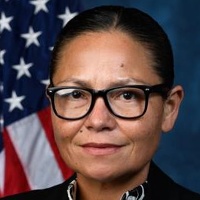
Kimberlyn King-Hinds
Representative
MP
Kimberlyn King-Hinds
Representative
MP
The Territorial Response and Access to Veterans’ Essential Lifecare (TRAVEL) Act of 2025 authorizes the Department of Veterans Affairs to assign existing physicians as traveling doctors to provide essential healthcare services in U.S. territories and possessions for up to one year. These traveling physicians will receive special relocation or retention bonuses in addition to their regular salary. Furthermore, the bill extends the expiration date for certain limits on veterans' pension payments until December 31, 2032.
The George Floyd Justice in Policing Act of 2025 comprehensively reforms policing by increasing accountability, mandating transparency through data collection, restricting dangerous tactics, and prohibiting sexual misconduct by officials acting under color of law.
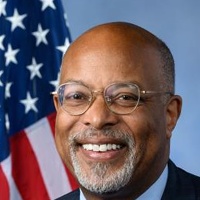
Glenn Ivey
Representative
MD
Glenn Ivey
Representative
MD
The George Floyd Justice in Policing Act of 2025 is a comprehensive bill designed to increase police accountability and transparency nationwide through federal mandates and funding incentives. It reforms standards for prosecuting civil rights violations, eliminates qualified immunity, and establishes national registries for police misconduct and use-of-force data. Furthermore, the Act bans specific dangerous police tactics like chokeholds and restricts the transfer of military equipment to local departments.
This resolution expresses support for designating a week to recognize the vital role of Community School Coordinators in supporting students and strengthening community partnerships.
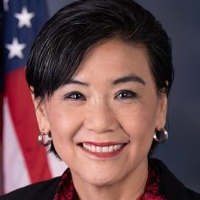
Judy Chu
Representative
CA
Judy Chu
Representative
CA
This resolution expresses the House's strong support for designating a week to honor Community School Coordinators. It highlights the vital role these coordinators play in integrating school and community resources to improve student outcomes. The bill specifically designates the week of September 14 through September 20, 2025, as "Community School Coordinators Appreciation Week."
This bill posthumously awards a Congressional Gold Medal to honor the groundbreaking civil rights achievements of Constance Baker Motley and authorizes the production and sale of bronze duplicates.
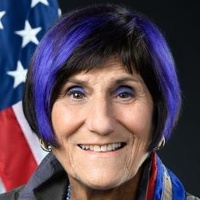
Rosa DeLauro
Representative
CT
Rosa DeLauro
Representative
CT
This bill, the Congressional Tribute to Constance Baker Motley Act of 2025, posthumously awards the Congressional Gold Medal to the pioneering civil rights attorney and federal judge, Constance Baker Motley. The legislation recognizes her historic achievements, including her role in *Brown v. Board of Education* and her service as the first African-American woman appointed as a federal judge. The Secretary of the Treasury is authorized to strike the medal, and provisions are made for selling bronze duplicates to cover production costs.
The Healthcare Workforce Resilience Act recaptures unused employment-based immigrant visas to provide 40,000 reserved visas for professional nurses and physicians, while also expediting their processing without charging premium processing fees.
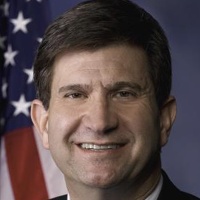
Bradley Schneider
Representative
IL
Bradley Schneider
Representative
IL
The Healthcare Workforce Resilience Act aims to strengthen the U.S. healthcare system by recapturing unused employment-based immigrant visas from 1992 through 2024. This legislation specifically reserves up to 40,000 of these visas for professional nurses and physicians, ensuring they are not subject to annual country caps. The bill also mandates expedited processing for these healthcare professionals without imposing premium processing fees, while requiring employers to attest that hiring these workers will not displace U.S. employees.
This resolution recognizes suicide as a serious public health crisis and expresses support for designating September as National Suicide Prevention Month and September 10, 2025, as World Suicide Prevention Day.
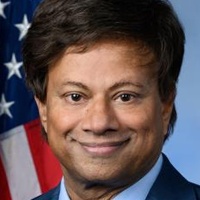
Shri Thanedar
Representative
MI
Shri Thanedar
Representative
MI
This resolution officially recognizes suicide as a serious public health crisis in the United States, highlighting the urgent need for prevention efforts across all demographics. It expresses strong support for designating September as "National Suicide Prevention Month" and September 10th as "World Suicide Prevention Day" to raise awareness. The measure calls for prioritizing comprehensive, tailored strategies to improve access to mental health and suicide prevention services nationwide.
The PART Act establishes new federal requirements for marking catalytic converters, creates a grant program for VIN stamping, tightens record-keeping for used parts dealers, and increases criminal penalties for theft and trafficking of catalytic converters.
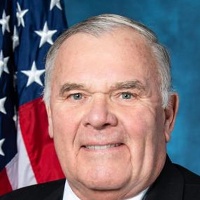
James Baird
Representative
IN
James Baird
Representative
IN
The PART Act aims to combat catalytic converter theft by requiring new vehicles to have traceable identifying markers on these parts. It establishes a federal grant program to help entities stamp identifying numbers onto existing converters. Furthermore, the bill imposes strict record-keeping requirements on businesses that buy used converters and creates new federal criminal penalties for stealing or trafficking stolen catalytic converters.
This act modifies the Family and Medical Leave Act (FMLA) to establish specific eligibility criteria and leave calculation methods for paraprofessionals and other essential education support staff.
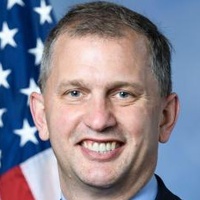
Sean Casten
Representative
IL
Sean Casten
Representative
IL
This bill, the ESP, Paraprofessional, and Education Support Staff Family Leave Act, updates eligibility requirements for certain school employees under the Family and Medical Leave Act (FMLA). It adjusts how paraprofessionals and education support staff meet the required hours of service by using a percentage of expected monthly hours worked during the school year. Furthermore, the bill mandates clear guidelines for calculating FMLA leave entitlement for these employees to account for non-standard school schedules.
This act removes a federal payment limitation for certain state Medicaid home and community-based services (HCBS) waivers.

Debbie Dingell
Representative
MI
Debbie Dingell
Representative
MI
The HCBS Worker Protection Act of 2025 removes a federal payment limitation for certain home and community-based services (HCBS) waivers under Medicaid. This change grants states greater flexibility in receiving federal matching funds for these essential community services.
This resolution supports designating a week in September 2025 as "Malnutrition Awareness Week" to highlight the widespread impact of malnutrition and encourage better nutrition care and research.
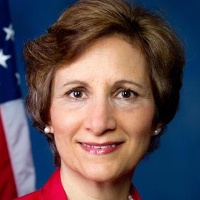
Suzanne Bonamici
Representative
OR
Suzanne Bonamici
Representative
OR
This resolution officially supports designating the week of September 8 through September 12, 2025, as "Malnutrition Awareness Week." It highlights the widespread and costly impact of malnutrition across all demographics, particularly among vulnerable populations. The bill recognizes the vital work of nutrition professionals and existing federal programs while encouraging better screening and early intervention to improve health outcomes.
The Mental Health in Aviation Act of 2025 mandates the FAA to update mental health regulations, improve medical clearance processes, fund more aviation medical examiners, and launch an anti-stigma campaign for aviation workers.
Sean Casten
Representative
IL
Sean Casten
Representative
IL
The Mental Health in Aviation Act of 2025 directs the FAA to update regulations to encourage aviation workers to seek mental health support without fear of stigma. The bill mandates annual reviews of the medical clearance process and allocates funding to hire more Aviation Medical Examiners. Furthermore, it requires the FAA to implement recommendations from a recent mental health task force and launch a public awareness campaign to reduce stigma.
This bill formally integrates Puerto Rico into the federal Supplemental Nutrition Assistance Program (SNAP) structure, outlining a transition plan away from its current block grant system.
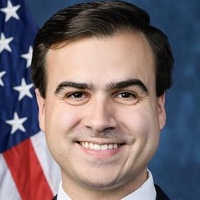
Pablo José Hernández Rivera
Representative
PR
Pablo José Hernández Rivera
Representative
PR
The Puerto Rico Nutrition Assistance Fairness Act aims to integrate Puerto Rico into the federal Supplemental Nutrition Assistance Program (SNAP) structure, aligning it with other territories like Guam. The bill mandates a transition period where Puerto Rico must submit a plan of operation to the Secretary of Agriculture for approval to join SNAP. During this transition, existing block grant funding may continue for up to five years while the territory moves toward full participation under federal SNAP rules.
This Act modernizes Medicare utilization requirements for rural facilities employing Physician Assistants and Nurse Practitioners by aligning their practice and oversight with state laws.
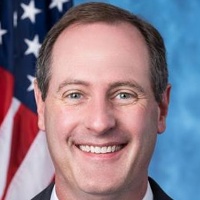
Tracey Mann
Representative
KS
Tracey Mann
Representative
KS
The Modernizing Rural Physician Assistant and Nurse Practitioner Utilization Act of 2025 updates Medicare payment requirements for facilities not directly directed by a physician. It mandates that these facilities must have formal arrangements with Physician Assistants (PAs) or Nurse Practitioners (NPs) whose practice adheres to state laws and regulations. These changes are set to take effect on January 1, 2027.
This act updates the population threshold defining an "urban area" to maintain eligibility for Rural Health Clinics under the Medicare program, effective January 1, 2027.
Tracey Mann
Representative
KS
Tracey Mann
Representative
KS
The Rural Health Clinic Location Modernization Act of 2025 updates the criteria for clinics to qualify as Rural Health Clinics (RHCs) under Medicare. This legislation revises the definition of an "urban area," setting a new population threshold of 50,000 people to determine eligibility. These changes to the location standards will take effect starting January 1, 2027.
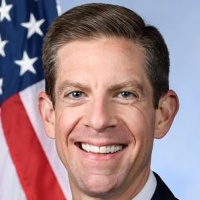
This bill establishes a phased schedule through fiscal year 2031 to increase federal appropriations for Impact Aid programs supporting school districts impacted by federal property.
Mike Levin
Representative
CA
Mike Levin
Representative
CA
The Advancing Toward Impact Aid Full Funding Act establishes a new, increasing schedule of authorized appropriations for key Impact Aid programs through fiscal year 2031. This legislation specifically sets funding levels for federal property acquisition, basic payments to heavily impacted school districts, payments for children with disabilities, and construction activities. The goal is to gradually increase federal support for these essential educational services.
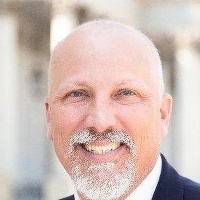
This Act bans Members of Congress and their immediate families from trading or owning specific investments while in office, requiring divestment within 90 to 180 days or facing significant financial penalties.
Chip Roy
Representative
TX
Chip Roy
Representative
TX
The Restore Trust in Congress Act establishes strict new rules prohibiting Members of Congress and their immediate families from owning or trading specific financial assets, referred to as "covered investments," while in office. Covered individuals must divest existing prohibited holdings within a set timeframe or face significant financial penalties, including fines and forfeiture of profits. The legislation aims to eliminate conflicts of interest arising from personal financial trading while serving in federal office.
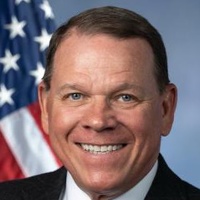
The FEMA Act of 2025 establishes FEMA as an independent, cabinet-level agency and enacts sweeping reforms across public assistance, individual aid, and mitigation programs to speed up recovery and increase transparency.
Sam Graves
Representative
MO
Sam Graves
Representative
MO
The FEMA Act of 2025 establishes the Federal Emergency Management Agency (FEMA) as an independent, cabinet-level agency to lead a unified, all-hazards approach to national emergency management. The bill enacts sweeping reforms across Public Assistance, Individual Assistance, and Mitigation programs to accelerate recovery, streamline funding, and reduce bureaucratic hurdles for disaster survivors and communities. Furthermore, it mandates significant new transparency measures, including public data reporting and GAO oversight, to ensure accountability for federal disaster spending.
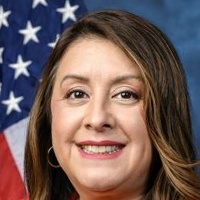
The INFORM Act of 2025 mandates that Homeland Security must notify the immediate family of a transferred immigration detainee within 24 hours, providing details about the relocation and the new facility's contact information.
Luz Rivas
Representative
CA
Luz Rivas
Representative
CA
The INFORM Act of 2025 mandates that Homeland Security must notify the immediate family of any individual transferred between immigration detention facilities within 24 hours. This notification must include the reason for the transfer and contact information for the new location. The Act broadly defines "immediate family" to cover a wide range of relatives, including step- and foster-family members.
The Dont STEAL Act mandates that employers pay employees the highest rate among their contract, federal, or state requirements, and it introduces stricter criminal penalties for willful wage theft.
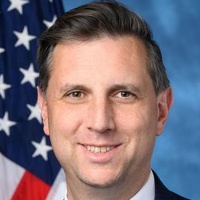
Seth Magaziner
Representative
RI
Seth Magaziner
Representative
RI
The Dont STEAL Act ensures employees are paid at least the highest amount guaranteed by their contract or federal/state law. It strengthens the Fair Labor Standards Act by establishing new criminal penalties, including potential prison time, for employers who willfully commit wage theft exceeding $1,000. Furthermore, fines collected from these new criminal penalties will fund the Department of Labor's enforcement efforts.
The Greyhound Protection Act of 2025 bans commercial greyhound racing, live lure training, and open field coursing nationwide starting in late 2027 due to documented animal welfare concerns.
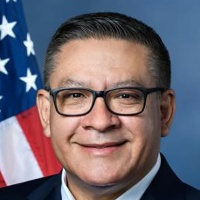
Salud Carbajal
Representative
CA
Salud Carbajal
Representative
CA
The Greyhound Protection Act of 2025 seeks to end commercial greyhound racing and related cruel training practices nationwide by October 1, 2027. This legislation bans all forms of wagering on greyhound races and prohibits the use of live animals for training or coursing events. Violators face significant fines and potential imprisonment under the strengthened Animal Welfare Act. The bill reflects concerns over widespread animal injuries, drug use, and inhumane confinement within the declining industry.