Legislative Activity
Track Glenn's sponsored bills, co-sponsored legislation, and voting record
This bill directs the Treasury Secretary to leverage U.S. influence at the International Monetary Fund to compel greater transparency and accountability regarding China’s exchange rate policies and currency market interventions.
Daniel Meuser
Representative
PA
Daniel Meuser
Representative
PA
The China Exchange Rate Transparency Act of 2025 directs the U.S. Treasury to leverage its influence within the International Monetary Fund (IMF) to demand greater transparency regarding China’s exchange rate policies and market interventions. The bill aims to hold China accountable for its lack of disclosure, which currently complicates international assessments of potential currency manipulation. These requirements remain in effect until China achieves substantial compliance or a period of seven years has elapsed.
This bill creates a 20-year demonstration project waiving certain Social Security disability benefit rules for blind Americans to encourage their return to work.

Pete Sessions
Representative
TX
Pete Sessions
Representative
TX
The Blind Americans Return to Work Act of 2025 initiates a 20-year demonstration project aimed at helping blind Americans receiving Social Security disability benefits return to work. For the first 10 years, eligibility for benefits will be determined without considering substantial gainful activity, and benefits will be reduced based on earnings above a set amount, incentivizing employment without immediate loss of support. The project waives certain benefit requirements to facilitate successful employment, with participants having the option to opt out after the initial 10-year period. This act aims to support blind individuals in their transition back to the workforce while maintaining a safety net.
The "Clock Hour Program Student Protection Act" amends the Higher Education Act of 1965, Section 481(b), to allow training programs to exceed state minimum clock hours by up to 150% to remain eligible.
Lloyd Smucker
Representative
PA
Lloyd Smucker
Representative
PA
The Clock Hour Program Student Protection Act amends the Higher Education Act of 1965, Section 481(b) to allow training programs to exceed the state minimum for clock hours, up to 150% of the state or federal agency's minimum clock hour requirements, while still remaining eligible. This change applies to the 2024-2025 award year and beyond.
Exempts family farms and small businesses from asset considerations in need analysis for federal student aid.
Tracey Mann
Representative
KS
Tracey Mann
Representative
KS
The "Family Farm and Small Business Exemption Act" amends the Higher Education Act of 1965 to exclude the net value of a family farm (on which the family resides) or a small business (with no more than 100 employees and owned/controlled by the family) from consideration as an asset when determining financial need for federal student aid. This change aims to make higher education more accessible for students from family farm and small business backgrounds.
The "Freedom to Invest in Tomorrow's Workforce Act" expands the use of 529 savings accounts to cover expenses related to postsecondary credentialing programs, including tuition, fees, books, supplies, equipment, and testing fees.

Robert Wittman
Representative
VA
Robert Wittman
Representative
VA
The "Freedom to Invest in Tomorrow's Workforce Act" amends Section 529 savings accounts to include expenses related to postsecondary credentialing programs. This allows 529 funds to cover costs like tuition, fees, books, supplies, and testing fees for recognized programs and credentials, as defined by the bill. These changes would apply to distributions made after the bill is enacted.
The Protect Our Letter Carriers Act of 2025 authorizes $7 billion to upgrade postal security infrastructure while mandating dedicated federal prosecutors for postal crimes and increasing sentencing guidelines for assaults against postal employees.
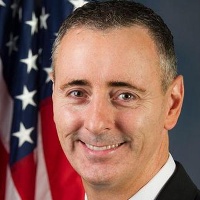
Brian Fitzpatrick
Representative
PA
Brian Fitzpatrick
Representative
PA
The Protect Our Letter Carriers Act of 2025 aims to enhance the safety of postal workers by funding high-security infrastructure upgrades, including electronic mailbox keys. The bill also mandates the appointment of dedicated federal prosecutors for postal crimes in every judicial district and requires stricter sentencing guidelines for those who assault or rob postal employees.
The Fair Access to Banking Act prohibits large financial institutions and payment networks from denying services to law-abiding businesses based on subjective, non-financial, or political criteria.
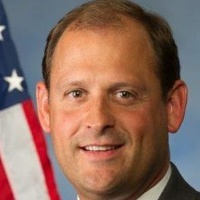
Garland Barr
Representative
KY
Garland Barr
Representative
KY
The Fair Access to Banking Act prohibits large financial institutions and payment networks from denying services to law-abiding businesses based on subjective, politically motivated, or reputational criteria. The bill mandates that financial institutions use impartial, quantitative, risk-based standards to evaluate customers rather than category-based exclusions. To ensure compliance, the legislation establishes enforcement mechanisms through federal regulators and provides a legal pathway for businesses to sue for damages if they are unfairly denied access to financial services.
This bill prohibits the export or sale of petroleum from the Strategic Petroleum Reserve to China, Russia, Iran, North Korea, or any entities controlled by those nations.
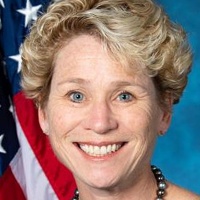
Chrissy Houlahan
Representative
PA
Chrissy Houlahan
Representative
PA
The Banning SPR Oil Exports to Foreign Adversaries Act prohibits the sale or export of petroleum from the U.S. Strategic Petroleum Reserve to China, Russia, Iran, North Korea, or entities controlled by these nations. This legislation aims to protect national security by ensuring that emergency oil reserves are not diverted to foreign adversaries. The Secretary of Energy may only waive this prohibition if it is certified to be in the national security interest of the United States.
This bill provides a 6.62 percent Medicare payment increase for physicians and practitioners from April through December 2025 to help stabilize medical practices.
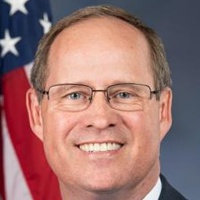
Gregory Murphy
Representative
NC
Gregory Murphy
Representative
NC
The Medicare Patient Access and Practice Stabilization Act of 2025 aims to support healthcare providers by extending Medicare payment adjustments through the end of 2025. Specifically, the bill provides a 6.62 percent payment increase for services rendered between April 1, 2025, and December 31, 2025, to help practitioners adjust to evolving Medicare payment policies.
The Abundant American Resources Act of 2025 mandates federal agencies to conduct comprehensive studies assessing the economic value of mineral resources located on restricted onshore and offshore federal lands.
Jodey Arrington
Representative
TX
Jodey Arrington
Representative
TX
The Abundant American Resources Act of 2025 mandates that federal agencies conduct comprehensive studies to determine the economic value of mineral, oil, and natural gas deposits located within restricted onshore and offshore federal lands. These assessments aim to quantify the potential resources currently held in areas such as national monuments and protected environmental zones. The findings must be completed within three years of the bill's enactment.
The Charitable Act extends and modifies tax deductions for charitable contributions, allowing individuals who take the standard deduction to claim additional tax benefits for donations made in 2026 and 2027.
Blake Moore
Representative
UT
Blake Moore
Representative
UT
The Charitable Act allows individuals who take the standard deduction to also claim a deduction for charitable contributions during the 2026 and 2027 tax years. This legislation permits non-itemizers to deduct donations up to one-third of their standard deduction amount while removing previous penalties for overstatements.
This bill recognizes the significant contributions of tax-exempt fraternal benefit societies to communities across the United States through charitable activities, volunteer work, and financial support for their members, and expresses Congressional support for their continued promotion.
Darin LaHood
Representative
IL
Darin LaHood
Representative
IL
This bill recognizes the significant historical and ongoing contributions of tax-exempt fraternal benefit societies to communities across the United States through charitable activities, volunteer work, and financial support for members. It expresses the sense of Congress that these societies are a valuable support system that addresses unmet needs and generates substantial returns to the U.S. through their tax-exempt status. The bill also advocates for the continued promotion of fraternal benefit societies.
The Rural Health Care Access Act of 2025 streamlines the designation and redesignation process for critical access hospitals under the Medicare Rural Hospital Flexibility Program.

Mark Green
Representative
TN
Mark Green
Representative
TN
The Rural Health Care Access Act of 2025 updates the Medicare Rural Hospital Flexibility Program to streamline the criteria for designating and redesignating critical access hospitals. By modifying these regulatory requirements, the bill aims to improve the process for rural facilities to maintain their status and continue providing essential care.
This bill restricts the $800 duty-free import exemption for low-value shipments by prohibiting shipment splitting and excluding goods subject to specific trade enforcement actions or national security tariffs.
Gregory Murphy
Representative
NC
Gregory Murphy
Representative
NC
The "End China’s De Minimis Abuse Act" restricts the use of duty-free exemptions for low-value shipments to prevent the exploitation of current trade loopholes. The bill prohibits the splitting of shipments to bypass duty limits and excludes goods subject to existing trade enforcement actions from qualifying for these exemptions. Additionally, it mandates stricter documentation for imports from targeted countries and establishes significant civil penalties for non-compliance.
The Life at Conception Act declares that the constitutional right to life begins at the moment of fertilization and applies to every member of the species *homo sapiens* at all stages of development.
Eric Burlison
Representative
MO
Eric Burlison
Representative
MO
The Life at Conception Act declares that the constitutional right to life begins at the moment of fertilization, defining all human beings as persons from that point forward. The bill establishes legal personhood for every member of the species *homo sapiens* at all stages of development. Additionally, it explicitly prohibits the prosecution of any woman for the death of her unborn child.
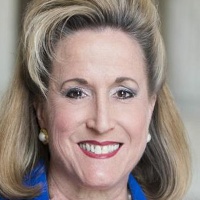
The Born-Alive Abortion Survivors Protection Act requires health care practitioners to provide the same level of care to infants born alive after an abortion attempt as they would to any other newborn, mandating immediate hospitalization and imposing penalties for violations, while protecting the mother from prosecution. It also allows the mother of a child born alive to file a civil action against anyone who violated the act.
Ann Wagner
Representative
MO
Ann Wagner
Representative
MO
The "Born-Alive Abortion Survivors Protection Act" ensures that infants born alive after an abortion receive the same medical care as any other newborn, mandating immediate hospitalization and requiring healthcare practitioners to report any failures to comply. Violators face fines, imprisonment, and potential prosecution for homicide or attempted homicide, while the mother of the child cannot be prosecuted. The bill also allows the woman who had the abortion to file a civil action against anyone who violated the act. It defines abortion and attempts at abortion, and renames "Partial-Birth Abortions" to "Abortions" in relevant sections of the U.S. Code.
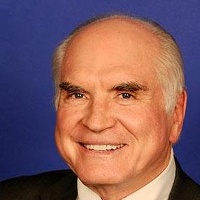
The Heartbeat Protection Act of 2025 prohibits physicians from performing abortions once a fetal heartbeat is detectable, subject to specific exceptions and federal penalties.
Mike Kelly
Representative
PA
Mike Kelly
Representative
PA
The Heartbeat Protection Act of 2025 prohibits physicians from performing an abortion if a fetal heartbeat is detectable, subject to specific exceptions for medical emergencies, rape, and incest. Physicians who knowingly violate this federal law face potential fines and imprisonment, though the legislation explicitly protects the mother from prosecution. The bill also mandates strict documentation and record-keeping requirements for all heartbeat determinations and exception claims.
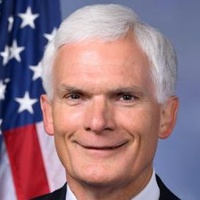
The SAVE Moms and Babies Act of 2025 prohibits the FDA from approving new abortion drugs and imposes strict federal restrictions on the distribution, usage, and reporting requirements for existing abortion medications.
Robert Latta
Representative
OH
Robert Latta
Representative
OH
The SAVE Moms and Babies Act of 2025 prohibits the FDA from approving new abortion drugs and restricts the use of existing ones. The bill mandates strict safety protocols, including in-person administration requirements, expanded adverse event reporting, and limitations on gestational age for drug use.
This bill amends the Internal Revenue Code to allow corporations to deduct intangible drilling and development costs when calculating adjusted financial statement income for the corporate alternative minimum tax.

Mike Carey
Representative
OH
Mike Carey
Representative
OH
The Promoting Domestic Energy Production Act revises corporate tax accounting rules to incentivize domestic energy investment. By allowing corporations to deduct intangible drilling and development costs when calculating their alternative minimum tax, the bill aims to reduce the tax burden on energy producers.
The Main Street Tax Certainty Act makes the 20% pass-through business income deduction permanent by removing its scheduled expiration after 2025.
Lloyd Smucker
Representative
PA
Lloyd Smucker
Representative
PA
The Main Street Tax Certainty Act makes the 20% pass-through business income deduction permanent. By removing the current 2025 expiration date, this legislation ensures long-term tax relief for owners of qualified pass-through entities.