Legislative Activity
Track Lateefah's sponsored bills, co-sponsored legislation, and voting record
This act establishes universal free breakfast and lunch programs in schools, eliminates meal debt, and updates poverty metrics across various federal education and nutrition programs.

Ilhan Omar
Representative
MN
Ilhan Omar
Representative
MN
The Universal School Meals Program Act of 2026 establishes permanent, universal free breakfast and lunch programs for all enrolled students at participating schools, eliminating income tests and meal debt collection. The bill significantly updates federal funding mechanisms by replacing reliance on free and reduced-price lunch data with new measures for identifying economically disadvantaged students across various education and social programs. Furthermore, it expands access to summer and afterschool meals while making technical amendments across several federal education and nutrition laws.
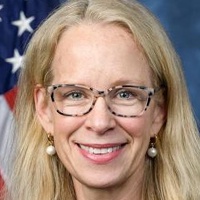
This resolution recognizes the 75th anniversary of the American College of Obstetricians and Gynecologists and honors its vital role in advancing women's health through clinical excellence, education, advocacy, and research.
Kelly Morrison
Representative
MN
Kelly Morrison
Representative
MN
This resolution celebrates the 75th anniversary of the American College of Obstetricians and Gynecologists (ACOG). It recognizes ACOG's critical role in advancing women's health through excellence in clinical practice, education, advocacy, and research. The bill honors ACOG's dedication to improving maternal health and supporting obstetrician-gynecologists nationwide.
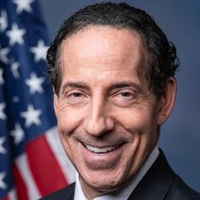
This Act establishes a fund administered by a Special Master to compensate law enforcement officers injured or killed while defending the U.S. Capitol on January 6, 2021.
Jamie Raskin
Representative
MD
Jamie Raskin
Representative
MD
This Act establishes the January 6th Law Enforcement Heroes Compensation Fund to provide financial compensation for injuries and deaths sustained by law enforcement officers defending the U.S. Capitol on January 6, 2021. The program will be administered by a Special Master appointed by the Attorney General, who will review claims for economic and noneconomic losses. The bill also mandates an additional, guaranteed payment for all eligible officers, funded in part by certain government settlement amounts related to the attack. Determinations made by the Special Master regarding compensation are final and not subject to judicial review.
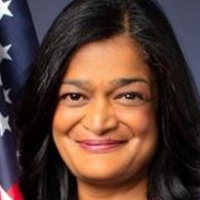
This resolution condemns attacks on civilians in Sudan, demands an end to external support for the warring parties, and calls for efforts to negotiate a settlement to the civil war.
Pramila Jayapal
Representative
WA
Pramila Jayapal
Representative
WA
This resolution condemns the devastating attacks on civilians in the Sudanese civil war and calls for an immediate end to external support fueling the conflict. It urges all parties to cease hostilities and demands robust international efforts to negotiate a settlement leading to civilian-led democratic governance. The bill emphasizes the urgent need to address the massive humanitarian crisis and hold perpetrators of atrocities accountable.
This bill expresses the Sense of Congress that medication abortion is safe and that federal approval preempts state restrictions on its dispensing, including in-person requirements and telehealth bans.
Patrick Ryan
Representative
NY
Patrick Ryan
Representative
NY
This resolution expresses the Sense of Congress that medication abortion is a safe treatment approved by the FDA. It further declares that federal approval preempts state laws attempting to restrict dispensing medication abortion in person or via telehealth.
This act prohibits the use of federal funds for military action in or against Iran through 2026 unless Congress formally declares war or authorizes such force.
Patrick Ryan
Representative
NY
Patrick Ryan
Representative
NY
The No Funds for Iran War Act prohibits the use of federal funds for military action in or against Iran through the end of 2026. This ban remains in effect unless Congress formally declares war or passes a specific authorization for military force. Exceptions are made only for actions consistent with the War Powers Resolution or necessary self-defense against an imminent attack.
This act repeals Executive Order 14399 and cancels related contracts and funding.
Stephen Lynch
Representative
MA
Stephen Lynch
Representative
MA
The Vote by Mail Protection Act of 2026 officially establishes its name and immediately repeals Executive Order 14399. This action cancels any existing contracts made under that order and prohibits the use of agency funds to support its related activities.
This bill establishes comprehensive standards for the care, housing, and treatment of pregnant women in federal custody, including mandated data collection, prohibitions on restrictive housing and restraints, and requirements for family unity services.
Sydney Kamlager-Dove
Representative
CA
Sydney Kamlager-Dove
Representative
CA
The Pregnant Women in Custody Act aims to establish comprehensive standards for the care, health services, and housing of pregnant individuals in federal custody, including those held by the Bureau of Prisons, CBP, ICE, and ORR. The bill mandates extensive data collection on the health needs of incarcerated pregnant women and strictly prohibits the use of restraints and restrictive housing during pregnancy, labor, and postpartum recovery, with very limited exceptions. Furthermore, it requires federal agencies to provide essential services like family unity programs, specialized medical care, and comprehensive education for pregnant and postpartum individuals.
This resolution supports designating May 10, 2026, as "National Asian American, Native Hawaiian, and Pacific Islander Mental Health Day" to raise awareness and improve mental health care access for these communities.
Judy Chu
Representative
CA
Judy Chu
Representative
CA
This resolution supports designating May 10, 2026, as "National Asian American, Native Hawaiian, and Pacific Islander Mental Health Day." It aims to raise awareness about the significant mental health challenges and barriers to care faced by the AANHPI community. The bill encourages improving mental health literacy, increasing culturally competent providers, and adopting policies to better serve these diverse populations.
This resolution commends U.S. public servants for their dedication to defending the Constitution, delivering essential services, and supporting the economy, particularly during Public Service Recognition Week.
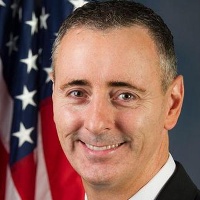
Brian Fitzpatrick
Representative
PA
Brian Fitzpatrick
Representative
PA
This resolution expresses the sense of the House of Representatives commending public servants for their dedication to defending the Constitution and delivering essential services to the American people. It specifically designates the week of May 3 through May 9, 2026, as Public Service Recognition Week. The bill honors the millions of federal, state, and local employees and uniformed service members who support the economy and democratic foundations of the nation.
This bill establishes a competitive grant program to fund demonstration projects that enhance the resilience of critical transportation infrastructure against natural hazards.
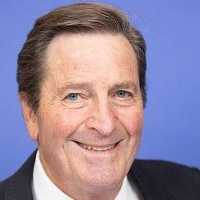
John Garamendi
Representative
CA
John Garamendi
Representative
CA
This bill establishes the Accelerating Demonstration Approaches for Protecting Transportation Assets (ADAPT Assets) Program, a competitive grant initiative managed by the Secretary of Transportation. The program will award up to 10 grants for large-scale demonstration projects designed to make critical transportation infrastructure more resilient to natural hazards. Eligible projects must address documented hazard risks and aim to preserve mobility, safety, and economic function through adaptation, elevation, or protective measures.
This resolution designates the week of May 4 through May 8, 2026, as Teacher Appreciation Week while recognizing the critical role and priorities of the nation's public school teachers.
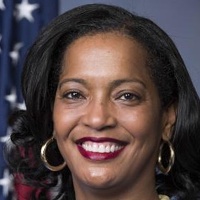
Jahana Hayes
Representative
CT
Jahana Hayes
Representative
CT
This resolution officially designates the week of May 4 through May 8, 2026, as Teacher Appreciation Week. It recognizes the vital role of public school teachers and highlights their key priorities, including support for existing federal protections and funding. Furthermore, the bill encourages leaders to engage directly with teachers to ensure their expertise informs education policy.
The CHARTER Act prohibits federally funded charter schools from contracting with for-profit entities to operate, oversee, or manage the school's core administration, ensuring public funds serve educational needs rather than generate private profit.
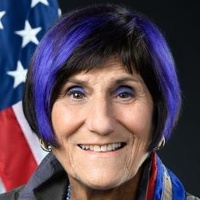
Rosa DeLauro
Representative
CT
Rosa DeLauro
Representative
CT
The CHARTER Act ensures that federally funded charter schools adhere to nonprofit requirements by prohibiting them from contracting with for-profit entities to operate or manage the school's core operations. This legislation aims to prevent public education funds from being diverted as profit for private entities. It clarifies that while core management must remain nonprofit, charters can still contract for specific support services like food or transportation.
The No WAR Act establishes a point of order preventing the use of budget reconciliation to fund unauthorized military hostilities against Iran.
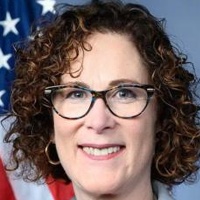
Valerie Hoyle
Representative
OR
Valerie Hoyle
Representative
OR
The No WAR Act establishes a procedural barrier, a "point of order," in Congress to prevent funding for unauthorized military action against Iran through the budget reconciliation process. This means that any reconciliation bill providing budget authority for hostilities against Iran will be out of order unless Congress has first formally authorized that military force. The Act ensures that funding for military conflict against Iran requires explicit prior congressional approval.
This bill officially designates May 2026 as Asian American, Native Hawaiian, and Pacific Islander Heritage Month to celebrate their significant contributions to U.S. history and culture.
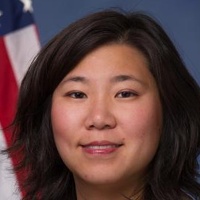
Grace Meng
Representative
NY
Grace Meng
Representative
NY
This bill officially designates May 2026 as Asian American, Native Hawaiian, and Pacific Islander Heritage Month. It calls for nationwide recognition and celebration of the significant contributions, achievements, and history of these communities to the United States. The measure emphasizes that these communities enhance the nation's diversity and strength.
This resolution establishes a comprehensive "Unhoused Persons Bill of Rights" asserting fundamental civil and human rights for unhoused individuals while mandating significant federal funding and policy shifts toward a housing-first approach to end homelessness.
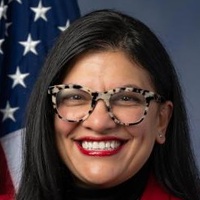
Rashida Tlaib
Representative
MI
Rashida Tlaib
Representative
MI
This resolution establishes a formal "Unhoused Persons Bill of Rights" to protect the fundamental civil and human rights of unhoused individuals, explicitly banning discrimination based on housing status. It outlines specific rights, such as access to housing, public services, and safety from harassment or property destruction. Furthermore, the bill commits to massive federal funding allocations and policy changes, prioritizing a "Housing First" approach to end homelessness.
This Act establishes the Language Access Board to create standards and enforce requirements ensuring individuals with limited English proficiency can meaningfully access federal programs and services.
Judy Chu
Representative
CA
Judy Chu
Representative
CA
The Language Access Board Act of 2026 establishes a framework to ensure individuals with limited English proficiency (LEP) can meaningfully access federal programs and services. It creates a 32-member Language Access Board responsible for setting and enforcing language access standards across federal agencies. The Act mandates that federal agencies make public-facing materials accessible to LEP individuals, comparable to those provided to English speakers. Finally, the Board is empowered to investigate violations, develop corrective action plans, and report on compliance to Congress.
This bill officially designates the United States Postal Service facility at 3817 Marysville Boulevard in Sacramento, California, as the "Grantland Johnson Post Office."
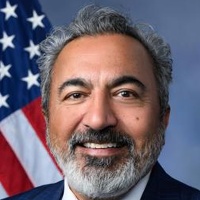
Ami Bera
Representative
CA
Ami Bera
Representative
CA
This bill officially designates the United States Postal Service facility located at 3817 Marysville Boulevard in Sacramento, California, as the "Grantland Johnson Post Office." This action ensures the building is officially recognized by its new name in all records and documentation.
The Housing FIRST Act amends the Fair Credit Reporting Act to establish specific rules and limitations for using consumer reports in tenant screening, particularly by restricting the inclusion of certain criminal and resolved case information.
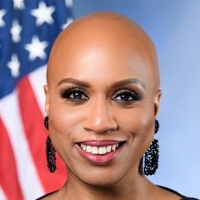
Ayanna Pressley
Representative
MA
Ayanna Pressley
Representative
MA
The Housing FIRST Act amends the Fair Credit Reporting Act to establish formal standards for tenant screening reports, treating them similarly to employment reports. This bill strictly limits the types of criminal and financial history landlords can use when evaluating rental applicants. Furthermore, it mandates specific disclosure and adverse action notification requirements for landlords using these reports.
This resolution directs the House Oversight Committee Chair to sue Pamela J. Bondi to compel her testimony regarding the federal government's enforcement of sex trafficking laws related to the Jeffrey Epstein investigation.
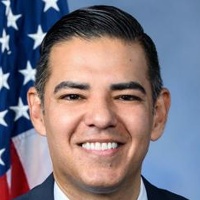
Robert Garcia
Representative
CA
Robert Garcia
Representative
CA
This resolution directs the House Oversight Committee Chair to initiate or intervene in a federal lawsuit within 30 days. The legal action must compel Pamela J. Bondi to comply with a committee subpoena for testimony regarding the DOJ's handling of records related to Jeffrey Epstein and sex trafficking law enforcement.