Legislative Activity
Track Lateefah's sponsored bills, co-sponsored legislation, and voting record
This act increases the corporate tax rate for companies whose CEO-to-worker pay ratio exceeds 50 to 1, based on a five-year average calculation.
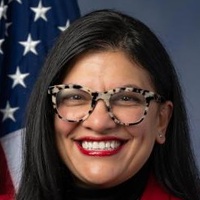
Rashida Tlaib
Representative
MI
Rashida Tlaib
Representative
MI
The Tax Excessive CEO Pay Act of 2025 imposes a federal income tax penalty on corporations whose CEO-to-worker pay ratio exceeds 50-to-1, calculated using a five-year average. If the ratio is too high, the standard 21% corporate tax rate will increase according to a specified penalty table. This measure applies to tax years beginning after December 31, 2025, with exceptions for smaller companies below a $100 million revenue threshold.
This bill prohibits federal health agencies from sharing identifiable Medicaid data with U.S. Immigration and Customs Enforcement (ICE).

Sydney Kamlager-Dove
Representative
CA
Sydney Kamlager-Dove
Representative
CA
The Limiting ICE’s Nationwide Encroachment Act (LINE Act) prohibits federal health agencies, like CMS and HHS, from sharing the personally identifiable Medicaid enrollment data of individuals with U.S. Immigration and Customs Enforcement (ICE). This measure is designed to protect the private health information of Medicaid recipients from being used for immigration enforcement purposes.
This bill prohibits the Department of Housing and Urban Development from disclosing individual records to immigration enforcement agencies without explicit consent or a written request from the individual.
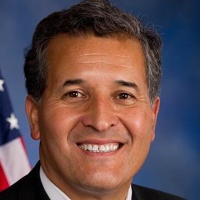
Juan Vargas
Representative
CA
Juan Vargas
Representative
CA
This bill prohibits the Secretary of Housing and Urban Development (HUD) from disclosing individual records to immigration enforcement agencies. HUD records are protected from sharing unless the individual provides consent or makes a written request in a language they understand. The legislation also prevents HUD from compelling public housing agencies to share these confidential records for immigration purposes.
This Act establishes sanctions against Pakistani officials undermining democracy and human rights, while urging the U.S. government to promote democratic institutions in Pakistan until September 30, 2030.
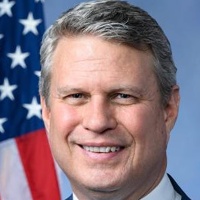
Bill Huizenga
Representative
MI
Bill Huizenga
Representative
MI
The Pakistan Freedom and Accountability Act expresses strong U.S. support for democracy and human rights in Pakistan, citing concerns over military influence and recent election interference. This legislation directs the President to identify and impose sanctions on Pakistani officials responsible for undermining democratic processes or committing serious human rights abuses. The Act emphasizes the need for civilian control over the military and sets an expiration date for its provisions in September 2030.
This act modifies the Family and Medical Leave Act (FMLA) to establish specific eligibility criteria and leave calculation methods for paraprofessionals and other essential education support staff.
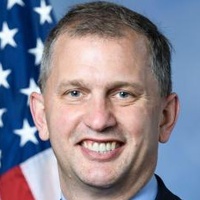
Sean Casten
Representative
IL
Sean Casten
Representative
IL
This bill, the ESP, Paraprofessional, and Education Support Staff Family Leave Act, updates eligibility requirements for certain school employees under the Family and Medical Leave Act (FMLA). It adjusts how paraprofessionals and education support staff meet the required hours of service by using a percentage of expected monthly hours worked during the school year. Furthermore, the bill mandates clear guidelines for calculating FMLA leave entitlement for these employees to account for non-standard school schedules.
This resolution expresses support for designating September 9, 2025, as "National Firearm Suicide Prevention Day" to raise awareness about firearm suicide and promote safe and secure firearm storage as a key suicide prevention measure.
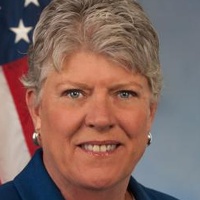
Julia Brownley
Representative
CA
Julia Brownley
Representative
CA
This resolution expresses support for designating September 9, 2025, as "National Firearm Suicide Prevention Day." The goal is to raise awareness about the growing crisis of firearm suicides across the United States. It emphasizes that safe and secure firearm storage is a critical component of suicide prevention efforts. The resolution encourages professionals to discuss gun safety and suicide prevention with their patients.
This act removes a federal payment limitation for certain state Medicaid home and community-based services (HCBS) waivers.

Debbie Dingell
Representative
MI
Debbie Dingell
Representative
MI
The HCBS Worker Protection Act of 2025 removes a federal payment limitation for certain home and community-based services (HCBS) waivers under Medicaid. This change grants states greater flexibility in receiving federal matching funds for these essential community services.
This resolution recognizes suicide as a serious public health crisis and expresses support for designating September 8, 2025, as "988 Day" to promote the vital 988 Suicide and Crisis Lifeline.
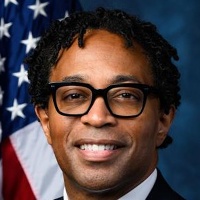
Wesley Bell
Representative
MO
Wesley Bell
Representative
MO
This resolution formally recognizes suicide as a serious public health crisis in the United States and expresses strong support for the 988 Suicide and Crisis Lifeline. It highlights the critical role of the 988 service in providing immediate, life-saving support to those in mental health distress. Furthermore, the resolution supports the designation of September 8th as "988 Day" to promote awareness of this essential resource.
This Act establishes a framework for striking workers to access unemployment insurance benefits after a two-week waiting period or the hiring of permanent replacements.
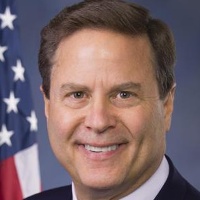
Donald Norcross
Representative
NJ
Donald Norcross
Representative
NJ
The Empowering Striking Workers Act of 2025 establishes a pathway for workers involved in a strike or lockout to receive unemployment insurance benefits after a mandatory 14-day waiting period. This legislation also exempts striking workers from the standard requirement to actively search for new employment while they are unable to work due to the labor dispute.
This bill formally integrates Puerto Rico into the federal Supplemental Nutrition Assistance Program (SNAP) structure, outlining a transition plan away from its current block grant system.
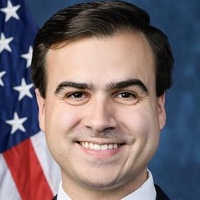
Pablo José Hernández Rivera
Representative
PR
Pablo José Hernández Rivera
Representative
PR
The Puerto Rico Nutrition Assistance Fairness Act aims to integrate Puerto Rico into the federal Supplemental Nutrition Assistance Program (SNAP) structure, aligning it with other territories like Guam. The bill mandates a transition period where Puerto Rico must submit a plan of operation to the Secretary of Agriculture for approval to join SNAP. During this transition, existing block grant funding may continue for up to five years while the territory moves toward full participation under federal SNAP rules.
This Act mandates the Bureau of Prisons to issue a REAL ID-compliant identification card, valid for at least 18 months, to all departing federal prisoners to facilitate access to essential federal services and state IDs.
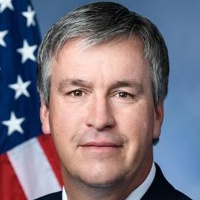
Barry Moore
Representative
AL
Barry Moore
Representative
AL
The BOP Release Card ID Act of 2025 mandates that the Bureau of Prisons issue a REAL ID-compliant photo identification card to all departing federal prisoners, valid for at least 18 months. This federal release card must be accepted for identity verification when accessing major federal benefits like Social Security, Medicaid, and SNAP. Furthermore, the BOP must establish agreements with states to help former inmates use this card to obtain standard state identification. The Attorney General will also issue guidance to states on creating similar release ID programs for state prisoners.
This Act allocates \$2.165 billion in dedicated funding for the CDC's National Center for HIV, Viral Hepatitis, STD, and Tuberculosis Prevention for the 2026 fiscal year.

Maxine Waters
Representative
CA
Maxine Waters
Representative
CA
The HIV Prevention Now Act secures **\$2.165 billion** in dedicated funding for the CDC's National Center for HIV, Viral Hepatitis, STD, and Tuberculosis Prevention for Fiscal Year 2026. This appropriation is specifically earmarked to support the center's prevention programs and activities. This funding is supplemental to, and cannot be transferred from, other existing appropriations.
The PrEP and PEP are Prevention Act mandates no-cost coverage for HIV prevention services, including FDA-approved drugs, testing, and counseling, across private insurance, Medicare, Medicaid, CHIP, and the Federal Employees Health Benefits Program.
Maxine Waters
Representative
CA
Maxine Waters
Representative
CA
The PrEP and PEP are Prevention Act mandates that essential HIV prevention services, including FDA-approved medications like PrEP and PEP, must be covered at no cost to the patient across private insurance, Medicare, Medicaid, CHIP, and the Federal Employees Health Benefits program. This law eliminates financial barriers such as deductibles, copays, and prior authorization requirements for these preventive treatments and necessary related care. The goal is to ensure universal, barrier-free access to critical HIV prevention tools.
This Act bans Members of Congress and their immediate families from trading or owning specific investments while in office, requiring divestment within 90 to 180 days or facing significant financial penalties.

Chip Roy
Representative
TX
Chip Roy
Representative
TX
The Restore Trust in Congress Act establishes strict new rules prohibiting Members of Congress and their immediate families from owning or trading specific financial assets, referred to as "covered investments," while in office. Covered individuals must divest existing prohibited holdings within a set timeframe or face significant financial penalties, including fines and forfeiture of profits. The legislation aims to eliminate conflicts of interest arising from personal financial trading while serving in federal office.
The MORE Act seeks to federally decriminalize cannabis, expunge past non-violent federal cannabis convictions, establish reinvestment programs, and open up SBA access for cannabis-related businesses.
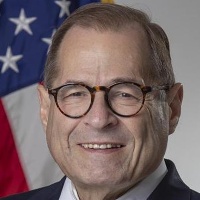
Jerrold Nadler
Representative
NY
Jerrold Nadler
Representative
NY
The Marijuana Opportunity Reinvestment and Expungement (MORE) Act seeks to federally decriminalize cannabis by removing it from the Controlled Substances Act, which will retroactively apply to past offenses. The bill establishes an Opportunity Trust Fund, financed by new cannabis taxes, to reinvest in communities harmed by prohibition. Furthermore, it mandates the expungement of non-violent federal cannabis convictions and opens up Small Business Administration (SBA) programs to legitimate cannabis businesses.
The INFORM Act of 2025 mandates that Homeland Security must notify the immediate family of a transferred immigration detainee within 24 hours, providing details about the relocation and the new facility's contact information.

Luz Rivas
Representative
CA
Luz Rivas
Representative
CA
The INFORM Act of 2025 mandates that Homeland Security must notify the immediate family of any individual transferred between immigration detention facilities within 24 hours. This notification must include the reason for the transfer and contact information for the new location. The Act broadly defines "immediate family" to cover a wide range of relatives, including step- and foster-family members.
This resolution expresses support for designating August 17, 2025, as "Marcus Garvey Recognition Day" to honor his significant contributions to Black history and economic self-reliance.

Yvette Clarke
Representative
NY
Yvette Clarke
Representative
NY
This resolution expresses strong support for the President to officially designate August 17, 2025, as "Marcus Garvey Recognition Day." It highlights Marcus Garvey's historical significance as the leader of the largest African-American movement and his dedication to Black economic self-reliance. The designation seeks to formally honor his enduring legacy following his posthumous pardon.
This resolution terminates the President's declared crime emergency in the District of Columbia, asserting that the emergency is unwarranted and the legal basis for federal MPD control is flawed.
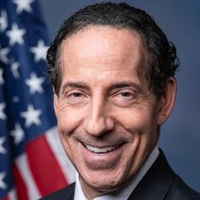
Jamie Raskin
Representative
MD
Jamie Raskin
Representative
MD
This resolution terminates the President's August 11, 2025, declaration of a crime emergency in the District of Columbia. Congress asserts that the President lacks the legal authority under the D.C. Home Rule Act to take operational control of the Metropolitan Police Department. Furthermore, the bill notes that local violent crime rates have been declining significantly.
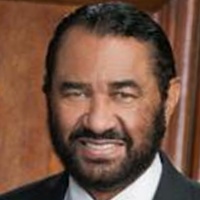
This resolution officially establishes August 20th as Original Slavery Remembrance Day to recognize the history of slavery, honor those who fought against it, and acknowledge its lasting effects.
Al Green
Representative
TX
Al Green
Representative
TX
This resolution officially establishes August 20th as **Original Slavery Remembrance Day** to formally recognize and condemn the history of slavery in the U.S. and globally. It commemorates the lives of enslaved people, honors historical figures who fought for freedom, and acknowledges the lasting effects of slavery on contemporary society. The resolution requests the President to issue a proclamation calling for appropriate national observance of this day.
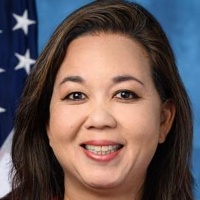
The Keep Seniors Fed Act amends the Food and Nutrition Act of 2008 to include Title II Social Security payments when calculating eligibility for food assistance benefits.
Jill Tokuda
Representative
HI
Jill Tokuda
Representative
HI
The Keep Seniors Fed Act makes technical amendments to the Food and Nutrition Act of 2008 regarding how income is calculated for food assistance eligibility. Specifically, it mandates that income received under Title II of the Social Security Act must now be counted when determining eligibility for benefits. These changes will take effect 90 days after the bill is signed into law.