Legislative Activity
Track Eric's sponsored bills, co-sponsored legislation, and voting record
The Healthcare Workforce Resilience Act recaptures unused employment-based immigrant visas to provide 40,000 reserved visas for professional nurses and physicians, while also expediting their processing without charging premium processing fees.
Bradley Schneider
Representative
IL
Bradley Schneider
Representative
IL
The Healthcare Workforce Resilience Act aims to strengthen the U.S. healthcare system by recapturing unused employment-based immigrant visas from 1992 through 2024. This legislation specifically reserves up to 40,000 of these visas for professional nurses and physicians, ensuring they are not subject to annual country caps. The bill also mandates expedited processing for these healthcare professionals without imposing premium processing fees, while requiring employers to attest that hiring these workers will not displace U.S. employees.
This act modifies the Family and Medical Leave Act (FMLA) to establish specific eligibility criteria and leave calculation methods for paraprofessionals and other essential education support staff.
Sean Casten
Representative
IL
Sean Casten
Representative
IL
This bill, the ESP, Paraprofessional, and Education Support Staff Family Leave Act, updates eligibility requirements for certain school employees under the Family and Medical Leave Act (FMLA). It adjusts how paraprofessionals and education support staff meet the required hours of service by using a percentage of expected monthly hours worked during the school year. Furthermore, the bill mandates clear guidelines for calculating FMLA leave entitlement for these employees to account for non-standard school schedules.
This Act limits the sharing of consumer reports requested in connection with a residential mortgage loan to prevent unauthorized access to homebuyers' sensitive financial information.
John Rose
Representative
TN
John Rose
Representative
TN
The Homebuyers Privacy Protection Act limits how consumer reporting agencies can share a consumer's report when it is requested in connection with a residential mortgage loan. Reports can only be shared with entities directly involved in the consumer's current mortgage or those providing a firm offer of credit or insurance. The Act also mandates a study by the GAO regarding the use and impact of "trigger leads" derived from credit checks.
This act sets the Identified Student Percentage threshold for federal nutrition programs at 25 percent for school years beginning on or after July 1, 2025.
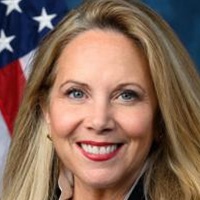
Laura Gillen
Representative
NY
Laura Gillen
Representative
NY
The Feed Hungry Kids Act establishes a fixed threshold of 25 percent for calculating a school's "Identified Student Percentage" starting in the school year beginning on or after July 1, 2025. This change directly impacts how schools qualify for certain federal nutrition programs. The bill standardizes this key metric for future program eligibility.
This Act bans Members of Congress and their immediate families from trading or owning specific investments while in office, requiring divestment within 90 to 180 days or facing significant financial penalties.
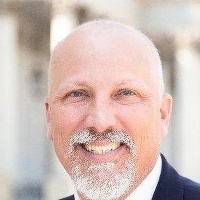
Chip Roy
Representative
TX
Chip Roy
Representative
TX
The Restore Trust in Congress Act establishes strict new rules prohibiting Members of Congress and their immediate families from owning or trading specific financial assets, referred to as "covered investments," while in office. Covered individuals must divest existing prohibited holdings within a set timeframe or face significant financial penalties, including fines and forfeiture of profits. The legislation aims to eliminate conflicts of interest arising from personal financial trading while serving in federal office.
This Act establishes a comprehensive EPA program to research, guide, and assist in improving indoor air quality across all buildings, with a special focus on schools and childcare facilities.
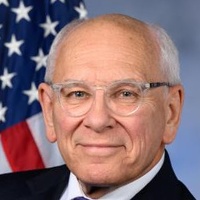
Paul Tonko
Representative
NY
Paul Tonko
Representative
NY
The Indoor Air Quality and Healthy Schools Act of 2025 establishes a comprehensive federal program, managed by the EPA Administrator, to assess, reduce, and prevent exposure to indoor air contaminants in all buildings, with a special focus on schools and childcare facilities. The Act mandates the creation of science-based guidelines for contaminants of concern and supports technical assistance, training, and voluntary "Healthy Building Certifications." It also directs the development of model building codes and a national assessment of air quality in educational settings to ensure healthier indoor environments nationwide.
The UNLOCK Act amends federal housing law to allow local governments to directly use certain federal funds for the construction of new low- and moderate-income housing.
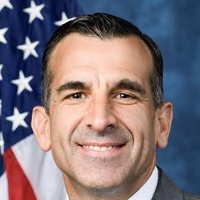
Sam Liccardo
Representative
CA
Sam Liccardo
Representative
CA
The UNLOCK Act amends the Housing and Community Development Act of 1974 to expand how federal housing funds can be used. This legislation now allows local entities to directly use these funds for the construction of new housing specifically for low- and moderate-income residents. The bill removes the requirement for these entities to partner with a nonprofit organization to carry out the new construction projects.
The FORWARD Act allows eligible retired or disabled military personnel to contribute to their Thrift Savings Plan (TSP) using their retirement or disability pay.
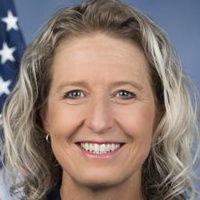
Jennifer Kiggans
Representative
VA
Jennifer Kiggans
Representative
VA
The FORWARD Act expands eligibility for retired or disabled military personnel to contribute to the Thrift Savings Plan (TSP) using their military retirement or disability pay. This provision allows eligible former service members to make contributions, though these deposits will not receive any government matching funds. The relevant agencies have 180 days to establish the necessary regulations for this new option.
This Act prohibits grocery stores from price gouging, using personal surveillance data to set individualized prices, and mandates disclosure of facial recognition use, while banning electronic shelf labels in larger stores.
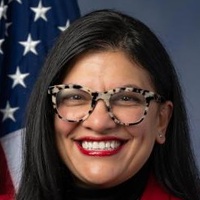
Rashida Tlaib
Representative
MI
Rashida Tlaib
Representative
MI
The Stop Price Gouging in Grocery Stores Act of 2025 aims to protect consumers by prohibiting grocery stores from charging "grossly excessive" prices for food items. The bill also bans stores from adjusting prices based on personal tracking data, such as facial recognition, and requires clear signage if facial recognition technology is used. Furthermore, it mandates that large physical grocery stores must use printed signs instead of electronic shelf labels for displaying prices.
The Data BRIDGE Act mandates the FCC to update the national broadband map to specifically include the locations of agricultural areas after consulting with relevant agencies.
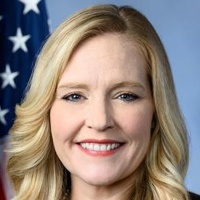
Erin Houchin
Representative
IN
Erin Houchin
Representative
IN
The Data BRIDGE Act mandates that the FCC update its national broadband map to specifically include the locations of agricultural areas. This update must be completed within 180 days of the bill's enactment. To ensure accuracy, the FCC is required to consult with the Secretary of Agriculture and other relevant stakeholders during this process. This action aims to better identify broadband coverage gaps affecting farms.
The GO Ag Act establishes a competitive grant program, capped at \$100,000 per recipient, to fund the creation of new high school agricultural education programs through fiscal year 2028.
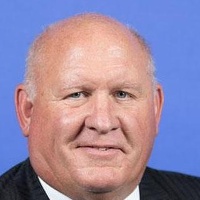
Glenn Thompson
Representative
PA
Glenn Thompson
Representative
PA
The Growing Opportunities in Agriculture Act (GO Ag Act) establishes a new competitive grant program to fund the creation of innovative, high-quality agricultural education programs in high schools. These grants, limited to $100,000 per entity, are intended to develop new curricula, support work-based learning, and fund leadership training. Recipients must report annually on program performance, with a total authorization of $5 million through FY 2028.
This act mandates that the Department of Veterans Affairs must provide abortion care, counseling, and related services and medication to eligible veterans and certain other individuals.
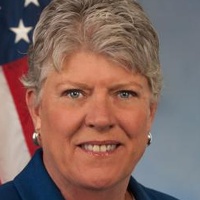
Julia Brownley
Representative
CA
Julia Brownley
Representative
CA
The Reproductive Freedom for Veterans Act mandates that the Department of Veterans Affairs (VA) must now provide abortion care, counseling, and related medication as part of the medical services offered to eligible veterans and certain other beneficiaries. This legislation formally amends existing VA health care provisions to include these reproductive health services.
This bill ensures that qualifying service years for National Guard and Reserve members count toward Federal Direct Loan forgiveness, even if they weren't in public service employment during those payment months.
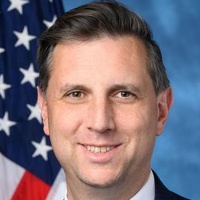
Seth Magaziner
Representative
RI
Seth Magaziner
Representative
RI
The National Guard and Reserve Student Loan Fairness Act simplifies student loan forgiveness for members of the military reserves. It mandates that qualifying years of service, based on points earned toward retired pay, automatically count as qualifying payments toward Federal Direct Loan forgiveness programs. This change applies even if the borrower was not working in public service during those payment months. The Departments of Defense and Education must coordinate data to ensure these payments are counted without requiring extra paperwork from the service member.
This bill repeals specific prior health reconciliation provisions and expands eligibility for the Premium Tax Credit by removing the 400% income cap and adjusting the subsidy calculation formula.
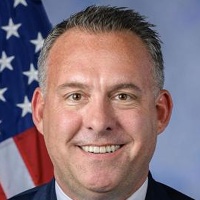
Adam Gray
Representative
CA
Adam Gray
Representative
CA
The Protecting Health Care and Lowering Costs Act of 2025 repeals specific prior reconciliation health provisions. This bill significantly expands eligibility for the Premium Tax Credit by eliminating the 400% Federal Poverty Level income cap. It also updates the subsidy calculation formula to ensure a smoother, linear adjustment of assistance across various income levels.
This act mandates the EPA to swiftly finalize rules ensuring clear E15 fuel labeling and automatic compatibility for most existing underground storage tanks with up to 15% ethanol, while requiring future equipment to be compatible with 100% ethanol.
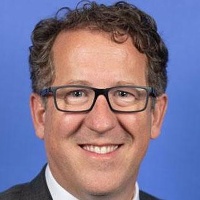
Adrian Smith
Representative
NE
Adrian Smith
Representative
NE
The Ethanol for America Act of 2025 mandates that the EPA finalize rules within 90 days regarding E15 fuel labeling and underground storage tank compatibility. This bill ensures current storage tanks are automatically deemed compatible with E15 and prevents forcing partial upgrades on station owners. Additionally, it requires all new or replacement storage system components to be compatible with up to 100% ethanol for future flexibility.
This act repeals the prohibition on Medicaid payments to certain healthcare entities and mandates retroactive payment for services already rendered under the repealed ban.
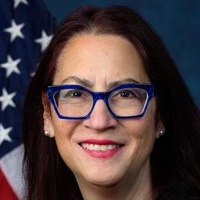
Laura Friedman
Representative
CA
Laura Friedman
Representative
CA
The Restoring Essential Healthcare Act repeals an outdated ban that prevented Medicaid from making payments to certain healthcare providers. This legislation ensures that these previously prohibited entities will now be reimbursed for medical services rendered between the enactment of the original ban and the passage of this Act. In short, it restores payment eligibility and retroactively covers past services.
This act codifies the FTC's "click-to-cancel" rule into federal law, requiring businesses to provide simple online cancellation methods for subscriptions.
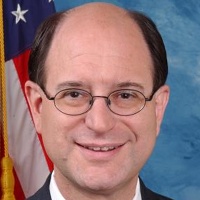
Brad Sherman
Representative
CA
Brad Sherman
Representative
CA
The Click to Cancel Act of 2025 officially codifies the Federal Trade Commission's "click-to-cancel" rule into federal law. This mandates that businesses provide consumers with a simple, online method to cancel subscriptions. Violations of this new law will be enforced by the FTC using its existing authority under the Federal Trade Commission Act.
This Act establishes the "Local Farmers Feeding Our Communities" program to strengthen local food security by funding agreements that support local producers and distribute fresh food to communities.
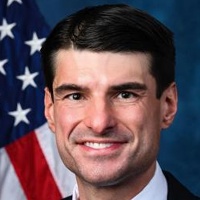
Robert Bresnahan
Representative
PA
Robert Bresnahan
Representative
PA
The Local Farmers Feeding our Communities Act establishes a new program to support local food producers and strengthen regional food security. This initiative requires the Secretary of Agriculture to fund agreements that ensure nutritious, locally sourced food is purchased and distributed widely, prioritizing small and beginning farmers. Funds must be used to buy minimally processed local products and provide technical assistance to producers. The program is backed by mandatory funding starting in Fiscal Year 2026.
This bill mandates a long-term study and creation of a health registry to investigate the neurological and mental health effects of G-force stress and flight operations on military aviators.
Jennifer Kiggans
Representative
VA
Jennifer Kiggans
Representative
VA
The Warrior Impact from Neurological and G-Force Stress Act (WINGS Act) mandates a comprehensive, long-term study by the VA to investigate the physical and mental health effects of military flight operations, particularly high G-forces, on aviators. This research will examine links between flight stress and conditions like TBI, cognitive decline, and mental health issues, comparing aviators to other service members. The bill also requires the creation of a dedicated Military Aviator Neurohealth Registry to track this data over time.
This Act eliminates age restrictions and simplifies premium requirements for adult children covered under the TRICARE Young Adult program.
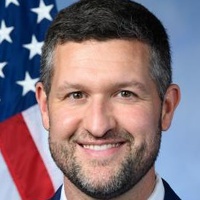
Patrick Ryan
Representative
NY
Patrick Ryan
Representative
NY
The Health Care Fairness for Military Families Act of 2025 significantly improves the TRICARE Young Adult (TYA) program for military dependents. This legislation eliminates the age restriction for TYA eligibility and removes the separate premium requirement for coverage. These changes aim to provide broader and simpler healthcare access for adult children of service members.