Legislative Activity
Track Melanie's sponsored bills, co-sponsored legislation, and voting record
This bill expresses support for designating June 5, 2026, as "National Gun Violence Awareness Day" and June 2026 as "National Gun Violence Awareness Month" to honor victims and promote awareness of gun violence.
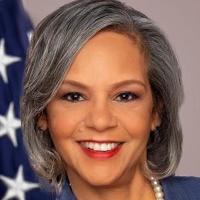
Robin Kelly
Representative
IL
Robin Kelly
Representative
IL
This bill expresses support for designating June 5, 2026, as "National Gun Violence Awareness Day" and the entire month of June 2026 as "National Gun Violence Awareness Month." The designations aim to honor the nearly 47,000 people killed by gunfire each year and raise public awareness about the devastating impact of gun violence. The resolution encourages the public to wear orange on that day and focus on community efforts to promote gun safety.
This bill advances menopause care and mid-life women's health by funding research, public education, provider training, and establishing centers of excellence.
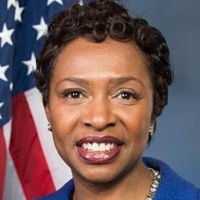
Yvette Clarke
Representative
NY
Yvette Clarke
Representative
NY
The Advancing Menopause Care and Mid-Life Women’s Health Act aims to significantly improve care for mid-life women by expanding federal research, public health promotion, and provider training related to menopause. The bill establishes national awareness programs and designates Centers of Excellence to enhance education and treatment resources. Overall, it seeks to address gaps in research, access to care, and provider knowledge concerning perimenopause, menopause, and related health conditions.
This act restricts government use of mail covers by requiring a court order based on reasonable grounds related to an ongoing criminal investigation.

Mary Scanlon
Representative
PA
Mary Scanlon
Representative
PA
The Postal Data Privacy Act of 2026 significantly restricts the government's ability to use mail covers. This act mandates that federal entities must obtain a court order based on reasonable suspicion of criminal activity before accessing mail information. Furthermore, it establishes clear requirements for preserving mail records once a legal process is initiated.
This resolution expresses support for designating May 2026 as Mental Health Awareness Month to address the worsening mental health crisis and promote access to care.
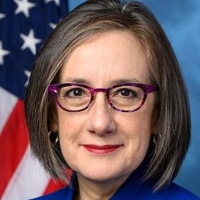
Andrea Salinas
Representative
OR
Andrea Salinas
Representative
OR
This resolution expresses support for designating May 2026 as Mental Health Awareness Month. It highlights the urgent and worsening national mental health crisis, citing alarming statistics across various demographics, including youth and high-risk groups. The bill aims to remove stigma, declare mental health a national priority, and support expanded funding and access to necessary services.
This bill mandates the removal of U.S. armed forces from hostilities within or against Cuba unless explicitly authorized by Congress.
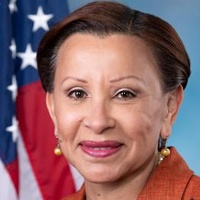
Nydia Velázquez
Representative
NY
Nydia Velázquez
Representative
NY
This bill mandates the President to withdraw all U.S. Armed Forces from hostilities within or against the Republic of Cuba. This removal is required unless Congress has specifically authorized the military action. The directive is issued under the authority of the War Powers Resolution.
This bill expresses support for designating May as National Menstrual Health Awareness Month to combat stigma, improve education, and enhance access to care and resources for people who menstruate.

Grace Meng
Representative
NY
Grace Meng
Representative
NY
This bill expresses support for designating May as "National Menstrual Health Awareness Month." It recognizes the significant impact of menstruation stigma on health, education, and economic opportunity for women and girls. The resolution aims to normalize menstruation, improve education, and expand access to menstrual health care and research.
The Stay Cool Act coordinates federal heat response, funds community cooling centers and housing upgrades, and invests in urban green infrastructure to mitigate extreme heat risks.
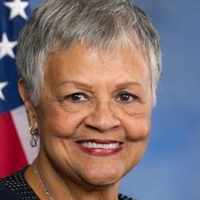
Bonnie Watson Coleman
Representative
NJ
Bonnie Watson Coleman
Representative
NJ
The **Stay Cool Act** is a comprehensive bill designed to combat the dangers of extreme heat through coordinated federal response, improved public warnings, and direct aid to vulnerable seniors. It establishes significant grant programs to fund community cooling centers, upgrade public housing with air conditioning, and develop urban green spaces and water features for neighborhood cooling. Overall, the legislation aims to increase community resilience, protect residents in federally assisted housing, and ensure more equitable access to safe, cool environments during heat emergencies.
This bill establishes the Smithsonian American Women's History Museum, designates its site on the National Mall, and sets requirements for its mission, construction, and diverse representation of viewpoints.
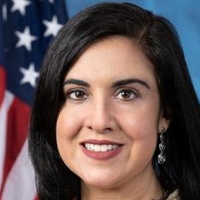
Nicole Malliotakis
Representative
NY
Nicole Malliotakis
Representative
NY
This act officially establishes the Smithsonian American Women’s History Museum and designates its location on the National Mall, requiring the transfer of land jurisdiction to the Smithsonian Institution. The museum is mandated to preserve and present the history and achievements of biological women in the United States. Furthermore, the legislation requires that exhibits and programs reflect diverse political viewpoints and authentic experiences of women, as guided by a broad array of knowledgeable sources.
This bill extends the Rural Community Hospital Demonstration Program for an additional five years and modifies extension criteria for participating hospitals.
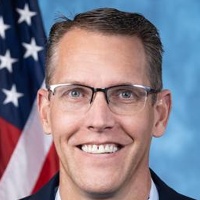
Randy Feenstra
Representative
IA
Randy Feenstra
Representative
IA
This bill, the "Rural Community Hospital Demonstration Program Reauthorization," extends the existing rural community hospital demonstration program for an additional five years, making it a 20-year program. It also updates the criteria for an additional extension period to cover certain hospitals that join the program between late 2024 and early 2027.
This resolution expresses the sense of the House of Representatives to achieve zero traffic fatalities on U.S. roadways by the year 2050 through policy advancement and a safe systems approach.

Janice Schakowsky
Representative
IL
Janice Schakowsky
Representative
IL
This resolution expresses the sense of the House of Representatives to eliminate all traffic fatalities on U.S. roadways by the year 2050. It highlights extensive data showing the preventable nature of current traffic deaths, injuries, and associated costs. The bill calls on Congress and the Department of Transportation to adopt a data-driven, safe systems approach to prioritize proven safety countermeasures.
This bill authorizes the minting and sale of commemorative gold and silver coins to honor the 25th anniversary of the September 11, 2001, terrorist attacks, with surcharges supporting the National September 11 Memorial and Museum.

Dan Goldman
Representative
NY
Dan Goldman
Representative
NY
This bill authorizes the Secretary of the Treasury to mint and issue commemorative gold and silver coins marking the 25th anniversary of the September 11, 2001, terrorist attacks. The coins will honor the victims, first responders, and survivors, with designs selected in consultation with the National September 11 Memorial and Museum. All surcharges from the sale of these coins will be paid directly to the Memorial and Museum to support its operations and maintenance.
The Duplication Scoring Act of 2026 requires the GAO to assess proposed legislation for potential overlap with existing federal programs and allows the CBO to include these findings in official cost estimates.

Tim Burchett
Representative
TN
Tim Burchett
Representative
TN
The Duplication Scoring Act of 2026 requires the Government Accountability Office (GAO) to assess new congressional bills for potential overlap with existing federal programs. These assessments will be published online and may be included in Congressional Budget Office (CBO) cost estimates to improve government efficiency and reduce redundancy.
This bill imposes a 100% tax and public reporting requirements on certain settlement payments received by former Presidents, their families, and related entities from civil actions against the United States.
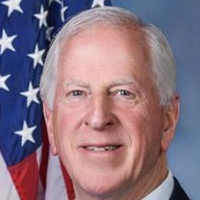
Mike Thompson
Representative
CA
Mike Thompson
Representative
CA
The SLUSH FUND Act of 2026 imposes a 100% tax on certain settlement payments received by former Presidents, their families, and related entities from funds originating from civil actions against the United States. This new tax is treated separately from standard income tax and cannot be deducted. The Act also mandates strict reporting requirements for those making these payments, with penalties for non-compliance.
This Act establishes comprehensive federal loan forgiveness and payment support for educators serving in high-need schools and early childhood education programs.
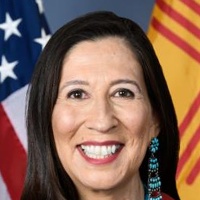
Teresa Leger Fernandez
Representative
NM
Teresa Leger Fernandez
Representative
NM
The Loan Forgiveness for Educators Act of 2026 establishes new federal loan forgiveness programs for teachers, school leaders, and early childhood educators serving in high-need schools or programs. Educators can achieve full loan forgiveness after five years of qualifying service, or receive monthly payment support during that time. The bill mandates the Secretary of Education to launch these programs within 270 days of enactment. It also includes specific provisions for Parent PLUS loan borrowers and ensures flexibility for educators whose school status changes.
This bill establishes a demonstration project for states to test alternative payment models in Medicaid and CHIP to improve maternal health outcomes for pregnant and postpartum individuals.
Janice Schakowsky
Representative
IL
Janice Schakowsky
Representative
IL
The IMPACT to Save Moms Act establishes a demonstration project for states to test alternative payment models for maternity care within Medicaid and CHIP programs. This project aims to improve maternal health outcomes, particularly for high-risk groups, by considering factors like risk stratification and social determinants of health. The Secretary of HHS must evaluate the project's impact and report recommendations to Congress on potential national expansion.
The **Protecting Our Democracy Act** imposes sweeping restrictions on presidential power, enhances congressional oversight, strengthens ethics and anti-corruption laws, and bolsters accountability for federal officials.
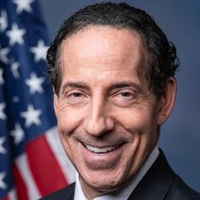
Jamie Raskin
Representative
MD
Jamie Raskin
Representative
MD
The **Protecting Our Democracy Act** imposes sweeping reforms across the executive branch to strengthen accountability and restore checks and balances. It restricts presidential pardon power, closes loopholes to ensure no President is above the law, and enforces constitutional emoluments clauses to prevent self-enrichment. Furthermore, the Act enhances congressional oversight by strengthening subpoena enforcement, increasing transparency around White House visitors and tax returns, and protecting federal whistleblowers from retaliation.
This resolution calls for a fundamental shift in U.S. trade policy to prioritize the interests of workers, farmers, small businesses, and the environment over corporate gains.
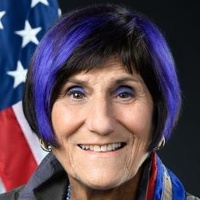
Rosa DeLauro
Representative
CT
Rosa DeLauro
Representative
CT
This resolution calls for a fundamental shift in U.S. trade policy to prioritize American workers, family farmers, and domestic production over corporate interests. It asserts that decades of corporate-centered trade have harmed communities and calls for a new framework built on strong labor, environmental, and domestic manufacturing standards. The bill demands that future trade policy actively support fair wages, strengthen "Buy America" requirements, and penalize offshoring.
The Moms Matter Act establishes grant programs to improve maternal mental health equity and expand the diverse workforce providing maternal mental and behavioral health care.
Yvette Clarke
Representative
NY
Yvette Clarke
Representative
NY
The Moms Matter Act establishes two grant programs to improve maternal mental health. The first program funds initiatives to expand mental health and substance use disorder services for pregnant and postpartum individuals, prioritizing high-risk populations. The second program provides grants to grow and diversify the workforce of mental and behavioral health providers specializing in maternal health.
This bill directs the VA to provide veterans with an opioid antagonist without requiring a prescription or copayment.
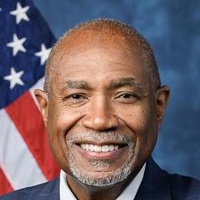
Herbert Conaway
Representative
NJ
Herbert Conaway
Representative
NJ
This bill directs the Department of Veterans Affairs (VA) to provide opioid antagonists to veterans without requiring a prescription. Furthermore, it eliminates any associated copayment for receiving these life-saving medications. The goal is to ensure veterans have immediate access to overdose reversal medication.
This Act funds data collection, research, public communication, and task force recommendations to improve maternal health outcomes during public health emergencies.

Lauren Underwood
Representative
IL
Lauren Underwood
Representative
IL
The Maternal Health Pandemic Response Act aims to improve maternal and infant health outcomes during public health emergencies. It authorizes significant funding for enhanced data collection, surveillance, and research across various CDC programs. Furthermore, the bill mandates public data disclosure, requires public health communication campaigns, and establishes a task force to develop federal recommendations for ensuring safe, respectful, and equitable maternity care during crises.