The Tribal Access to Clean Water Act of 2025 authorizes significant federal funding and technical assistance across multiple agencies to rapidly expand and improve access to safe drinking water and sanitation infrastructure for Indian Tribes and Native Hawaiian communities.
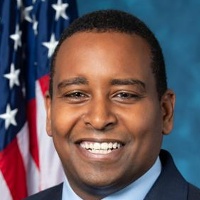
Joe Neguse
Representative
CO-2
The Tribal Access to Clean Water Act of 2025 aims to address the critical lack of safe and reliable water infrastructure on Tribal lands and for the Native Hawaiian Community. This bill expands eligibility for federal water and sanitation funding, authorizes significant new appropriations across the Departments of Agriculture and Health and Human Services (IHS), and provides crucial technical assistance to help these communities access and manage these resources. Ultimately, the Act seeks to fulfill the federal trust responsibility by ensuring all Tribal residents have access to clean, safe drinking water and adequate sanitation systems.
New Water Bill Authorizes $648 Million Annually for Tribal Infrastructure, Drops Matching Fund Requirements
The Tribal Access to Clean Water Act of 2025 is Congress’s attempt to tackle a massive, long-standing problem: the fact that nearly half of all homes on Tribal lands lack reliable, clean water and sanitation. This bill isn't just about adding new money; it's about tearing down administrative hurdles and expanding who gets access to existing federal programs. It’s a five-year commitment, authorizing hundreds of millions annually from fiscal years 2026 through 2030, specifically targeting water infrastructure.
Expanding the Water Lifeline
The most immediate change is who can access the USDA’s rural water and waste facility loans and grants. Historically, these funds primarily went to recognized Indian Tribes. This bill expands eligibility to include Native Hawaiian organizations, specifically naming the Department of Hawaiian Home Lands. This is a significant move toward equity, treating Native Hawaiian communities the same as Tribes when it comes to accessing these vital infrastructure dollars (SEC. 4).
For those on Tribal lands, the bill removes a huge financial headache: the requirement to secure matching funds. If an eligible Tribe or Native Hawaiian organization uses the new money authorized in this Act, they do not have to provide any matching contribution that might otherwise be required. Furthermore, they won't have to prove they can’t get commercial credit elsewhere. This removes two massive barriers for communities that often struggle with capital, making it much easier to actually start fixing broken water systems (SEC. 4).
The IHS Gets a Major Upgrade
The Indian Health Service (IHS) is often the agency responsible for sanitation construction on Tribal lands, and this bill supercharges its capacity. First, it broadens the scope of what IHS can fund. Previously, funding focused mainly on residential areas. Now, the definition of "Indian homes, communities, and lands" explicitly includes crucial non-commercial community buildings like Tribal schools, hospitals, clinics, and government offices. This means a school can get its plumbing fixed alongside a nearby residential area, ensuring health and education services aren't disrupted by poor infrastructure (SEC. 5).
Crucially, the bill authorizes a massive $500 million annually for IHS construction between 2026 and 2030. That’s half a billion dollars every year dedicated to building and repairing water and sanitation systems. On top of that, the bill authorizes $100 million annually for Tribes to cover the day-to-day operation and maintenance (O&M) costs of systems they own and run. This is key, because building a new system is useless if there’s no money to keep the lights on and the pumps running.
The Sustainability Check
One provision shows a strong focus on long-term sustainability. After a Tribe completes a new water or sanitation project funded through IHS, the agency is required to try and include that project in future funding pools for sustained support and guidance for at least five years. This five-year check-in is designed to ensure the system doesn't immediately fall into disrepair, protecting the initial federal investment and, more importantly, the community’s access to clean water (SEC. 5).
Finally, the bill recognizes that Tribes need technical know-how, not just cash. It authorizes $30 million annually for IHS technical assistance, allowing Tribes to hire outside experts to help manage and operate complex utility systems. The Bureau of Reclamation also gets an extra $18 million annually for its Native American Affairs Technical Assistance Program, further boosting the available expertise (SEC. 5, SEC. 6).
This legislation is a significant investment aimed at rectifying a public health crisis. By removing financial hurdles, expanding eligibility, and focusing on long-term operations support, it aims to ensure that the goal of reliable, clean water on Tribal lands becomes a reality, not just a promise.