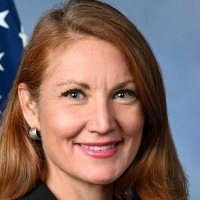
Legislative Activity
Track Melanie's sponsored bills, co-sponsored legislation, and voting record
The "Postal Supervisors and Managers Fairness Act of 2025" amends Title 39 to modify procedures for negotiating pay and benefits of supervisory and other managerial personnel of the USPS, requiring the USPS to present written proposals to the supervisors' organization regarding pay and benefit changes, and mandates a binding determination by a dispute resolution panel within 15 days of its recommendation.

Gerald Connolly
Representative
VA
Gerald Connolly
Representative
VA
The "Postal Supervisors and Managers Fairness Act of 2025" amends Title 39 of the U.S. Code to modify the procedures for negotiating pay and benefits of supervisory and managerial personnel within the Postal Service. It requires the Postal Service to provide advance notice of proposed changes to pay and benefits and mandates a binding determination by a dispute resolution panel within 15 days of its recommendation. This aims to streamline the negotiation process and ensure fair resolution of disagreements.
This bill amends the law to grant non-unionized Postal Service employees in specific supervisory, professional, technical, clerical, administrative, or managerial roles the right to appeal certain employment decisions to the Merit Systems Protection Board.
Gerald Connolly
Representative
VA
Gerald Connolly
Representative
VA
The Postal Employee Appeal Rights Amendment Act of 2025 updates which non-unionized Postal Service employees can appeal certain employment decisions to the Merit Systems Protection Board (MSPB). Specifically, it grants this appeal right to supervisory, professional, technical, clerical, administrative, or managerial employees under the Executive and Administrative Schedule who are not covered by a collective bargaining unit. This legislation clarifies the scope of appeal rights for certain non-bargaining unit personnel within the Postal Service.
The American Victims of Terrorism Compensation Act amends the Justice for United States Victims of State Sponsored Terrorism Act to increase funding for victims of state-sponsored terrorism by redirecting forfeited assets and requiring annual payments to eligible claimants.
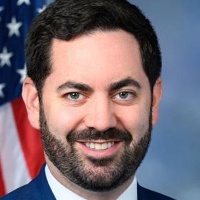
Michael Lawler
Representative
NY
Michael Lawler
Representative
NY
The American Victims of Terrorism Compensation Act amends the Justice for United States Victims of State Sponsored Terrorism Act to increase funding for victims of state-sponsored terrorism by redirecting forfeited assets and penalties into the United States Victims of State Sponsored Terrorism Fund. It mandates specific deposit timelines for forfeited funds, requires annual pro rata payments to eligible claimants beginning in 2026, and enhances transparency through detailed annual reports on fund activity. The Act also allows for the use of Department of Justice personnel to aid in the administration of the fund and ensures a supplemental payment to those already approved for fifth-round payments.
The "BAD DOGE Act" repeals Executive Order 14158, effectively ending the US DOGE Service and US DOGE Service Temporary Organization due to concerns of overreach and violations of laws and regulations.
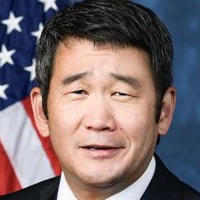
Dave Min
Representative
CA
Dave Min
Representative
CA
The "BAD DOGE Act" repeals Executive Order 14158, effectively disbanding the US DOGE Service (USDS) and the US DOGE Service Temporary Organization (USDSTO). This action is in response to findings that the USDS and USDSTO, under the leadership of Elon Musk, exceeded their authorized powers, violated constitutional principles, and contravened federal statutes and ethics regulations. The Act aims to restore proper oversight and adherence to legal standards within government IT operations.
The "DOC Access Act of 2025" aims to improve dental and vision care coverage by ensuring fair payment practices, protecting providers' choices, and upholding state regulatory authority.
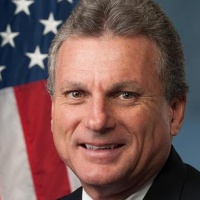
Earl Carter
Representative
GA
Earl Carter
Representative
GA
The "DOC Access Act of 2025" aims to enhance health care coverage under vision and dental plans by ensuring fair payment practices, protecting doctors' choices in labs and suppliers, and respecting state laws. It allows optometrists and dentists to charge their standard rate for non-covered services if the plan's payment is unreasonable, while ensuring they can only charge the contracted rate for dental cleanings. The bill also gives doctors more control over agreement extensions with limited benefit plans and allows them to opt out of certain provisions. Ultimately, this act seeks to balance federal guidelines with state oversight in regulating health insurance issuers and dental or vision benefit plans.
This resolution designates February 24–28, 2025, as "Public Schools Week" to celebrate the vital role of public education and advocate for the continued support and funding of our nation's schools.
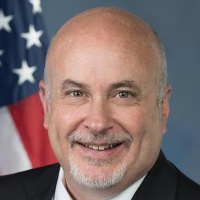
Mark Pocan
Representative
WI
Mark Pocan
Representative
WI
This resolution designates February 24–28, 2025, as "Public Schools Week" to celebrate the vital role public education plays in preparing students for the future. It reaffirms the commitment to providing every child with a high-quality, inclusive, and well-funded learning environment. Additionally, the bill calls on lawmakers to prioritize equitable resources and support services to ensure student success.
This bill ensures Medicare patients can continue receiving physical therapy services without interruption by allowing temporary substitute therapists ("locum tenens") to be covered when a physical therapist is temporarily unavailable.

Gus Bilirakis
Representative
FL
Gus Bilirakis
Representative
FL
The "Prevent Interruptions in Physical Therapy Act of 2025" ensures Medicare beneficiaries can continue receiving uninterrupted physical therapy services. It allows physical therapists to utilize temporary staffing arrangements, known as "locum tenens," when the regular therapist is temporarily unavailable. This ensures Medicare payments for services provided by qualified substitute physical therapists, maintaining consistent care for patients.
The "Due Process Continuity of Care Act" enables states to provide Medicaid coverage for individuals awaiting charges in medical institutions and supports states in planning and expanding healthcare access for this population.
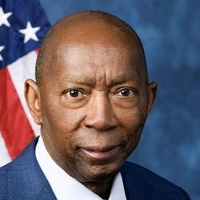
Sylvester Turner
Representative
TX
Sylvester Turner
Representative
TX
The "Due Process Continuity of Care Act" aims to provide Medicaid coverage for individuals in custody awaiting charges in a medical institution, removing the existing inmate limitation on benefits. It authorizes the Secretary to award planning grants to states to support providing Medicaid assistance to eligible individuals and to prepare an application that meets specific requirements. The Act requires states to develop plans for assessing health treatment needs, increasing healthcare provider participation, and ensuring quality of care for patients in custody. It allocates $50,000,000 for these planning grants.
Amends the Navajo-Gallup Water Supply Project to expand its service area, increase funding, and modify water rights and usage agreements, ensuring water access for additional Navajo Nation communities and the Jicarilla Apache Nation.
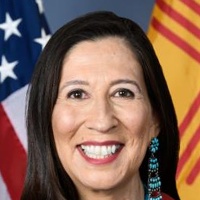
Teresa Leger Fernandez
Representative
NM
Teresa Leger Fernandez
Representative
NM
The Navajo-Gallup Water Supply Project Amendments Act of 2025 modifies and expands the existing Navajo-Gallup Water Supply Project by increasing authorized funding to $2,175,000,000, expanding the project's service area, and updating language regarding land acquisition and construction. The act establishes and governs the use of settlement trust funds for the Navajo Nation and Jicarilla Apache Nation, and allows the Navajo Nation to supply non-Project water to its communities in Utah under specific conditions. It also extends deadlines for fund deposits and waivers related to water rights, and clarifies taxation of project facilities.
The "Energy Resilient Communities Act" establishes a grant program to support the development of clean energy microgrids, prioritizing projects in environmental justice communities, to enhance climate resilience and reduce emissions.
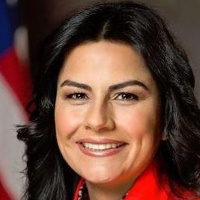
Nanette Barragán
Representative
CA
Nanette Barragán
Representative
CA
The "Energy Resilient Communities Act" establishes a grant program for clean energy microgrids, prioritizing projects that benefit environmental justice communities and community-owned energy systems. These grants will fund technical assistance, community outreach, and the construction of clean energy microgrids for critical infrastructure and residences. The Act emphasizes domestic production, prevailing wages, and local employment, while also requiring annual reports to Congress on the program's progress and impacts. It allocates significant funding for these initiatives over the next decade.
The bill modifies and extends funding for the World Trade Center Health Program, expands the types of healthcare providers who can certify mental health conditions, and requires a report to Congress on the program's budget.
Andrew Garbarino
Representative
NY
Andrew Garbarino
Representative
NY
The 9/11 Responder and Survivor Health Funding Correction Act of 2025 amends the Public Health Service Act to improve the World Trade Center (WTC) Health Program by expanding the types of healthcare providers who can conduct mental health evaluations, modifying provider credentialing, clarifying enrollment calculations, and extending the time frame for adding health conditions for WTC responders. The act adjusts the funding formula for fiscal years 2026 through 2090 and requires the Secretary of Health and Human Services to report to Congress on the program's budget, including projected needs through 2090 and recommendations for changes to the funding formula. It also stipulates that remaining funds in the Supplemental Fund, Special Fund, and Pentagon-Shanksville Fund will revert to the Treasury.
The Zuni Indian Tribe Water Rights Settlement Act of 2025 resolves water rights claims for the Zuni Tribe, protects the Zuni Salt Lake and Sanctuary, and facilitates land management and preservation efforts.
Gabriel (Gabe) Vasquez
Representative
NM
Gabriel (Gabe) Vasquez
Representative
NM
The Zuni Indian Tribe Water Rights Settlement Act of 2025 resolves water rights claims within the Zuni River Stream System for the Zuni Tribe by ratifying an agreement, establishing a trust fund, and allocating funding for water infrastructure. It also protects the Zuni Salt Lake and Sanctuary by withdrawing federal land from development, restricting land use, and transferring land into trust for the Zuni Tribe, preserving its cultural significance and water resources. The Act requires the Zuni Tribe and the U.S. government to waive certain water rights claims, with specific protections for individual allottees' water rights. This comprehensive settlement aims to improve water management, resolve disputes, and support economic development for the Zuni Tribe.
The "Kids Access to Primary Care Act of 2025" aims to improve children's access to primary care by increasing Medicaid payments to primary care providers, including OB/GYNs, and encouraging the use of Bright Futures guidelines.
Kim Schrier
Representative
WA
Kim Schrier
Representative
WA
The "Kids Access to Primary Care Act of 2025" aims to improve children's healthcare access by increasing Medicaid payments for primary care services to match Medicare rates, expanding the types of providers eligible for these payments, and mandating compliance from Medicaid managed care plans. It also requires a study on the impact of these changes on enrollment and provider payment rates. Additionally, the Act encourages healthcare providers to utilize the Bright Futures guidelines for pediatric care.
This bill amends the Civilian Health and Medical Program of the Department of Veterans Affairs (CHAMPVA) to extend eligibility for medical care to children until their 26th birthday, regardless of marital status.
Julia Brownley
Representative
CA
Julia Brownley
Representative
CA
The CHAMPVA Children's Care Protection Act of 2025 amends the eligibility requirements for the Civilian Health and Medical Program of the Department of Veterans Affairs (CHAMPVA). This act increases the maximum age for eligible children to receive medical care under the program to 26 years old, regardless of their marital status. This change does not affect benefits for children incapable of self-support and takes effect for medical care provided on or after the enactment of this act.
Allows individuals to enroll in standalone dental plans through the Health Insurance Exchange, regardless of health plan enrollment status.
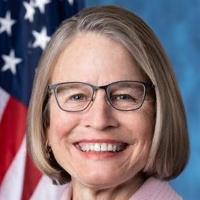
Mariannette Miller-Meeks
Representative
IA
Mariannette Miller-Meeks
Representative
IA
The "Increasing Access to Dental Insurance Act" aims to broaden access to dental coverage by enabling individuals to enroll in standalone dental plans via the Health Insurance Exchange, irrespective of their enrollment status in a qualified health plan. This expands options for individuals seeking dental insurance.
This bill authorizes a Congressional Gold Medal for the Buffalo Soldier regiments, honoring their service and contributions to the U.S. military.
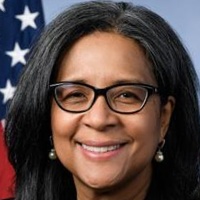
Marilyn Strickland
Representative
WA
Marilyn Strickland
Representative
WA
The Buffalo Soldiers Congressional Gold Medal Act of 2025 authorizes the Speaker of the House and the President pro tempore of the Senate to award a Congressional Gold Medal to the Buffalo Soldier regiments, recognizing their dedicated service to the United States. Following the award ceremony, the medal will be given to the Smithsonian Institution's National Museum of African American History and Culture for display and research. The Secretary of the Treasury is permitted to create and sell bronze duplicates of the gold medal. Funds from the sales will be deposited back into the Mint's Public Enterprise Fund.
The Secure Rural Schools Reauthorization Act of 2025 extends federal funding and program authorities for states and counties containing national forest land through 2026.
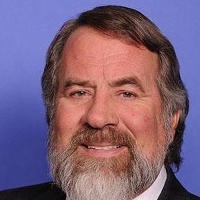
Doug LaMalfa
Representative
CA
Doug LaMalfa
Representative
CA
The Secure Rural Schools Reauthorization Act of 2025 extends critical federal funding for states and counties containing national forest land through 2026. This legislation ensures the continuation of essential community services and maintains the authority for resource advisory committees and local special projects.
This act authorizes the creation of the Smithsonian National Museum of the American Latino on the National Mall, ensuring diverse representation in its exhibits and programs.
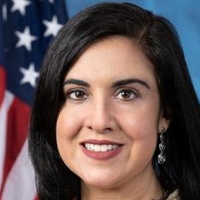
Nicole Malliotakis
Representative
NY
Nicole Malliotakis
Representative
NY
The Smithsonian National Museum of the American Latino Act authorizes the creation of the Smithsonian National Museum of the American Latino on the National Mall. It ensures the museum's exhibits and programs accurately represent the diverse cultures, histories, events, and values of Hispanic and Latino communities, seeking guidance from diverse sources. The Act also mandates regular reports to Congress on the museum's efforts to meet these diversity requirements.
This bill establishes an Office of Gun Violence Prevention within the Department of Justice to coordinate gun violence prevention efforts, evaluate related programs and policies, recommend evidence-based strategies, and assist communities affected by gun violence.
Maxwell Frost
Representative
FL
Maxwell Frost
Representative
FL
The "Office of Gun Violence Prevention Act of 2025" establishes an Office of Gun Violence Prevention within the Department of Justice, led by a Director appointed by the Attorney General, to coordinate gun violence prevention efforts, evaluate related laws and programs, and recommend evidence-based policies to Congress and the President. The Director will also convene an advisory council comprising various officials and at least 12 additional individuals representing gun violence survivors, community violence intervention service providers, and other relevant groups. The Office will also assist communities affected by gun violence with crisis response activities, such as providing access to mental health services and suicide prevention resources. Finally, the act authorizes the appropriation of necessary funds to carry out the provisions of the bill.
The "Rio San José and Rio Jemez Water Settlements Act of 2025" resolves water rights disputes for the Pueblos of Acoma, Laguna, Jemez, and Zia in New Mexico by ratifying settlement agreements, establishing trust funds, and defining water rights.
Teresa Leger Fernandez
Representative
NM
Teresa Leger Fernandez
Representative
NM
This bill resolves water rights disputes in New Mexico for the Pueblos of Acoma, Laguna, Jemez, and Zia by ratifying existing agreements and establishing trust funds to manage settlement money. It clarifies and protects the water rights of each Pueblo, ensuring long-term access to water resources, and requires the Pueblos to waive certain claims in exchange for the settlement benefits. The legislation allocates specific funding for water infrastructure, watershed protection, and economic development, contingent upon meeting key conditions and timelines for implementation. By settling these disputes, the bill aims to enhance water security and support economic development for the Pueblos.