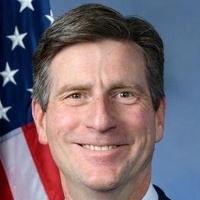
Legislative Activity
Track Greg's sponsored bills, co-sponsored legislation, and voting record
The Congressional Trade Authority Act of 2025 significantly restricts the President's power to adjust imports based on national security by requiring joint agreement from the Secretaries of Defense and Commerce and mandatory Congressional approval for any resulting trade action.
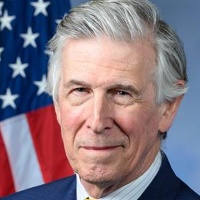
Donald Beyer
Representative
VA
Donald Beyer
Representative
VA
The Congressional Trade Authority Act of 2025 significantly overhauls presidential authority to restrict imports based on national security grounds. This bill shifts the primary investigation role to the Secretary of Defense and mandates that any resulting import adjustments require explicit approval by a Congressional joint resolution to take effect. Furthermore, all new trade restrictions will automatically expire after three years unless Congress renews them.
The "Do No Harm Act" clarifies that the Religious Freedom Restoration Act cannot be used to bypass federal laws protecting against discrimination, ensuring equal opportunity, or safeguarding access to healthcare and other essential services.
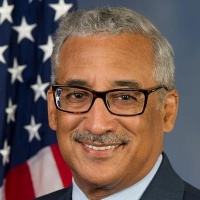
Robert Scott
Representative
VA
Robert Scott
Representative
VA
The "Do No Harm Act" amends the Religious Freedom Restoration Act of 1993 to ensure religious freedom is not used to justify discrimination or harm. It clarifies that the Act does not override federal laws protecting against discrimination, ensuring equal opportunity, or safeguarding access to healthcare and other essential services. This amendment confirms that the Religious Freedom Restoration Act applies only when the government is a party in a judicial proceeding.
The End Veteran Homelessness Act of 2025 aims to prioritize case management for vulnerable homeless veterans, expand and clarify rules for the HUD-VASH rental assistance program, and mandate detailed annual reporting on program effectiveness and staffing.
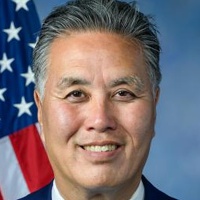
Mark Takano
Representative
CA
Mark Takano
Representative
CA
The End Veteran Homelessness Act of 2025 aims to improve support for homeless and at-risk veterans by prioritizing vulnerable individuals for VA case management services. It mandates detailed annual reporting on the HUD-VASH program's effectiveness, staffing, and voucher utilization. Furthermore, the bill expands eligibility for rental assistance and protects veterans from eviction if they initially refuse case management services. Finally, it requires the GAO to conduct a comprehensive review of HUD-VASH participants and case management quality.
This bill mandates a comprehensive assessment of current and necessary staffing levels for DHS agencies operating at the southern border and requires a report detailing proposed solutions.
Julie Johnson
Representative
TX
Julie Johnson
Representative
TX
The Border Workforce Improvement Act mandates a comprehensive assessment by the Department of Homeland Security (DHS) to determine the actual staffing needs of Customs and Border Protection, ICE, and USCIS at the southern border. This review will analyze current staffing practices, workload drivers, and resource gaps in personnel, technology, and risk management. The resulting report must detail findings and outline the specific action plans DHS leadership intends to implement to address identified deficiencies.
This bill terminates the national emergency declared by the President on February 1, 2025, under Executive Order 14194.
Gregory Meeks
Representative
NY
Gregory Meeks
Representative
NY
This bill terminates the national emergency declared by the President on February 1, 2025, via Executive Order 14194. It exercises legislative authority under the National Emergencies Act to formally end the emergency declaration.
This bill authorizes the posthumous presentation of a Congressional Gold Medal to James Earl Jones, honoring his contributions to the United States and his work promoting inclusion in film and theatre.
Michael Lawler
Representative
NY
Michael Lawler
Representative
NY
The James Earl Jones Congressional Gold Medal Act directs the Speaker of the House and the President pro tempore of the Senate to arrange for the posthumous presentation of a Congressional Gold Medal to James Earl Jones, honoring his contributions to the United States and his work promoting inclusion in film and theatre. The Secretary of the Treasury will create the gold medal, and bronze duplicates will be made available for sale to the public.
This act modernizes wildfire safety by investing in firefighter training and support, enhancing public health warnings for smoke exposure, and advancing mitigation technology and disaster recovery programs.
Josh Harder
Representative
CA
Josh Harder
Representative
CA
The Modernizing Wildfire Safety and Prevention Act of 2025 is a comprehensive bill designed to bolster the nation's wildfire response capabilities. It focuses on increasing the skilled workforce through new training academies and grants, improving federal firefighter support and retirement benefits, and enhancing public health protections against wildfire smoke via a new national alert system. Finally, the Act streamlines disaster recovery aid and advances predictive technology through centralized risk mapping and data centers.
The "Keeping Our Field Offices Open Act" prevents the Social Security Administration from closing or limiting access to field offices, hearing offices, and resident stations, ensuring continued service availability for the public.
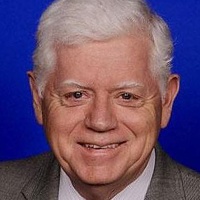
John Larson
Representative
CT
John Larson
Representative
CT
The "Keeping Our Field Offices Open Act" prevents the Social Security Administration (SSA) from closing or consolidating field offices, hearing offices, and resident stations, ensuring continued access to services. It requires the SSA Commissioner to justify any planned closures to Congress with detailed analysis and cost-benefit assessments, considering the impact on vulnerable populations. The bill mandates public notice, hearings, and a final report to Congress before any changes, allowing appeals and maintaining the number of offices at or above the January 20, 2025 level, excluding temporary emergency closures.
The Fighter Force Preservation and Recapitalization Act of 2025 aims to increase and modernize the Air Force's fighter aircraft fleet, ensuring a strong national defense through the year 2030.
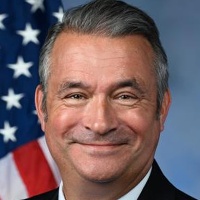
Don Bacon
Representative
NE
Don Bacon
Representative
NE
The Fighter Force Preservation and Recapitalization Act of 2025 aims to modernize and maintain the Air Force's fighter aircraft fleet by increasing the minimum number of fighter aircraft, requiring detailed reports on the fleet's status, prioritizing the assignment of new aircraft to existing squadrons, and preserving the Air National Guard's fighter capabilities. The act mandates the Air Force to assign at least three out of every four new advanced fighter aircraft to existing Air Force fighter squadrons and maintain at least 25 Air National Guard fighter aircraft squadrons. Additionally, it requires the Secretary of the Air Force to develop and submit an annual modernization plan for the Air National Guard's fighter fleet to Congress. The Act defines specific categories of fighter aircraft to clarify modernization efforts.
The Richard L. Trumka Protecting the Right to Organize Act of 2025 strengthens protections for workers' rights to organize and collectively bargain by modernizing labor laws, addressing unfair labor practices, and enhancing enforcement mechanisms.
Robert Scott
Representative
VA
Robert Scott
Representative
VA
This bill, the Richard L. Trumka Protecting the Right to Organize Act of 2025, seeks to amend the National Labor Relations Act and other labor laws to strengthen protections for workers' rights to organize and collectively bargain. It aims to modernize labor regulations by clarifying definitions, addressing unfair labor practices, enhancing enforcement, and increasing transparency in labor-management relations. The bill introduces measures such as electronic voting in union elections, strengthens whistleblower protections, and mandates studies on collective bargaining practices. Ultimately, the goal is to ensure fair treatment of workers and promote equitable labor practices.
The John R. Lewis Voting Rights Advancement Act of 2025 aims to strengthen and update the Voting Rights Act of 1965 by addressing vote dilution and denial, establishing updated criteria for federal oversight of states and political subdivisions with a history of voting rights violations, and promoting transparency in election-related changes.
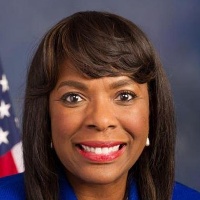
Terri Sewell
Representative
AL
Terri Sewell
Representative
AL
The John R. Lewis Voting Rights Advancement Act of 2025 amends the Voting Rights Act of 1965 to address vote dilution, denial, and abridgment claims, and to update which states and political subdivisions are subject to federal oversight based on a history of voting rights violations. It broadens the types of violations that allow a court to retain jurisdiction over a case, clarifies the Attorney General's authority to assign observers, and ensures transparency in voting-related changes. The Act also authorizes the Attorney General to demand documents and information to enforce voting rights and provides grants to small jurisdictions to assist with notification requirements.
This bill restricts political appointees and special government employees from accessing Social Security data, establishes civil damages for unauthorized access, mandates Inspector General investigations, and requires a GAO study on the changes.
John Larson
Representative
CT
John Larson
Representative
CT
The Protecting Americans’ Social Security Data Act restricts political appointees and special government employees from accessing sensitive Social Security beneficiary data systems. It establishes a right for individuals to sue the government or responsible parties for unauthorized access or disclosure of their private Social Security information, including specified minimum damages. Furthermore, the bill mandates the Inspector General to investigate such violations and report findings to Congress within 30 days. Finally, it requires the GAO to conduct a comprehensive study on the impact of these new privacy and enforcement measures.
The "Child Care Availability and Affordability Act" aims to make child care more accessible and affordable by expanding employer-provided child care credits, increasing tax-free dependent care assistance, and enhancing the household and dependent care tax credit.
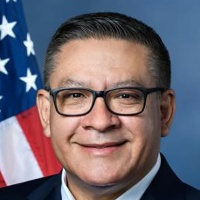
Salud Carbajal
Representative
CA
Salud Carbajal
Representative
CA
The Child Care Availability and Affordability Act aims to improve access to affordable child care by expanding employer-provided child care credits, increasing tax-free dependent care assistance, and creating a refundable household and dependent care tax credit. The employer provided child care credit is increased from 25% to 50% of qualified expenses, and the maximum credit amount is raised from $150,000 to $500,000. The amount of tax-free employer-provided dependent care assistance is increased from $5,000 to $7,500. A new tax credit is created for employment-related expenses paid for household and dependent care, with the applicable percentage starting at 50% and decreasing based on income, and the maximum creditable expenses are $5,000 for one qualifying individual and $8,000 for two or more.
The MERIT Act mandates the reinstatement of federal probationary employees affected by mass terminations occurring between January 20, 2025, and the Act's enactment, providing back pay and benefits.

LaMonica McIver
Representative
NJ
LaMonica McIver
Representative
NJ
The MERIT Act requires federal agencies to reinstate probationary employees who were terminated as part of a mass termination event between January 20, 2025, and the Act's enactment date, providing them with back pay and benefits. The Act also mandates reports on government employee terminations and the reinstatement process. It defines key terms such as "affected probationary employee" and "mass termination" to clarify the scope and applicability of the Act. This act ensures that affected employees are treated as involuntarily separated without cause and outlines the process for determining back pay and providing notice to eligible employees.
The Child Care Workforce Act aims to improve child care quality and affordability by increasing child care worker wages through a pilot grant program for States, Indian Tribes, and Tribal organizations.
Salud Carbajal
Representative
CA
Salud Carbajal
Representative
CA
The Child Care Workforce Act aims to improve child care quality and affordability by establishing a pilot program that provides grants to states, Indian Tribes, and Tribal organizations to increase the wages of child care workers. These grants will be used to supplement the wages of eligible child care workers, with the goal of attracting and retaining qualified professionals, enhancing their well-being, and expanding access to affordable child care options. The program will be evaluated for its effectiveness, and a report will be submitted to Congress.
The "Safe Schools Improvement Act" amends the Elementary and Secondary Education Act of 1965, requiring states to establish policies that prevent and prohibit bullying and harassment in schools based on protected characteristics, ensuring a safe and inclusive learning environment for all students.

Linda Sánchez
Representative
CA
Linda Sánchez
Representative
CA
The Safe Schools Improvement Act aims to reduce bullying and harassment in schools by requiring states to establish policies prohibiting such conduct based on various characteristics, including race, sex, religion, and disability. It mandates annual notifications, data collection on incidents, biennial evaluations of programs, and regular reports to Congress to ensure accountability and effectiveness. This act does not infringe on existing nondiscrimination laws or freedom of speech but seeks to create a safer, more inclusive learning environment for all students.
The "Roberto Clemente Commemorative Coin Act" directs the Treasury to mint coins in 2027 honoring Roberto Clemente, with surcharges benefiting the Roberto Clemente Foundation.
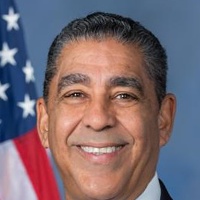
Adriano Espaillat
Representative
NY
Adriano Espaillat
Representative
NY
The Roberto Clemente Commemorative Coin Act directs the Department of Treasury to mint and issue gold, silver, and half-dollar coins in 2027 to commemorate the life and legacy of Roberto Clemente. The coins' designs will represent Clemente's life, including his baseball achievements and humanitarian work. Surcharges from the coin sales will benefit the Roberto Clemente Foundation, supporting their educational programs, youth sports initiatives, disaster relief efforts, and historic preservation projects. The Act ensures that the coin program will not incur any net cost to the United States government.
The Humane Cosmetics Act of 2025 bans cosmetic animal testing in the U.S., restricts the use of animal testing data, and sets penalties for violations, while also preventing states from enacting conflicting regulations.
Donald Beyer
Representative
VA
Donald Beyer
Representative
VA
The Humane Cosmetics Act of 2025 bans cosmetic animal testing in the U.S. and restricts the use of animal testing data for cosmetic safety, with certain exceptions. It authorizes the Secretary of Health and Human Services to impose civil penalties for non-compliance and preempts states from enacting conflicting regulations. The Act defines key terms related to cosmetic animal testing and cosmetics.
The PAST Act of 2025 significantly strengthens the Horse Protection Act by increasing penalties, banning specific action devices, and mandating licensed inspectors to combat the practice of horse soring.
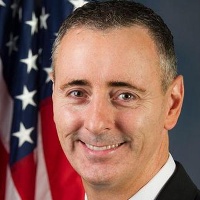
Brian Fitzpatrick
Representative
PA
Brian Fitzpatrick
Representative
PA
The PAST Act of 2025 significantly strengthens the Horse Protection Act to combat the painful practice of soring in specific horse breeds. This bill increases penalties for violations, establishes stricter licensing and oversight for inspectors, and explicitly bans the use of "action devices" designed to cause unnatural gaits. The legislation aims to enhance enforcement, ensure fairer competition, and hold violators accountable through increased fines and disqualifications.
This resolution reaffirms the United States' commitment to Mexican sovereignty and condemns the use of unilateral military action in Mexico without the Mexican government's consent and explicit congressional authorization.
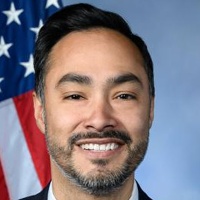
Joaquin Castro
Representative
TX
Joaquin Castro
Representative
TX
This resolution reaffirms the United States' commitment to respecting Mexico’s sovereignty and condemns the use of unilateral military action without Mexico's consent and explicit congressional authorization. It emphasizes that transnational criminal activities, such as drug trafficking, do not constitute an armed attack justifying military force under international or U.S. law. Ultimately, the bill advocates for continued bilateral cooperation to address shared security challenges rather than military intervention.