Legislative Activity
Track Austin's sponsored bills, co-sponsored legislation, and voting record
This resolution formally recognizes the 250th anniversary of the United States Marine Corps, honoring its legacy, service, and core values.
Jack Bergman
Representative
MI
Jack Bergman
Representative
MI
This resolution formally recognizes the upcoming 250th anniversary of the United States Marine Corps in 2025. Congress is honoring the Corps' long history, core values of honor, courage, and commitment, and its consistent readiness to defend the nation. The bill encourages the public to join in celebrating this significant milestone and acknowledging the service and sacrifice of all Marines.
This bill establishes national reciprocity for concealed carry permits, allowing individuals legally permitted to carry in their home state to carry a handgun in any other state that allows concealed carry.
Richard Hudson
Representative
NC
Richard Hudson
Representative
NC
The Constitutional Concealed Carry Reciprocity Act of 2025 establishes a national standard for carrying concealed handguns across state lines. This act allows individuals legally permitted to carry in their home state to carry concealed in any other state that allows its residents to carry concealed firearms. The law does not override private property restrictions or prohibitions on government property, but it provides protections and legal recourse for those traveling in compliance with the new federal standard.
This bill revises physician self-referral rules to create a special exemption for certain rural, physician-owned hospitals and removes expansion restrictions for existing physician-owned hospitals.
H. Griffith
Representative
VA
H. Griffith
Representative
VA
The Physician Led and Rural Access to Quality Care Act revises physician self-referral rules to improve healthcare access in underserved areas. Specifically, it creates a new exception allowing physician self-referrals to hospitals located in designated rural areas that meet specific distance requirements. Furthermore, the bill removes existing restrictions that previously limited the expansion of services at physician-owned hospitals.
This bill prohibits healthcare providers from using savings obtained through the 340B drug pricing program to fund sex reassignment surgeries or hormone treatments for transgender individuals.
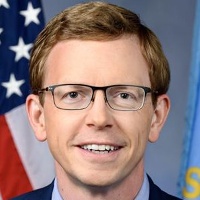
Dusty Johnson
Representative
SD
Dusty Johnson
Representative
SD
The No 340B Savings for Transgender Care Act prohibits healthcare providers participating in the 340B drug pricing program from using their savings to pay for sex reassignment surgeries or hormone treatments for transgender individuals. This legislation specifically restricts the use of discounted outpatient drug savings for gender transition-related medical services.
The Fair and Open Competition Act of 2025 prohibits the federal government from requiring or penalizing bidders or contractors on federally funded construction projects based on their agreement or non-agreement with labor unions.
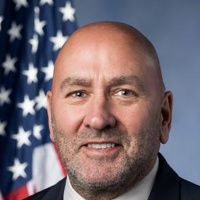
Clay Higgins
Representative
LA
Clay Higgins
Representative
LA
The Fair and Open Competition Act of 2025 ensures fair competition on federally funded construction projects by prohibiting the government from requiring or penalizing bidders based on union agreements. This legislation aims to keep federal agencies neutral in labor relations while promoting cost savings and opening opportunities for all businesses. Exceptions to this neutrality rule are strictly limited to specific public health, safety, or national security emergencies.
This bill grants U.S. Armed Forces members serving in Kenya, Mali, Burkina Faso, and Chad the same tax benefits as those serving in designated combat zones.
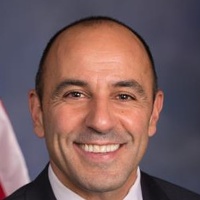
Jimmy Panetta
Representative
CA
Jimmy Panetta
Representative
CA
This bill extends combat zone tax benefits to members of the Armed Forces serving in Kenya, Mali, Burkina Faso, and Chad. It treats these locations as "qualified hazardous duty areas" for tax purposes, applying the same favorable rules used for official combat zones. This change impacts filing deadlines, income exclusions, and tax liability for service members in these specific regions.
This act exempts individuals and businesses deriving at least 75% of their adjusted gross income from farming, ranching, or forestry from certain payment limitations for specified agricultural disaster programs.
Jimmy Panetta
Representative
CA
Jimmy Panetta
Representative
CA
The Fair Access to Agriculture Disaster Programs Act creates an exception to income limits for certain federal agriculture disaster payments. This exception applies to individuals or businesses where at least 75% of their average adjusted gross income is derived from farming, ranching, or forestry. Consequently, these deeply involved agricultural producers will not be subject to standard payment caps on specific disaster assistance programs.
The Credit for Caring Act of 2025 establishes a new, partially refundable federal income tax credit for working family caregivers covering qualified expenses exceeding \$2,000, up to a \$5,000 annual limit.
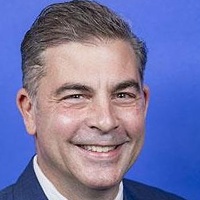
Mike Carey
Representative
OH
Mike Carey
Representative
OH
The Credit for Caring Act of 2025 establishes a new, non-refundable federal income tax credit for working family caregivers who incur significant expenses caring for a relative with long-term care needs. Eligible caregivers can claim a credit equal to 30% of qualified expenses exceeding \$2,000, up to a maximum annual credit of \$5,000. The bill specifies detailed requirements for the care recipient's needs, the types of allowable expenses, and includes income phase-out limits for claiming the benefit.
The "Delphi Retirees Pension Restoration Act" restores full pension benefits to eligible Delphi retirees and beneficiaries, compensating for past underpayments with interest, using existing funds and allowing for favorable tax treatment of lump-sum payments.
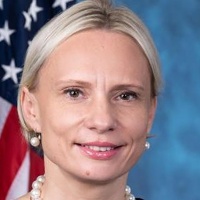
Victoria Spartz
Representative
IN
Victoria Spartz
Representative
IN
The Delphi Retirees Pension Restoration Act aims to restore the full pension benefits to eligible participants and beneficiaries under specific terminated pension plans, such as the Delphi Hourly-Rate Employees Pension Plan. It mandates the recalculation of benefits to match the full vested plan benefit, provides for lump-sum payments to cover past underpayments with interest, and funds these increased benefits through existing resources. The bill also includes provisions for the tax treatment of these payments, allowing recipients to spread the income over three years.
This resolution expresses formal condolences to the families and loved ones of the 67 victims of the January 2025 collision between American Eagle Flight 5342 and a U.S. Army flight, while honoring the victims and commending the first responders.
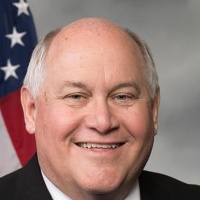
Ron Estes
Representative
KS
Ron Estes
Representative
KS
This resolution expresses the House of Representatives' deepest condolences to the families and loved ones of the 67 individuals who lost their lives in the January 29, 2025, collision of American Eagle Flight 5342 and a U.S. Army flight. It honors the victims, many of whom had strong ties to Wichita, Kansas, and commends the heroic efforts of the first responders and emergency personnel who managed the recovery.
The "Federal Firearms Licensee Protection Act of 2025" increases penalties for stealing firearms from licensed dealers, manufacturers, or importers, especially during burglaries or robberies, and clarifies related definitions.
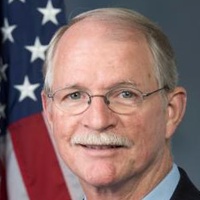
John Rutherford
Representative
FL
John Rutherford
Representative
FL
The "Federal Firearms Licensee Protection Act of 2025" increases penalties for stealing firearms from licensed dealers. It sets stricter punishments, including up to 20 years in prison, for violating laws related to firearm theft. The act also mandates minimum prison sentences of 3 years for burglaries and 5 years for robberies targeting licensed firearm businesses.
To award a Congressional Gold Medal to the 761st Tank Battalion, the first Black soldiers to serve in an American armored unit, for their valor and crucial contributions to the Allied victory in Europe.
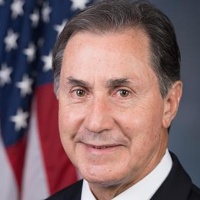
Gary Palmer
Representative
AL
Gary Palmer
Representative
AL
This bill authorizes the Speaker of the House and the President pro tempore of the Senate to award a Congressional Gold Medal to the 761st Tank Battalion, also known as the "Black Panthers," in recognition of their courageous service and crucial contributions during World War II. The medal will be given to the National Museum of African American History and Culture for display, honoring the 761st as the first Black soldiers to serve in an American armored unit and their significant role in the Allied victory in Europe. The bill also allows for the creation and sale of bronze duplicates of the medal to support the United States Mint Public Enterprise Fund.
The SOLAR Act restricts USDA funding for ground-mounted solar projects that convert farmland, with exceptions for small projects, on-farm use, or those approved by local governments with a farmland conservation plan.
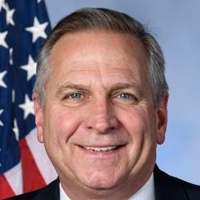
Mike Bost
Representative
IL
Mike Bost
Representative
IL
The Securing Our Lands and Resources Act (SOLAR Act) restricts USDA funding for ground-mounted solar energy systems that convert covered farmland, with exceptions for small projects, on-farm energy use, or projects approved by local governments. These approved projects must adhere to a farmland conservation plan that protects soil health, ensures restoration after the project ends, and provides sufficient decommissioning funds. Failure to comply with the conservation plan results in repayment of USDA financial assistance.
This bill renames the U.S. National Poultry Research Center in Athens, Georgia, to the "Abit Massey Poultry Research Center".
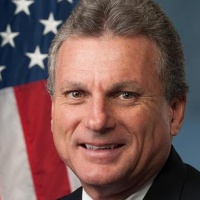
Earl Carter
Representative
GA
Earl Carter
Representative
GA
This bill renames the U.S. National Poultry Research Center in Athens, Georgia, as the "Abit Massey Poultry Research Center." Any reference to the U.S. National Poultry Research Center will now refer to the Abit Massey Poultry Research Center.
This resolution condemns the Iranian regime’s terrorism and human rights abuses while affirming support for the Iranian people’s right to establish a democratic, secular, and non-nuclear republic.
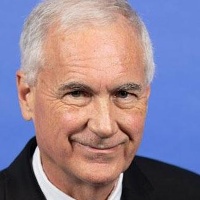
Tom McClintock
Representative
CA
Tom McClintock
Representative
CA
This resolution condemns the Iranian regime for its ongoing human rights abuses, state-sponsored terrorism, and regional instability. It expresses strong support for the Iranian people's struggle for a democratic, secular, and non-nuclear republic. Furthermore, the bill advocates for international accountability for the regime's crimes and calls for the protection of Iranian political refugees.
The SCREEN Act requires online platforms that host or provide pornographic content to implement technology to verify users' ages and prevent minors from accessing harmful material.
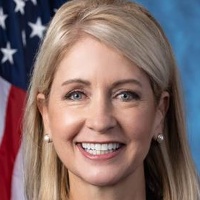
Mary Miller
Representative
IL
Mary Miller
Representative
IL
The SCREEN Act requires online platforms that host or provide pornographic content to implement technology verification measures to prevent minors from accessing harmful material. It mandates that these platforms use reliable age verification methods, undergo regular audits by the Federal Trade Commission (FTC) to ensure compliance, and protect user data collected during the verification process. The FTC is responsible for enforcing the Act, and the Government Accountability Office (GAO) must report to Congress on the effectiveness and impact of these measures. This act aims to protect children from the harmful effects of online pornography.
This bill authorizes the creation of a Congressional Gold Medal to honor the volunteers and communities involved with the North Platte Canteen during World War II.
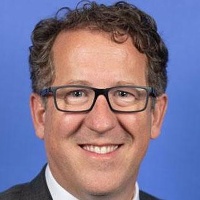
Adrian Smith
Representative
NE
Adrian Smith
Representative
NE
The North Platte Canteen Congressional Gold Medal Act recognizes and honors the volunteers and donors of the North Platte Canteen in Nebraska during World War II with a Congressional Gold Medal. This medal will be presented by the Speaker of the House and the President pro tempore of the Senate, and then displayed at the Lincoln County Historical Museum. The Act also authorizes the creation and sale of bronze duplicates of the gold medal to cover production costs, with proceeds deposited into the Mint's Public Enterprise Fund.
The "Sporting Goods Excise Tax Modernization Act" clarifies that marketplace providers are responsible for excise taxes on certain imported sporting goods sold through their platforms.
Jimmy Panetta
Representative
CA
Jimmy Panetta
Representative
CA
The "Sporting Goods Excise Tax Modernization Act" modifies excise tax regulations by treating marketplace providers as the importer and seller for excise tax purposes on taxable sporting goods sold through their platform if the goods are shipped from outside the U.S. This applies when the marketplace provider lists the product, collects payments, and the manufacturer is not the marketplace provider. The regulations will be applied to sales in calendar quarters starting 60 days after the enactment of this Act.
This bill expands and codifies the Department of Agriculture's Rural Health Care Facility Technical Assistance Program to improve the financial stability and healthcare delivery in rural facilities.
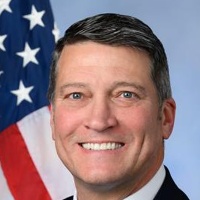
Ronny Jackson
Representative
TX
Ronny Jackson
Representative
TX
The Rural Health Care Facility Technical Assistance Program Act expands and codifies a Department of Agriculture program to provide technical assistance and training to rural health care facilities. This program aims to improve financial stability, prevent closures, and strengthen health care delivery in rural areas. The Act authorizes up to $2,000,000 annually from 2026-2030 for these activities and requires annual reports to Congress. It prioritizes outreach to facilities at risk and those serving underserved populations.
The "Securing Strictly Needy Americans’ Pivotal (SNAP) Benefits Act of 2025" aims to prevent SNAP benefit misuse by limiting out-of-state EBT use and restricting store owners from redeeming their own SNAP benefits at their stores.
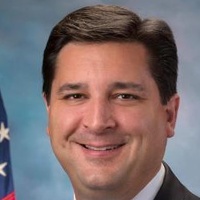
David Rouzer
Representative
NC
David Rouzer
Representative
NC
The "Securing Strictly Needy Americans’ Pivotal (SNAP) Benefits Act of 2025" aims to prevent SNAP benefit misuse by suspending accounts used exclusively out-of-state for over 60 days until residency is proven. It also restricts SNAP recipients who own retail food stores or wholesale food concerns from redeeming benefits at their own establishments, excluding publicly held corporations and government-owned entities. This act is set to take effect one year after enactment.