Legislative Activity
Track Marlin's sponsored bills, co-sponsored legislation, and voting record
This bill modifies deposits into the Crime Victims Fund by excluding certain False Claims Act recoveries and mandates an Inspector General audit of the Fund's sustainability.
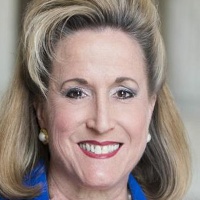
Ann Wagner
Representative
MO
Ann Wagner
Representative
MO
This bill amends the Victims of Crime Act of 1984 to temporarily exclude certain False Claims Act recoveries from being deposited into the Crime Victims Fund through fiscal year 2029. It also mandates a comprehensive audit by the Department of Justice Inspector General on the Fund's sustainability and the impact of recent legislative changes. The resulting report will provide recommendations for improving the Fund's effectiveness and oversight.
This Act imposes visa and entry sanctions on foreign individuals involved in providing gender transition care to minors who are U.S. persons.
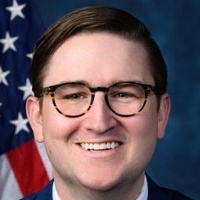
Addison McDowell
Representative
NC
Addison McDowell
Representative
NC
This Act imposes visa and entry bans on foreign individuals who provide gender transition care to U.S. minors. Sanctions target foreign physicians, associated medical institutions, and members of specific transgender health organizations involved in these procedures. The law defines prohibited care as "chemical or surgical mutilation" intended to alter a person's biological sex.
This act removes Section 4024(c) from the CARES Act to clarify the enforcement of state housing laws.
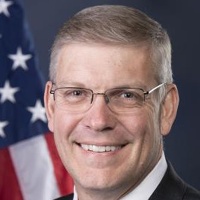
Barry Loudermilk
Representative
GA
Barry Loudermilk
Representative
GA
The Respect State Housing Laws Act aims to clarify federal housing regulations by amending the CARES Act. Specifically, this legislation removes Section 4024(c) from the CARES Act.
This bill authorizes Congress to award Congressional Gold Medals to the 1980 U.S. Men's Olympic Ice Hockey team for their historic "Miracle on Ice" victory.
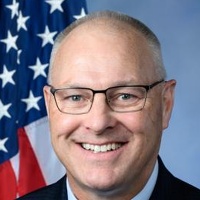
Pete Stauber
Representative
MN
Pete Stauber
Representative
MN
This bill, the Miracle on Ice Congressional Gold Medal Act, officially authorizes Congress to award Congressional Gold Medals to the 1980 U.S. Men's Olympic Ice Hockey Team for their historic "Miracle on Ice" victory. The medals will be struck by the Treasury and permanently displayed at specific national sports museums. The Act also permits the sale of duplicate bronze medals to cover production costs.
This bill exempts qualifying less-than-lethal projectile devices and their ammunition from federal excise taxes and the regulations of the National Firearms Act.
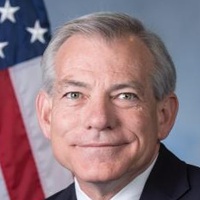
David Schweikert
Representative
AZ
David Schweikert
Representative
AZ
This bill exempts specific, carefully defined less-than-lethal projectile devices and their ammunition from the federal excise tax on firearms and ammunition. It also removes these qualifying devices from regulation under the National Firearms Act. The legislation establishes clear criteria, including velocity limits and design restrictions, to ensure the exemption applies only to tools intended for de-escalation rather than lethal force. Manufacturers can request official classification for their products to confirm eligibility for these tax and regulatory benefits.
The SAFE Drugs Act of 2025 limits pharmacists and physicians from excessively copying commercial drugs through compounding, establishes new annual reporting for out-of-state compounding, increases FDA inspection frequency for large-scale facilities, and adjusts compounding facility fees.
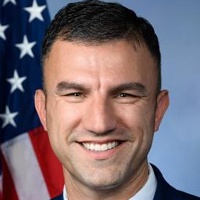
Rudy Yakym
Representative
IN
Rudy Yakym
Representative
IN
The SAFE Drugs Act of 2025 aims to enhance the safety and oversight of drug compounding by limiting the ability of pharmacists and physicians to copy commercially available drugs. It introduces new annual reporting requirements for pharmacies compounding drugs for out-of-state patients and imposes stricter FDA inspection schedules for large-scale compounding facilities. Furthermore, the bill mandates registration for all outsourcing facilities and adjusts the fee structure used to fund safety assurance activities.
This bill establishes a federal crime and civil cause of action against anyone who knowingly administers an abortion-inducing drug to a woman without her informed consent.
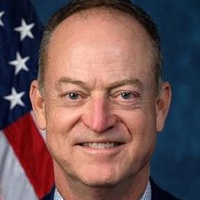
Mark Messmer
Representative
IN
Mark Messmer
Representative
IN
The Forced Abortion Prevention and Accountability Act establishes a new federal crime prohibiting the knowing and intentional administration of abortion-inducing drugs to a pregnant woman without her informed consent. This legislation creates severe criminal penalties, including up to 25 years in prison, for those who violate this prohibition or attempt to do so. Furthermore, it grants victims the right to file a civil lawsuit to recover damages for physical and psychological injuries resulting from forced abortions.
This resolution commemorates Jimmy Lai's birthday as "Jimmy Lai Day" while condemning the suppression of democracy in Hong Kong and calling for the release of all political prisoners.

John Moolenaar
Representative
MI
John Moolenaar
Representative
MI
This resolution designates December 8, 2025, as "Jimmy Lai Day" to honor his advocacy for press freedom, religious freedom, and democracy in Hong Kong. It condemns the actions of the People's Republic of China and Hong Kong authorities for suppressing fundamental freedoms and calls for the immediate release of Jimmy Lai and all unjustly imprisoned pro-democracy advocates.
This bill repeals the Human Rights Sanctuary Amendment Act of 2022, restoring previous laws.
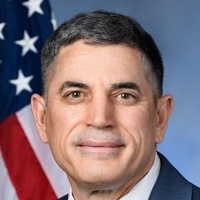
Andrew Clyde
Representative
GA
Andrew Clyde
Representative
GA
This bill, the D.C. Shield Law Repeal Act, seeks to repeal the Human Rights Sanctuary Amendment Act of 2022. By doing so, it will restore the laws and regulations that were in effect prior to the 2022 Act.
This bill designates the Muslim Brotherhood and its affiliates as terrorist organizations, imposing strict prohibitions and immigration consequences for its members.
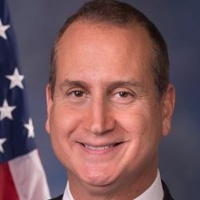
Mario Diaz-Balart
Representative
FL
Mario Diaz-Balart
Representative
FL
The Muslim Brotherhood Terrorist Designation Act of 2025 seeks to formally prohibit the operations of the Muslim Brotherhood and its affiliates within the United States by applying existing anti-terrorism restrictions. This legislation mandates the Secretary of State to annually report on all Muslim Brotherhood branches globally, leading to the imposition of sanctions by the President on those entities. Furthermore, the bill establishes immigration consequences, including visa cancellation, for members of the organization.
This act mandates the inclusion of a citizenship question on future decennial censuses and requires that only U.S. citizens be counted when apportioning congressional representation and electoral votes.
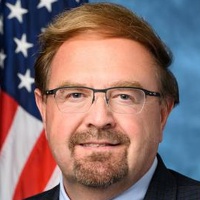
Charles (Chuck) Edwards
Representative
NC
Charles (Chuck) Edwards
Representative
NC
The Equal Representation Act of 2025 mandates the inclusion of a citizenship question on the decennial census starting in 2030. This legislation requires that the population counts used for apportioning seats in the House of Representatives and determining electoral votes exclude non-citizens. The bill ensures that representation is based solely on the count of U.S. citizens within each state.
This bill prohibits the use of federal funds to cover any expenses related to abortion services for individuals unlawfully present in the United States.
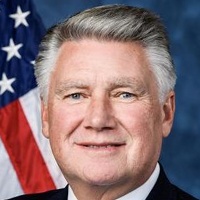
Mark Harris
Representative
NC
Mark Harris
Representative
NC
This bill, the "No Taxpayer Funded Abortion Travel for Illegal Aliens Act," prohibits the use of federal funds to cover any expenses related to abortion services for individuals unlawfully present in the United States. These prohibited expenses include travel, lodging, meals, and related support services. The legislation specifically targets federal funding for aiding unlawful immigrants in accessing abortion care.
This bill mandates the Congressional Budget Office (CBO) to annually publish a public schedule detailing the expected release dates for its major recurring reports.
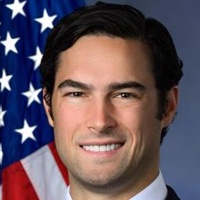
Brandon Gill
Representative
TX
Brandon Gill
Representative
TX
The Congressional Budget Office Scheduling Reform Act mandates that the Director of the CBO publish an annual schedule of major recurring reports on the CBO's public website by December 31st of each year. This schedule must detail the expected publication dates for key documents, including budget baselines and deficit reduction reports. The Director retains the ability to update this schedule as necessary throughout the following year.
This bill mandates the SEC to establish data protection policies for sensitive information received from investment advisers.
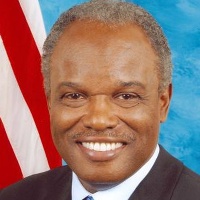
David Scott
Representative
GA
David Scott
Representative
GA
This bill, the "SEC Data Protection Act," mandates that the Securities and Exchange Commission (SEC) establish comprehensive data protection policies for sensitive, nonpublic information received from investment advisers. The SEC must adopt these rules within one year, ensuring the safeguarding and restricted access of proprietary data. This legislation aims to protect sensitive information collected by the Commission during its oversight of investment advisers.
This resolution condemns the persecution of Christians in Nigeria and supports decisive U.S. action to end the existential threat they face.
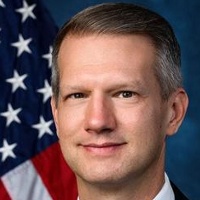
Riley Moore
Representative
WV
Riley Moore
Representative
WV
This resolution condemns the severe, ongoing persecution and mass killing of Christians in Nigeria by terrorist groups and militants. It criticizes the Nigerian government for failing to protect its Christian citizens and for enforcing blasphemy laws. Finally, Congress stands ready to support decisive action, including sanctions, to end this existential threat and calls for direct humanitarian aid to victims.
This bill impeaches Chief Judge James E. Boasberg for allegedly authorizing improper nondisclosure orders that infringed upon the legislative duties of several Members of Congress.
Brandon Gill
Representative
TX
Brandon Gill
Representative
TX
This resolution initiates impeachment proceedings against Chief Judge James E. Boasberg of the U.S. District Court for the District of Columbia for high crimes and misdemeanors. The core allegation is that Judge Boasberg improperly authorized nondisclosure orders related to an FBI investigation that covered Members of Congress acting under their legislative duties. These actions are cited as compromising the separation of powers and violating existing federal statute regarding notification of legal process. The resolution calls for the judge's removal from office based on these alleged improprieties.
This resolution expresses the sense of the House to accept and prominently display a statue honoring Charles "Charlie" James Kirk for his legacy of free expression and civic leadership.

Andy Biggs
Representative
AZ
Andy Biggs
Representative
AZ
This resolution expresses the sense of the House of Representatives that a statue honoring Charles "Charlie" Kirk should be accepted and permanently displayed in the U.S. Capitol. It recognizes Mr. Kirk for founding Turning Point USA and promoting principles of free expression, civic leadership, and limited government. The bill mandates that the statue be accepted by the Fine Arts Board no later than January 2, 2027, to commemorate his legacy.
This act codifies Executive Order 14330 to permanently allow 401(k) plans access to alternative investment assets.
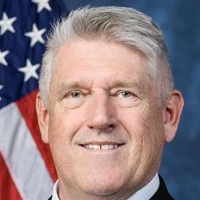
Troy Downing
Representative
MT
Troy Downing
Representative
MT
The Retirement Investment Choice Act aims to permanently establish the rules set forth in Executive Order 14330 into federal law. This action codifies the executive order, which focuses on democratizing access to alternative assets within 401(k) retirement plans. By enacting this into statute, the bill ensures these investment options remain available to plan participants regardless of future executive actions.
This resolution honors the life and legacy of Charles "Charlie" James Kirk, condemns his assassination as political violence, and calls for a renewed commitment to civil discourse and American founding principles.

Mike Johnson
Representative
LA
Mike Johnson
Representative
LA
This resolution honors the life and legacy of Charles "Charlie" James Kirk, founder of Turning Point USA. It strongly condemns his assassination as an act of political violence. The bill calls for a renewed national commitment to civil discourse and the founding principles of the United States.
This resolution supports designating the week of September 21 through September 27, 2025, as "Gold Star Families Remembrance Week" to honor the families of fallen service members.
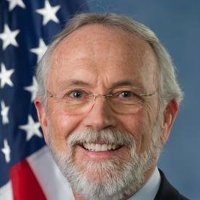
Dan Newhouse
Representative
WA
Dan Newhouse
Representative
WA
This resolution supports designating the week of September 21 through September 27, 2025, as "Gold Star Families Remembrance Week." The measure aims to officially recognize and honor the profound sacrifices made by families who have lost a loved one serving in the U.S. Armed Forces. It encourages communities nationwide to observe this week through acts of service and by celebrating the lives of these fallen service members.