Legislative Activity
Track Marlin's sponsored bills, co-sponsored legislation, and voting record
This resolution solemnly marks the one-year anniversary of the attempted assassination of President Trump, condemns ongoing political violence, and honors the victims and first responders.
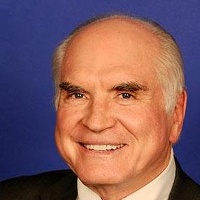
Mike Kelly
Representative
PA
Mike Kelly
Representative
PA
This resolution solemnly marks the one-year anniversary of the attempted assassination of President Donald J. Trump, condemning the multiple violent attempts against the President's life. It honors the victims of the shooting, including the late Corey D. Comperatore, and recognizes the bravery of first responders. Furthermore, the resolution condemns all incitement of violence against elected officials and calls for national unity against political violence.
The Employee Rights Act mandates secret ballot elections for union representation, restricts voting eligibility to lawfully present workers, tightens rules on employer-employee data sharing during elections, limits union spending of member dues, clarifies independent contractor and joint employer standards, extends NLRA coverage to tribal entities, allows for independent negotiation in certain states, bans non-job-related DEI clauses in contracts, and limits federal prosecution for minor acts of violence during labor disputes.
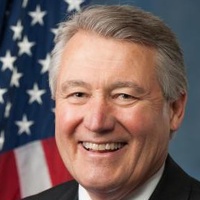
Rick Allen
Representative
GA
Rick Allen
Representative
GA
The Employee Rights Act fundamentally reforms U.S. labor law by mandating secret ballot elections for union representation and restricting union access to employee contact information. It also clarifies definitions for independent contractors and joint employers under federal wage and labor relations statutes. Furthermore, the bill prohibits Diversity, Equity, or Inclusion (DEI) clauses in collective bargaining agreements and establishes federal penalties for violence during labor disputes, while prioritizing state authority for minor incidents.
This bill extends the maximum holding period for certain real estate assets for Federal credit unions from 15 to 20 years and clarifies loan eligibility language.
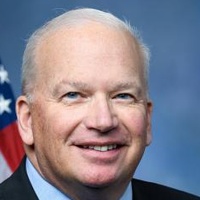
Scott Fitzgerald
Representative
WI
Scott Fitzgerald
Representative
WI
The Expanding Access to Lending Options Act directs the National Credit Union Administration (NCUA) to prioritize the safety and soundness of federally chartered credit unions. This legislation primarily amends the Federal Credit Union Act by extending the maximum holding period for certain real estate assets from 15 to 20 years. It also clarifies the eligibility language for property involved in these real estate loans.
This act prohibits abortion providers from disposing of fetal remains in publicly owned water systems, imposing criminal penalties for violations while protecting the patient from liability.

Brandon Gill
Representative
TX
Brandon Gill
Representative
TX
The Respectful Treatment of Unborn Remains Act of 2025 prohibits abortion providers from disposing of fetal remains into any publicly owned water system. Violators of this new federal rule could face fines or imprisonment, though the patient undergoing the procedure faces no liability. This Act clarifies definitions for key terms and ensures it does not override any existing, stricter state or local regulations.
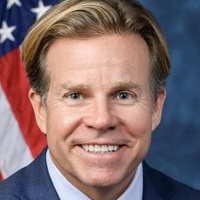
The LEDGER Act mandates the establishment of a comprehensive, government-wide system to track and record the exact destination and availability period of every federal expenditure.
Mike Haridopolos
Representative
FL
Mike Haridopolos
Representative
FL
The LEDGER Act mandates the creation of a comprehensive, centralized system managed by the Secretary of the Treasury to track every expenditure made by all branches of the U.S. Government. This new system must detail exactly where federal funds are spent and how long those funds were available for obligation. The goal is to significantly enhance the traceability and transparency of government spending.
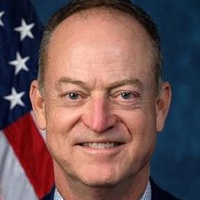
The GOLDEN DOME Act of 2025 establishes a comprehensive, rapidly deployable, next-generation missile defense shield by creating a powerful Program Manager, accelerating technology acquisition, and authorizing over $23 billion for integrated air, sea, land, and space defense systems.
Mark Messmer
Representative
IN
Mark Messmer
Representative
IN
The GOLDEN DOME Act of 2025 establishes a comprehensive, next-generation missile defense shield to counter rapidly evolving threats from adversaries like China and Russia. It creates a powerful, direct-reporting Program Manager with broad authority to accelerate the development, acquisition, and deployment of integrated air and missile defense systems across all domains. This funding prioritizes space-based sensors, advanced interceptors, and modernized command and control capabilities to ensure the defense of U.S. citizens against all aerial and missile attacks. The Act also includes provisions to streamline procurement processes and protect the competitive space industrial base.
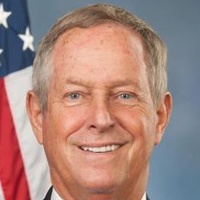
This bill repeals the Caesar Syria Civilian Protection Act of 2019.
Joe Wilson
Representative
SC
Joe Wilson
Representative
SC
This bill proposes the complete repeal of the Caesar Syria Civilian Protection Act of 2019. By repealing this previous legislation, the bill removes all existing rules and requirements established under that Act.
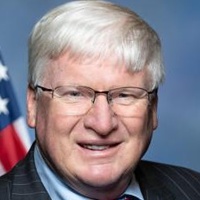
This act revises budget baseline calculations by excluding funds designated as emergency requirements or provided through supplemental appropriations.
Glenn Grothman
Representative
WI
Glenn Grothman
Representative
WI
The Stop the Baseline Bloat Act of 2025 aims to reform how federal budget baselines are calculated under existing deficit control laws. Specifically, this bill mandates that funding designated as "emergency requirements" or provided through supplemental appropriations must be excluded when determining the baseline spending level. This change seeks to prevent temporary, non-recurring spending from artificially inflating future budget caps.
This bill mandates the denial or revocation of U.S. passports for individuals charged with or convicted of providing material support to foreign terrorist organizations.
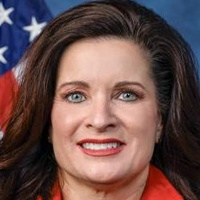
Sheri Biggs
Representative
SC
Sheri Biggs
Representative
SC
The No Passports for Terrorists and Traffickers Act mandates the denial or revocation of U.S. passports for individuals charged with or convicted of providing material support to designated foreign terrorist organizations. This measure grants the Secretary of State the authority to restrict travel for those deemed affiliated with terrorism. Exceptions exist for urgent humanitarian needs or safe return to the United States, and affected individuals retain the right to appeal the decision.
The SAFE Cities Act establishes a process for identifying and restricting federal funding to local jurisdictions that refuse to take reasonable steps to stop violence and property destruction.
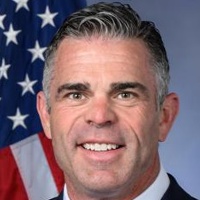
Tony Wied
Representative
WI
Tony Wied
Representative
WI
The SAFE Cities Act establishes a process for the Attorney General to officially designate certain state or local governments as "anarchist jurisdictions" based on their failure to take reasonable steps to stop violence and property destruction. Once designated, these jurisdictions will face restrictions or unfavorable treatment regarding the distribution of federal grants. The criteria focus on local policies that hinder law enforcement's ability to restore order or that involve significant cuts to police funding.
This resolution expresses support for designating the month of July as "American Patriotism Month" to honor the nation's history, values, and sacrifices.
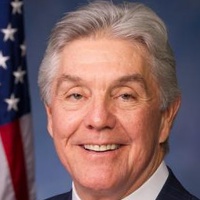
Roger Williams
Representative
TX
Roger Williams
Representative
TX
This resolution expresses support for officially designating the month of July as "American Patriotism Month." It recognizes the historical significance of American patriotism and encourages citizens and groups to observe the month with appropriate ceremonies celebrating U.S. history and values. The bill further asks the President to issue a yearly proclamation supporting this designation.
This resolution supports designating a "Family Month" to emphasize the importance of the traditional married mother and father family structure while withdrawing recognition from Pride Month.
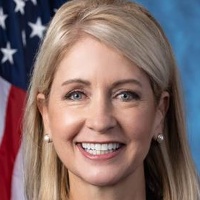
Mary Miller
Representative
IL
Mary Miller
Representative
IL
This resolution supports designating a "Family Month" to emphasize the importance of the traditional married mother and father family structure as the foundation of a healthy society. It criticizes current policies and cultural trends for discouraging marriage and notes the decline of the nuclear family. Ultimately, the bill calls for a national rededication to strengthening this specific family unit.
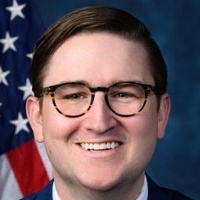
This resolution strongly condemns the rise of antisemitism in the United States and honors the memory of Yaron Lischinsky and Sarah Milgrim, who were murdered while promoting peace.
Addison McDowell
Representative
NC
Addison McDowell
Representative
NC
This resolution strongly condemns the rise of antisemitism in the United States and around the world. It specifically honors the memory of Yaron Lischinsky and Sarah Milgrim, who were tragically murdered while promoting peace. Ultimately, Congress reaffirms its commitment to combating all forms of hate and ensuring the vigorous enforcement of laws protecting religious freedom.
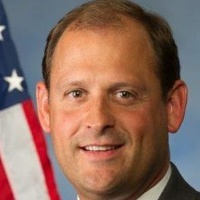
The Financial Integrity and Regulation Management Act prohibits federal banking agencies from using "reputational risk" as a factor in supervising, examining, or taking enforcement actions against depository institutions.
Garland Barr
Representative
KY
Garland Barr
Representative
KY
The Financial Integrity and Regulation Management (FIRM) Act prohibits federal banking agencies from using "reputational risk" as a factor in supervising, examining, or rating financial institutions. This legislation aims to ensure that bank oversight focuses strictly on financial safety and soundness, rather than public perception or political considerations. Agencies must remove all references to reputational risk from their guidance and report back to Congress on their compliance within 180 days.
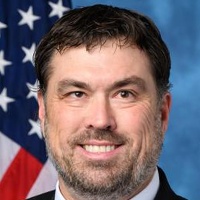
This bill mandates the death penalty or life imprisonment for inadmissible or deportable aliens convicted of first-degree murder, and life imprisonment for those convicted of second-degree murder under specified immigration grounds.
Morgan Luttrell
Representative
TX
Morgan Luttrell
Representative
TX
The Justice for Victims of Illegal Alien Murders Act establishes stricter penalties for certain non-citizens who commit murder in the United States. If an inadmissible or deportable alien is convicted of first-degree murder, they will face the death penalty or life imprisonment. Similar enhanced sentencing, including life imprisonment, applies to those convicted of second-degree murder under these specific immigration grounds.
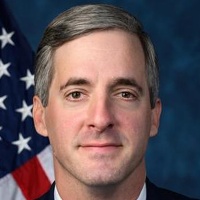
This bill significantly increases mandatory minimum prison sentences for non-citizens who commit crimes after entering the U.S. illegally or after previous removal.
Brad Knott
Representative
NC
Brad Knott
Representative
NC
The Punishing Illegal Immigrant Felons Act of 2025 significantly increases prison sentences for non-citizens who commit crimes after entering the U.S. illegally or after being previously removed. This legislation mandates substantial minimum prison terms—including an additional five years for illegal entry followed by a felony conviction and a new ten-year minimum for re-entry after deportation coupled with a crime. The bill aims to impose much harsher penalties on undocumented immigrants who commit serious offenses.
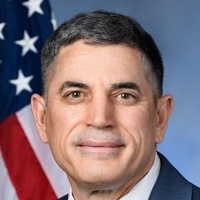
This bill removes federal tax and registration requirements for firearm silencers, preempts certain state regulations, mandates the destruction of existing federal silencer owner records, and updates related definitions and marking requirements.
Andrew Clyde
Representative
GA
Andrew Clyde
Representative
GA
The Constitutional Hearing Protection Act aims to treat firearm silencers equally under federal tax law by updating definitions and removing certain registration requirements if existing firearm laws are followed. The bill also preempts state and local governments from imposing special taxes or registration burdens on silencers. Furthermore, it mandates the destruction of existing federal records identifying silencer owners within one year of enactment.
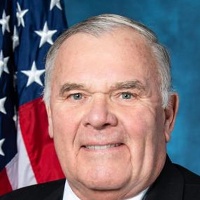
This bill restricts the Palestine Liberation Organization's status in UN agencies to less than full membership and limits the U.S. status in UN organizations to above observer status, while excluding Taiwan from these provisions.
James Baird
Representative
IN
James Baird
Representative
IN
The No Official Palestine Entry Act of 2025 aims to restrict the Palestine Liberation Organization's status within United Nations agencies to observer status or less. It also modifies existing law to limit the United States' status in UN organizations to something beyond mere observer status, but short of full membership. This Act explicitly states that its provisions do not apply to Taiwan.
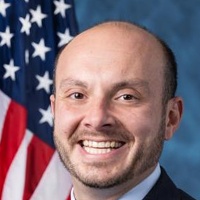
This Act requires Federal Housing Enterprises to use state-regulated title protection products for mortgages or hold extra capital reserves against those without such protection.
Andrew Garbarino
Representative
NY
Andrew Garbarino
Representative
NY
The Protecting America's Property Rights Act aims to enhance the security of mortgages purchased by Federal Housing Enterprises by requiring the use of state-regulated title protection products. If these regulated products are not used, the Enterprises must hold additional capital reserves against those mortgages. This legislation mandates the Director to quickly establish rules ensuring compliance with these new title risk management standards.
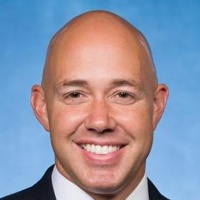
The GAMES Act eliminates the one-year post-separation time limit for veterans to become eligible for the Department of Defense's military adaptive sports program.
Brian Mast
Representative
FL
Brian Mast
Representative
FL
The Gaining Meaningful Experiences from Service Act, or GAMES Act, expands eligibility for veterans to participate in the Department of Defense's military adaptive sports program. This legislation removes the previous one-year time limit veterans faced after leaving service to enroll. As a result, all veterans are now eligible to access these beneficial adaptive sports opportunities regardless of when they separated.