Legislative Activity
Track Terri's sponsored bills, co-sponsored legislation, and voting record
The Protect Our Letter Carriers Act of 2025 authorizes $7 billion to upgrade postal security infrastructure while mandating dedicated federal prosecutors for postal crimes and increasing sentencing guidelines for assaults against postal employees.

Brian Fitzpatrick
Representative
PA
Brian Fitzpatrick
Representative
PA
The Protect Our Letter Carriers Act of 2025 aims to enhance the safety of postal workers by funding high-security infrastructure upgrades, including electronic mailbox keys. The bill also mandates the appointment of dedicated federal prosecutors for postal crimes in every judicial district and requires stricter sentencing guidelines for those who assault or rob postal employees.
The Right to Contraception Act establishes a federal right to obtain and use contraception and prohibits government interference with access to contraceptive services and information.

Lizzie Fletcher
Representative
TX
Lizzie Fletcher
Representative
TX
The Right to Contraception Act establishes a federal right for individuals to access and use contraception without government interference. It prohibits federal and state governments from enacting laws that restrict access to contraceptives or the provision of related services. The Act provides clear enforcement mechanisms, allowing individuals and the Attorney General to sue to strike down any rule that violates these protections.
This bill codifies Executive Order 11246 to establish the principles of Equal Employment Opportunity as permanent federal law.

Shontel Brown
Representative
OH
Shontel Brown
Representative
OH
This bill formally codifies Executive Order 11246, "Equal Employment Opportunity," into federal law. By establishing these protections as statute, the legislation ensures the long-standing mandate against employment discrimination by federal contractors remains permanent and legally binding.
This Act directs the Secretary of the Treasury to mint and issue commemorative coins honoring the legacy of civil rights icon Rosa Parks, with proceeds supporting the Rosa and Raymond Parks Institute for Self Development.
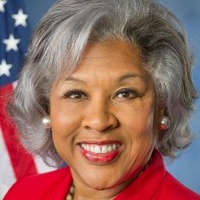
Joyce Beatty
Representative
OH
Joyce Beatty
Representative
OH
The Rosa Parks Commemorative Coin Act directs the Secretary of the Treasury to mint and issue a series of commemorative coins in 2029 to honor the legacy of civil rights icon Rosa Parks. Proceeds from the sale of these collector coins, including designated surcharges, will support the mission of the Rosa and Raymond Parks Institute for Self Development. The program is designed to ensure no net cost to the federal government.
This resolution expresses strong support for the U.S. Department of Education and public K-12 schools, while formally opposing any efforts to defund, dismantle, or weaken federal support for public education.

Suzanne Bonamici
Representative
OR
Suzanne Bonamici
Representative
OR
This resolution affirms strong support for the U.S. Department of Education and its critical role in funding and protecting public K-12 schools. It emphasizes the importance of federal investment in closing opportunity gaps and ensuring civil rights protections for all students. Furthermore, the bill explicitly condemns any efforts to defund public education, dismantle the Department of Education, or divert public funds to private school vouchers.
This bill awards a Congressional Gold Medal to the Freedom Riders in recognition of their courageous nonviolent struggle to end racial segregation in interstate travel.

Henry Johnson
Representative
GA
Henry Johnson
Representative
GA
This bill authorizes the presentation of a Congressional Gold Medal to the Freedom Riders in recognition of their courageous, nonviolent efforts to end racial segregation in interstate travel. By challenging discriminatory laws through the 1961 Freedom Rides, these activists played a pivotal role in advancing the American Civil Rights Movement. The medal will be housed at the Smithsonian Institution to honor their historic contribution to equality.
The REVIVE VI Act amends the tax code to exclude certain income earned from services performed in the U.S. Virgin Islands from the calculation of global intangible low-taxed income (GILTI).

Ron Estes
Representative
KS
Ron Estes
Representative
KS
The Restore Economic Vitality and Investment in the Virgin Islands (REVIVE VI) Act aims to stimulate local economic growth by providing targeted tax relief for qualifying U.S. shareholders. The bill amends the Internal Revenue Code to exclude certain income derived from services performed in the U.S. Virgin Islands from the calculation of global intangible low-taxed income (GILTI). This measure is designed to incentivize investment and business activity within the territory.
The Black History is American History Act amends federal education laws to mandate the inclusion of Black history in American history and civics curricula, teacher training, and national educational assessments.
Joyce Beatty
Representative
OH
Joyce Beatty
Representative
OH
The Black History is American History Act amends federal education law to ensure that Black history is explicitly integrated into American history and civics curricula nationwide. By requiring the inclusion of Black history in teacher training, instructional materials, and national educational assessments, the bill aims to provide a more comprehensive and accurate understanding of the American experience. Additionally, it establishes a formal partnership with the National Museum of African American History and Culture to support educators and students.
This bill provides a 6.62 percent Medicare payment increase for physicians and practitioners from April through December 2025 to help stabilize medical practices.
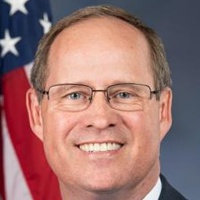
Gregory Murphy
Representative
NC
Gregory Murphy
Representative
NC
The Medicare Patient Access and Practice Stabilization Act of 2025 aims to support healthcare providers by extending Medicare payment adjustments through the end of 2025. Specifically, the bill provides a 6.62 percent payment increase for services rendered between April 1, 2025, and December 31, 2025, to help practitioners adjust to evolving Medicare payment policies.
The SNAP Benefits Fairness Act of 2025 enacts a technical correction to the Food and Nutrition Act of 2008 to streamline statutory language.

LaMonica McIver
Representative
NJ
LaMonica McIver
Representative
NJ
The SNAP Benefits Fairness Act of 2025 implements a technical correction to the Food and Nutrition Act of 2008. This update streamlines the existing language of the law without altering any current program requirements or eligibility standards. The act is scheduled to take effect on January 1 following its enactment.
This bill permanently authorizes the delivery of cardiac and pulmonary rehabilitation services in the home via telehealth, allowing for virtual physician supervision and expanding hospital billing eligibility.

John Joyce
Representative
PA
John Joyce
Representative
PA
The Sustainable Cardiopulmonary Rehabilitation Services in the Home Act permanently codifies the ability for patients to receive cardiac and pulmonary rehabilitation services from the comfort of their own homes. By authorizing telehealth delivery and virtual physician supervision, the bill expands access to these essential services while removing restrictive geographic requirements. This legislation ensures that the flexibility established during the COVID-19 pandemic remains a permanent, standard feature of Medicare coverage.
The STAR Act of 2025 establishes a 25 percent tax credit for qualified semiconductor design expenditures to incentivize domestic research and technological innovation.

Blake Moore
Representative
UT
Blake Moore
Representative
UT
The Semiconductor Technology Advancement and Research (STAR) Act of 2025 establishes a 25 percent tax credit for qualified semiconductor design expenditures conducted within the United States. This legislation aims to bolster domestic innovation by incentivizing both in-house and contract design costs for advanced semiconductor technology. The credit is available through 2036 and is designed to complement existing manufacturing investment incentives.
The Global Health, Empowerment and Rights Act prevents the U.S. government from denying foreign aid to nongovernmental organizations based on the legal health services they provide or the advocacy they conduct using their own private funds.
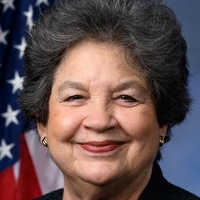
Lois Frankel
Representative
FL
Lois Frankel
Representative
FL
The Global Health, Empowerment and Rights Act prevents the U.S. government from denying foreign aid to nongovernmental organizations based on the legal health services they provide using their own private funds. It ensures that these organizations are not penalized for offering counseling or referrals that comply with local laws. Additionally, the bill prohibits the imposition of restrictive advocacy and lobbying requirements on these groups that exceed those applied to U.S.-based organizations.
This bill recognizes the significant contributions of tax-exempt fraternal benefit societies to communities across the United States through charitable activities, volunteer work, and financial support for their members, and expresses Congressional support for their continued promotion.

Darin LaHood
Representative
IL
Darin LaHood
Representative
IL
This bill recognizes the significant historical and ongoing contributions of tax-exempt fraternal benefit societies to communities across the United States through charitable activities, volunteer work, and financial support for members. It expresses the sense of Congress that these societies are a valuable support system that addresses unmet needs and generates substantial returns to the U.S. through their tax-exempt status. The bill also advocates for the continued promotion of fraternal benefit societies.
The Charitable Act extends and modifies tax deductions for charitable contributions, allowing individuals who take the standard deduction to claim additional tax benefits for donations made in 2026 and 2027.
Blake Moore
Representative
UT
Blake Moore
Representative
UT
The Charitable Act allows individuals who take the standard deduction to also claim a deduction for charitable contributions during the 2026 and 2027 tax years. This legislation permits non-itemizers to deduct donations up to one-third of their standard deduction amount while removing previous penalties for overstatements.
This bill expresses the House of Representatives' desire to keep the United States Postal Service (USPS) as an independent entity within the Federal Government, protecting it from privatization. It emphasizes the USPS's importance to the mailing industry, its role in connecting communities, and the potential negative impacts of privatization on prices, services, and infrastructure.

Stephen Lynch
Representative
MA
Stephen Lynch
Representative
MA
This bill expresses the House of Representatives' view that Congress should act to maintain the United States Postal Service (USPS) as an independent entity within the Federal Government. It emphasizes the USPS's role as a self-sustaining service vital to the economy and national connectivity. The resolution discourages privatization, citing concerns about increased costs, reduced services, and damage to critical infrastructure.
The 911 SAVES Act mandates the reclassification of public safety telecommunicators as "Protective Service Occupations" within the federal Standard Occupational Classification system to accurately reflect their critical role in emergency response.

Norma Torres
Representative
CA
Norma Torres
Representative
CA
The 911 SAVES Act mandates that the Office of Management and Budget reclassify public safety telecommunicators as "Protective Service Occupations" within the federal Standard Occupational Classification system. This legislation recognizes the critical, high-stress, and lifesaving nature of 911 dispatchers, correcting their current misclassification to better reflect their essential role in emergency response.
The Close the Medigap Act of 2025 mandates guaranteed-issue protections, prohibits discriminatory pricing, increases transparency in broker payments, and improves consumer access to Medicare supplemental insurance information.

Lloyd Doggett
Representative
TX
Lloyd Doggett
Representative
TX
The Close the Medigap Act of 2025 aims to improve consumer protections and transparency for Medicare supplemental insurance. The bill establishes national guaranteed-issue rights, prohibits discriminatory pricing based on health status or age, and restores access to first-dollar coverage plans. Additionally, it enhances the Medicare plan finder website and mandates new reporting requirements for broker compensation to ensure greater accountability in the Medigap market.
The Assuring Medicare’s Promise Act of 2025 strengthens the Medicare Hospital Insurance Trust Fund by expanding the net investment income tax and directing its revenue toward long-term program solvency.
Lloyd Doggett
Representative
TX
Lloyd Doggett
Representative
TX
The Assuring Medicare’s Promise Act of 2025 aims to strengthen the Medicare Hospital Insurance Trust Fund by redirecting revenue from the net investment income tax directly to the program. Additionally, the bill expands the scope of this tax for high-income earners by including certain trade or business income and foreign earnings in the tax base. These measures are designed to improve the long-term financial stability of Medicare starting in 2026.
The COVER Now Act establishes a federal demonstration project allowing local governments in non-expansion states to provide Medicaid coverage to their low-income residents.
Lloyd Doggett
Representative
TX
Lloyd Doggett
Representative
TX
The COVER Now Act establishes a federal demonstration project allowing counties and cities in non-expansion states to provide Medicaid coverage directly to their low-income residents. This initiative provides significant federal matching funds to local governments to expand healthcare access while protecting them from punitive state interference. The program ensures a seamless transition for participants if their state eventually adopts full Medicaid expansion.