
Legislative Activity
Track Linda's sponsored bills, co-sponsored legislation, and voting record
Extends through 2032 the increased amount of distilled spirits excise taxes that are transferred (covered over) to Puerto Rico and the U.S. Virgin Islands.
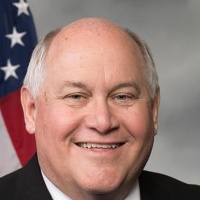
Ron Estes
Representative
KS
Ron Estes
Representative
KS
This bill extends the temporary increase in the limitation on the cover over of distilled spirits taxes to Puerto Rico and the Virgin Islands. It amends the Internal Revenue Code of 1986, pushing the expiration date from January 1, 2022, to January 1, 2032. This extension applies to distilled spirits brought into the United States after December 31, 2021.
The "Mudslide Recovery Act" establishes a grant program to aid communities recovering from mudslides following wildland fires, allocating $5 million annually from 2026-2032.
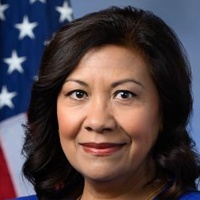
Norma Torres
Representative
CA
Norma Torres
Representative
CA
The Mudslide Recovery Act establishes a pilot grant program to aid communities recovering from mudslides that occur after wildland fires. The Secretaries of Interior and Homeland Security will administer the competitive grant program, awarding funds to eligible recipients such as states, tribes, local governments, and non-profit organizations. The program is authorized to receive $5,000,000 annually from 2026 through 2032.
This act authorizes the creation of the Smithsonian National Museum of the American Latino on the National Mall, ensuring diverse representation in its exhibits and programs.
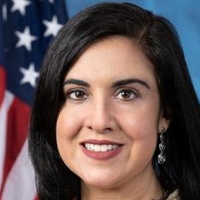
Nicole Malliotakis
Representative
NY
Nicole Malliotakis
Representative
NY
The Smithsonian National Museum of the American Latino Act authorizes the creation of the Smithsonian National Museum of the American Latino on the National Mall. It ensures the museum's exhibits and programs accurately represent the diverse cultures, histories, events, and values of Hispanic and Latino communities, seeking guidance from diverse sources. The Act also mandates regular reports to Congress on the museum's efforts to meet these diversity requirements.
The "Ending DOGE Conflicts Act" mandates financial disclosures for special government employees who own or lead companies contracting with the federal government, ensuring transparency and preventing conflicts of interest.
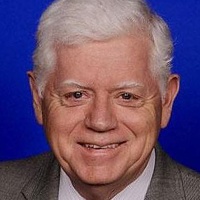
John Larson
Representative
CT
John Larson
Representative
CT
The "Ending DOGE Conflicts Act" mandates that special government employees with financial ties to companies contracting with the federal government must adhere to strict financial disclosure requirements. It requires the Director of the Office of Government Ethics to certify these employees' financial reports and prohibits them from performing official duties until compliance is confirmed.
The "Expanding Child Care Access Act of 2025" establishes a tax credit of up to $5,000 for qualified child care startup expenses for licensed family child care providers.
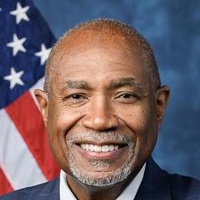
Herbert Conaway
Representative
NJ
Herbert Conaway
Representative
NJ
The "Expanding Child Care Access Act of 2025" introduces a tax credit, up to $5,000, for qualified child care startup expenses incurred by licensed family child care providers. This credit aims to support individuals starting or expanding licensed child care services within their primary residence, covering expenses such as licensing fees, supplies, insurance, and necessary equipment or renovations. The credit is available for a limited time and cannot be claimed for expenses already covered by other deductions or credits.
The "More Homes on the Market Act" increases the tax exclusion for profit from the sale of a primary residence, incentivizing homeowners to sell and increasing housing supply.
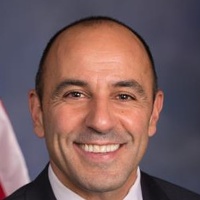
Jimmy Panetta
Representative
CA
Jimmy Panetta
Representative
CA
The "More Homes on the Market Act" increases the tax exclusion for profit from the sale of a primary residence, raising it to $500,000 for single filers and $1,000,000 for married couples filing jointly. These amounts will be adjusted for inflation starting in 2025. This change encourages homeowners to sell their properties, thereby increasing the availability of homes on the market.
The Freight RAILCAR Act of 2025 incentivizes freight railcar modernization by establishing a tax credit for qualified newly built replacement railcars and qualified railcar modernization expenditures.
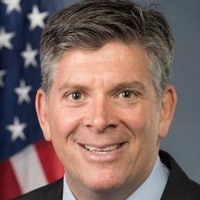
Darin LaHood
Representative
IL
Darin LaHood
Representative
IL
The "Freight RAILCAR Act of 2025" introduces a tax credit for modernizing freight railcars, encouraging investments in newer, more efficient railcars. Taxpayers can claim a credit equal to 10% of their freight railcar fleet modernization expenses, with a limit of 1,000 qualified freight railcars per year. The credit applies to railcars that increase capacity, improve fuel efficiency, or meet updated performance standards, and is available for three years after the Act's enactment. The Secretary of the Treasury is required to submit a report to Congress detailing the credit's usage and impact on railcar modernization and scrapping.
The "Fair Play for Women Act" aims to bolster Title IX enforcement in school sports by increasing transparency, mandating training, and establishing penalties for non-compliance, to ensure equitable athletic opportunities for women and girls.
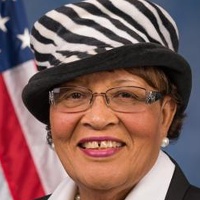
Alma Adams
Representative
NC
Alma Adams
Representative
NC
The Fair Play for Women Act aims to bolster Title IX enforcement in athletics by increasing transparency, enhancing training, and establishing clear accountability measures for educational institutions. It mandates detailed reporting on athletic opportunities, participation, and funding, broken down by sex and race, for both colleges and K-12 schools. The Act also requires annual Title IX training for athletic staff and athletes, and establishes a public database of Title IX coordinators. Finally, the Department of Education is empowered to impose civil penalties on institutions found to be non-compliant with Title IX.
Prohibits federal funds from being used to eliminate the United States Agency for International Development (USAID) as an independent entity, requiring the Secretary of State to certify compliance.

Sara Jacobs
Representative
CA
Sara Jacobs
Representative
CA
The "Protect US National Security Act" ensures that federal funds cannot be used to eliminate the United States Agency for International Development (USAID) as an independent entity. It asserts that only an act of Congress can eliminate USAID. The Secretary of State must certify compliance with this requirement to Congress within 30 days of the act's enactment and annually for 5 years.
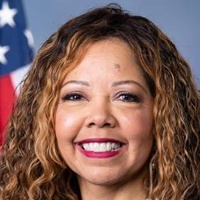
This bill directs the Secretary of Labor to award grants to community colleges for high-quality workforce development programs in high-skill, high-wage, or in-demand sectors.
Lucy McBath
Representative
GA
Lucy McBath
Representative
GA
This bill amends the Workforce Innovation and Opportunity Act to establish a grant program through the Department of Labor, awarding funds to community colleges for the development of high-quality workforce programs that lead to credentials in high-skill, high-wage, or in-demand jobs. These grants require partnerships with employers and a focus on serving individuals with barriers to employment, with the aim of improving program quality, accessibility, and alignment with workforce needs. The bill authorizes appropriations of $65,000,000 annually from 2026 through 2031 for this purpose.
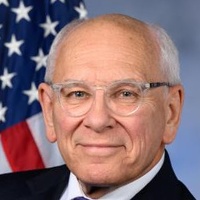
The Scientific Integrity Act mandates federal agencies to establish and enforce scientific integrity policies that protect scientific research from political interference, ensure open communication of scientific findings, and provide whistleblower protection for scientists.
Paul Tonko
Representative
NY
Paul Tonko
Representative
NY
The Scientific Integrity Act mandates that federal agencies that fund, conduct, or oversee scientific research establish and enforce scientific integrity policies. These policies aim to protect scientists from political interference, ensure the open communication of scientific findings, and establish clear processes for reporting and addressing scientific misconduct. The Act requires agencies to appoint Scientific Integrity Officers, provide regular training, and report on misconduct complaints, with oversight from the Office of Science and Technology Policy and Congress. It also protects the rights of federal employees and contractors to share their findings and prevents the suppression or distortion of scientific data.
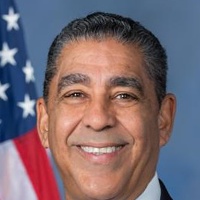
The "Protecting Sensitive Locations Act" restricts immigration enforcement actions at sensitive locations like schools and places of worship, requiring discretion and oversight.
Adriano Espaillat
Representative
NY
Adriano Espaillat
Representative
NY
The "Protecting Sensitive Locations Act" amends the Immigration and Nationality Act to restrict immigration enforcement actions within 1,000 feet of sensitive locations like schools, hospitals, and places of worship, except in exigent circumstances. It mandates training, reporting, and oversight for enforcement activities near these locations, and invalidates evidence obtained in violation of the Act. The Act aims to ensure discretion and limit enforcement impact on sensitive community spaces, while also requiring annual reports to Congress on enforcement actions taken in sensitive locations.
The "Taxpayer Data Protection Act" limits access to the Treasury Department's payment systems to authorized personnel and requires investigation and reporting of unauthorized access.

Haley Stevens
Representative
MI
Haley Stevens
Representative
MI
The Taxpayer Data Protection Act limits access to the Treasury Department's payment systems to Treasury employees or contractors with satisfactory performance reviews and security clearances. It sets specific criteria for individuals accessing the system, including conflict of interest restrictions, training, and ethics agreements. The Act also mandates the Treasury Department's Inspector General to investigate and report to Congress on any unauthorized system use.
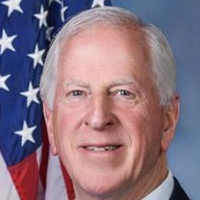
The Disaster Resiliency and Coverage Act of 2025 aims to increase disaster preparedness and insurance coverage by providing grants for home mitigation, tax exclusions for disaster relief payments, and a tax credit for disaster mitigation expenditures.
Mike Thompson
Representative
CA
Mike Thompson
Representative
CA
The Disaster Resiliency and Coverage Act of 2025 aims to increase household disaster resilience through a grant program for pre-disaster mitigation activities, tax exclusions for state-based catastrophe loss mitigation payments and certain emergency agricultural assistance, and a tax credit for disaster mitigation expenditures. The grant program will provide funds to states and tribal governments for mitigation activities on individual homes in high-risk disaster areas, while the tax exclusions and credit offer financial relief and incentives for individuals and agricultural producers affected by disasters. This act seeks to encourage proactive measures to protect homes and businesses from the impact of future disasters.
Permanently extends the New Markets Tax Credit, provides inflation adjustments, and includes it for alternative minimum tax relief.

Claudia Tenney
Representative
NY
Claudia Tenney
Representative
NY
The New Markets Tax Credit Extension Act of 2025 permanently extends the New Markets Tax Credit, which incentivizes investment in low-income communities. It removes the credit's expiration date and adjusts the credit amount for inflation after 2025. The act also provides alternative minimum tax relief for qualified equity investments made after December 31, 2024.
The Job Protection Act expands access to family and medical leave by reducing the employment eligibility requirement to 90 days and extending coverage to employees at all businesses, regardless of size.

Lauren Underwood
Representative
IL
Lauren Underwood
Representative
IL
The Job Protection Act expands access to family and medical leave by reducing the required length of employment from 12 months to just 90 days for all eligible workers. Additionally, the bill extends these leave requirements to all employers, regardless of company size, ensuring that virtually all employees are covered.
This bill codifies Executive Order 11246 to establish the principles of Equal Employment Opportunity as permanent federal law.

Shontel Brown
Representative
OH
Shontel Brown
Representative
OH
This bill formally codifies Executive Order 11246, "Equal Employment Opportunity," into federal law. By establishing these protections as statute, the legislation ensures the long-standing mandate against employment discrimination by federal contractors remains permanent and legally binding.
The Right to Contraception Act establishes a federal right to obtain and use contraception and prohibits government interference with access to contraceptive services and information.

Lizzie Fletcher
Representative
TX
Lizzie Fletcher
Representative
TX
The Right to Contraception Act establishes a federal right for individuals to access and use contraception without government interference. It prohibits federal and state governments from enacting laws that restrict access to contraceptives or the provision of related services. The Act provides clear enforcement mechanisms, allowing individuals and the Attorney General to sue to strike down any rule that violates these protections.
The No Tax Breaks for Outsourcing Act amends the Internal Revenue Code to eliminate tax incentives for offshoring by reforming international corporate taxation, tightening interest deduction rules, and closing loopholes used by inverted and foreign-managed corporations.

Lloyd Doggett
Representative
TX
Lloyd Doggett
Representative
TX
The **No Tax Breaks for Outsourcing Act** amends the Internal Revenue Code to discourage corporations from shifting profits and operations overseas. The bill replaces the current global intangible low-taxed income (GILTI) regime with a "net CFC tested income" system, implements country-by-country tax reporting, and limits interest deductions for large international groups. Additionally, it strengthens rules to prevent corporate inversions and treats foreign corporations managed within the United States as domestic entities for tax purposes.
This resolution expresses the House of Representatives' formal disapproval of granting pardons to individuals convicted of assaulting Capitol Police officers.
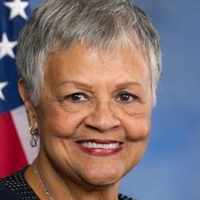
Bonnie Watson Coleman
Representative
NJ
Bonnie Watson Coleman
Representative
NJ
This resolution expresses the formal disapproval of the House of Representatives regarding the granting of pardons to individuals convicted of assaulting Capitol Police officers. It serves as a clear statement of opposition toward clemency for those who committed violent acts against law enforcement during the attack on the U.S. Capitol.