Legislative Activity
Track Josh's sponsored bills, co-sponsored legislation, and voting record
This bill allows for year-round sales of E15 gasoline and restructures the Renewable Fuel Standard program by phasing out small refinery exemptions in favor of a 75% compliance obligation reduction starting in 2028.
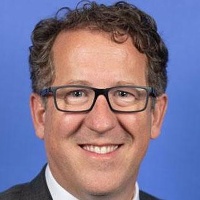
Adrian Smith
Representative
NE
Adrian Smith
Representative
NE
This bill, the Nationwide Consumer and Fuel Retailer Choice Act of 2025, makes two major changes: it allows for the year-round sale of E15 gasoline and reforms the Renewable Fuel Standard (RFS) for small refineries. The RFS reform phases out existing small refinery exemptions starting in 2028, replacing them with a 75% compliance obligation reduction. The Act also directs the EPA to update fuel infrastructure rules for E15 distribution.
This resolution designates specific dates to honor law enforcement officers killed in the line of duty and expresses support for all officers.
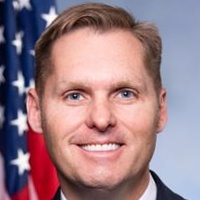
Michael Guest
Representative
MS
Michael Guest
Representative
MS
This resolution officially designates May 15, 2026, as Peace Officers Memorial Day and the week of May 10-16, 2026, as National Police Week. It honors the service and sacrifice of law enforcement officers killed in the line of duty, specifically recognizing 363 officers lost in 2025. The bill expresses unwavering support for law enforcement and acknowledges the need for proper resources to ensure officer safety.
This bill establishes the Combating Organized Retail Crime Act of 2025 to enhance federal prosecution tools against organized retail and supply chain crime and create a DHS-led coordination center to align law enforcement efforts.
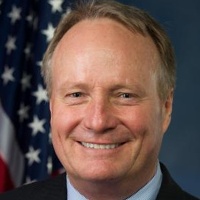
David Joyce
Representative
OH
David Joyce
Representative
OH
The Combating Organized Retail Crime Act of 2025 aims to combat sophisticated, cross-jurisdictional organized retail and supply chain theft. It achieves this by strengthening federal laws regarding money laundering and stolen property offenses, including lowering monetary thresholds for prosecution. Furthermore, the bill establishes a dedicated Center within the Department of Homeland Security to coordinate federal, state, and local enforcement efforts against these criminal organizations.
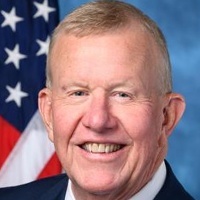
This resolution expresses support for America's law enforcement professionals by recognizing their service, acknowledging the dangers they face, and calling for necessary equipment, training, and funding to ensure their safety and effectiveness.
Mike Ezell
Representative
MS
Mike Ezell
Representative
MS
This resolution expresses strong support and appreciation for America's law enforcement professionals, recognizing their daily service and sacrifice. It honors officers who have been injured or killed in the line of duty and highlights recent crime reduction successes attributed to their efforts. The bill calls for increased support, including better equipment, training, mental health resources, and tougher penalties for assaulting officers, to ensure their safety and effectiveness.
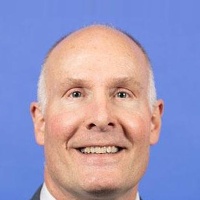
This Act prohibits the sale or importation of connected vehicles and components containing hardware or software from covered adversarial countries like China, Russia, Iran, and North Korea, starting in 2027.
John Moolenaar
Representative
MI
John Moolenaar
Representative
MI
The Connected Vehicle Security Act of 2026 prohibits the sale or importation of connected vehicles, hardware, or software originating from or controlled by designated "covered countries" (North Korea, China, Russia, or Iran). This measure aims to safeguard U.S. economic and national security against risks like espionage and cyber intrusion posed by foreign adversaries exploiting vehicle connectivity technology. The Secretary of Commerce is tasked with issuing regulations to enforce these bans, which begin phasing in starting in 2027, though waivers may be granted under specific national security conditions.
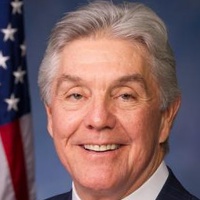
This resolution expresses support for designating July 15, 2026, as Glioblastoma Awareness Day to raise awareness and support research for this aggressive brain cancer.
Roger Williams
Representative
TX
Roger Williams
Representative
TX
This resolution expresses support for designating July 15, 2026, as Glioblastoma Awareness Day. It aims to raise public awareness about glioblastoma, the most aggressive malignant brain tumor, and honor those affected by the disease. The bill encourages greater investment in research and collaboration to develop improved treatments and outcomes for patients.
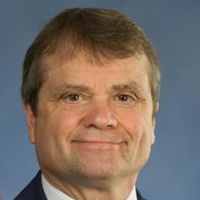
This resolution expresses support for designating May 2026 as National Brain Tumor Awareness Month to increase public awareness and support research for brain tumors.
Mike Quigley
Representative
IL
Mike Quigley
Representative
IL
This resolution expresses support for designating May 2026 as National Brain Tumor Awareness Month. The measure aims to increase public awareness regarding the significant impact of brain tumors and the urgent need for advances in research and treatment. It honors those affected by brain tumors and supports efforts to improve outcomes for patients.
This bill mandates stricter federal and state regulation of utility rate-setting by establishing lower return-on-equity ranges and banning numerous non-operational costs from being passed on to consumers.
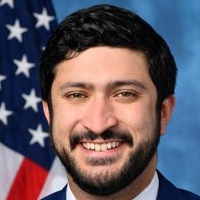
Gregorio Casar
Representative
TX
Gregorio Casar
Representative
TX
The Lowering Utility Bills Act aims to reduce consumer energy costs by establishing stricter federal and state guidelines for how electric transmission providers and investor-owned utilities calculate their allowed rate of return. The bill mandates using the lowest reasonable return on equity based on market data and explicitly bans passing numerous lobbying, administrative, and political expenses onto customers. Furthermore, it requires utilities to prioritize lower-cost, grid-enhancing technologies when planning new capital expenditures.
This bill officially renames the U.S. Postal Service facility at 2200 South Salina Street in Syracuse, New York, as the "Wallie Howard Jr. Post Office Building."
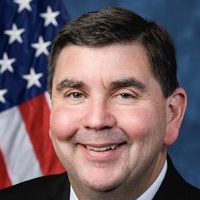
John Mannion
Representative
NY
John Mannion
Representative
NY
This bill officially designates the United States Postal Service facility at 2200 South Salina Street in Syracuse, New York, as the "Wallie Howard Jr. Post Office Building." This renaming standardizes all future references to the building across federal documents and records.
This bill nullifies three specific Department of State rules regarding foreign assistance, effectively voiding their implementation and preventing enforcement of similar future policies.
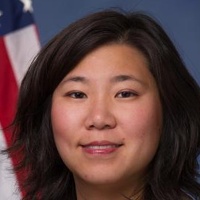
Grace Meng
Representative
NY
Grace Meng
Representative
NY
This Act nullifies three specific Department of State rules concerning foreign assistance, effectively treating them as if they never existed. It prohibits any federal agency from implementing or enforcing these rules, or any substantially similar future policies. The legislation aims to prevent the enforcement of rules related to "Protecting Life," "Discriminatory Equity Ideology," and "Gender Ideology" in foreign aid.
This bill establishes the Precision Oncology Program for Cancer of the Prostate (POPCaP) within the VA to provide specialized genetic sequencing, clinical trials, and coordinated care for veterans with prostate and genitourinary cancers.
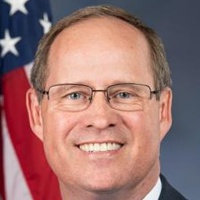
Gregory Murphy
Representative
NC
Gregory Murphy
Representative
NC
The POPCaP Authorization Act of 2026 establishes a new Precision Oncology Program for Prostate Cancer within the Department of Veterans Affairs. This program mandates the designation of at least 21 Centers of Excellence to provide advanced genetic sequencing and clinical trials for eligible veterans with prostate or genitourinary cancers. The Act also creates a Program Leadership team to coordinate research, maintain a national registry, and ensure standardized, cutting-edge care across the network.
This bill mandates a cost-of-living adjustment for veterans' compensation and related benefits equal to the 2026 Social Security COLA, effective December 1, 2026.
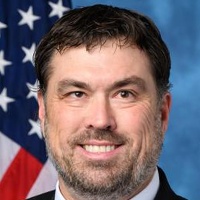
Morgan Luttrell
Representative
TX
Morgan Luttrell
Representative
TX
This bill ensures that veterans' disability compensation and related benefits receive a Cost-of-Living Adjustment (COLA) for 2026. The increase will match the percentage rise applied to Social Security benefits for that year. Effective December 1, 2026, this adjustment will apply to disability compensation, dependent benefits, clothing allowances, and survivor benefits.
This bill recognizes and honors the International Hearing Society on its 75th anniversary for its dedication to advancing hearing healthcare and supporting hearing professionals and patients.
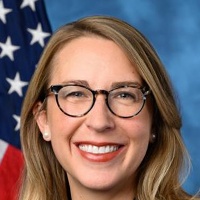
Hillary Scholten
Representative
MI
Hillary Scholten
Representative
MI
This bill recognizes and honors the International Hearing Society on its 75th anniversary in 2026. It celebrates the organization's history, its dedication to connecting hearing professionals, and its vital role in advancing hearing health care. The legislation also commends the Society for its advocacy work to improve patient care and expand access to quality services nationwide.
This bill designates April as Community College Month to recognize the vital role of over 1,000 community colleges in advancing accessible higher education, workforce training, and national economic prosperity.
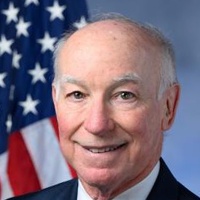
Joe Courtney
Representative
CT
Joe Courtney
Representative
CT
This resolution officially designates April as Community College Month to celebrate the vital role of over 1,000 community colleges nationwide. It recognizes these institutions for providing accessible higher education, workforce training, and significant contributions to the U.S. economy. The bill highlights their affordability, local presence, and impact on student success across the country.
This act establishes federal grant and low-interest loan programs to expand and improve child care facilities in underserved rural communities.
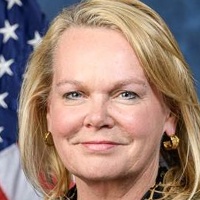
April McClain Delaney
Representative
MD
April McClain Delaney
Representative
MD
The Rural Child Care Facility Expansion Act establishes a new federal grant program to help expand child care facilities in rural communities through construction, renovation, and equipment purchases. It also creates a low-interest loan program, administered by the USDA, to help existing rural providers renovate or expand their structures, particularly in designated "child care deserts." The goal of both provisions is to significantly increase the availability of licensed child care slots across rural America.
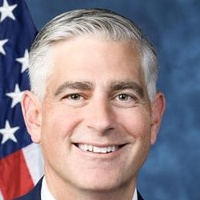
The MATCH Act mandates stricter export controls on semiconductor manufacturing equipment to countries of concern and requires the U.S. to coordinate with allied nations to prevent the transfer of critical technology to adversarial entities.
Michael Baumgartner
Representative
WA
Michael Baumgartner
Representative
WA
The Multilateral Alignment of Technology Controls on Hardware (MATCH) Act aims to protect U.S. national security by restricting adversary access to advanced semiconductor manufacturing equipment. The bill mandates diplomatic efforts to align export controls with allied nations and establishes a framework to impose strict U.S. regulations if those partners fail to implement sufficient safeguards. By targeting specific entities and facilities in countries of concern, the legislation seeks to close gaps in the current export control regime and maintain America’s technological advantage.
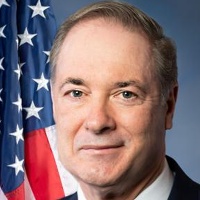
This bill aims to restrict the labeling of non-dairy products as standardized dairy products unless they meet a strict new definition based on milk from hooved mammals.
John Joyce
Representative
PA
John Joyce
Representative
PA
The DAIRY PRIDE Act aims to protect the integrity of dairy labeling by establishing a strict definition for what can be called a "dairy product." This bill prohibits foods that do not meet this new standard—derived from the milk of hooved mammals—from being sold across state lines under standardized dairy names. Enforcement will be managed by the FDA, which is required to issue guidance and report on compliance actions to Congress.
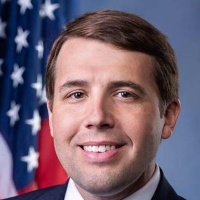
This act extends eligibility for various Department of Veterans Affairs benefits to former service members discharged solely due to their sexual orientation or gender identity.
Chris Pappas
Representative
NH
Chris Pappas
Representative
NH
The Securing the Rights our Veterans Earned Act (SERVE Act) extends eligibility for key Department of Veterans Affairs (VA) benefits to former service members who were discharged based on their sexual orientation or gender identity. This includes access to hospital care, mental health services, national cemetery burial, Post-9/11 GI Bill education assistance, and housing loans. The bill also mandates the VA Secretary to conduct outreach regarding these newly available benefits.
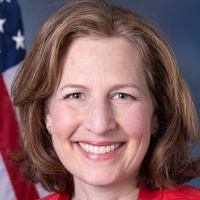
This bill expands eligibility for the Vaccines for Children program, mandates minimum payment rates for vaccine administration under Medicaid and CHIP, and increases the federal matching rate for states that conduct targeted vaccination outreach.
Kim Schrier
Representative
WA
Kim Schrier
Representative
WA
The Strengthening the Vaccines for Children Program Act of 2026 aims to expand access to childhood immunizations by broadening eligibility for the VFC program and setting minimum payment rates for vaccine administration under Medicaid and CHIP. The bill mandates that Medicaid and CHIP programs pay providers at least 100% of the Medicare Part B rate for vaccine administration and counseling services through 2028. Additionally, it increases the federal Medicaid matching rate contingent upon states implementing culturally competent vaccination outreach efforts.
This bill designates April 19 through April 25, 2026, as National Crime Victims' Rights Week to honor victims, survivors, and the organizations that support them.
Jim Costa
Representative
CA
Jim Costa
Representative
CA
This resolution officially designates April 19 through April 25, 2026, as National Crime Victims' Rights Week. It recognizes the lasting impact of crime on victims and survivors while honoring the efforts of organizations that support them. The bill reaffirms Congress's commitment to strengthening victims' rights and services nationwide.