Legislative Activity
Track Emily's sponsored bills, co-sponsored legislation, and voting record
This bill establishes the Smithsonian American Women's History Museum, designates its site on the National Mall, and sets requirements for its mission, construction, and diverse representation of viewpoints.
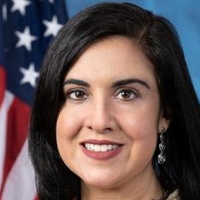
Nicole Malliotakis
Representative
NY
Nicole Malliotakis
Representative
NY
This act officially establishes the Smithsonian American Women’s History Museum and designates its location on the National Mall, requiring the transfer of land jurisdiction to the Smithsonian Institution. The museum is mandated to preserve and present the history and achievements of biological women in the United States. Furthermore, the legislation requires that exhibits and programs reflect diverse political viewpoints and authentic experiences of women, as guided by a broad array of knowledgeable sources.
This act prohibits a sitting President from filing civil lawsuits against the United States and voids the settlement agreement in *Trump v. Internal Revenue Service*, banning federal funds for such settlements.
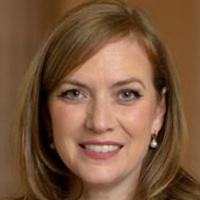
Lizzie Fletcher
Representative
TX
Lizzie Fletcher
Representative
TX
This Act prohibits a sitting President from filing civil lawsuits against the United States. It also voids the settlement agreement in the specific case of *Trump v. Internal Revenue Service*. Furthermore, the bill bans the use of federal funds to establish any compensation fund to settle civil actions brought by a President or former President against the U.S.
This bill expands Medicare Part B coverage to reimburse for specific pharmacist services related to testing and treatment for certain public health threats, effective January 1, 2026.
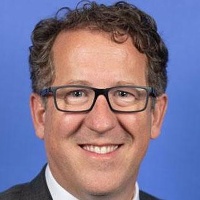
Adrian Smith
Representative
NE
Adrian Smith
Representative
NE
The Ensuring Community Access to Pharmacist Services Act expands Medicare Part B coverage to include services provided by pharmacists starting January 1, 2026. This coverage is specifically for testing or treatment related to COVID-19, the flu, RSV, strep throat, or during a declared public health emergency. The bill outlines payment structures, generally covering 80% of the cost, and prohibits pharmacists from balance billing Medicare patients for these covered services.
The Provider Reimbursement Stability Act of 2026 reforms Medicare physician payment policies by updating budget neutrality thresholds, establishing a correction process for utilization estimates, mandating periodic updates to practice expense data, and limiting annual conversion factor fluctuations.
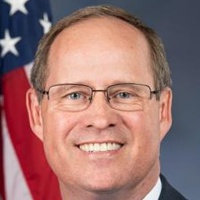
Gregory Murphy
Representative
NC
Gregory Murphy
Representative
NC
The Provider Reimbursement Stability Act of 2026 aims to improve the accuracy and predictability of Medicare physician payments. The bill reforms budget neutrality calculations, mandates periodic updates to practice expense cost data, and establishes a 2.5% cap on annual conversion factor fluctuations. These measures are designed to ensure more stable reimbursement rates for healthcare providers.
This bill prohibits using federal funds for specific settlement payments, particularly those related to the *Trump, et al. v. IRS, et al.* case, and restricts certain compromise settlements from the Judgment Fund to high-ranking officials and specific types of claims.
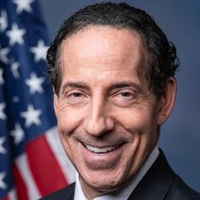
Jamie Raskin
Representative
MD
Jamie Raskin
Representative
MD
This Act prohibits the use of federal funds for specific settlement payments, including those related to the *Trump, et al. v. IRS, et al.* case. It places new restrictions on the Judgment Fund, barring payments to high-ranking officials, their relatives, and certain entities for specific types of claims. The bill also establishes strict reporting and notification requirements for large government compromise settlements.
This bill disapproves the CMS rule implementing prior authorization for select Medicare services under the WISeR Model.
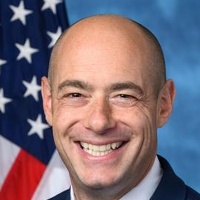
Greg Landsman
Representative
OH
Greg Landsman
Representative
OH
This bill expresses the disapproval of Congress for a new Centers for Medicare & Medicaid Services (CMS) rule requiring prior authorization for certain Medicare services under the WISeR Model. By disapproving the rule, Congress prevents its implementation. This action effectively blocks the proposed prior authorization requirement for select services.
This Act restores overtime pay protections by phasing in higher minimum salary thresholds and tightening the duties test for executive, administrative, and professional employees exempt from federal overtime requirements.
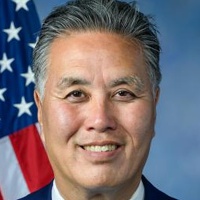
Mark Takano
Representative
CA
Mark Takano
Representative
CA
The Restoring Overtime Pay Act of 2026 significantly updates overtime exemptions under the Fair Labor Standards Act. It establishes a phased-in, rising minimum salary threshold for executive, administrative, and professional employees to qualify for overtime exemption, eventually tying it to national earnings data. Additionally, the bill tightens the "duties test," reducing the amount of non-exempt work an employee can perform while remaining exempt from overtime pay. These changes aim to restore overtime eligibility to more salaried workers.
This bill establishes a national resource center to train faith communities and service providers on preventing and responding to domestic violence, sexual assault, and stalking, while also creating model state legislation to address religious divorce denial.
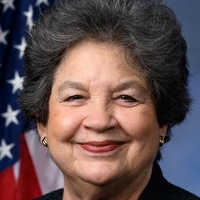
Lois Frankel
Representative
FL
Lois Frankel
Representative
FL
The Supporting Survivors from Faith-based Communities Act establishes a national resource center to improve how faith communities and service providers respond to victims of domestic violence, sexual assault, and stalking who have a faith or spiritual background. This center will provide education and training to strengthen prevention efforts and ensure victim safety and autonomy remain the highest priority. The bill also directs the Attorney General to create model state legislation addressing religious divorce denial.
The **Protecting Our Democracy Act** imposes sweeping restrictions on presidential power, enhances congressional oversight, strengthens ethics and anti-corruption laws, and bolsters accountability for federal officials.
Jamie Raskin
Representative
MD
Jamie Raskin
Representative
MD
The **Protecting Our Democracy Act** imposes sweeping reforms across the executive branch to strengthen accountability and restore checks and balances. It restricts presidential pardon power, closes loopholes to ensure no President is above the law, and enforces constitutional emoluments clauses to prevent self-enrichment. Furthermore, the Act enhances congressional oversight by strengthening subpoena enforcement, increasing transparency around White House visitors and tax returns, and protecting federal whistleblowers from retaliation.
This Act prohibits private equity funds engaged in harmful practices, termed "vulture investors," from investing in or exploiting youth sports entities.
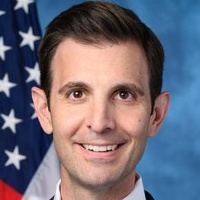
Chris Deluzio
Representative
PA
Chris Deluzio
Representative
PA
The Let Kids Play Act prohibits "vulture investors"—private equity firms with harmful track records—from investing in youth sports entities. It bans covered firms from using specific predatory business tactics, such as imposing junk fees or restricting competition, when involved in youth sports. The bill mandates that designated vulture investors must fully divest from these entities within two years. Enforcement is granted to the FTC and the Department of Justice, and the Act also allows private lawsuits for damages.
This resolution recognizes the 75th anniversary of the American College of Obstetricians and Gynecologists and honors its vital role in advancing women's health through clinical excellence, education, advocacy, and research.
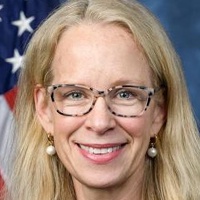
Kelly Morrison
Representative
MN
Kelly Morrison
Representative
MN
This resolution celebrates the 75th anniversary of the American College of Obstetricians and Gynecologists (ACOG). It recognizes ACOG's critical role in advancing women's health through excellence in clinical practice, education, advocacy, and research. The bill honors ACOG's dedication to improving maternal health and supporting obstetrician-gynecologists nationwide.
This Act establishes a fund administered by a Special Master to compensate law enforcement officers injured or killed while defending the U.S. Capitol on January 6, 2021.
Jamie Raskin
Representative
MD
Jamie Raskin
Representative
MD
This Act establishes the January 6th Law Enforcement Heroes Compensation Fund to provide financial compensation for injuries and deaths sustained by law enforcement officers defending the U.S. Capitol on January 6, 2021. The program will be administered by a Special Master appointed by the Attorney General, who will review claims for economic and noneconomic losses. The bill also mandates an additional, guaranteed payment for all eligible officers, funded in part by certain government settlement amounts related to the attack. Determinations made by the Special Master regarding compensation are final and not subject to judicial review.
This bill mandates the Department of Homeland Security to develop and implement mandatory training for its personnel on recognizing and accepting Native American tribal documents as proof of U.S. citizenship.
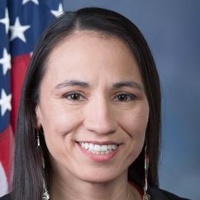
Sharice Davids
Representative
KS
Sharice Davids
Representative
KS
The Respect Tribal IDs Act mandates that the Department of Homeland Security (DHS) develop and implement comprehensive training for its personnel on recognizing and accepting Native American tribal documents as proof of U.S. citizenship. This training will cover proper interaction protocols, document identification, and the U.S. government's trust responsibility to tribes. All immigration enforcement personnel must complete this mandatory training annually and upon regional assignment.
This resolution reaffirms the foundational U.S. commitment to the Taiwan Relations Act, the three Joint Communiqués, and the Six Assurances, supporting Taiwan's self-defense and opposing any non-peaceful resolution of its future.
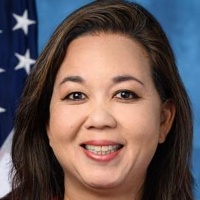
Jill Tokuda
Representative
HI
Jill Tokuda
Representative
HI
This resolution reaffirms the foundational U.S. commitment to the Taiwan Relations Act and longstanding bipartisan policy toward Taiwan. It underscores that peace and stability in the region are vital to U.S. interests and opposes any non-peaceful efforts to determine Taiwan's future. The bill affirms the U.S. commitment to providing Taiwan with defensive arms and maintaining the capacity to resist coercion.
This bill establishes comprehensive standards for the care, housing, and treatment of pregnant women in federal custody, including mandated data collection, prohibitions on restrictive housing and restraints, and requirements for family unity services.
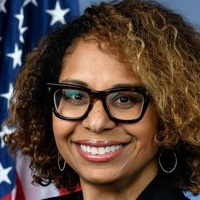
Sydney Kamlager-Dove
Representative
CA
Sydney Kamlager-Dove
Representative
CA
The Pregnant Women in Custody Act aims to establish comprehensive standards for the care, health services, and housing of pregnant individuals in federal custody, including those held by the Bureau of Prisons, CBP, ICE, and ORR. The bill mandates extensive data collection on the health needs of incarcerated pregnant women and strictly prohibits the use of restraints and restrictive housing during pregnancy, labor, and postpartum recovery, with very limited exceptions. Furthermore, it requires federal agencies to provide essential services like family unity programs, specialized medical care, and comprehensive education for pregnant and postpartum individuals.
This resolution expresses support for designating May 4, 2026, as a National Day of Reason to celebrate the importance of reason in human progress and foundational American principles.
Jamie Raskin
Representative
MD
Jamie Raskin
Representative
MD
This resolution expresses support for designating May 4, 2026, as a "National Day of Reason." It recognizes reason as fundamental to human progress, U.S. founding principles, and the protection of civil liberties. The bill encourages Americans to observe the day by promoting critical thought and the scientific method.
This resolution recognizes the historical and cultural significance of Cinco de Mayo, commemorating the Mexican victory at the Battle of Puebla and encouraging its observance in the United States.
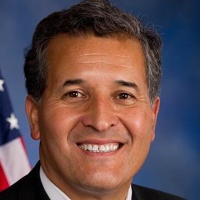
Juan Vargas
Representative
CA
Juan Vargas
Representative
CA
This resolution officially recognizes the cultural and historical significance of Cinco de Mayo, commemorating the 1862 Mexican victory at the Battle of Puebla. It highlights the holiday as a symbol of self-determination, unity, and the strong ties between the U.S. and Mexico. The bill encourages the American public to observe this important day with appropriate activities.
This resolution commends U.S. public servants for their dedication to defending the Constitution, delivering essential services, and supporting the economy, particularly during Public Service Recognition Week.
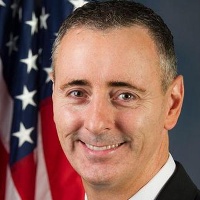
Brian Fitzpatrick
Representative
PA
Brian Fitzpatrick
Representative
PA
This resolution expresses the sense of the House of Representatives commending public servants for their dedication to defending the Constitution and delivering essential services to the American people. It specifically designates the week of May 3 through May 9, 2026, as Public Service Recognition Week. The bill honors the millions of federal, state, and local employees and uniformed service members who support the economy and democratic foundations of the nation.
This resolution directs the House Oversight Committee Chair to sue Pamela J. Bondi to compel her testimony regarding the federal government's enforcement of sex trafficking laws related to the Jeffrey Epstein investigation.
Robert Garcia
Representative
CA
Robert Garcia
Representative
CA
This resolution directs the House Oversight Committee Chair to initiate or intervene in a federal lawsuit within 30 days. The legal action must compel Pamela J. Bondi to comply with a committee subpoena for testimony regarding the DOJ's handling of records related to Jeffrey Epstein and sex trafficking law enforcement.
This bill mandates stricter federal and state regulation of utility rate-setting by establishing lower return-on-equity ranges and banning numerous non-operational costs from being passed on to consumers.
Gregorio Casar
Representative
TX
Gregorio Casar
Representative
TX
The Lowering Utility Bills Act aims to reduce consumer energy costs by establishing stricter federal and state guidelines for how electric transmission providers and investor-owned utilities calculate their allowed rate of return. The bill mandates using the lowest reasonable return on equity based on market data and explicitly bans passing numerous lobbying, administrative, and political expenses onto customers. Furthermore, it requires utilities to prioritize lower-cost, grid-enhancing technologies when planning new capital expenditures.