Legislative Activity
Track Delia's sponsored bills, co-sponsored legislation, and voting record
The American Dream and Promise Act of 2025 provides a pathway to permanent residency for eligible individuals who came to the U.S. as children, or who have Temporary Protected Status (TPS) or Deferred Enforced Departure (DED) status.
Sylvia Garcia
Representative
TX
Sylvia Garcia
Representative
TX
The American Dream and Promise Act of 2025 provides a pathway to permanent residency for eligible individuals who entered the United States as children and those with Temporary Protected Status (TPS) or Deferred Enforced Departure (DED). Title I, the Dream Act of 2025, establishes conditional permanent residency for eligible individuals who entered the U.S. as children. Title II, the American Promise Act of 2025, allows the Secretary of Homeland Security or the Attorney General to grant permanent resident status to eligible individuals from TPS or DED countries. Title III outlines general provisions, such as background checks, application processes, and fee exemptions, applicable to all seeking to adjust their status under this Act.
The RAISE Act of 2025 introduces a refundable tax credit for eligible teachers and early childhood educators, increases the tax deduction for educator expenses, and provides mandatory funding to support local educational agencies that maintain or increase teacher salaries.
Jahana Hayes
Representative
CT
Jahana Hayes
Representative
CT
The RAISE Act of 2025 introduces a refundable tax credit for eligible teachers, offering $1,000 plus additional amounts for teachers in qualifying schools with high student poverty levels. It also increases the tax deduction for educators' expenses to $500 and expands eligibility to include early childhood educators. Additionally, the Act amends the Elementary and Secondary Education Act to provide mandatory funding to support local educational agencies that maintain or increase teacher salaries, with a portion reserved for teacher salary incentive grants. These grants can be used for various programs aimed at strengthening the teaching profession and improving educator skills.
The "Protect Veteran Jobs Act" allows wrongly terminated veteran civil service employees to be reinstated and requires executive agencies to report to Congress on veteran employee terminations.
Derek Tran
Representative
CA
Derek Tran
Representative
CA
The Protect Veteran Jobs Act allows wrongly fired or dismissed veterans in civil service jobs between January 20, 2025, and the Act's enactment date to be reinstated to their previous position or a similar one. It mandates executive branch agencies to report to Congress every three months on all veteran employees who were fired or dismissed and the reasons for their termination, effective until January 20, 2029. The Act relies on existing U.S. Code definitions for key terms like "veteran" and "civil service."
The Compassion for Vulnerable and Struggling Workers Act allows involuntarily terminated civil service employees who meet specific criteria, such as being pregnant or having cancer, to enroll in a health benefits plan, with funding sourced from the United States DOGE Service savings.

Sheila Cherfilus-McCormick
Representative
FL
Sheila Cherfilus-McCormick
Representative
FL
The Compassion for Vulnerable and Struggling Workers Act allows civil service employees involuntarily terminated between January 20, 2025, and January 1, 2026, to enroll in a health benefits plan if they meet certain conditions. These conditions include being removed without cause, having a fully successful performance review, being pregnant at the time of removal, or being diagnosed with cancer in the 5 years before removal. Federal funds saved by the United States DOGE Service will cover the government and individual contributions for these health benefits.
The CROWN Act of 2025 prohibits discrimination based on hair texture and hairstyle in federally funded programs, housing, public accommodations, and employment.
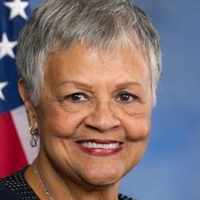
Bonnie Watson Coleman
Representative
NJ
Bonnie Watson Coleman
Representative
NJ
The CROWN Act of 2025 prohibits discrimination based on hair texture and hairstyle if that style is commonly associated with a particular race or national origin. This protection extends to federally funded programs, housing, public accommodations, and employment. The act aims to ensure equal opportunity and prevent discrimination based on hair, addressing historical biases and stereotypes. It clarifies that existing civil rights laws should be interpreted to include protection against hair-based discrimination.
The REPAIR Act ensures vehicle owners and independent repair shops have access to vehicle data and repair information, promoting competition and protecting data privacy in the auto repair industry.
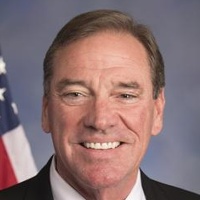
Neal Dunn
Representative
FL
Neal Dunn
Representative
FL
The "Right to Equitable and Professional Auto Industry Repair Act" or the "REPAIR Act" ensures vehicle owners and independent repair shops have access to necessary vehicle data, repair information, and tools, preventing manufacturers from creating barriers to repairs. It establishes an advisory committee to address competition issues in the auto repair industry and mandates that car buyers are informed of their rights to choose repair options. The Federal Trade Commission (FTC) is empowered to enforce the Act, protecting consumers from unfair restrictions on vehicle repair and ensuring control over their vehicle data.
Ethan's Law establishes federal penalties for improperly storing firearms where minors or prohibited persons can access them and creates grant programs to incentivize states to adopt matching safe storage laws.
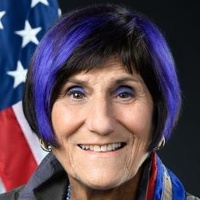
Rosa DeLauro
Representative
CT
Rosa DeLauro
Representative
CT
Ethan's Law establishes federal requirements for the secure storage of firearms to prevent unauthorized access by minors and prohibited persons, making improper storage a civil violation with escalating penalties if injury or death results. The bill also creates a federal grant program to incentivize states and Tribes to adopt matching safe storage laws. Furthermore, Congress declares that failing to comply with these storage requirements constitutes negligence and may be considered the direct cause of resulting firearm injuries.
This resolution designates February 24–28, 2025, as "Public Schools Week" to celebrate the vital role of public education and advocate for the continued support and funding of our nation's schools.
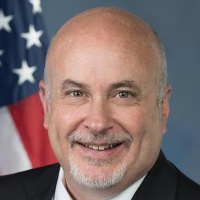
Mark Pocan
Representative
WI
Mark Pocan
Representative
WI
This resolution designates February 24–28, 2025, as "Public Schools Week" to celebrate the vital role public education plays in preparing students for the future. It reaffirms the commitment to providing every child with a high-quality, inclusive, and well-funded learning environment. Additionally, the bill calls on lawmakers to prioritize equitable resources and support services to ensure student success.
The "DOC Access Act of 2025" aims to improve dental and vision care coverage by ensuring fair payment practices, protecting providers' choices, and upholding state regulatory authority.
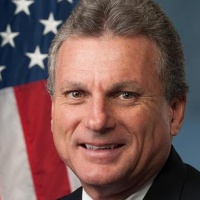
Earl Carter
Representative
GA
Earl Carter
Representative
GA
The "DOC Access Act of 2025" aims to enhance health care coverage under vision and dental plans by ensuring fair payment practices, protecting doctors' choices in labs and suppliers, and respecting state laws. It allows optometrists and dentists to charge their standard rate for non-covered services if the plan's payment is unreasonable, while ensuring they can only charge the contracted rate for dental cleanings. The bill also gives doctors more control over agreement extensions with limited benefit plans and allows them to opt out of certain provisions. Ultimately, this act seeks to balance federal guidelines with state oversight in regulating health insurance issuers and dental or vision benefit plans.
The Federal Retirement Fairness Act allows temporary employees' service after 1988 to count toward retirement benefits under the Federal Employees Retirement System.

Gerald Connolly
Representative
VA
Gerald Connolly
Representative
VA
The Federal Retirement Fairness Act amends title 5 of the United States Code, allowing civilian service in a temporary position after December 31, 1988, to be creditable under the Federal Employees Retirement System. This change applies to current employees and Members of the United States Postal Service, and requires the Office of Personnel Management to notify eligible individuals and issue implementing regulations.
This bill expands Post-9/11 GI Bill eligibility to National Guard members performing specific full-time duties.
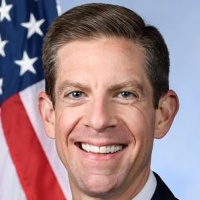
Mike Levin
Representative
CA
Mike Levin
Representative
CA
The Guard and Reserve GI Bill Parity Act of 2025 expands Post-9/11 GI Bill eligibility to National Guard members performing specific full-time duties. This expansion applies to service performed on or after September 11, 2001. The changes will take effect one year after the enactment of this Act, with the time limitation for using educational assistance applied as if enacted immediately after the Post-9/11 Veterans Educational Assistance Act of 2008.
The Poverty Line Act of 2025 updates the calculation of the federal poverty line to more accurately reflect the cost of basic needs and regional variations in cost of living, expanding eligibility for federal assistance programs.
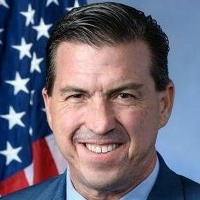
Kevin Mullin
Representative
CA
Kevin Mullin
Representative
CA
The Poverty Line Act of 2025 updates the calculation of the federal poverty line to more accurately reflect the true costs of basic needs such as housing, childcare, and healthcare, while also accounting for geographic variations and household spending norms. This updated calculation aims to expand eligibility for federal assistance programs. The Act requires regular evaluations and adjustments to the poverty line, ensuring it keeps pace with economic changes and accurately reflects the needs of households striving for economic mobility. It also mandates a report to Congress on necessary updates to federal laws and regulations that rely on the poverty line for program eligibility.
The bill modifies and extends funding for the World Trade Center Health Program, expands the types of healthcare providers who can certify mental health conditions, and requires a report to Congress on the program's budget.
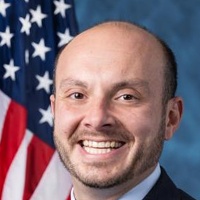
Andrew Garbarino
Representative
NY
Andrew Garbarino
Representative
NY
The 9/11 Responder and Survivor Health Funding Correction Act of 2025 amends the Public Health Service Act to improve the World Trade Center (WTC) Health Program by expanding the types of healthcare providers who can conduct mental health evaluations, modifying provider credentialing, clarifying enrollment calculations, and extending the time frame for adding health conditions for WTC responders. The act adjusts the funding formula for fiscal years 2026 through 2090 and requires the Secretary of Health and Human Services to report to Congress on the program's budget, including projected needs through 2090 and recommendations for changes to the funding formula. It also stipulates that remaining funds in the Supplemental Fund, Special Fund, and Pentagon-Shanksville Fund will revert to the Treasury.
This bill authorizes the creation of a Congressional Gold Medal to posthumously honor President Jimmy Carter for his dedicated service to the Nation, to be presented to the Carter Center.
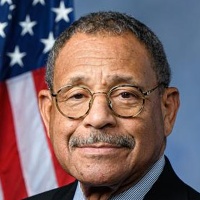
Sanford Bishop
Representative
GA
Sanford Bishop
Representative
GA
The "President Jimmy Carter Congressional Gold Medal Act" authorizes the posthumous presentation of a Congressional Gold Medal to former President Jimmy Carter in recognition of his dedicated service to the Nation. This medal, created by the Secretary of the Treasury, will be given to the Carter Center in Atlanta, Georgia, following the award ceremony. The Act also permits the creation and sale of bronze duplicates of the gold medal to the public and authorizes the United States Mint to use its Public Enterprise Fund to cover the costs of producing the medals.
The "Venezuelan Adjustment Act" allows eligible Venezuelan nationals who have been in the U.S. since December 31, 2021, to apply for lawful permanent resident status, offering a pathway to legal residency while outlining specific eligibility criteria and exceptions.
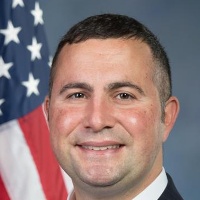
Darren Soto
Representative
FL
Darren Soto
Representative
FL
The Venezuelan Adjustment Act allows eligible Venezuelan nationals who have been in the U.S. since December 31, 2021, to apply for lawful permanent resident status, providing a pathway to citizenship for those who meet specific requirements and pass background checks. Certain grounds for inadmissibility will not apply when determining an alien's admissibility. The Department of Homeland Security will oversee the application process, with decisions not subject to court review except for constitutional claims or questions of law. This adjustment of status does not reduce the number of immigrant visas available under existing immigration laws.
The DRIVE Act of 2025 mandates that the VA increase veteran travel reimbursement rates to match the federal employee mileage rate and ensures veterans receive these payments within 90 days of submitting a complete claim.
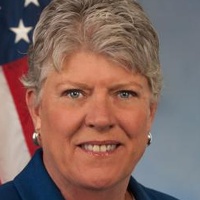
Julia Brownley
Representative
CA
Julia Brownley
Representative
CA
The DRIVE Act of 2025 ensures that the Department of Veterans Affairs (VA) travel reimbursement rate for veterans' medical appointments will never fall below the standard federal employee mileage rate. This legislation mandates that the VA must process and pay these mileage allowances within 90 days of a veteran submitting a complete request. Essentially, the bill aims to increase equity and speed in compensating veterans for necessary travel to VA healthcare.
The Justice for All Act of 2025 expands protections against discrimination based on race, sex, religion, national origin, age, disability, and source of income, while also increasing accountability for discriminatory actions and limiting the use of arbitration and immunity defenses.
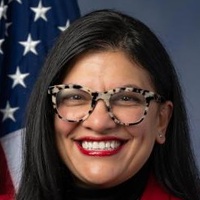
Rashida Tlaib
Representative
MI
Rashida Tlaib
Representative
MI
The Justice for All Act of 2025 aims to strengthen and expand civil rights protections by clarifying prohibited discrimination, reinstating the right to sue for discriminatory impact, and addressing loopholes in existing laws. This bill amends several key acts to include protections based on religion, sex (including sexual orientation and gender identity), and source of income, while also prohibiting discrimination by law enforcement and in public accommodations. It also makes employers fully responsible for employee discrimination, bans mandatory arbitration in employment, consumer, and civil rights disputes, and clarifies liability for government officials who violate constitutional rights. Finally, the act ensures that individuals who have experienced discrimination can recover equitable and legal relief, attorney's fees, and costs.
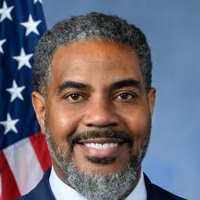
The "Tipped Income Protection and Support Act" eliminates the lower minimum wage for tipped employees, ensuring they receive the standard minimum wage while retaining all tips, and introduces a tax deduction for reported cash tips for eligible employees.
Steven Horsford
Representative
NV
Steven Horsford
Representative
NV
The Tipped Income Protection and Support (TIPS) Act eliminates the subminimum wage for tipped employees, requiring employers to pay the standard minimum wage before tips. It ensures that all tips go to the employees, allowing for traditional tip pooling. The bill also introduces a tax deduction for qualified cash tips for employees earning up to $112,500 annually, effective for taxable years after 2025.
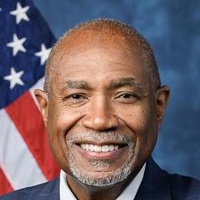
The "Expanding Child Care Access Act of 2025" establishes a tax credit of up to $5,000 for qualified child care startup expenses for licensed family child care providers.
Herbert Conaway
Representative
NJ
Herbert Conaway
Representative
NJ
The "Expanding Child Care Access Act of 2025" introduces a tax credit, up to $5,000, for qualified child care startup expenses incurred by licensed family child care providers. This credit aims to support individuals starting or expanding licensed child care services within their primary residence, covering expenses such as licensing fees, supplies, insurance, and necessary equipment or renovations. The credit is available for a limited time and cannot be claimed for expenses already covered by other deductions or credits.
The "Ending DOGE Conflicts Act" mandates financial disclosures for special government employees who own or lead companies contracting with the federal government, ensuring transparency and preventing conflicts of interest.

John Larson
Representative
CT
John Larson
Representative
CT
The "Ending DOGE Conflicts Act" mandates that special government employees with financial ties to companies contracting with the federal government must adhere to strict financial disclosure requirements. It requires the Director of the Office of Government Ethics to certify these employees' financial reports and prohibits them from performing official duties until compliance is confirmed.