Legislative Activity
Track Mike's sponsored bills, co-sponsored legislation, and voting record
This resolution honors the life, distinguished public service, and enduring legacy of former Wyoming Senator Alan K. Simpson.
John Barrasso
Senator
WY
John Barrasso
Senator
WY
This resolution formally honors the life and distinguished public service career of the Honorable Alan K. Simpson, former U.S. Senator for Wyoming. It celebrates his extensive tenure in both state and federal government, highlighting his focus on fiscal responsibility and support for veterans. The Senate expresses its deep sorrow at his passing and directs that the day's adjournment serve as a final tribute to his memory.
This resolution formally recognizes the rich heritage, culture, and significant contributions of American Indian, Alaska Native, and Native Hawaiian women across the United States.

Lisa Murkowski
Senator
AK
Lisa Murkowski
Senator
AK
This resolution formally recognizes the rich heritage, culture, and significant contributions of American Indian, Alaska Native, and Native Hawaiian women across the United States. It celebrates their historic achievements in areas such as military service, science, the arts, and civil rights leadership. The bill also emphasizes the importance of continued investment to overcome barriers these women face in accessing justice, healthcare, and economic opportunities.
This Act establishes a federal grant program to strengthen domestic mining education through competitive awards to qualified schools, while also creating an advisory board and repealing an older mining institute act.
John Barrasso
Senator
WY
John Barrasso
Senator
WY
The Mining Schools Act of 2025 establishes a new federal grant program, administered by the Secretary of Energy, to strengthen domestic mining education at qualified colleges and universities. This program will award up to ten competitive grants annually to improve curriculum and recruit professionals needed for the nation's mineral supply. The Act also creates the Mining Professional Development Advisory Board to assist in the grant selection process and repeals the previous Mining and Mineral Resources Institutes Act.
This Act mandates a comprehensive study and public report by the Treasury Department on mitigating financial risks posed by the People's Republic of China to the U.S. financial system.
Mark Warner
Senator
VA
Mark Warner
Senator
VA
The China Financial Threat Mitigation Act of 2025 mandates a comprehensive study and report by the Secretary of the Treasury on the risks posed by the People's Republic of China's financial sector to the U.S. economy. This report, developed in consultation with key financial regulators and the State Department, must assess potential systemic vulnerabilities and current mitigation efforts. The findings will be made public, along with recommendations for enhanced international cooperation to safeguard U.S. financial interests.
The Major Richard Star Act allows veterans with combat-related disabilities to receive both military retired pay and veteran's disability compensation without reduction.
Richard Blumenthal
Senator
CT
Richard Blumenthal
Senator
CT
The Major Richard Star Act allows veterans with combat-related disabilities to receive both veteran's disability compensation and military retired pay concurrently, without reduction. This act amends Title 10 of the United States Code to ensure that disability retirees with combat-related disabilities are not subject to reductions in retired pay due to receiving veteran's disability compensation. These changes will take effect the first day of the month following the enactment of the Act.
The Financial Integrity and Regulation Management Act prohibits federal banking agencies from using "reputational risk" as a factor in the supervision, examination, or rating of depository institutions.

Tim Scott
Senator
SC
Tim Scott
Senator
SC
The Financial Integrity and Regulation Management (FIRM) Act mandates that federal banking agencies must cease using "reputational risk" as a factor in the supervision, examination, or rating of depository institutions. This legislation aims to ensure regulators focus solely on a bank's financial safety and soundness, rather than public perception or political pressure. The Act requires all relevant agencies to remove references to reputational risk from their guidance and policies within 180 days of enactment.
This Act expands the Work Opportunity Tax Credit to include employers who hire military spouses.
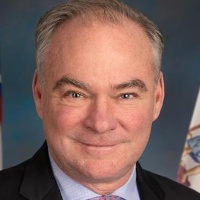
Timothy Kaine
Senator
VA
Timothy Kaine
Senator
VA
The Military Spouse Hiring Act amends the Work Opportunity Tax Credit (WOTC) to include military spouses as eligible hires. This allows employers to claim the tax credit for hiring individuals certified as spouses of active-duty military personnel. The provision applies to wages paid for individuals hired after the Act's enactment date.
The Fair and Open Competition Act ensures federal construction projects promote open competition by prohibiting the government from mandating or prohibiting union agreements in contracts or grants.

Todd Young
Senator
IN
Todd Young
Senator
IN
The Fair and Open Competition Act (FOCA Act) ensures fair competition on federally funded construction projects by prohibiting the government from mandating or barring contractors from entering into agreements with labor unions. This promotes open bidding, reduces taxpayer costs, and prevents discrimination based on union membership. The law requires federal agencies to remain neutral regarding project labor agreements for both direct contracts and federal grants.
This bill establishes a federally funded program to deploy cybersecurity experts to assist rural water and wastewater systems in defending against cyberattacks.

Catherine Cortez Masto
Senator
NV
Catherine Cortez Masto
Senator
NV
The Cybersecurity for Rural Water Systems Act establishes a new "Circuit Rider Program" managed by the Secretary of Agriculture. This program will deploy cybersecurity experts to assist rural water and wastewater systems with assessing and improving their defenses against cyber threats. The initiative is authorized to receive $10 million annually from fiscal year 2025 through 2029 to protect these critical public health systems.
The Deliver for Democracy Act ties the Postal Service's ability to raise periodical rates to meeting specific on-time delivery performance targets, mandates annual public reporting on newspaper delivery, and requires a GAO study on alternative pricing for periodicals.
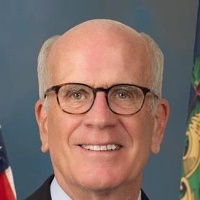
Peter Welch
Senator
VT
Peter Welch
Senator
VT
The Deliver for Democracy Act ties the Postal Service's ability to raise periodical rates to meeting specific on-time delivery performance targets for magazines and newspapers. It mandates annual public reporting by the Postmaster General on newspaper delivery performance, requiring input from relevant industry groups. Finally, the bill directs the GAO to study and report on alternative pricing strategies for periodicals that currently cost the USPS more to handle than they generate in postage.
This resolution urges the UN Security Council to strengthen and expand the arms embargo on Sudan to stop the flow of weapons fueling the ongoing conflict and exacerbating human rights abuses.
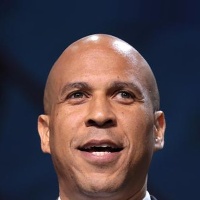
Cory Booker
Senator
NJ
Cory Booker
Senator
NJ
This resolution urges the UN Security Council to strengthen and expand the arms embargo on Sudan to address the ongoing conflict and atrocities committed by the Rapid Support Forces (RSF) and the Sudanese Armed Forces (SAF). It calls for stricter enforcement of sanctions against those violating the embargo, the inclusion of dual-use equipment in the embargo, and the establishment of mechanisms for humanitarian aid delivery and civilian protection. The resolution also appeals to the UN General Assembly for a nationwide ceasefire, recognition of atrocities, and unrestricted humanitarian aid, while pressing the U.S. government to increase support for civil society, improve monitoring of atrocities, and restart funding for affected areas. Ultimately, the resolution seeks to pressure all parties to end the conflict, adhere to the arms embargo, and ensure the protection and aid for civilians in Sudan.
The Honor Our Living Donors Act prohibits considering an organ recipient's income when reimbursing living donors and mandates annual reporting on whether donors were fully reimbursed for their costs.
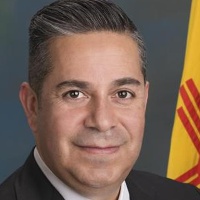
Ben Luján
Senator
NM
Ben Luján
Senator
NM
The Honor Our Living Donors Act ensures that federal grant funding intended to support living organ donors cannot consider the financial status of the transplant recipient. This legislation also removes any legal expectation that organ recipients might receive payments related to the donation. Furthermore, the Secretary must annually report to Congress on whether grant funds adequately covered all eligible donor expenses and estimate any shortfall.
The Credit for Caring Act of 2025 establishes a new, non-refundable tax credit for working family caregivers based on qualified expenses paid for eligible care recipients.

Shelley Capito
Senator
WV
Shelley Capito
Senator
WV
The Credit for Caring Act of 2025 establishes a new, non-refundable tax credit for working family caregivers who incur qualified expenses for a dependent with long-term care needs. This "Working Family Caregivers Credit" equals 30% of eligible expenses exceeding $2,000, up to a maximum annual credit of $5,000. To qualify, caregivers must have earned income over $7,500 and the care recipient must be certified by a healthcare practitioner as needing long-term care. The credit begins to phase out for taxpayers with Modified Adjusted Gross Income over $150,000 (joint filers) or $75,000 (all others).
Designates March 6, 2025, as "National Slam the Scam Day" to raise awareness and promote education to prevent government imposter and other pervasive scams.
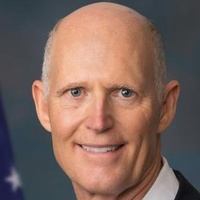
Rick Scott
Senator
FL
Rick Scott
Senator
FL
This resolution designates March 6, 2025, as "National Slam the Scam Day" to combat government imposter scams and other pervasive scams. It aims to raise awareness and promote education to protect individuals, especially older adults, from financial losses and identity theft. The resolution encourages reporting scams and supports the efforts of law enforcement, consumer groups, and financial institutions in preventing these scams. It also honors those who are actively fighting against government imposter scams.
This bill updates the definition of fossil fuel under the Clean Air Act to exclude fuel used by ocean-going vessels from renewable fuel calculations.
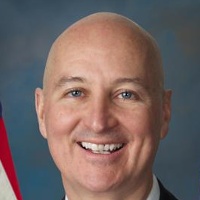
Pete Ricketts
Senator
NE
Pete Ricketts
Senator
NE
The Renewable Fuel for Ocean-Going Vessels Act amends the Clean Air Act to exclude fuel used by ocean-going vessels from the definition of fossil fuel for renewable fuel standard calculations. This change effectively treats marine vessel fuel similarly to home heating oil under existing renewable fuel programs. The EPA is tasked with implementing the necessary rulemaking within one year of the bill's enactment.
The Choice in Affordable Housing Act of 2025 incentivizes landlords to accept Housing Choice Vouchers, particularly in high-opportunity areas, by offering financial bonuses, covering security deposits, and improving program oversight.
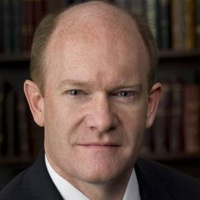
Christopher Coons
Senator
DE
Christopher Coons
Senator
DE
The Choice in Affordable Housing Act of 2025 aims to increase the participation of private landlords in the Housing Choice Voucher (Section 8) program, particularly in high-opportunity neighborhoods. It establishes new incentives, such as one-time payments and security deposit assistance, funded by the Herschel Lashkowitz Housing Partnership Fund. The Act also modernizes inspection standards, requires the use of specific Small Area Fair Market Rents, and mandates annual reporting on the program's effectiveness.
The HELP Copays Act mandates that financial assistance provided by third parties for prescription drug costs must count toward a patient's deductible, copayments, and out-of-pocket limits.

Roger Marshall
Senator
KS
Roger Marshall
Senator
KS
The HELP Copays Act mandates that financial assistance provided by third parties, such as non-profits or drug manufacturers, must count toward a patient's deductible, copayment, and out-of-pocket maximums. This change ensures that patient cost-sharing requirements are met even when external aid is used to cover prescription drug costs. The new rules generally apply to plan years beginning on or after January 1, 2026.
The ACRE Act of 2025 creates a new tax exclusion for qualified lenders on interest earned from loans secured by rural or agricultural real property.
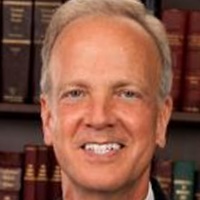
Jerry Moran
Senator
KS
Jerry Moran
Senator
KS
The Access to Credit for our Rural Economy Act of 2025 (ACRE Act) creates a new federal tax incentive for qualified lenders. This incentive excludes interest earned on certain loans secured by rural or agricultural real property from taxable income. The goal is to encourage lending for agricultural, rural housing, and related property by reducing the cost of capital for lenders.
This bill ensures veterans have the option to obtain and submit a physical, mail-in or in-person paper form for reimbursement of certain travel expenses related to VA care.
Rick Scott
Senator
FL
Rick Scott
Senator
FL
This bill ensures that veterans have the option to receive and submit a physical, paper copy of the VA travel reimbursement form (Form 10-3452) by mail or at any VA medical facility. It mandates that the Department of Veterans Affairs must provide these physical copies upon request to accommodate veterans who cannot or prefer not to use digital submission methods. This guarantees accessible avenues for veterans seeking reimbursement for travel expenses related to their VA care.
The "Protection of Women and Girls in Sports Act of 2025" amends Title IX to prohibit individuals born male from participating in women's and girls' athletic programs in educational institutions that receive federal funds, defining "sex" as determined at birth.
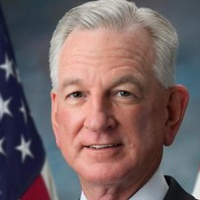
Tommy Tuberville
Senator
AL
Tommy Tuberville
Senator
AL
The "Protection of Women and Girls in Sports Act of 2025" amends Title IX to prohibit schools receiving federal funding from allowing individuals born male to participate in female athletic programs. Sex is defined as determined by reproductive biology and genetics at birth. This bill aims to ensure fair competition for women and girls in sports.