Legislative Activity
Track James's sponsored bills, co-sponsored legislation, and voting record
This Act excludes specific VA disability payments from being counted as income when unhoused disabled veterans apply for certain housing assistance programs.
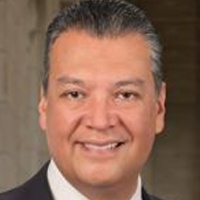
Alejandro Padilla
Senator
CA
Alejandro Padilla
Senator
CA
The Housing Unhoused Disabled Veterans Act aims to increase housing assistance eligibility for disabled veterans by excluding specific VA disability benefits from income calculations for certain housing programs. This ensures that compensation received for service-connected disabilities does not prevent veterans from qualifying for supportive housing assistance. However, these excluded benefits will still be considered when calculating the final adjusted rent amount.
This bill strengthens federal law enforcement tools and establishes a new coordination center to combat organized retail and supply chain crime.
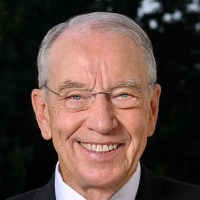
Charles Grassley
Senator
IA
Charles Grassley
Senator
IA
The Combating Organized Retail Crime Act aims to combat sophisticated criminal gangs engaged in large-scale retail and supply chain theft. This bill strengthens federal law by updating money laundering and stolen property statutes, including establishing a $5,000 aggregate value threshold for certain offenses. Crucially, it mandates the creation of a specialized federal Coordination Center within Homeland Security to unify efforts across all levels of law enforcement and private industry against these transnational criminal organizations.
This Act mandates that states receiving federal Medicaid funds must publicly report detailed information on all payments made to abortion providers, including the number and specifics of abortions performed.
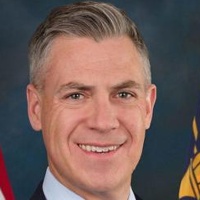
Jim Banks
Senator
IN
Jim Banks
Senator
IN
The Abortion Funding Awareness Act of 2025 requires states to report detailed information annually regarding any federal Medicaid payments made to abortion providers. These state reports must specify payment amounts, the number of abortions performed by the provider, and the gestational age and method used for each procedure. The Secretary of HHS will then compile these state submissions into a summary report for Congress and the public.
This bill amends mining laws to allow hardrock mining operations to locate multiple, non-patented mill sites necessary for their operations and establishes a fund for abandoned hardrock mines funded by associated claim maintenance fees.

Catherine Cortez Masto
Senator
NV
Catherine Cortez Masto
Senator
NV
The Mining Regulatory Clarity Act amends existing law to allow hardrock mining operations to locate multiple, necessary mill sites on public land, provided each site does not exceed five acres. This legislation establishes the Abandoned Hardrock Mine Fund, funded by maintenance fees from these new mill sites, to support remediation efforts under existing infrastructure law. The bill includes several savings provisions to ensure it does not override existing land use restrictions or claimant rights.
The Jobs in the Woods Act establishes a competitive grant program through the Secretary of Agriculture to fund forestry workforce training in eligible low-income rural areas with reliable internet access.
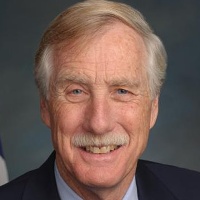
Angus King
Senator
ME
Angus King
Senator
ME
The Jobs in the Woods Act establishes a new competitive grant program administered by the Secretary of Agriculture to fund forestry workforce development. These grants aim to support training programs for forestry jobs specifically within eligible, low-income rural communities that meet certain broadband standards. Eligible entities can apply for grants between $\$500,000$ and $\$2$ million over four years, with priority given to programs addressing workforce shortages and ensuring job placement.
The REPAIR Act of 2025 establishes strict deadlines and a mandatory mediation process overseen by the Federal Permitting Improvement Steering Council to resolve court-ordered remands of project authorizations.
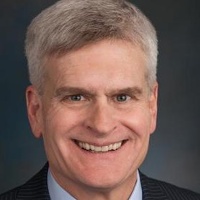
Bill Cassidy
Senator
LA
Bill Cassidy
Senator
LA
The REPAIR Act of 2025 establishes new rules and strict deadlines for challenging federal project authorizations in court. It mandates a mediation and remediation process overseen by the Federal Permitting Improvement Steering Council if a court remands an authorization due to procedural errors. Furthermore, the Act clarifies that completing an environmental review under NEPA does not automatically grant an individual the right to sue over the project approval.
This resolution honors the life, distinguished public service, and significant legislative contributions of the late former Louisiana Senator, John Bennett Johnston, Jr.
Bill Cassidy
Senator
LA
Bill Cassidy
Senator
LA
This resolution formally honors the life and extensive public service of the late Honorable John Bennett Johnston, Jr., former U.S. Senator for Louisiana. It details his career, highlighting his significant tenure on key Senate committees, particularly his leadership on energy policy. The resolution recognizes his legislative achievements benefiting Louisiana, including flood control and conservation efforts. Finally, the Senate adjourns immediately in his memory as a final tribute to his service.
This joint resolution expresses Congress's disapproval of the EPA's rule concerning California's Advanced Clean Cars II pollution control standards.

Shelley Capito
Senator
WV
Shelley Capito
Senator
WV
This joint resolution expresses Congress's disapproval of a specific Environmental Protection Agency (EPA) rule concerning California's "Advanced Clean Cars II" pollution control standards. By invoking the Congressional Review Act, Congress is effectively vetoing this EPA regulation. This action prevents the EPA's rule regarding California's vehicle emission standards from taking effect.
This Act amends the National Labor Relations Act to explicitly include Indian Tribes and their enterprises operating on tribal lands as "employers."
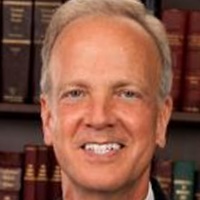
Jerry Moran
Senator
KS
Jerry Moran
Senator
KS
The Tribal Labor Sovereignty Act of 2025 amends the National Labor Relations Act (NLRA) to clarify the definition of "employer." This bill explicitly includes Indian Tribes and their tribally owned enterprises operating on tribal lands under the scope of the NLRA for labor relations purposes. It also establishes clear definitions for "Indian Tribe," "Indian," and "Indian Lands" within this context.
The DETERRENT Act mandates increased federal and institutional transparency regarding foreign gifts and contracts for colleges, bans certain contracts with "countries of concern," and establishes strict enforcement penalties for non-compliance.
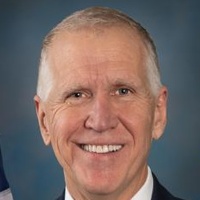
Thom Tillis
Senator
NC
Thom Tillis
Senator
NC
The DETERRENT Act significantly tightens reporting requirements for colleges and universities regarding foreign gifts and contracts, mandating public disclosure databases and imposing strict new prohibitions on agreements with "foreign countries or entities of concern." It establishes severe financial penalties and potential ineligibility for federal aid for institutions that knowingly violate these transparency and compliance rules. The bill also requires institutions to implement internal policies and designate compliance officers to manage risks associated with foreign influence.
The BOP SCAN Mail Act mandates the Bureau of Prisons to develop and implement a strategy to digitize mail processing to interdict synthetic drugs like fentanyl entering federal correctional facilities.
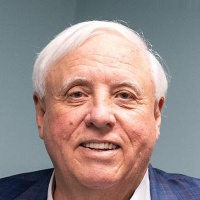
Jim Justice
Senator
WV
Jim Justice
Senator
WV
The BOP SCAN Mail Act mandates the Bureau of Prisons (BOP) to develop and implement a comprehensive strategy to stop synthetic drugs, like fentanyl, from entering federal facilities via mail. This strategy requires digitizing mail delivery so inmates receive digital copies within 24 hours, while physical mail is delivered later if cleared of contraband. The ultimate goal is to achieve 100% scanning capacity to enhance security and alleviate staffing burdens within the BOP.
This Act extends nonimmigrant status, grants limited job flexibility, and waives the foreign residence requirement for religious workers facing long green card backlogs.
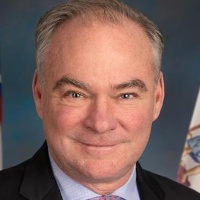
Timothy Kaine
Senator
VA
Timothy Kaine
Senator
VA
The Religious Workforce Protection Act aims to support religious workers facing long delays in obtaining lawful permanent residence. It extends nonimmigrant status for those stuck in green card backlogs, even past the normal five-year limit for R-1 visas. Furthermore, the bill modifies job flexibility rules for certain long-waiting religious workers and exempts those who left the U.S. due to the R-1 visa time limit from the usual one-year foreign residence requirement before reapplying.
This bill authorizes the minting and sale of special commemorative gold and silver coins to mark the 25th anniversary of the September 11th attacks, with all surcharges benefiting the National September 11 Memorial and Museum.

Kirsten Gillibrand
Senator
NY
Kirsten Gillibrand
Senator
NY
This Act authorizes the minting and issuance of special commemorative gold and silver coins to mark the 25th anniversary of the September 11, 2001, terrorist attacks. The coins will honor the victims, first responders, and the National September 11 Memorial and Museum. All surcharges collected from the sale of these coins must be paid directly to the National September 11 Memorial and Museum to support its operations.
The Rural Housing Service Reform Act of 2025 modernizes rural housing programs by streamlining foreclosure rules, preserving existing affordable rentals, establishing new lending programs for Native CDFIs, increasing loan limits for minor repairs, and setting efficiency goals for application processing.

Tina Smith
Senator
MN
Tina Smith
Senator
MN
The Rural Housing Service Reform Act of 2025 is a comprehensive bill designed to modernize and strengthen federal rural housing programs. It streamlines foreclosure processes, establishes a permanent program to preserve existing affordable rental housing, and creates new lending pathways for Native CDFIs to boost rural homeownership. Furthermore, the Act increases financial assistance limits for minor home repairs and mandates significant technology upgrades and increased transparency across the Rural Housing Service.
The Sanctioning Russia Act of 2025 imposes sweeping economic and financial penalties on the Russian Federation and its affiliates, contingent upon Russia's failure to negotiate peace with Ukraine.
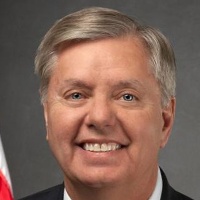
Lindsey Graham
Senator
SC
Lindsey Graham
Senator
SC
The Sanctioning Russia Act of 2025 mandates sweeping economic penalties against the Russian Federation and its affiliates for actions against Ukraine. This legislation requires the President and Treasury Secretary to impose escalating sanctions on Russian officials, financial institutions, and energy sector entities. Furthermore, the Act prohibits U.S. persons from investing in Russian debt, bans the trading of Russian securities on U.S. exchanges, and imposes a massive 500% import duty on Russian goods. Sanctions can only be terminated if Russia agrees to a verifiable peace deal with Ukraine.
This resolution designates March 27, 2025, as "National Women in Agriculture Day" to recognize and celebrate the vital contributions of women across the U.S. agricultural sector.

Joni Ernst
Senator
IA
Joni Ernst
Senator
IA
This resolution officially designates March 27, 2025, as "National Women in Agriculture Day." It recognizes the vital and substantial contributions of the over 1.2 million female agricultural producers to the U.S. economy and global food supply. The measure encourages citizens to acknowledge the leadership, mentorship, and economic impact women have across the entire agricultural sector.
This act excludes certain student loan repayments received through programs designed to increase veterinary services in rural areas from taxable income.

Michael Crapo
Senator
ID
Michael Crapo
Senator
ID
The Rural Veterinary Workforce Act makes student loan repayment or forgiveness amounts received by veterinarians participating in state-based programs tax-free. This exclusion applies to funds received through programs designed to increase veterinary services in underserved areas. This tax benefit will take effect for amounts received in taxable years beginning after December 31, 2025.
This resolution honors the life, distinguished public service, and enduring legacy of former Wyoming Senator Alan K. Simpson.
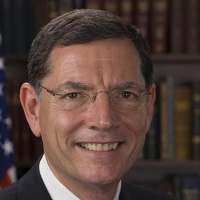
John Barrasso
Senator
WY
John Barrasso
Senator
WY
This resolution formally honors the life and distinguished public service career of the Honorable Alan K. Simpson, former U.S. Senator for Wyoming. It celebrates his extensive tenure in both state and federal government, highlighting his focus on fiscal responsibility and support for veterans. The Senate expresses its deep sorrow at his passing and directs that the day's adjournment serve as a final tribute to his memory.
The MEGOBARI Act suspends the U.S.-Georgia Strategic Partnership Commission until Georgia reverses democratic backsliding, supports sanctions against Russia, and commits to its Euro-Atlantic path, while also authorizing targeted sanctions against corrupt officials.
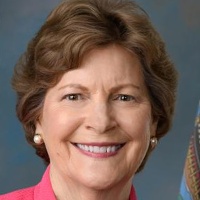
Jeanne Shaheen
Senator
NH
Jeanne Shaheen
Senator
NH
The MEGOBARI Act expresses Congressional concern over Georgia's democratic backsliding and reaffirms U.S. support for its Euro-Atlantic integration. The bill directs the Secretary of State to suspend the U.S.-Georgia Strategic Partnership Commission until Georgia upholds democratic commitments. Furthermore, it mandates reports on Russian influence and establishes a framework for imposing targeted sanctions on individuals undermining Georgia's stability or democratic progress. This entire Act is set to expire five years after enactment unless renewed.
The SHORT Act modifies federal firearms definitions, eliminates disparate treatment and state preemption for certain short-barreled rifles and shotguns, and mandates the destruction of related registration records.

Roger Marshall
Senator
KS
Roger Marshall
Senator
KS
The SHORT Act aims to revise federal firearms tax definitions and eliminate disparate federal treatment of short-barreled rifles and shotguns used for lawful purposes. It also preempts state and local governments from imposing special taxes or registration requirements on these specific weapons if they are involved in interstate commerce. Finally, the bill mandates the destruction of existing federal records related to the registration and transfer of these firearms.