Legislative Activity
Track Mike's sponsored bills, co-sponsored legislation, and voting record
The "ENABLE Act" permanently extends provisions that increase contributions to ABLE accounts, include ABLE contributions in retirement savings calculations, and allow penalty-free rollovers from 529 education savings accounts to ABLE accounts.
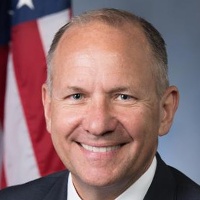
Lloyd Smucker
Representative
PA
Lloyd Smucker
Representative
PA
The ENABLE Act permanently extends provisions that allow for increased contributions to ABLE accounts, which are savings accounts for individuals with disabilities. It also allows penalty-free rollovers from 529 education savings accounts to ABLE accounts, providing greater flexibility in financial planning for families and individuals with disabilities. Additionally, the act includes contributions made to an ABLE account when calculating retirement savings contributions.
The Secure Rural Schools Reauthorization Act of 2025 extends federal funding and program authorities for states and counties containing national forest land through 2026.
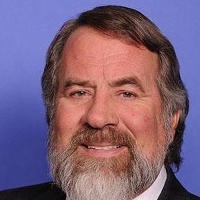
Doug LaMalfa
Representative
CA
Doug LaMalfa
Representative
CA
The Secure Rural Schools Reauthorization Act of 2025 extends critical federal funding for states and counties containing national forest land through 2026. This legislation ensures the continuation of essential community services and maintains the authority for resource advisory committees and local special projects.
This resolution designates February 15–22, 2025, as "National FFA Week" to celebrate the organization's impact on agricultural education and its historic milestones.
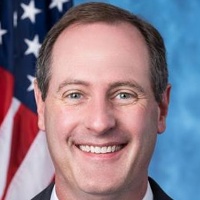
Tracey Mann
Representative
KS
Tracey Mann
Representative
KS
This resolution designates February 15–22, 2025, as "National FFA Week" to honor the National FFA Organization’s vital role in cultivating the next generation of agricultural leaders. It celebrates the organization’s commitment to personal growth and career readiness while commemorating the 90th anniversary of the New Farmers of America and the 75th anniversary of the FFA’s federal charter.
Mandates that schools receiving federal funds require daily Pledge of Allegiance recitation, display the U.S. flag in every classroom, and provide education on flag history, while allowing individuals to abstain for religious or personal reasons.
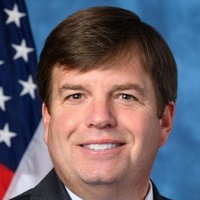
Dale Strong
Representative
AL
Dale Strong
Representative
AL
The "Promoting American Patriotism In Our Schools Act" mandates that schools receiving federal funds must require daily Pledge of Allegiance recitation, prominently display the U.S. flag in classrooms and gyms, and provide education on the flag's history. Individuals can abstain from reciting the Pledge for religious or personal reasons. Non-compliant schools will face enforcement by the Secretary.
This act authorizes the creation of the Smithsonian National Museum of the American Latino on the National Mall, ensuring diverse representation in its exhibits and programs.
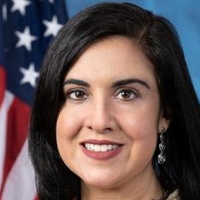
Nicole Malliotakis
Representative
NY
Nicole Malliotakis
Representative
NY
The Smithsonian National Museum of the American Latino Act authorizes the creation of the Smithsonian National Museum of the American Latino on the National Mall. It ensures the museum's exhibits and programs accurately represent the diverse cultures, histories, events, and values of Hispanic and Latino communities, seeking guidance from diverse sources. The Act also mandates regular reports to Congress on the museum's efforts to meet these diversity requirements.
The "Fighting Trade Cheats Act of 2025" increases penalties for customs violations, allows private parties to sue for customs fraud, and excludes violators from the importer of record program.
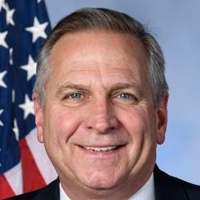
Mike Bost
Representative
IL
Mike Bost
Representative
IL
The "Fighting Trade Cheats Act of 2025" increases penalties for fraudulent and grossly negligent violations of U.S. customs laws, including banning violators and their affiliates from importing goods. It also allows private parties harmed by customs fraud to sue for damages and injunctive relief. The Act excludes those who commit fraud from participating in the importer of record program.
The "Death Tax Repeal Act" eliminates estate and generation-skipping transfer taxes, adjusts gift tax calculations, and sets a $10,000,000 lifetime gift exemption.
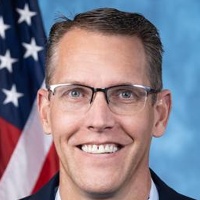
Randy Feenstra
Representative
IA
Randy Feenstra
Representative
IA
The "Death Tax Repeal Act" eliminates both estate and generation-skipping transfer taxes, effective from the date of enactment. It adjusts gift tax calculations by setting the lifetime gift exemption at $10,000,000, with inflation adjustments after 2011. The Act also includes transitional rules for applying certain sections of the Internal Revenue Code during the enactment year.
The I CAN Act removes practice and billing barriers for Nurse Practitioners, CRNAs, and CNMs across Medicare and Medicaid while increasing transparency in federal health program coverage decisions.
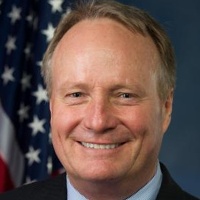
David Joyce
Representative
OH
David Joyce
Representative
OH
The "I CAN Act" is comprehensive legislation designed to remove existing practice and billing barriers for various Advanced Practice Registered Nurses (APRNs)—including Nurse Practitioners, CRNAs, and CNMs—within Medicare and Medicaid. It aims to expand patient access to care by allowing these qualified professionals to supervise, order, and bill for services to the full extent of their state-defined scope of practice. Furthermore, the bill enhances transparency and accountability for Medicare's local coverage decisions affecting APRN services. Overall, this act seeks to integrate APRNs more fully into federal healthcare programs, improving efficiency and service delivery.
This resolution expresses Congressional opposition to imposing new performance fees or royalties on local radio stations and businesses for broadcasting or playing music.
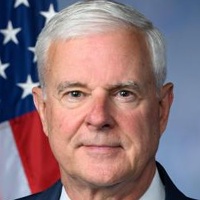
Steve Womack
Representative
AR
Steve Womack
Representative
AR
The Local Radio Freedom Act expresses Congressional opposition to imposing new performance fees, taxes, or royalties on local radio stations and businesses for playing music. It argues that the current system of free airplay provides essential promotional value to artists and that new fees would threaten the financial viability of local broadcasters and the vital community services they provide.
The "National Right-to-Work Act" prohibits mandatory union membership as a condition of employment, protecting employees' rights to choose whether or not to join or support a labor union.
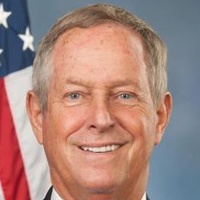
Joe Wilson
Representative
SC
Joe Wilson
Representative
SC
The "National Right-to-Work Act" amends both the National Labor Relations Act and the Railway Labor Act to protect an employee's right to choose whether or not to join or support a labor union. It eliminates the possibility of mandatory union membership or dues payments as a condition of employment, ensuring that employees cannot be forced to join or support a union against their will.
The Freight RAILCAR Act of 2025 incentivizes freight railcar modernization by establishing a tax credit for qualified newly built replacement railcars and qualified railcar modernization expenditures.
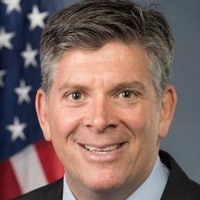
Darin LaHood
Representative
IL
Darin LaHood
Representative
IL
The "Freight RAILCAR Act of 2025" introduces a tax credit for modernizing freight railcars, encouraging investments in newer, more efficient railcars. Taxpayers can claim a credit equal to 10% of their freight railcar fleet modernization expenses, with a limit of 1,000 qualified freight railcars per year. The credit applies to railcars that increase capacity, improve fuel efficiency, or meet updated performance standards, and is available for three years after the Act's enactment. The Secretary of the Treasury is required to submit a report to Congress detailing the credit's usage and impact on railcar modernization and scrapping.
The Marc Fischer Memorial Act mandates the implementation of a comprehensive digital mail scanning strategy across all federal prisons to detect and interdict synthetic drugs like fentanyl.
Don Bacon
Representative
NE
Don Bacon
Representative
NE
The Marc Fischer Memorial Act mandates that the Bureau of Prisons implement a comprehensive strategy to achieve 100% digital scanning of all inmate mail to interdict fentanyl and other synthetic drugs. By transitioning to digital mail processing, the Act aims to protect staff and inmates from lethal exposure, improve institutional security, and alleviate the administrative burden on correctional personnel.
The WARN Act directs the Comptroller General to study and report on the effectiveness of weather alert systems to improve community emergency response plans and public safety.
Nicholas Langworthy
Representative
NY
Nicholas Langworthy
Representative
NY
The WARN Act aims to improve community safety during weather emergencies by directing the Comptroller General to study the effectiveness of local, state, territory, and federal emergency alert systems. The study will assess alert dissemination methods, evaluate the clarity and actionability of alert content, and explore improvements to public alerting systems. A report on the study's findings will be submitted to Congress within 18 months, with the goal of enhancing emergency response plans and public safety.
The Fair Access to Banking Act prohibits large financial institutions and payment networks from denying services to law-abiding businesses based on subjective, non-financial, or political criteria.
Garland Barr
Representative
KY
Garland Barr
Representative
KY
The Fair Access to Banking Act prohibits large financial institutions and payment networks from denying services to law-abiding businesses based on subjective, politically motivated, or reputational criteria. The bill mandates that financial institutions use impartial, quantitative, risk-based standards to evaluate customers rather than category-based exclusions. To ensure compliance, the legislation establishes enforcement mechanisms through federal regulators and provides a legal pathway for businesses to sue for damages if they are unfairly denied access to financial services.
The Support Military Families Act allows eligible federal employees who are military spouses to maintain telework or remote work arrangements, exempting them from mandatory in-person return-to-office requirements.
Eugene Vindman
Representative
VA
Eugene Vindman
Representative
VA
The Support Military Families Act protects federal employees married to U.S. service members by exempting them from mandatory in-person work requirements, allowing them to continue teleworking or working remotely. Additionally, the bill mandates a GAO report to analyze the economic and operational impacts of these work arrangements on the federal workforce.
This resolution supports the goals and ideals of "Career and Technical Education Month" by recognizing the vital role of CTE programs in building a skilled workforce and strengthening the U.S. economy.
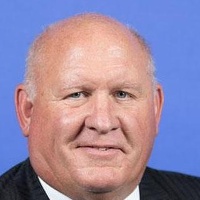
Glenn Thompson
Representative
PA
Glenn Thompson
Representative
PA
This resolution supports the designation of "Career and Technical Education Month" to celebrate the vital role of CTE programs in building a skilled workforce. It highlights how these programs provide students with essential training and credentials that align with modern economic demands. Furthermore, it encourages educators and parents to promote CTE as a respected and effective educational pathway for future success.
The Charitable Act extends and modifies tax deductions for charitable contributions, allowing individuals who take the standard deduction to claim additional tax benefits for donations made in 2026 and 2027.
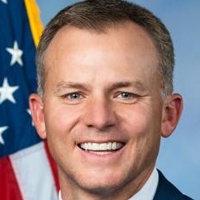
Blake Moore
Representative
UT
Blake Moore
Representative
UT
The Charitable Act allows individuals who take the standard deduction to also claim a deduction for charitable contributions during the 2026 and 2027 tax years. This legislation permits non-itemizers to deduct donations up to one-third of their standard deduction amount while removing previous penalties for overstatements.
The Life at Conception Act declares that the constitutional right to life begins at the moment of fertilization and applies to every member of the species *homo sapiens* at all stages of development.
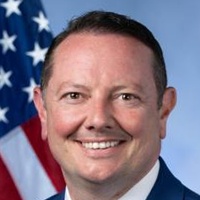
Eric Burlison
Representative
MO
Eric Burlison
Representative
MO
The Life at Conception Act declares that the constitutional right to life begins at the moment of fertilization, defining all human beings as persons from that point forward. The bill establishes legal personhood for every member of the species *homo sapiens* at all stages of development. Additionally, it explicitly prohibits the prosecution of any woman for the death of her unborn child.
The Born-Alive Abortion Survivors Protection Act requires health care practitioners to provide the same level of care to infants born alive after an abortion attempt as they would to any other newborn, mandating immediate hospitalization and imposing penalties for violations, while protecting the mother from prosecution. It also allows the mother of a child born alive to file a civil action against anyone who violated the act.
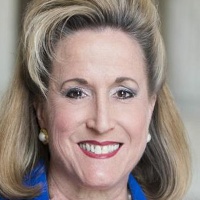
Ann Wagner
Representative
MO
Ann Wagner
Representative
MO
The "Born-Alive Abortion Survivors Protection Act" ensures that infants born alive after an abortion receive the same medical care as any other newborn, mandating immediate hospitalization and requiring healthcare practitioners to report any failures to comply. Violators face fines, imprisonment, and potential prosecution for homicide or attempted homicide, while the mother of the child cannot be prosecuted. The bill also allows the woman who had the abortion to file a civil action against anyone who violated the act. It defines abortion and attempts at abortion, and renames "Partial-Birth Abortions" to "Abortions" in relevant sections of the U.S. Code.
This bill mandates the dissolution of the Federal Insurance Office and redistributes its regulatory and oversight responsibilities to the Secretary of the Treasury and other federal financial agencies.
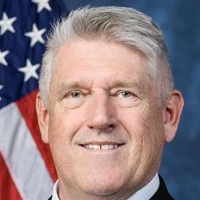
Troy Downing
Representative
MT
Troy Downing
Representative
MT
The Federal Insurance Office Elimination Act proposes the dissolution of the Federal Insurance Office (FIO) within the Department of the Treasury. This legislation removes the FIO from various financial oversight and regulatory processes, reassigning its responsibilities to the Secretary of the Treasury, the Federal Reserve, and other relevant agencies.