Legislative Activity
Track Mike's sponsored bills, co-sponsored legislation, and voting record
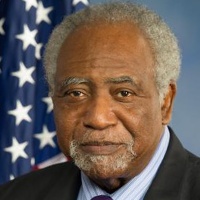
This resolution demands that the President and the Secretary of Health and Human Services provide the House of Representatives with all documentation regarding the recent freeze on federal social service payments to California, Colorado, Illinois, Minnesota, and New York.
Danny Davis
Representative
IL
Danny Davis
Representative
IL
This resolution demands that the President and the Secretary of Health and Human Services provide the House of Representatives with all internal documents, communications, and records regarding the recent freeze on federal funding for California, Colorado, Illinois, Minnesota, and New York. It specifically seeks transparency on the decision-making process, legal justifications, and administrative actions taken by the Department of Health and Human Services concerning these state-based grant programs.
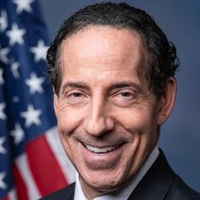
The High Court Gift Ban Act prohibits federal judicial officers from accepting gifts exceeding $50 per instance or $100 annually from a single source, with specific exceptions and enforcement penalties.
Jamie Raskin
Representative
MD
Jamie Raskin
Representative
MD
The High Court Gift Ban Act establishes strict limits on gifts accepted by federal judicial officers, prohibiting any gift valued over $50 or exceeding $100 in total annual value from a single source. The bill includes specific exemptions for personal hospitality, professional events, and family gifts, while mandating enforcement through the Judicial Conference and potential civil or criminal penalties for violations.
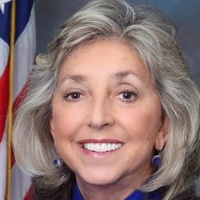
This bill disapproves and blocks the proposed sale of defense articles and technical services related to F110 engine integration for Turkey's TFX aircraft program.
Dina Titus
Representative
NV
Dina Titus
Representative
NV
This bill formally disapproves of a proposed foreign military sale to Turkey involving defense articles and services related to F110 engine integration for TFX aircraft. By blocking this transaction, the legislation prevents the transfer of technical data and support equipment outlined in Transmittal No. 24051.
This resolution honors the victims, survivors, and first responders of the 2022 Highland Park Independence Day parade shooting while reaffirming a commitment to community healing and the reduction of gun violence.
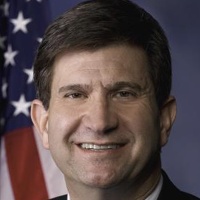
Bradley Schneider
Representative
IL
Bradley Schneider
Representative
IL
This resolution honors the seven victims of the July 4, 2022, Highland Park Independence Day parade shooting on its fourth anniversary. It expresses support for the survivors and their families while commending the courageous response of first responders and the resilience of the Highland Park community. Finally, the House reaffirms its commitment to supporting those affected by the tragedy and working to reduce gun violence.
This bill directs the President to remove U.S. Armed Forces from hostilities in Lebanon within seven days, pursuant to the War Powers Resolution.
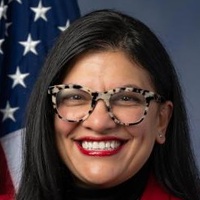
Rashida Tlaib
Representative
MI
Rashida Tlaib
Representative
MI
This resolution directs the President to withdraw U.S. Armed Forces from hostilities in Lebanon within seven days, utilizing authority under the War Powers Resolution. It explicitly clarifies that this action does not authorize the use of military force or limit security cooperation with Lebanese forces or the protection of diplomatic facilities.
The Strategic Unmanned Systems Partnership Act establishes a working group to accelerate the co-development, co-production, and acquisition of cost-effective unmanned systems through a strategic defense partnership between the United States and Ukraine.
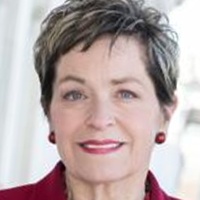
Marcy Kaptur
Representative
OH
Marcy Kaptur
Representative
OH
The Strategic Unmanned Systems Partnership Act establishes a joint working group between the U.S. and Ukraine to accelerate the co-development, production, and acquisition of cost-effective, expendable unmanned systems. By leveraging lessons from the battlefield in Ukraine, the initiative aims to integrate proven drone and counter-drone technologies into U.S. defense capabilities. The Act also mandates the creation of frameworks for secure technology transfer, reciprocal procurement, and the scaling of production to enhance national security.
This bill impeaches Secretary of Education Linda M. McMahon for high crimes and misdemeanors, citing unlawful transfers of departmental offices, misleading Congress, and disrupting federal education funding.
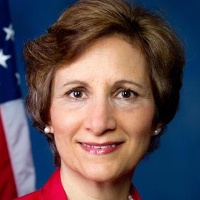
Suzanne Bonamici
Representative
OR
Suzanne Bonamici
Representative
OR
This bill impeaches Secretary of Education Linda M. McMahon for high crimes and misdemeanors related to her alleged unlawful transfer of departmental offices, willful non-compliance with federal law, and misleading Congress. The resolution cites her actions as a deliberate attempt to dismantle the Department of Education without congressional approval and a breach of her oath of office. These actions, including massive workforce reductions and the delayed disbursement of congressionally authorized funds, warrant her removal and disqualification from future office.
This bill prohibits data brokers from selling or transferring sensitive health and location data, granting enforcement power to the FTC, state attorneys general, and private citizens.
Mary Scanlon
Representative
PA
Mary Scanlon
Representative
PA
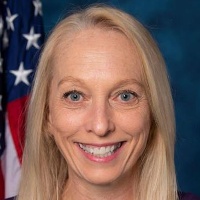
This bill, the Health and Location Data Protection Act of 2026, prohibits data brokers from selling or transferring sensitive health and location data about individuals. It grants enforcement authority to the Federal Trade Commission (FTC), state attorneys general, and private citizens. The FTC is tasked with issuing necessary regulations to implement these protections.
The LIFT the BAR Act restores federal public benefit eligibility, including SNAP, Medicaid, and housing assistance, for many lawfully present noncitizens by repealing restrictions from the 1996 welfare law and updating terminology.

Pramila Jayapal
Representative
WA
Pramila Jayapal
Representative
WA
The LIFT the BAR Act repeals decades-old restrictions that barred many lawfully present noncitizens from accessing essential federal public benefits. This legislation restores eligibility for programs like SNAP, Medicaid, CHIP, and housing assistance for qualified noncitizens. The bill also updates terminology, replacing "alien" with "noncitizen" throughout relevant statutes.
This bill renames and revises the Great American Outdoors Act's maintenance fund, increases dedicated funding through new, higher fees for foreign visitors, and sets spending priorities for deferred maintenance across public lands agencies.
Bruce Westerman
Representative
AR
Bruce Westerman
Representative
AR
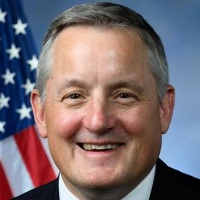
This bill, the Great American Outdoors Act 250, significantly reforms and renames the existing public lands restoration fund to the America’s Legacy Restoration Fund. It secures dedicated funding streams, primarily from energy revenues and new fees on foreign visitors, to address critical deferred maintenance across the National Park Service, Forest Service, and other public land agencies. The legislation establishes strict spending priorities for infrastructure repair while also creating pilot programs for enhancing outdoor recreation and sportsmen's access. Finally, it mandates increased transparency and accountability through standardized metrics and public reporting on all funded projects.
This act establishes a federal grant program to help states and tribal governments develop, implement, or improve their firearms dealer licensing programs.
Joseph Morelle
Representative
NY
Joseph Morelle
Representative
NY
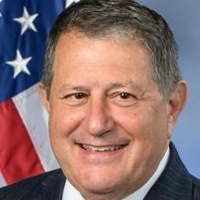
The State Firearms Dealer Licensing Enhancement Act establishes a federal grant program administered by the Attorney General to help states and tribal governments develop, improve, or evaluate their firearms dealer licensing programs. Eligible applicants must already have a law in place requiring state or tribal licensing for firearms dealers, which includes specific standards for application, inspection, and enforcement. Grant recipients must report annually on their licensing activities, and the Attorney General will report findings to Congress.
This bill establishes a free, voluntary program to provide veteran borrowers with expert support services to help them understand and navigate their VA home loan benefits.
Veronica Escobar
Representative
TX
Veronica Escobar
Representative
TX
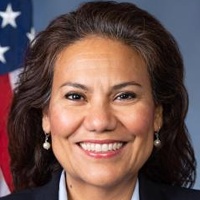
The VA Home Loan Navigator Act establishes a new, free program to provide comprehensive housing loan support services to veteran borrowers. This program will offer education, guidance, and assistance navigating all aspects of their VA home loan benefits, from eligibility to foreclosure prevention. Services will be delivered by independent, neutral third-party organizations approved by the VA and HUD. Participation is entirely voluntary for the borrower.
This act doubles the maximum Pell Grant award, makes funding mandatory, extends eligibility to Dreamer students, restores previous eligibility limits, and reforms Satisfactory Academic Progress rules.
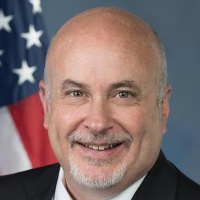
Mark Pocan
Representative
WI
Mark Pocan
Representative
WI
The Pell Grant Preservation and Expansion Act of 2026 aims to significantly strengthen federal student aid by doubling the maximum Pell Grant award and funding it through mandatory appropriations. This bill also expands eligibility to include Dreamer students, restores Pell Grant eligibility for students with certain scholarships, and reforms Satisfactory Academic Progress (SAP) rules to make regaining aid easier after academic setbacks. These changes are designed to stabilize and expand access to postsecondary education for millions of students.
This bill mandates the creation of an online detainee locator system by DHS, requires notification for medical transfers, and increases public reporting on CBP arrests and enforcement operations.
Rashida Tlaib
Representative
MI
Rashida Tlaib
Representative
MI
This bill, the "Find Our Families Act of 2026," mandates the creation of a public, online detainee locator system for individuals in CBP and ICE custody, accessible in multiple languages. It requires timely posting of custody and location information, along with new notification requirements for medical transfers to family members. Additionally, the bill requires the public reporting of detailed information regarding CBP arrests and ongoing enforcement operations.
This bill, the "Protect Local Funding Act," prohibits the finalization, implementation, or enforcement of the proposed "Regulation for Federal Financial Assistance" rule published on May 29, 2026, or any substantially similar rule.
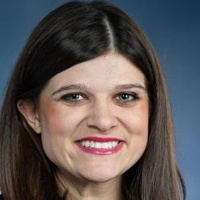
Haley Stevens
Representative
MI
Haley Stevens
Representative
MI
This bill, the "Protect Local Funding Act," prohibits the finalization, implementation, or enforcement of the proposed "Regulation for Federal Financial Assistance" published on May 29, 2026, or any substantially similar rule. It prevents federal agencies from enacting this specific regulation concerning federal financial assistance.
This resolution commemorates the 10th anniversary of the Pulse nightclub shooting, honoring the victims, recognizing first responders, and reaffirming support for gun safety and mental health efforts.
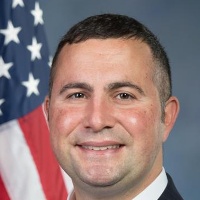
Darren Soto
Representative
FL
Darren Soto
Representative
FL
This resolution commemorates the 10th anniversary of the tragic Pulse nightclub shooting in Orlando, honoring the 49 lives lost and expressing support for all affected. It recognizes the bravery of first responders and reaffirms the nation's unity against hate and terrorism. The bill also highlights ongoing efforts toward gun safety and mental health legislation.
This bill establishes six mandatory fee-free days annually for entry to federal recreational lands and waters to encourage public service and national pride.
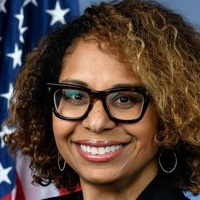
Sydney Kamlager-Dove
Representative
CA
Sydney Kamlager-Dove
Representative
CA
This bill, the "Encouraging Public Service in Our National Parks and Public Land Act," amends existing law to mandate six specific fee-free days annually for entry to federal recreational lands and waters. These free admission days are set to coincide with significant holidays like Martin Luther King Jr. Day and Veterans Day. The goal is to promote national pride and encourage public volunteerism by increasing access to these public lands.
This act repeals the federal tax credit for contributions to scholarship organizations and eliminates the income exclusion for certain scholarship amounts received from those organizations.
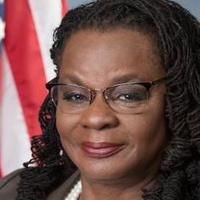
Gwen Moore
Representative
WI
Gwen Moore
Representative
WI
The Keep Public Funds in Public Schools Act of 2026 aims to redirect funding by eliminating federal tax incentives for private school scholarships. Specifically, it repeals the tax credit for contributions to scholarship-granting organizations and removes the income exclusion for certain scholarship amounts received. These changes are set to take effect starting in 2027.
The Jewish American Security Act aims to combat rising antisemitism through enhanced security grants, new protections for Jewish students in education, and increased transparency requirements for online platforms regarding hate speech.

Dan Goldman
Representative
NY
Dan Goldman
Representative
NY
The Jewish American Security Act addresses the rising threat of antisemitism across the nation. This bill mandates new protections for Jewish students in educational settings and significantly increases funding and administrative support for securing Jewish community institutions. Furthermore, it requires increased transparency from large online platforms regarding their moderation of antisemitic content and mandates federal assessments of domestic and transnational antisemitic threats.
This bill mandates an EPA study on the environmental impacts of AI data centers, establishes a NIST consortium to develop measurement standards, and requires large AI data centers to publicly report their environmental impacts.
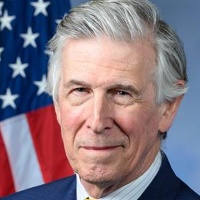
Donald Beyer
Representative
VA
Donald Beyer
Representative
VA
This bill, the "Artificial Intelligence Environmental Impacts Act of 2026," mandates a comprehensive study by the EPA on the environmental and energy impacts of AI data centers and infrastructure. It also requires the National Institute of Standards and Technology to establish a consortium to develop measurement standards for these impacts. Finally, the legislation establishes an annual public reporting system for large AI data centers detailing their environmental footprint.