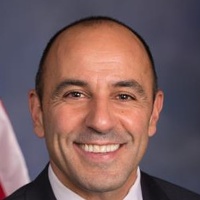
Legislative Activity
Track Jimmy's sponsored bills, co-sponsored legislation, and voting record
The RESULTS Act reforms how Medicare determines payment rates for clinical diagnostic laboratory tests by mandating the use of comprehensive, real-world private payor claims data collected from an independent entity.
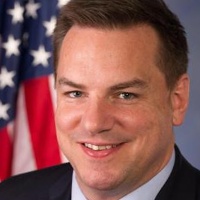
Richard Hudson
Representative
NC
Richard Hudson
Representative
NC
The Reforming and Enhancing Sustainable Updates to Laboratory Testing Services Act of 2025 (RESULTS Act) aims to improve Medicare payment rates for clinical lab tests by mandating the collection of more accurate, real-world payment data directly from large, independent private insurance claims databases. This legislation updates definitions, collection timelines, and calculation methods to ensure Medicare payments for widely available tests reflect current market rates. It also establishes default payment rules if sufficient private payor data cannot be secured.
The **Congressional Power of the Purse Act** strengthens Congress's control over impoundment, mandates detailed federal spending transparency, and tightens oversight on the declaration and termination of national emergencies.
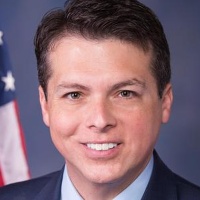
Brendan Boyle
Representative
PA
Brendan Boyle
Representative
PA
The Congressional Power of the Purse Act is a comprehensive bill designed to reassert Congressional authority over federal spending, emergency declarations, and executive branch financial oversight. It strengthens Congress's ability to prevent impoundment of appropriated funds, mandates greater transparency regarding unspent government money, and imposes strict time limits and review procedures on presidential declarations of national emergencies. Ultimately, the Act aims to increase accountability across the Executive Branch regarding the execution and management of taxpayer funds.
This bill extends Haiti's preferential trade benefits until 2037, enhances annual labor compliance reviews for producers, and mandates U.S. technical assistance to boost and diversify Haitian exports.
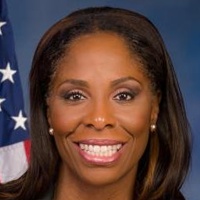
Stacey Plaskett
Representative
VI
Stacey Plaskett
Representative
VI
The HOPE for Haitian Prosperity Act of 2025 strengthens trade benefits for Haiti by extending preferential duty treatment until 2037 and increasing annual labor compliance reviews focusing on wages and working conditions. The bill also mandates the U.S. Trade Representative to provide targeted technical assistance aimed at increasing and diversifying Haitian exports to the United States. These measures seek to enhance Haiti's economic competitiveness while ensuring adherence to core labor standards.
This act repeals Section 14(b) of the National Labor Relations Act, thereby preempting all state "right-to-work" laws.
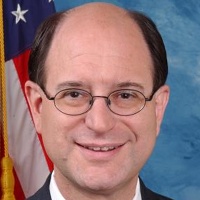
Brad Sherman
Representative
CA
Brad Sherman
Representative
CA
The Nationwide Right to Unionize Act eliminates federal permission for states to enact or enforce "right-to-work" laws by repealing Section 14(b) of the National Labor Relations Act. This action ensures that union security agreements negotiated between unions and employers are governed exclusively by federal labor law. Consequently, state laws that prohibit mandatory union membership or fee payment as a condition of employment will no longer apply where federal law permits such agreements.
The FEMA Act of 2025 establishes FEMA as an independent, cabinet-level agency and enacts sweeping reforms across public assistance, individual aid, and mitigation programs to speed up recovery and increase transparency.
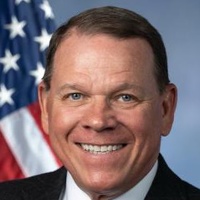
Sam Graves
Representative
MO
Sam Graves
Representative
MO
The FEMA Act of 2025 establishes the Federal Emergency Management Agency (FEMA) as an independent, cabinet-level agency to lead a unified, all-hazards approach to national emergency management. The bill enacts sweeping reforms across Public Assistance, Individual Assistance, and Mitigation programs to accelerate recovery, streamline funding, and reduce bureaucratic hurdles for disaster survivors and communities. Furthermore, it mandates significant new transparency measures, including public data reporting and GAO oversight, to ensure accountability for federal disaster spending.
This bill establishes a USDA grant program to help specialty crop producers purchase and receive training for new automation and mechanization equipment.
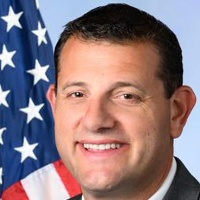
David Valadao
Representative
CA
David Valadao
Representative
CA
This bill establishes a new grant program administered by the Secretary of Agriculture to help specialty crop producers become more competitive. These grants will assist eligible entities in purchasing advanced mechanized or automated equipment and providing necessary training for its use. Recipients must provide matching funds equal to at least 50 percent of the total project cost. The covered technology ranges widely, including harvesting tools, sorting machinery, traceability systems, and advanced IoT and robotic equipment.
This bill officially terminates the national emergency declared by the President on July 30, 2025, under Executive Order 14323.
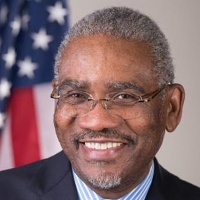
Gregory Meeks
Representative
NY
Gregory Meeks
Representative
NY
This bill officially terminates the national emergency declared by the President on July 30, 2025, under Executive Order 14323. It utilizes the authority granted by the National Emergencies Act to immediately end the declared emergency status. In essence, this legislation confirms that the emergency situation from that date is no longer in effect.
This bill establishes a grant program for eligible organizations to implement domestic market development and promotion activities for U.S.-grown specialty crops.
David Valadao
Representative
CA
David Valadao
Representative
CA
The Specialty Crop Domestic Market Promotion and Development Program Act of 2025 establishes a program for the Secretary of Agriculture to award grants to eligible organizations. These grants will fund domestic market development programs, including advertising and promotion activities, for domestically produced specialty crops. Recipients must submit a marketing plan and provide non-Federal matching funds of at least 25%. The Act authorizes $75 million annually for this purpose starting in fiscal year 2026.
This bill establishes a grant program through the USDA to fund domestic market development projects for U.S.-grown specialty crops, requiring a minimum 25% non-federal match.
David Valadao
Representative
CA
David Valadao
Representative
CA
The Specialty Crop Domestic Market Promotion and Development Program Act of 2025 establishes a new federal grant program to boost the domestic market for U.S.-grown specialty crops. The Secretary of Agriculture will award funds to eligible organizations to execute approved marketing and development projects. Recipients must provide non-Federal matching funds and adhere to strict spending guidelines monitored through annual reviews and audits.
This act amends federal law to allow states to use Emergency Solutions Grant Program funds for operating and supporting designated safe parking areas that connect people living in vehicles with re-housing services.
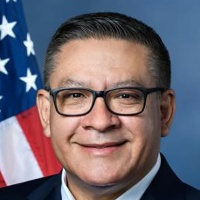
Salud Carbajal
Representative
CA
Salud Carbajal
Representative
CA
The Naomi Schwartz and Susan Rose Safe Parking Act of 2025 amends federal law to officially designate "safe parking" as an eligible activity under the Emergency Solutions Grant (ESG) Program. This allows states to use ESG funds to operate secure overnight parking locations for individuals experiencing homelessness in vehicles. These designated sites must connect residents with re-housing services and supportive assistance to help them transition into stable housing.
The SUN Act mandates timely and detailed congressional reporting and oversight for the domestic deployment of National Guard and reserve forces by the President, excluding deployments solely for natural disaster relief.
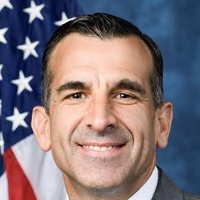
Sam Liccardo
Representative
CA
Sam Liccardo
Representative
CA
The Safeguarding the Use of the National Guard Act (SUN Act) enhances Congressional oversight of the President's domestic deployment of National Guard and reserve forces. It requires the President to submit a detailed report to Congress within 15 days outlining the legal justification, goals, costs, and impact of any domestic deployment. This reporting requirement is waived only when reserve forces are deployed specifically following a Presidential declaration under the Robert T. Stafford Act for a natural disaster.
This resolution terminates the President's declared crime emergency in the District of Columbia, asserting that the emergency is unwarranted and the legal basis for federal MPD control is flawed.
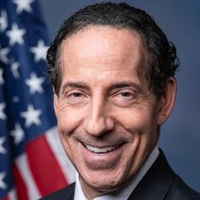
Jamie Raskin
Representative
MD
Jamie Raskin
Representative
MD
This resolution terminates the President's August 11, 2025, declaration of a crime emergency in the District of Columbia. Congress asserts that the President lacks the legal authority under the D.C. Home Rule Act to take operational control of the Metropolitan Police Department. Furthermore, the bill notes that local violent crime rates have been declining significantly.
The GO Ag Act establishes a competitive grant program, capped at \$100,000 per recipient, to fund the creation of new high school agricultural education programs through fiscal year 2028.
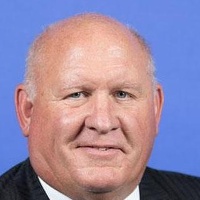
Glenn Thompson
Representative
PA
Glenn Thompson
Representative
PA
The Growing Opportunities in Agriculture Act (GO Ag Act) establishes a new competitive grant program to fund the creation of innovative, high-quality agricultural education programs in high schools. These grants, limited to $100,000 per entity, are intended to develop new curricula, support work-based learning, and fund leadership training. Recipients must report annually on program performance, with a total authorization of $5 million through FY 2028.
This Act designates new wilderness areas, protects segments of California rivers as Wild and Scenic, establishes special management and scenic areas, and mandates several studies related to recreation and trail development in California's Central Coast region.
Salud Carbajal
Representative
CA
Salud Carbajal
Representative
CA
The Central Coast Heritage Protection Act designates significant new wilderness areas and additions across California, alongside establishing protected Wild and Scenic River segments along several creeks and rivers. The bill also creates the Fox Mountain Special Management Area and two new Scenic Areas, all with specific conservation mandates. Finally, it directs studies for a new national scenic trail and improved nonmotorized recreation opportunities in designated National Forest districts.
This bill repeals specific prior health reconciliation provisions and expands eligibility for the Premium Tax Credit by removing the 400% income cap and adjusting the subsidy calculation formula.
Adam Gray
Representative
CA
Adam Gray
Representative
CA
The Protecting Health Care and Lowering Costs Act of 2025 repeals specific prior reconciliation health provisions. This bill significantly expands eligibility for the Premium Tax Credit by eliminating the 400% Federal Poverty Level income cap. It also updates the subsidy calculation formula to ensure a smoother, linear adjustment of assistance across various income levels.
This Act establishes the "Local Farmers Feeding Our Communities" program to strengthen local food security by funding agreements that support local producers and distribute fresh food to communities.
Robert Bresnahan
Representative
PA
Robert Bresnahan
Representative
PA
The Local Farmers Feeding our Communities Act establishes a new program to support local food producers and strengthen regional food security. This initiative requires the Secretary of Agriculture to fund agreements that ensure nutritious, locally sourced food is purchased and distributed widely, prioritizing small and beginning farmers. Funds must be used to buy minimally processed local products and provide technical assistance to producers. The program is backed by mandatory funding starting in Fiscal Year 2026.
This act repeals the prohibition on Medicaid payments to certain healthcare entities and mandates retroactive payment for services already rendered under the repealed ban.
Laura Friedman
Representative
CA
Laura Friedman
Representative
CA
The Restoring Essential Healthcare Act repeals an outdated ban that prevented Medicaid from making payments to certain healthcare providers. This legislation ensures that these previously prohibited entities will now be reimbursed for medical services rendered between the enactment of the original ban and the passage of this Act. In short, it restores payment eligibility and retroactively covers past services.
This resolution expresses support for designating July 2025 as "American Grown Flower and Foliage Month" to encourage the purchase of domestically produced flowers and foliage.
Salud Carbajal
Representative
CA
Salud Carbajal
Representative
CA
This resolution expresses strong support for designating July 2025 as "American Grown Flower and Foliage Month." It aims to recognize the vital contributions of domestic flower and foliage growers to the U.S. economy and communities. The bill encourages consumers to actively choose and display flowers and greenery grown in the United States to support American farmers.
The Don Young American Grown Act mandates that official decorations in high-level federal buildings must exclusively use flowers and greenery grown in the United States.
Salud Carbajal
Representative
CA
Salud Carbajal
Representative
CA
The Don Young American Grown Act mandates that official floral and greenery decorations in high-level federal buildings, including the Executive Office of the President, State, and Defense Departments, must be grown in the United States. This requirement applies to cut flowers and greens used for official displays, excluding personal decorations. The new rule will take effect one year after the Act is signed into law.
The EATS Act of 2025 expands eligibility for SNAP benefits by removing previous restrictions for students enrolled at least half-time in recognized educational programs.
Jimmy Gomez
Representative
CA
Jimmy Gomez
Representative
CA
The EATS Act of 2025 significantly updates eligibility for the Supplemental Nutrition Assistance Program (SNAP) by removing previous restrictions that often disqualified students. This legislation explicitly includes bona fide students enrolled at least half-time in recognized educational programs as eligible participants for food assistance. These changes take effect on January 2, 2026.