Legislative Activity
Track August's sponsored bills, co-sponsored legislation, and voting record
This Act adjusts the Federal Medical Assistance Percentage (FMAP) for the District of Columbia's Medicaid program, setting a temporary phase-down schedule until 2030 before reverting to the standard calculation.
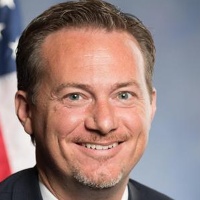
Michael Cloud
Representative
TX
Michael Cloud
Representative
TX
The District of Columbia Medicaid Fairness Act adjusts the Federal Medical Assistance Percentage (FMAP) used for calculating D.C.'s Medicaid funding. The bill establishes a temporary, declining federal matching rate for D.C. between 70% and 55% through fiscal year 2029. After 2029, D.C.'s FMAP will revert to the standard calculation method.
This bill denies or revokes all immigration benefits for individuals adhering to Sharia law, making them inadmissible or deportable without judicial review.
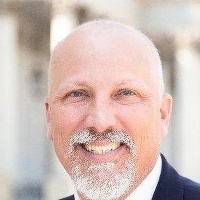
Chip Roy
Representative
TX
Chip Roy
Representative
TX
The Preserving a Sharia-Free America Act aims to prohibit any individual who adheres to Sharia law from receiving immigration benefits, visas, or admission into the United States. This legislation mandates the denial or revocation of immigration status for adherents, making them inadmissible or deportable. Furthermore, any false statements regarding Sharia adherence to federal officials will result in severe immigration penalties, and all related determinations are explicitly barred from judicial review.
This Act suspends 2025 federal farm payment limitations and allows producers to receive an advance partial payment for their 2025 covered commodities.
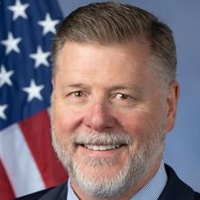
Eric Crawford
Representative
AR
Eric Crawford
Representative
AR
The Bridge the Gap for Rural Communities Act temporarily suspends federal payment limitations for the 2025 crop year. It also establishes an option for eligible producers to receive an advance partial payment of up to 50% of their projected 2025 covered commodity payments by the end of that year. This measure aims to provide immediate financial support to rural agricultural producers.
This act establishes research and implementation for a new revenue-loss crop insurance policy to stabilize farmer income during harvest.
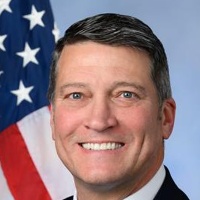
Ronny Jackson
Representative
TX
Ronny Jackson
Representative
TX
The Agriculture Infrastructure Stability Act of 2025 mandates the research and development of a new revenue-loss crop insurance policy to help stabilize farm income. The Federal Crop Insurance Corporation must make this policy available to farmers within two years, provided it meets existing statutory requirements. Furthermore, the Corporation is required to report its research findings and policy details to Congress within one year of the Act's passage.
This bill prohibits the EPA from reallocating the renewable fuel obligations of small refineries granted exemptions, ensuring those volumes remain tied to the exempt facility while still counting toward the parent company's overall production for compliance calculations.
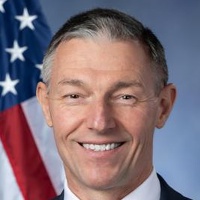
Mike Kennedy
Representative
UT
Mike Kennedy
Representative
UT
The Protect Consumers from Reallocation Costs Act of 2025 prohibits the EPA from reallocating the renewable fuel volume obligations of small refineries that receive exemption extensions. This ensures that the volume remains tied to the exempt refinery rather than being shifted to other obligated parties. Furthermore, the bill requires the EPA to count the fuel produced by an exempt small refinery when calculating the overall production obligations for its parent company.
This resolution condemns violent attacks against ICE facilities and officers while expressing full support for the agency's mission to enforce immigration laws and protect national security.
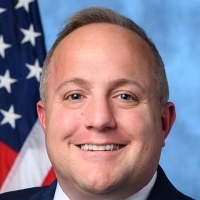
Russell Fry
Representative
SC
Russell Fry
Representative
SC
This House Resolution strongly condemns all violent attacks and threats against U.S. Immigration and Customs Enforcement (ICE) officers and facilities. It reaffirms Congress's full support for ICE's mission to protect national security and public safety through immigration law enforcement. The resolution calls on federal agencies to investigate past incidents and enhance protection for personnel against ongoing threats, including doxxing. Finally, it urges public officials to cease using hostile rhetoric against law enforcement.
This bill authorizes the creation and sale of a limited-edition, silver one-dollar commemorative coin honoring the late activist Charles "Charlie" Kirk.
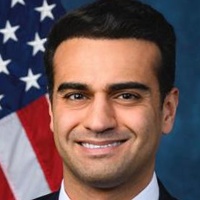
Abraham Hamadeh
Representative
AZ
Abraham Hamadeh
Representative
AZ
This bill authorizes the Secretary of the Treasury to mint and issue up to 400,000 special one-dollar silver commemorative coins honoring the late activist Charles "Charlie" Kirk. The coins must feature his likeness on the obverse and the inscription "well done, good and faithful servant" on the reverse. All costs associated with the production and sale of these coins must be covered by the revenue generated, ensuring no net cost to the U.S. Treasury.
The Fraud Accountability and Recovery Act requires the President to halt foreign aid to countries that refuse to extradite fraud convicts or fail to assist in recovering U.S. federal funds stolen through fraud.
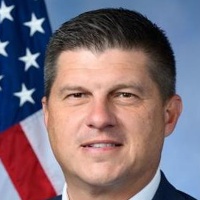
Brad Finstad
Representative
MN
Brad Finstad
Representative
MN
The Fraud Accountability and Recovery Act aims to combat large-scale fraud against the U.S. government by penalizing foreign countries that refuse to extradite convicted fraudsters or fail to assist in recovering stolen federal funds. This bill mandates the suspension of U.S. foreign assistance to non-cooperative nations, though the President retains a national security waiver. Furthermore, it requires the Secretary of State to annually report on noncompliant countries and the amount of lost U.S. funds tied to their inaction.
This act streamlines the Nuclear Regulatory Commission's licensing process by allowing permits and licenses to be issued without mandatory hearings unless requested, and by updating procedural requirements for various nuclear facility applications.
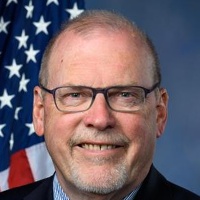
H. Griffith
Representative
VA
H. Griffith
Representative
VA
The Efficient Nuclear Licensing Hearings Act streamlines the Nuclear Regulatory Commission's (NRC) process for issuing certain nuclear facility permits and licenses. This legislation allows the NRC to issue permits without automatically holding a full hearing if no affected party requests one. It also updates procedures to favor informal hearings when they are held and modifies timing requirements for license issuance.
This resolution honors the life and legacy of Charles "Charlie" James Kirk, condemns his assassination as political violence, and calls for a renewed commitment to civil discourse and American founding principles.

Mike Johnson
Representative
LA
Mike Johnson
Representative
LA
This resolution honors the life and legacy of Charles "Charlie" James Kirk, founder of Turning Point USA. It strongly condemns his assassination as an act of political violence. The bill calls for a renewed national commitment to civil discourse and the founding principles of the United States.
This bill establishes stricter, mandatory prompt payment deadlines and penalties for Medicare Advantage organizations when paying clean claims submitted by healthcare providers.
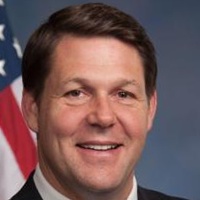
Jodey Arrington
Representative
TX
Jodey Arrington
Representative
TX
The Medicare Advantage Prompt Pay Act establishes stricter deadlines for Medicare Advantage organizations to pay clean claims submitted by doctors and suppliers. This legislation mandates that MA plans must pay at least 95% of electronic claims within 14 days and other clean claims within 30 days, starting January 1, 2027. Failure to meet these new prompt payment requirements will result in mandatory interest payments to providers and potential civil monetary penalties of up to $25,000 per violation for the MA organization. The Act also requires MA plans to begin reporting detailed data on their payment timeliness to the Secretary.
This resolution supports designating the week of September 21 through September 27, 2025, as "Gold Star Families Remembrance Week" to honor the families of fallen service members.
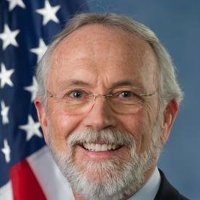
Dan Newhouse
Representative
WA
Dan Newhouse
Representative
WA
This resolution supports designating the week of September 21 through September 27, 2025, as "Gold Star Families Remembrance Week." The measure aims to officially recognize and honor the profound sacrifices made by families who have lost a loved one serving in the U.S. Armed Forces. It encourages communities nationwide to observe this week through acts of service and by celebrating the lives of these fallen service members.
This Act mandates that new passenger motor vehicles sold in the U.S. must include standard equipment capable of receiving AM broadcast radio signals.

Gus Bilirakis
Representative
FL
Gus Bilirakis
Representative
FL
The AM Radio for Every Vehicle Act of 2025 mandates that the Secretary of Transportation establish a rule requiring AM broadcast radio receivers to be installed as standard equipment in new passenger motor vehicles. This requirement aims to ensure public access to AM radio signals, which are often used for emergency alerts. The bill also directs a GAO study on the effectiveness of AM radio within the national emergency alert system compared to other technologies. Finally, the Act preempts state and local laws on this matter and includes a sunset provision eight years after enactment.
This bill amends the Social Security Act to provide Medicare coverage for FDA-approved multi-cancer early detection screening tests starting in 2028.
Jodey Arrington
Representative
TX
Jodey Arrington
Representative
TX
The Nancy Gardner Sewell Medicare Multi-Cancer Early Detection Screening Coverage Act amends the Social Security Act to provide Medicare Part B coverage for multi-cancer early detection screening tests starting January 1, 2028. This legislation establishes clear criteria for qualifying tests and outlines payment structures to ensure beneficiaries have access to these advanced diagnostic tools. Importantly, this coverage is designed to complement, rather than replace, existing Medicare-covered cancer screenings.
This Act ensures the automatic continuation of pay for active duty military personnel and essential civilian support staff if Congress fails to pass a budget for fiscal year 2026.
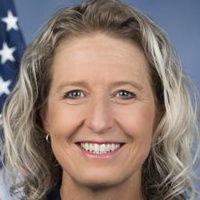
Jennifer Kiggans
Representative
VA
Jennifer Kiggans
Representative
VA
The Pay Our Troops Act of 2026 ensures that active duty military personnel and essential civilian support staff continue to receive their pay if Congress has not yet passed the full budget for fiscal year 2026. This act provides automatic continuing appropriations from the Treasury to prevent a lapse in military salaries due to budget delays. The funding automatically terminates once a new budget or continuing resolution is passed, or on January 1, 2027, whichever comes first.
This Act permanently classifies the entire class of highly potent synthetic opioids known as nitazenes as Schedule I controlled substances to combat overdose deaths.
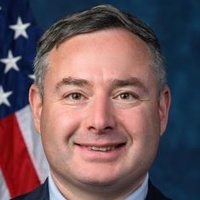
Eugene Vindman
Representative
VA
Eugene Vindman
Representative
VA
The Nitazene Control Act of 2025 permanently classifies the entire class of highly potent synthetic opioids known as nitazenes (2-Benzylbenzimidazole opioids) as Schedule I controlled substances. This action is taken due to their extreme danger, high potential for abuse, and role in fatal overdoses across the country. By scheduling the entire chemical class at once, the bill aims to proactively stop the emergence of new, dangerous analogs. This permanent scheduling subjects nitazenes to the strictest federal controls, mirroring those applied to fentanyl.
This resolution condemns the assassination of Charlie Kirk and honors his life, legacy, and commitment to civil discourse.
Mike Kennedy
Representative
UT
Mike Kennedy
Representative
UT
This resolution condemns the assassination of conservative activist Charlie Kirk and extends condolences to his family. It honors his life and legacy, recognizing his founding of Turning Point USA and his commitment to encouraging civil discourse on college campuses.
This resolution strongly condemns the assassination of Charlie Kirk and calls for national change inspired by his life and tragic death.
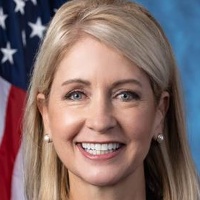
Mary Miller
Representative
IL
Mary Miller
Representative
IL
This resolution strongly condemns the assassination of conservative activist Charlie Kirk on September 10, 2025, during his national speaking tour. It honors his life, his founding of Turning Point USA, and his dedication to conservative principles. Ultimately, the document calls for national unity and reaffirms the commitment to protecting the right to peaceful assembly and free expression.
This resolution formally condemns the assassination of Charlie Kirk and reaffirms the right to peaceful assembly against political violence.
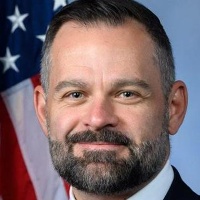
Cory Mills
Representative
FL
Cory Mills
Representative
FL
This resolution formally condemns the horrific political assassination of conservative spokesman Charlie Kirk on September 10, 2025, in Orem, Utah. It expresses deep condolences to his family and recognizes the bravery of the first responders at the scene. Ultimately, the measure reaffirms the fundamental American right to peaceful assembly and stands firmly against political violence.
This Act streamlines the permitting process for Liquefied Natural Gas (LNG) facilities by limiting judicial review of existing permits and setting strict deadlines for filing new legal challenges in geographically appropriate Courts of Appeals.
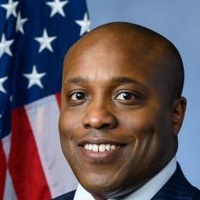
Wesley Hunt
Representative
TX
Wesley Hunt
Representative
TX
The Protect LNG Act of 2025 aims to streamline and stabilize the permitting process for Liquefied Natural Gas (LNG) facilities. It ensures that existing facility approvals remain valid even if challenged in court over environmental reviews, requiring courts to remand violations to agencies for correction rather than invalidating permits. Furthermore, the Act centralizes legal challenges to these covered applications exclusively in the U.S. Court of Appeals with geographic jurisdiction over the facility, subject to a strict 90-day filing deadline.