Legislative Activity
Track Robert's sponsored bills, co-sponsored legislation, and voting record
The Fair and Open Competition Act of 2025 prohibits the federal government from requiring or penalizing bidders or contractors on federally funded construction projects based on their agreement or non-agreement with labor unions.
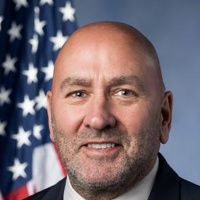
Clay Higgins
Representative
LA
Clay Higgins
Representative
LA
The Fair and Open Competition Act of 2025 ensures fair competition on federally funded construction projects by prohibiting the government from requiring or penalizing bidders based on union agreements. This legislation aims to keep federal agencies neutral in labor relations while promoting cost savings and opening opportunities for all businesses. Exceptions to this neutrality rule are strictly limited to specific public health, safety, or national security emergencies.
The Veterans First Act of 2025 redirects \$2 billion from foreign aid to fund the construction and renovation of state-run veterans' homes.
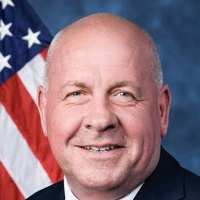
David Taylor
Representative
OH
David Taylor
Representative
OH
The Veterans First Act of 2025 redirects $2 billion from foreign aid to the Department of Veterans Affairs (VA). This funding is specifically allocated to provide grants for the construction, renovation, and improvement of state-run veterans' homes and facilities. The bill ensures these funds remain available until fully utilized for veteran care infrastructure projects.
This bill amends the tax code to allow payments to health care sharing ministries to be treated as deductible medical expenses and clarifies that these ministries are not considered insurance for tax purposes, effective for tax years beginning after December 31, 2025.
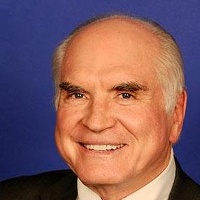
Mike Kelly
Representative
PA
Mike Kelly
Representative
PA
This bill amends the Internal Revenue Code to officially treat payments made to a qualified health care sharing ministry as a deductible medical expense for tax purposes. Furthermore, the legislation clarifies that, for federal tax purposes, these ministries will no longer be considered health insurance plans. These changes are set to take effect for tax years beginning after December 31, 2025.
The BITCOIN Act of 2025 establishes a Strategic Bitcoin Reserve, mandates the U.S. government to purchase and hold one million Bitcoins over five years, and protects private property rights related to digital assets.
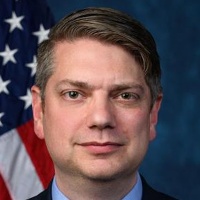
Nicholas Begich
Representative
AK
Nicholas Begich
Representative
AK
The BITCOIN Act of 2025 establishes a Strategic Bitcoin Reserve to secure and manage government-held Bitcoin, viewing it as a national asset for financial stability. The Act mandates the Secretary of the Treasury to initiate a five-year program to purchase 1,000,000 Bitcoins for long-term holding. Furthermore, it institutes strict public proof-of-reserve requirements and explicitly protects the private property rights of individuals to own and control their own Bitcoin.
This Act prevents the President and the Secretary of HHS from using emergency declarations to impose gun control measures and prohibits federal disaster rules from restricting the possession or transfer of firearms, ammunition, and related accessories.
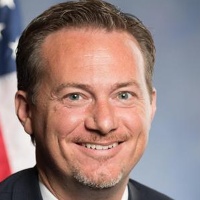
Michael Cloud
Representative
TX
Michael Cloud
Representative
TX
The Protecting the Right to Keep and Bear Arms Act of 2025 restricts the President and the Secretary of Health and Human Services from using emergency declarations to enact gun control measures. This bill specifically prevents the use of the National Emergencies Act and the Public Health Service Act for imposing new firearm restrictions. Furthermore, it amends disaster relief law to prohibit federal disaster declarations from banning the possession, sale, or transfer of firearms, ammunition, or related accessories.
Calls for Nigeria to be designated as a Country of Particular Concern due to ongoing, severe violations of religious freedom, urging U.S. action to protect religious minorities and promote human rights in the region.
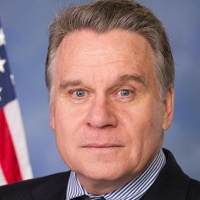
Christopher Smith
Representative
NJ
Christopher Smith
Representative
NJ
This resolution expresses the sense of Congress that Nigeria should be designated as a Country of Particular Concern due to severe violations of religious freedom. It urges the Nigerian government to protect religious minorities, prosecute those responsible for violence, and ensure religious freedom. The resolution also calls for increased U.S. diplomatic efforts and potential sanctions on individuals and groups responsible for religious freedom violations in Nigeria.
The REDI Act allows medical and dental interns and residents to defer both principal and interest payments on their student loans while in training.
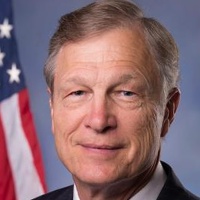
Brian Babin
Representative
TX
Brian Babin
Representative
TX
The Resident Education Deferred Interest (REDI) Act amends federal student loan regulations to provide a specific deferment for medical and dental residents. This allows borrowers currently serving in an internship or residency program to pause principal payments and prevent interest accrual on their student loans during that training period.
This bill censures Representative Al Green for disrupting the President's address to Congress and requires him to receive a formal reprimand before the House.
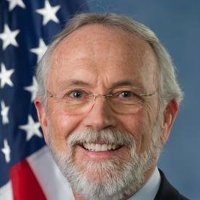
Dan Newhouse
Representative
WA
Dan Newhouse
Representative
WA
This bill censures Representative Al Green of Texas for disrupting the President's address to Congress on March 4, 2025. It condemns his actions and orders him to appear before the House of Representatives to receive a formal reprimand. During this time the Speaker of the House will publicly read the resolution of censure.
The FARMLAND Act of 2025 aims to protect U.S. agriculture by restricting foreign investment, increasing oversight, and enforcing regulations against foreign entities of concern.
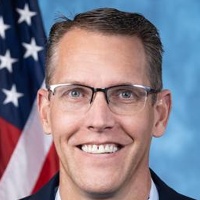
Randy Feenstra
Representative
IA
Randy Feenstra
Representative
IA
The FARMLAND Act of 2025 aims to protect U.S. agriculture and national security by modernizing and enforcing laws against malign foreign investments in U.S. agricultural land and businesses, particularly from countries of concern. It increases penalties for non-compliance with reporting requirements, mandates detailed reports on foreign land ownership and potential threats, and enhances the Committee on Foreign Investment in the United States (CFIUS) authority to review real estate transactions involving foreign entities. The act also directs the creation of a comprehensive database of foreign-owned agricultural land and prohibits foreign individuals/entities from participating in Farm Service Agency programs. Finally, the act authorizes appropriations for secure workspace construction, database development, and other activities related to enforcing the act.
Censures Representative Al Green for disrupting President Trump's address to Congress, violating decorum, and bringing disrepute to the House.
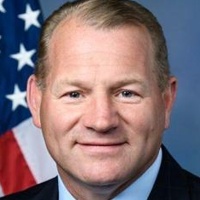
Troy Nehls
Representative
TX
Troy Nehls
Representative
TX
This resolution censures Representative Al Green for disrupting President Trump's address to Congress, violating decorum, and bringing disrepute to the House. It mandates that Representative Green present himself to the House for a public reading of the censure resolution by the Speaker.
To award a Congressional Gold Medal to the 761st Tank Battalion, the first Black soldiers to serve in an American armored unit, for their valor and crucial contributions to the Allied victory in Europe.
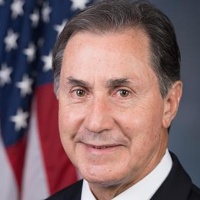
Gary Palmer
Representative
AL
Gary Palmer
Representative
AL
This bill authorizes the Speaker of the House and the President pro tempore of the Senate to award a Congressional Gold Medal to the 761st Tank Battalion, also known as the "Black Panthers," in recognition of their courageous service and crucial contributions during World War II. The medal will be given to the National Museum of African American History and Culture for display, honoring the 761st as the first Black soldiers to serve in an American armored unit and their significant role in the Allied victory in Europe. The bill also allows for the creation and sale of bronze duplicates of the medal to support the United States Mint Public Enterprise Fund.
Prohibits the purchase of real estate near U.S. federal lands by agents or businesses associated with the government of the People's Republic of China with 25% or more equity interest.
Dan Newhouse
Representative
WA
Dan Newhouse
Representative
WA
The "No American Land for Communist China Act" prohibits the President from allowing individuals or entities associated with the Chinese government from purchasing real estate near covered federal lands. Covered lands include those managed by the Departments of Interior, Defense, Agriculture (Forest Service), and Energy, as well as Indian country. This restriction applies to entities with at least 25% equity interest held by Chinese government-affiliated individuals or businesses. The Act defines "United States" broadly to include states, territories, and other U.S. possessions.
This bill adds the Secretary of Agriculture to the Committee on Foreign Investment in the United States (CFIUS) and requires CFIUS to review agricultural land transactions, especially those involving entities from China, North Korea, Russia, or Iran.
Dan Newhouse
Representative
WA
Dan Newhouse
Representative
WA
The "Protecting American Agriculture from Foreign Adversaries Act of 2025" adds the Secretary of Agriculture to the Committee on Foreign Investment in the United States (CFIUS) for agricultural matters. It mandates CFIUS review of agricultural land transactions, particularly those involving entities from China, North Korea, Russia, or Iran, to safeguard American agriculture. This ensures scrutiny of foreign investments in agricultural land and related industries, addressing potential threats to national security. The requirements for a specific country will end if that country is removed from the list of foreign adversaries in section 791.4 of title 15, Code of Federal Regulations.
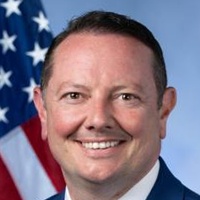
The "Ending the Cycle of Dependency Act of 2025" modifies work requirements for SNAP benefits and establishes new work requirements for Medicaid recipients aged 19-59, with certain exemptions.
Eric Burlison
Representative
MO
Eric Burlison
Representative
MO
The "Ending the Cycle of Dependency Act of 2025" modifies work requirements for both the Food and Nutrition Act of 2008 and the Social Security Act. It raises the age limit for exemption from work requirements for SNAP benefits and mandates that certain Medicaid recipients between the ages of 19 and 59 must complete at least 80 hours of work, community service, or a work program per month to maintain eligibility. The bill outlines specific exemptions to these work requirements, including individuals with medical conditions, pregnant individuals, and caretakers of young children. States are allowed to disenroll individuals from Medicaid if they do not comply with the work requirements and federal funding is unavailable.
The "Death Tax Repeal Act" eliminates estate and generation-skipping transfer taxes, adjusts gift tax calculations, and sets a $10,000,000 lifetime gift exemption.
Randy Feenstra
Representative
IA
Randy Feenstra
Representative
IA
The "Death Tax Repeal Act" eliminates both estate and generation-skipping transfer taxes, effective from the date of enactment. It adjusts gift tax calculations by setting the lifetime gift exemption at $10,000,000, with inflation adjustments after 2011. The Act also includes transitional rules for applying certain sections of the Internal Revenue Code during the enactment year.
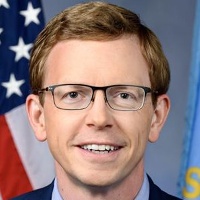
The "Fair SHARE Act of 2025" introduces a tax on the sale of electric vehicles and heavy battery modules to support the Highway Trust Fund.
Dusty Johnson
Representative
SD
Dusty Johnson
Representative
SD
The "Fair SHARE Act of 2025" introduces a tax on the sale of electric vehicles and heavy battery modules to support the Highway Trust Fund. It taxes $1,000 on each electric vehicle and $550 on heavy battery modules (over 1,000 pounds). This act defines electric vehicles and light-duty vehicles, ensuring hybrid vehicles are excluded. The tax revenue will be dedicated to the Highway Trust Fund, with changes effective for sales after December 31, 2025.
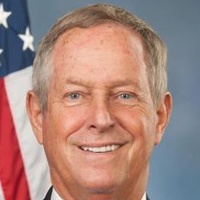
The "National Right-to-Work Act" prohibits mandatory union membership as a condition of employment, protecting employees' rights to choose whether or not to join or support a labor union.
Joe Wilson
Representative
SC
Joe Wilson
Representative
SC
The "National Right-to-Work Act" amends both the National Labor Relations Act and the Railway Labor Act to protect an employee's right to choose whether or not to join or support a labor union. It eliminates the possibility of mandatory union membership or dues payments as a condition of employment, ensuring that employees cannot be forced to join or support a union against their will.
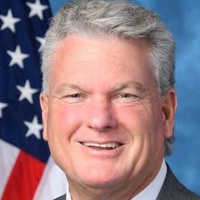
The SAFE for America Act of 2025 eliminates the diversity visa program, effective October 1, 2025.
Mike Collins
Representative
GA
Mike Collins
Representative
GA
The SAFE for America Act of 2025 eliminates the Diversity Visa Program, which makes visas available to persons from countries with low rates of immigration to the United States. This is achieved through repealing subsection (c) of Section 203 of the Immigration and Nationality Act. The Act also makes corresponding technical amendments to other sections of the Immigration and Nationality Act to reflect this change. These changes would take effect beginning October 1, 2025.
This Act allows schools participating in the National School Lunch Program to offer organic or non-organic whole milk alongside other options, while clarifying saturated fat accounting and restricting milk sourcing from China state-owned enterprises.
Glenn Thompson
Representative
PA
Glenn Thompson
Representative
PA
The Whole Milk for Healthy Kids Act of 2025 expands milk options available to students in the National School Lunch Program by allowing schools to offer organic or non-organic whole milk. This legislation provides greater flexibility for schools in providing fluid milk choices while maintaining accommodations for students with special dietary needs. Importantly, the saturated fat content of these offered milk options will not count toward the meal's overall saturated fat limits.
This bill allows states to use Medicaid to pay primary care providers directly, including through value-based care models, and requires a report on the quality and cost of these arrangements.

Dan Crenshaw
Representative
TX
Dan Crenshaw
Representative
TX
The "Medicaid Primary Care Improvement Act" allows states to use Medicaid funds for direct agreements with healthcare providers, including value-based care models and direct primary care arrangements. It requires the Secretary of Health and Human Services to gather input and issue guidance to states on implementing these arrangements. Additionally, the Act mandates a report to Congress analyzing state contracts with independent physicians and the quality/cost of care in direct primary care arrangements within Medicaid. This aims to improve primary care access and quality within the Medicaid program without altering existing cost-sharing or limiting medical assistance.