Legislative Activity
Track Andrew's sponsored bills, co-sponsored legislation, and voting record
This bill mandates a comprehensive threat assessment and strategic plan from the Secretary of Homeland Security regarding the criminal organization Tren de Aragua's impact on U.S. border security.
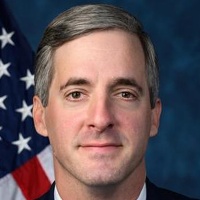
Brad Knott
Representative
NC
Brad Knott
Representative
NC
This Act requires the Secretary of Homeland Security to conduct a comprehensive border threat assessment on the criminal organization Tren de Aragua. Following this assessment, the Secretary must submit a strategic plan detailing how to counter the identified threats along the nation's borders. The legislation aims to enhance security by focusing federal efforts against this specific transnational criminal organization.
This bill requires the Secretary of Homeland Security to conduct and report on a threat assessment of terrorist threats posed by individuals in Syria affiliated with designated terrorist organizations.
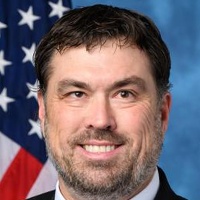
Morgan Luttrell
Representative
TX
Morgan Luttrell
Representative
TX
The Syria Terrorism Threat Assessment Act requires the Secretary of Homeland Security to conduct a comprehensive threat assessment of terrorist threats posed by individuals in Syria affiliated with designated terrorist organizations. This assessment must detail the individuals, their affiliations, and DHS's capabilities to track and mitigate these threats. The Secretary must submit the unclassified assessment, potentially with a classified annex, to relevant congressional committees within 60 days of the Act's enactment.
This Act amends federal law to revise the mental state and resulting death requirements for the crime of carjacking.
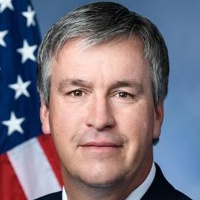
Barry Moore
Representative
AL
Barry Moore
Representative
AL
The Federal Carjacking Enforcement Act amends federal carjacking law by modifying the required mental state for the offense, replacing a specific intent requirement with the standard of "knowingly." Additionally, it clarifies the circumstances under which a death resulting from the act constitutes an enhanced offense.
This bill expands the grounds for deportability to include any alien convicted of a felony or two misdemeanors under state or federal law.

Paul Gosar
Representative
AZ
Paul Gosar
Representative
AZ
The Criminal Alien Removal Clarification Act of 2025 amends immigration law to establish new, clear grounds for deportability. This bill mandates that any alien convicted of a single felony or two misdemeanors, under either state or federal law, after admission to the U.S. is subject to removal.
This bill impeaches Chief Judge James E. Boasberg for allegedly authorizing improper nondisclosure orders that infringed upon the legislative duties of several Members of Congress.
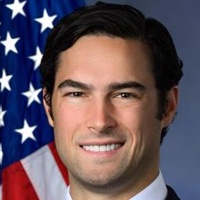
Brandon Gill
Representative
TX
Brandon Gill
Representative
TX
This resolution initiates impeachment proceedings against Chief Judge James E. Boasberg of the U.S. District Court for the District of Columbia for high crimes and misdemeanors. The core allegation is that Judge Boasberg improperly authorized nondisclosure orders related to an FBI investigation that covered Members of Congress acting under their legislative duties. These actions are cited as compromising the separation of powers and violating existing federal statute regarding notification of legal process. The resolution calls for the judge's removal from office based on these alleged improprieties.
This resolution expresses the sense of the House to accept and prominently display a statue honoring Charles "Charlie" James Kirk for his legacy of free expression and civic leadership.
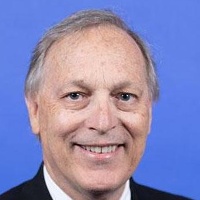
Andy Biggs
Representative
AZ
Andy Biggs
Representative
AZ
This resolution expresses the sense of the House of Representatives that a statue honoring Charles "Charlie" Kirk should be accepted and permanently displayed in the U.S. Capitol. It recognizes Mr. Kirk for founding Turning Point USA and promoting principles of free expression, civic leadership, and limited government. The bill mandates that the statue be accepted by the Fine Arts Board no later than January 2, 2027, to commemorate his legacy.
This bill revokes tax-exempt status under section 501(c)(3) for the Council on American-Islamic Relations and any organization found to have ties to terrorism.
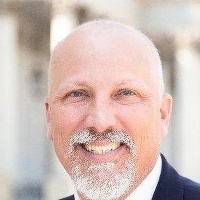
Chip Roy
Representative
TX
Chip Roy
Representative
TX
This bill, the "No Tax Exemptions For Terror Act," proposes to revoke the tax-exempt status under section 501(c)(3) of the Internal Revenue Code for the Council on American-Islamic Relations and any other organization found to have ties to terrorism or terrorist organizations. This change would apply to all future taxable years.
This resolution condemns the UN and IMO for proposing a global shipping tax, asserting that such a measure threatens U.S. sovereignty, trade, and economic interests.
Andy Biggs
Representative
AZ
Andy Biggs
Representative
AZ
This resolution strongly condemns the United Nations and the International Maritime Organization for proposing a global tax on shipping emissions. Congress asserts that such a tax threatens U.S. sovereignty, economic interests, and the principle of "no taxation without representation." The bill directs the President to oppose this international fee and maintain full U.S. control over its own taxation and trade policies.
This Act codifies and sets conditions for waiving existing visa sanctions against members of the Palestine Liberation Organization and Palestinian Authority officials based on their commitment to counterterrorism and peace efforts.
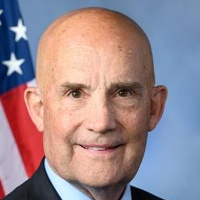
Keith Self
Representative
TX
Keith Self
Representative
TX
The Return to Palestinian Entities Accountability and Counterterrorism Enforcement Act, or the Return to PEACE Act, ensures that existing visa sanctions against members of the Palestine Liberation Organization (PLO) and Palestinian Authority (PA) officials remain in effect. The Secretary of State can waive these bans for renewable 180-day periods only after certifying to Congress that the PLO/PA are not undermining prior commitments, pursuing international legal action against Israel, or supporting terrorism. These provisions are set to expire seven years after enactment.
The Chloe Cole Act prohibits healthcare professionals from performing chemical or surgical mutilation on minors by linking the prohibition to interstate commerce and establishes a private right of action for victims to sue.
Robert Onder
Representative
MO
Robert Onder
Representative
MO
The Chloe Cole Act prohibits healthcare professionals from engaging in chemical or surgical mutilation of minors, defined as specific medical interventions intended to alter appearance or biological function related to sex. This prohibition is enforced through federal jurisdiction when interstate commerce is involved in the procedure. The bill also establishes a private right of action, allowing individuals subjected to these procedures as minors to sue participating providers, and sets strict liability standards for future violations.
The SEVER Act authorizes the denial of U.S. entry visas to foreign representatives to the United Nations if they are subject to specific sanctions as of September 16, 2025.
Claudia Tenney
Representative
NY
Claudia Tenney
Representative
NY
The SEVER Act, or Strengthening Entry Visa Enforcement and Restrictions Act, updates the rules for issuing visas to foreign representatives attending the United Nations. This legislation grants the U.S. government the authority to deny entry visas to UN representatives who are subject to specific sanctions, including those imposed by Executive Order 13876 as of September 16, 2025.
This bill amends the Social Security Act to provide Medicare coverage for FDA-approved multi-cancer early detection screening tests starting in 2028.
Jodey Arrington
Representative
TX
Jodey Arrington
Representative
TX
The Nancy Gardner Sewell Medicare Multi-Cancer Early Detection Screening Coverage Act amends the Social Security Act to provide Medicare Part B coverage for multi-cancer early detection screening tests starting January 1, 2028. This legislation establishes clear criteria for qualifying tests and outlines payment structures to ensure beneficiaries have access to these advanced diagnostic tools. Importantly, this coverage is designed to complement, rather than replace, existing Medicare-covered cancer screenings.
This Act mandates the FAA to establish standardized procedures for collecting, analyzing, and sharing reports of Unidentified Anomalous Phenomena (UAP) while protecting reporters from punitive action.
Robert Garcia
Representative
CA
Robert Garcia
Representative
CA
The Safe Airspace for Americans Act mandates the Federal Aviation Administration (FAA) to establish standardized procedures for collecting, analyzing, and sharing reports regarding Unidentified Anomalous Phenomena (UAP) from aviation personnel. This legislation aims to reduce the stigma associated with reporting UAP encounters while ensuring that such reports cannot be used punitively against reporters, except in cases of criminal activity or accidents. The FAA must coordinate with defense and intelligence agencies and protect the employment and certification status of individuals who report these sightings.
This Act limits the sharing of consumer reports requested in connection with a residential mortgage loan to prevent unauthorized access to homebuyers' sensitive financial information.
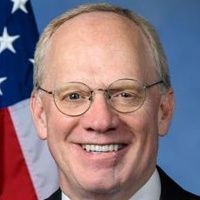
John Rose
Representative
TN
John Rose
Representative
TN
The Homebuyers Privacy Protection Act limits how consumer reporting agencies can share a consumer's report when it is requested in connection with a residential mortgage loan. Reports can only be shared with entities directly involved in the consumer's current mortgage or those providing a firm offer of credit or insurance. The Act also mandates a study by the GAO regarding the use and impact of "trigger leads" derived from credit checks.
This Act bans Members of Congress and their immediate families from trading or owning specific investments while in office, requiring divestment within 90 to 180 days or facing significant financial penalties.
Chip Roy
Representative
TX
Chip Roy
Representative
TX
The Restore Trust in Congress Act establishes strict new rules prohibiting Members of Congress and their immediate families from owning or trading specific financial assets, referred to as "covered investments," while in office. Covered individuals must divest existing prohibited holdings within a set timeframe or face significant financial penalties, including fines and forfeiture of profits. The legislation aims to eliminate conflicts of interest arising from personal financial trading while serving in federal office.
This Act officially renames the Department of Defense to the Department of War and changes the title of its head to the Secretary of War.
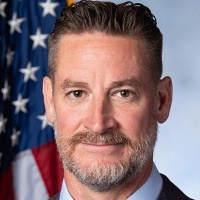
W. Steube
Representative
FL
W. Steube
Representative
FL
The Department of War Restoration Act of 2025 officially renames the Department of Defense to the Department of War. This change also renames the Secretary of Defense to the Secretary of War. The Act ensures all existing laws and documents are updated to reflect this new nomenclature.
The GRACE Act prohibits federal education funding for schools or agencies with vaccination requirements unless they provide an unconditional religious exemption without requiring documentation.
W. Steube
Representative
FL
W. Steube
Representative
FL
The GRACE Act prohibits federal education funding for any school or agency that mandates vaccinations unless they provide a religious exemption based solely on an individual's stated sincerely held religious beliefs. This exemption cannot require any proof or documentation to support the religious objection. Consequently, institutions requiring documentation for religious vaccine exemptions risk losing federal education funds.
This Act increases federal penalties for union-related interference with commerce through threats or violence, while reserving prosecution for minor, non-coordinated incidents to state and local authorities.
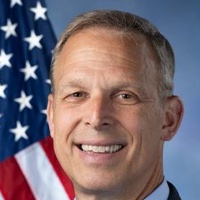
Scott Perry
Representative
PA
Scott Perry
Representative
PA
The Freedom From Union Violence Act of 2025 amends federal law regarding interference with commerce through threats or violence, increasing penalties for robbery and extortion. It creates an exemption from federal prosecution for minor acts of violence or property damage during a labor dispute, reserving those cases for state and local authorities. This Act does not alter existing federal labor laws.
The Safety and Opportunity for Girls Act of 2025 amends Title IX to define sex based on biological reproductive capacity and ensures schools can maintain sex-segregated facilities and programs without jeopardizing federal funding.
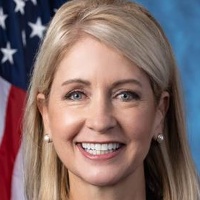
Mary Miller
Representative
IL
Mary Miller
Representative
IL
The Safety and Opportunity for Girls Act of 2025 amends Title IX to define "female" and "male" based on biological reproductive capacity. This legislation explicitly permits schools to maintain sex-segregated facilities, programs, and activities without jeopardizing their federal funding. It ensures that schools retain the authority to separate spaces based on biological sex.
This Act establishes a federal database to identify and prohibit federal funding for state and local governments deemed to have sanctuary policies that conflict with immigration enforcement.
Chip Roy
Representative
TX
Chip Roy
Representative
TX
The Sanctuary Penalty and Public Protection Act of 2025 establishes a federal database to identify and publicly list state and local governments deemed to have policies that obstruct federal immigration enforcement. Jurisdictions placed on this "sanctuary jurisdiction" list will be prohibited from receiving or using any new federal funding. This act aims to penalize local governments that refuse to fully cooperate with federal immigration detainers and enforcement requests.