
Legislative Activity
Track Ilhan's sponsored bills, co-sponsored legislation, and voting record
This resolution condemns attacks on civilians in Sudan, demands an end to external support for the warring parties, and calls for efforts to negotiate a settlement to the civil war.
Pramila Jayapal
Representative
WA
Pramila Jayapal
Representative
WA
This resolution condemns the devastating attacks on civilians in the Sudanese civil war and calls for an immediate end to external support fueling the conflict. It urges all parties to cease hostilities and demands robust international efforts to negotiate a settlement leading to civilian-led democratic governance. The bill emphasizes the urgent need to address the massive humanitarian crisis and hold perpetrators of atrocities accountable.
The YALI Act of 2025 establishes and expands the Young African Leaders Initiative to invest in sub-Saharan African leaders through training, networking, and fellowships like the Mandela Washington Fellowship, while also setting up regional centers and requiring regular progress reports.
Sydney Kamlager-Dove
Representative
CA
Sydney Kamlager-Dove
Representative
CA
The YALI Act of 2025 formally establishes and expands the Young African Leaders Initiative to invest in emerging African leaders across sub-Saharan Africa. This legislation mandates the creation of professional development, training, and networking opportunities focused on business, civic engagement, and public administration. The bill specifically supports the Mandela Washington Fellowship and requires the establishment of regional leadership centers and online networks to foster ongoing engagement and U.S.-Africa ties.
The TREE Act prohibits the import and sale of deforestation goods in U.S. commerce starting in 2029, requiring due diligence statements and imposing civil penalties based on country risk categorization.

Lloyd Doggett
Representative
TX
Lloyd Doggett
Representative
TX
The Trade Responsibly for Environmental Emissions (TREE) Act prohibits the import and sale of "deforestation goods"—commodities linked to deforestation or forest degradation after December 31, 2020—starting in 2029. Importers must submit detailed due diligence statements to Customs and Border Protection, with violations resulting in significant civil penalties, including fines up to 4% of U.S. revenue and potential import bans. The bill also mandates a risk-based country categorization system to guide increased border inspections.
The No WAR Act establishes a point of order preventing the use of budget reconciliation to fund unauthorized military hostilities against Iran.
Valerie Hoyle
Representative
OR
Valerie Hoyle
Representative
OR
The No WAR Act establishes a procedural barrier, a "point of order," in Congress to prevent funding for unauthorized military action against Iran through the budget reconciliation process. This means that any reconciliation bill providing budget authority for hostilities against Iran will be out of order unless Congress has first formally authorized that military force. The Act ensures that funding for military conflict against Iran requires explicit prior congressional approval.
This act prohibits public stock buybacks and mandates that large companies reserve at least one-third of their board seats for employee-elected representatives.
Jesús García
Representative
IL
Jesús García
Representative
IL
The Reward Work Act aims to shift corporate focus from shareholder enrichment to worker investment. It achieves this by prohibiting publicly traded companies from conducting open market stock buybacks and mandating that large companies reserve at least one-third of their board seats for employee representatives. This legislation requires the SEC to establish regulations ensuring fair employee elections for these director positions.
This bill nullifies three specific Department of State rules regarding foreign assistance, effectively voiding their implementation and preventing enforcement of similar future policies.

Grace Meng
Representative
NY
Grace Meng
Representative
NY
This Act nullifies three specific Department of State rules concerning foreign assistance, effectively treating them as if they never existed. It prohibits any federal agency from implementing or enforcing these rules, or any substantially similar future policies. The legislation aims to prevent the enforcement of rules related to "Protecting Life," "Discriminatory Equity Ideology," and "Gender Ideology" in foreign aid.
The Housing FIRST Act amends the Fair Credit Reporting Act to establish specific rules and limitations for using consumer reports in tenant screening, particularly by restricting the inclusion of certain criminal and resolved case information.
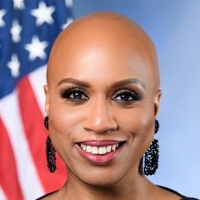
Ayanna Pressley
Representative
MA
Ayanna Pressley
Representative
MA
The Housing FIRST Act amends the Fair Credit Reporting Act to establish formal standards for tenant screening reports, treating them similarly to employment reports. This bill strictly limits the types of criminal and financial history landlords can use when evaluating rental applicants. Furthermore, it mandates specific disclosure and adverse action notification requirements for landlords using these reports.
This Act streamlines federal processes and provides funding for institutions of higher education to conduct research on marijuana for medical, public health, and agricultural purposes.
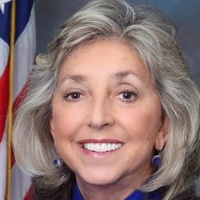
Dina Titus
Representative
NV
Dina Titus
Representative
NV
The Higher Education Marijuana Research Act of 2026 aims to significantly expand federally sanctioned marijuana research at colleges and universities. It prioritizes research licenses for institutions of higher education and allows them to legally obtain marijuana from state or tribal sources for approved studies. Furthermore, the bill establishes grant programs through the NIH and USDA to fund medical and agricultural marijuana research, while protecting student and researcher participation from federal penalties.
This bill supports designating "Black Maternal Health Week" to highlight the urgent need to address and reduce the severe maternal mortality and morbidity crisis disproportionately affecting Black women and birthing people in the United States.
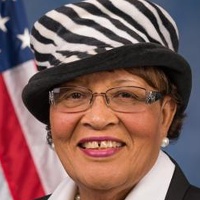
Alma Adams
Representative
NC
Alma Adams
Representative
NC
This bill supports designating a week in April 2026 as "Black Maternal Health Week" to focus national attention on the severe maternal health crisis facing Black women. It highlights the unacceptable and unjust disparities in maternal mortality and morbidity rates among Black women due to structural racism and inequities. The legislation urges Congress to invest in comprehensive maternal care and pass legislation, like the Momnibus Act, grounded in human rights and reproductive justice.
This bill expresses support for designating April as National Arab American Heritage Month to celebrate the rich heritage and significant contributions of Arab Americans to the United States.
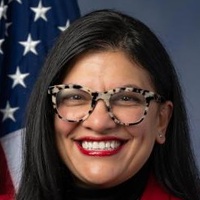
Rashida Tlaib
Representative
MI
Rashida Tlaib
Representative
MI
This resolution expresses support for designating April as National Arab American Heritage Month (NAAHM). It recognizes the profound and diverse contributions of Arab Americans throughout U.S. history, spanning science, public service, culture, and more. The designation aims to celebrate this heritage while countering misconceptions and discrimination.
This resolution seeks to nullify the Department of Education’s recent rule regarding the William D. Ford Federal Direct Loan Program.
Joe Courtney
Representative
CT
Joe Courtney
Representative
CT
This resolution seeks to exercise congressional disapproval of the Department of Education’s recent rule regarding the William D. Ford Federal Direct Loan Program. If passed, the resolution would nullify the rule, rendering it without force or effect.
This resolution directs the President to remove U.S. Armed Forces from unauthorized hostilities in Lebanon within seven days.
Rashida Tlaib
Representative
MI
Rashida Tlaib
Representative
MI
This resolution directs the President to remove United States Armed Forces from unauthorized hostilities in Lebanon within seven days of its adoption. It asserts that Congress has not provided the necessary constitutional or statutory authorization for U.S. military involvement in the region. The bill reinforces Congress's exclusive authority to declare war and mandates the withdrawal of forces unless specific authorization is subsequently enacted.
This resolution seeks to overturn the Department of Labor’s rule regarding the Adverse Effect Wage Rate methodology for H-2A nonimmigrant workers.
Zoe Lofgren
Representative
CA
Zoe Lofgren
Representative
CA
This joint resolution exercises congressional authority to overturn the Department of Labor’s rule regarding the Adverse Effect Wage Rate (AEWR) methodology for H-2A nonimmigrant workers. If enacted, the resolution would nullify the rule, ensuring it has no further force or effect.
This bill prohibits the use of federal funds for military force in or against Cuba through 2026, unless explicitly authorized by Congress or permitted under the War Powers Resolution.
Pramila Jayapal
Representative
WA
Pramila Jayapal
Representative
WA
This bill prohibits the use of federal funds for military action in or against Cuba through December 31, 2026. Exceptions are only permitted if Congress declares war, provides specific statutory authorization, or if the action aligns with the War Powers Resolution.
This resolution formally recognizes the persistence of the gender wage gap in the United States and reaffirms a commitment to achieving equal pay for equal work.
Lois Frankel
Representative
FL
Lois Frankel
Representative
FL
This resolution formally recognizes the persistent gender wage gap in the United States and its significant negative impact on women, families, and the national economy. It highlights the systemic factors contributing to pay disparities across various demographics and occupations. Ultimately, the resolution reaffirms Congress's commitment to achieving equal pay for equal work.
The Ultra-Millionaire Tax Act of 2026 establishes an annual federal wealth tax on individuals with a net worth exceeding $50 million while increasing funding for IRS enforcement and taxpayer services.
Pramila Jayapal
Representative
WA
Pramila Jayapal
Representative
WA
The Ultra-Millionaire Tax Act of 2026 proposes a new annual federal wealth tax on individuals with a net worth exceeding $50 million, with rates ranging from 2% to 3% based on total assets. The legislation includes robust enforcement measures, such as increased IRS funding and mandatory audit requirements, to ensure compliance among the ultra-wealthy. Additionally, it strengthens foreign asset disclosure requirements to prevent tax avoidance.
This bill directs the President to remove United States Armed Forces from unauthorized hostilities within or against Cuba.
Nydia Velázquez
Representative
NY
Nydia Velázquez
Representative
NY
This bill directs the President to remove United States Armed Forces from any unauthorized hostilities within or against the Republic of Cuba. It asserts that current military actions in the region lack the necessary congressional declaration of war or specific authorization. The directive includes exceptions for self-defense against imminent threats and ongoing lawful counternarcotics operations.
This resolution recognizes the observance of Ramadan and Eid al-Fitr in 2026, commends the spiritual significance of the month, and extends best wishes to Muslims globally.

Debbie Dingell
Representative
MI
Debbie Dingell
Representative
MI
This resolution recognizes the observance of the Muslim holy month of Ramadan and the celebration of Eid al-Fitr in 2026. It commends the spiritual significance of Ramadan and extends best wishes to Muslims in the United States and globally. The bill also acknowledges the significant contributions of American Muslims to the nation.
The Energy Bills Relief Act aims to lower energy costs for families by reversing clean energy rollbacks, expanding assistance programs, streamlining grid upgrades, and increasing transparency in utility regulation.
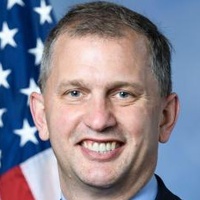
Sean Casten
Representative
IL
Sean Casten
Representative
IL
The Energy Bills Relief Act is a comprehensive bill designed to lower energy costs for American families, accelerate the deployment of low-cost, clean energy, and modernize the nation's electricity grid. It achieves this by reversing harmful policies against renewables, expanding energy assistance programs, streamlining grid connection processes, and increasing transparency in utility regulation. Ultimately, the legislation aims to create a more reliable, affordable, and cleaner energy system while ensuring communities have a stronger voice in energy development.
The Momnibus Act is a comprehensive legislative package designed to improve maternal health outcomes and reduce racial disparities by addressing social determinants, expanding nutritional and mental health support, diversifying the perinatal workforce, and investing in data-driven, community-based care.

Lauren Underwood
Representative
IL
Lauren Underwood
Representative
IL
The Momnibus Act is a comprehensive legislative package designed to end preventable maternal mortality and close racial and ethnic disparities in maternal health outcomes. By addressing social determinants of health, expanding nutritional and mental health support, and investing in a diverse, culturally competent workforce, the bill provides a holistic framework for improving care. Through targeted federal grants, enhanced data collection, and innovative technology, the Act aims to ensure that all pregnant and postpartum individuals receive the equitable, high-quality care they deserve.