
Legislative Activity
Track Eleanor's sponsored bills, co-sponsored legislation, and voting record
This Act reinstates and provides backpay to unfairly terminated CDC employees and mandates regular reporting from the CDC on employee dismissals.

Nanette Barragán
Representative
CA
Nanette Barragán
Representative
CA
The Protect our Public Health Workforce Act addresses the unfair removal of certain CDC federal employees between January 20, 2025, and the enactment of this law. It mandates the reinstatement or placement of these affected employees into equivalent positions, along with providing full backpay. Furthermore, the CDC must regularly report detailed information regarding employee removals to relevant Congressional committees until January 20, 2029.
This Act establishes a pathway for eligible Ukrainian nationals paroled into the U.S. since February 20, 2014, to apply for lawful permanent resident status without paying application fees.
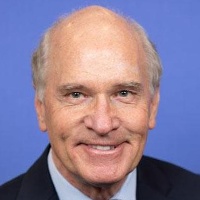
William Keating
Representative
MA
William Keating
Representative
MA
The Ukrainian Adjustment Act of 2025 establishes a pathway for eligible Ukrainian nationals, paroled into the U.S. after February 20, 2014, to apply for lawful permanent resident status (a Green Card). This process requires rigorous security vetting and allows the Secretary of Homeland Security broad waiver authority for most inadmissibility grounds, excluding certain post-2014 criminal activity. Approved applicants will have their status adjusted retroactively to their date of parole, and the application process will be fee-free.
Anna's Law of 2025 establishes a grant program to fund trauma-informed training for law enforcement and EMTs responding to sexual assault cases.

Janice Schakowsky
Representative
IL
Janice Schakowsky
Representative
IL
Anna's Law of 2025 establishes a new grant program to fund trauma-informed training for law enforcement and EMTs responding to sexual assault cases. This training aims to educate first responders on the effects of trauma to improve victim interactions and reduce re-traumatization. Agencies accepting the grants must ensure new recruits receive eight hours of training, while current staff receives four hours annually. The bill also mandates reporting on the program's effectiveness and maintaining a public directory of qualified trainers.
This Act mandates increased financial and operational transparency from health care sharing ministries to both government agencies and their members, alongside new disclosure requirements for enrollment contractors.
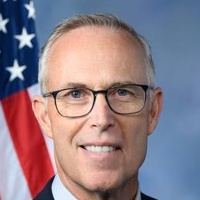
Jared Huffman
Representative
CA
Jared Huffman
Representative
CA
The Health Share Transparency Act of 2025 requires health care sharing ministries (HCSMs) to significantly increase public and governmental disclosure regarding their finances, operations, and claim practices. Ministries must provide detailed annual reports to federal agencies and give clear, prominent disclosures to prospective and current members about coverage limitations and appeal processes. The bill also mandates that enrollment contractors educate potential members on the differences between HCSMs and traditional insurance plans.
The Better CARE for Animals Act of 2025 strengthens the enforcement of the Animal Welfare Act by expanding investigative authority, establishing new civil penalties up to \$10,000 per day, and explicitly granting the Attorney General power to file civil actions, including seeking seizure and forfeiture of animals.
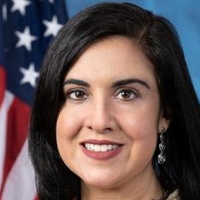
Nicole Malliotakis
Representative
NY
Nicole Malliotakis
Representative
NY
The Better CARE for Animals Act of 2025 significantly strengthens enforcement of the Animal Welfare Act by clarifying definitions and expanding the scope of investigations. It grants the Attorney General explicit authority to file civil actions seeking penalties up to $10,000 per day, and mandates that collected fines help cover temporary animal care costs. The bill also requires the Secretary of Agriculture and the Attorney General to establish a formal agreement for coordinated enforcement.
This act establishes a grant program through the NSF to boost the participation and retention of women, underrepresented minorities, and people with disabilities in STEM fields.

Marilyn Strickland
Representative
WA
Marilyn Strickland
Representative
WA
The Women and Underrepresented Minorities in STEM Booster Act of 2025 establishes a new grant program managed by the National Science Foundation. This program is designed to increase the participation and retention of women, underrepresented minorities, and people with disabilities in science, technology, engineering, and math (STEM) fields. Funds will support activities such as mentoring, internships, and outreach aimed at addressing documented gaps in STEM education and the workforce. Congress has authorized $15 million annually for this initiative from 2026 through 2030.
The SHIELD Act establishes a federal grant program to fund the expansion of legal services and infrastructure for immigrants facing deportation.
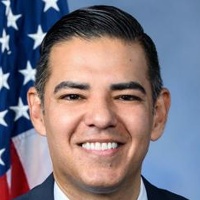
Robert Garcia
Representative
CA
Robert Garcia
Representative
CA
The Securing Help for Immigrants through Education and Legal Development (SHIELD) Act establishes a federal grant program to expand legal services for immigrants facing deportation. This initiative aims to build the necessary legal infrastructure and workforce to ensure high-quality representation, recognizing the critical impact legal counsel has on case outcomes. The Attorney General will administer competitive grants to state/local governments and nonprofits to hire, train, and retain immigration defense staff. Congress authorizes $100 million for this program for fiscal years 2026 and 2027.
This resolution expresses support for designating April 30, 2025, as "National Adult Hepatitis B Vaccination Awareness Day" to promote adult testing, vaccination, and care to combat the rising threat of chronic Hepatitis B infection and liver cancer.

Henry Johnson
Representative
GA
Henry Johnson
Representative
GA
This resolution expresses strong support for designating April 30, 2025, as "National Adult Hepatitis B Vaccination Awareness Day." It highlights the significant number of undiagnosed chronic Hepatitis B cases in the U.S. and the severe long-term health risks, such as liver cancer. The bill encourages increased testing, vaccination among susceptible adults, and prompt care for those diagnosed to curb rising infection rates.
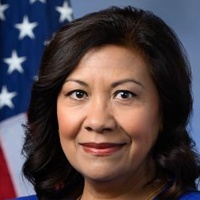
The Fairness to Freedom Act of 2025 establishes a guaranteed right to a government-funded attorney for all individuals in immigration proceedings and creates an independent Office of Immigration Representation to administer this defense system.
Norma Torres
Representative
CA
Norma Torres
Representative
CA
The Fairness to Freedom Act of 2025 establishes a guaranteed, government-funded right to counsel for all individuals in immigration proceedings who cannot afford a lawyer. It creates an independent Office of Immigration Representation to manage and deliver this high-quality legal defense across the country. Furthermore, the bill ensures this new system is adequately funded by tying its minimum budget to the scale of federal immigration enforcement spending.
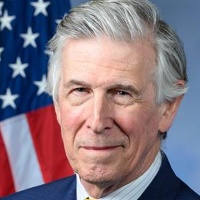
The REHIRE Act grants a special hiring preference, including five extra points, to certain Federal employees involuntarily removed between January 1, 2025, and January 1, 2027, provided they were not removed for misconduct or poor performance.
Donald Beyer
Representative
VA
Donald Beyer
Representative
VA
The REHIRE Act establishes a temporary hiring preference for certain Federal employees involuntarily removed from their positions between January 1, 2025, and January 1, 2027. These eligible former employees will receive the equivalent of a "preference eligible" status plus five extra points on their earned scores when applying for competitive service jobs. This hiring advantage excludes those removed for misconduct, poor performance, or from political positions, and it expires five years after enactment.
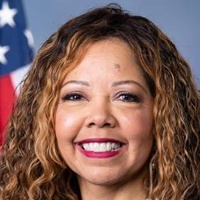
This bill bans the manufacture, sale, and transfer of specific semiautomatic assault weapons and large-capacity ammunition feeding devices while grandfathering existing possessions and establishing new transfer requirements.
Lucy McBath
Representative
GA
Lucy McBath
Representative
GA
The Assault Weapons Ban of 2025 comprehensively defines and bans the manufacture, sale, and transfer of specific semiautomatic assault weapons and large capacity ammunition feeding devices. The bill grandfathers existing weapons but imposes new requirements for their secure storage and mandates dealer involvement for future private transfers. It also allows federal grant money to be used by states for buy-back programs targeting these banned items.
The PREP Act shortens the initial probationary period for federal employees, often to six months, when they are transferring from another executive branch civil service position.
Donald Beyer
Representative
VA
Donald Beyer
Representative
VA
The Probationary Reduction for Employee Protections (PREP) Act shortens the initial probationary periods for new federal employees. Specifically, it limits the trial period to a maximum of six months for those transitioning directly from another executive branch civil service job. For other new hires, the maximum probationary period will be 12 months across competitive service, excepted service, and Senior Executive Service appointments.
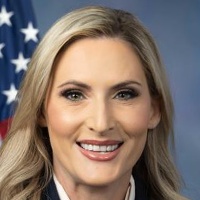
The Fresh Start Act of 2025 ties federal gun violence prevention grants to states implementing automatic criminal record expungement laws and requires detailed annual reporting on the process broken down by demographics.
Laurel Lee
Representative
FL
Laurel Lee
Representative
FL
The Fresh Start Act of 2025 incentivizes states to adopt automatic criminal record expungement laws by tying them to federal gun violence prevention grants. This legislation requires states receiving these funds to automatically clear or seal eligible criminal records without requiring individual action or payment of outstanding fees. Recipients must also annually report detailed data on the process, broken down by race, ethnicity, and gender, which the Attorney General will then make public.
This bill makes diapers a qualified medical expense for tax-advantaged accounts and prohibits state and local governments from imposing sales tax on diaper purchases.
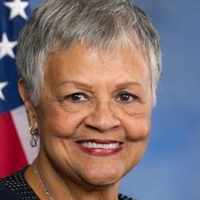
Bonnie Watson Coleman
Representative
NJ
Bonnie Watson Coleman
Representative
NJ
The Improving Diaper Affordability Act of 2025 addresses the significant financial burden and health risks associated with diaper need for American families. This bill makes diapers a qualified expense for tax-advantaged accounts like HSAs, FSAs, and HRAs, effectively lowering the cost through pre-tax dollars. Additionally, it prohibits state and local governments from imposing retail sales or use taxes on the purchase of diapers. These measures aim to increase access to this essential item for low-income households.
The RESEARCHER Act establishes new federal guidelines to address the financial instability of graduate and postdoctoral researchers by improving stipends, benefits, and support services, while mandating new data collection and studies on the issue.
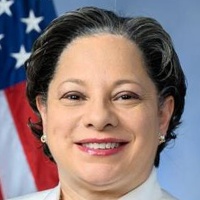
Jennifer McClellan
Representative
VA
Jennifer McClellan
Representative
VA
The RESEARCHER Act establishes new federal guidelines to address the financial instability faced by graduate and postdoctoral researchers supported by federal funding. It mandates agencies to improve stipends, healthcare access, and support for housing and family care for these essential researchers. Furthermore, the bill requires comprehensive data collection and studies by the National Academies and GAO to assess and report on the effectiveness of these new financial support measures.
This bill establishes a universal, comprehensive national health insurance program called "Medicare for All" that eliminates patient cost-sharing and transitions the nation away from private insurance duplication.

Pramila Jayapal
Representative
WA
Pramila Jayapal
Representative
WA
The Medicare for All Act establishes a universal, nationwide health insurance program providing comprehensive coverage for all U.S. residents with no out-of-pocket costs. It fundamentally restructures healthcare financing by implementing global budgets for institutions and a new fee schedule for individuals, while phasing out existing federal programs like Medicare and Medicaid. The legislation also sets strict quality standards for providers and creates a dedicated Trust Fund to manage the system's finances.
This Act significantly increases the civil and criminal penalties, including fines and jail time, for causing oil spills under federal law.
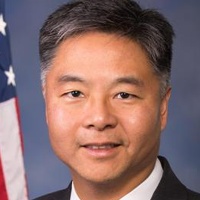
Ted Lieu
Representative
CA
Ted Lieu
Representative
CA
The Increasing Penalties for Offshore Polluters Act significantly strengthens federal enforcement against oil spills. This legislation revises the Federal Water Pollution Control Act to establish much higher minimum and maximum civil fines for polluters. Furthermore, it substantially increases the criminal penalties, doubling the maximum jail time and fines associated with various levels of oil spill violations.
This act repeals a specific section of the Office of National Drug Control Policy Reauthorization Act of 1998 to promote evidence-based drug policy.
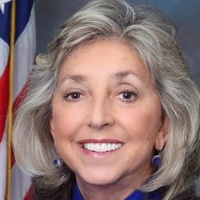
Dina Titus
Representative
NV
Dina Titus
Representative
NV
The Evidence-Based Drug Policy Act of 2025 aims to modernize federal drug policy by repealing a specific, outdated provision within the Office of National Drug Control Policy Reauthorization Act of 1998. This action removes an existing statutory requirement to streamline current drug control strategies. The bill focuses on updating the legal framework guiding national drug policy.
The Consent is Key Act increases federal grant funding for states that enact laws allowing civil lawsuits against individuals who remove sexual protection barriers without consent.
Norma Torres
Representative
CA
Norma Torres
Representative
CA
The Consent is Key Act increases federal grant funding for states that enact laws allowing civil lawsuits against individuals who remove sexual protection barriers without consent. To receive this increased funding, states must apply to the Attorney General, detailing their compliance with the new law. This funding boost, capped at 20% of recent averages, is available for a four-year period.
This bill establishes a federal civil cause of action against individuals who remove a sexual protection barrier without consent during sexual contact, provided the act involves interstate commerce or travel.
Norma Torres
Representative
CA
Norma Torres
Representative
CA
The Stealthing Act of 2025 establishes a federal civil right of action against individuals who remove a sexual protection barrier, such as a condom, during sexual contact without the partner's consent. This law recognizes the non-consensual removal of protection as a serious violation exposing victims to risks like STIs and pregnancy. Victims can sue for damages if the act involved interstate travel, commerce, or communication.