Legislative Activity
Track John's sponsored bills, co-sponsored legislation, and voting record
This bill celebrates the Supreme Court's *Dobbs* decision, affirms the right to life as the foremost right, and commits the House to protecting unborn life and supporting families.
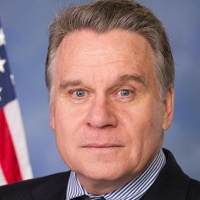
Christopher Smith
Representative
NJ
Christopher Smith
Representative
NJ
This resolution celebrates the anniversary of the Supreme Court's *Dobbs* decision, which overturned *Roe v. Wade* and returned authority over abortion to the states. It affirms the right to life as the foremost unalienable right and commits the House to protecting unborn lives. Furthermore, the resolution resolves to support families and uphold the authority of elected representatives to enact laws protecting unborn life.
This bill directs the presentation of Congressional Gold Medals to the Artemis II crew members in recognition of their historic mission beyond low Earth orbit.
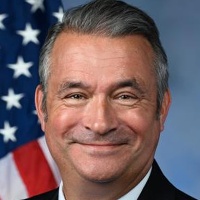
Don Bacon
Representative
NE
Don Bacon
Representative
NE
This bill directs the presentation of Congressional Gold Medals to the crew of the Artemis II mission to recognize their historic achievements in returning humans beyond low Earth orbit. The medals will honor the crew's role in setting new space exploration records and paving the way for future lunar and Mars missions. The Secretary of the Treasury is authorized to strike these medals and produce bronze duplicates for sale.
This bill renames and revises the Great American Outdoors Act's maintenance fund, increases dedicated funding through new, higher fees for foreign visitors, and sets spending priorities for deferred maintenance across public lands agencies.
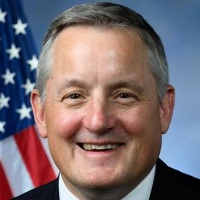
Bruce Westerman
Representative
AR
Bruce Westerman
Representative
AR
This bill, the Great American Outdoors Act 250, significantly reforms and renames the existing public lands restoration fund to the America’s Legacy Restoration Fund. It secures dedicated funding streams, primarily from energy revenues and new fees on foreign visitors, to address critical deferred maintenance across the National Park Service, Forest Service, and other public land agencies. The legislation establishes strict spending priorities for infrastructure repair while also creating pilot programs for enhancing outdoor recreation and sportsmen's access. Finally, it mandates increased transparency and accountability through standardized metrics and public reporting on all funded projects.
This resolution condemns government fraud and urges the House to prioritize pre-payment verification and government-wide reforms to improve U.S. financial prosperity.
Patrick Fallon
Representative
TX
Patrick Fallon
Representative
TX
This resolution condemns actors defrauding the U.S. Government and emphasizes that robust, government-wide fraud prevention reforms are essential for national financial prosperity. It asserts that federal agencies must verify eligibility and claims *before* issuing payments to curb massive improper spending. The House views this shift to proactive verification as the primary solution to the ongoing fiscal emergency caused by fraud.
The **Take Care of America’s Veterans Act** comprehensively reforms veteran benefits, healthcare access, education opportunities, and VA organizational structure to improve services and increase accountability across the board.
Mike Bost
Representative
IL
Mike Bost
Representative
IL
The **Take Care of America’s Veterans Act** is a comprehensive bill designed to strengthen benefits and modernize services across compensation, education, health care, and VA operations. It eliminates benefit offsets for disabled retirees, expands educational flexibility, sets new standards for timely health care access, and invests in VA technology and infrastructure. Overall, the legislation aims to provide faster, fairer, and more comprehensive support for veterans and their families.
This bill, the TSP Modernization Act, mandates the electronic transfer of Thrift Savings Fund account balances to qualified retirement plans one year after enactment.
Mike Bost
Representative
IL
Mike Bost
Representative
IL
The TSP Modernization Act facilitates the electronic transfer of funds from Thrift Savings Plan (TSP) accounts to qualified retirement plans. This change will take effect one year after the bill is enacted, allowing participants to move their savings more efficiently. The Federal Retirement Thrift Investment Board is responsible for implementing this new electronic transfer process.
This bill directs the Department of Housing and Urban Development to recognize documentation from the Make It American Process Standard as sufficient evidence for domestic content certification for HUD financial assistance.
Tracey Mann
Representative
KS
Tracey Mann
Representative
KS
The Build American Efficiency Act streamlines the process for HUD funding recipients to certify compliance with domestic content requirements under the Build America, Buy America Act. It directs HUD to recognize documentation from the Make It American Process Standard as sufficient evidence for this certification. This change offers flexibility, as recipients are not required to use this specific documentation.
This resolution supports designating June as Family Month to recognize the traditional nuclear family as the foundation of a healthy society and to rededicate the nation to its importance, while also opposing the observance of Pride Month.
Mary Miller
Representative
IL
Mary Miller
Representative
IL
This resolution supports designating June as Family Month to recognize the traditional nuclear family as the foundation of a healthy society. It calls for a national rededication to the importance of marriage and family, asserting that children thrive best in a home with a married mother and father. The bill also explicitly states that the House of Representatives no longer recognizes Pride Month.
This resolution calls upon Americans to honor the service members who died defending freedom and peace on Memorial Day, 2026.
Michael Guest
Representative
MS
Michael Guest
Representative
MS
This resolution calls upon all Americans to honor the service members who died defending freedom and peace, particularly on Memorial Day 2026. It recognizes the ultimate sacrifice of over one million Americans in pursuit of these ideals. The bill emphasizes the importance of continuing to express gratitude and commemorate these patriots.
This bill establishes the Smithsonian American Women's History Museum, designates its site on the National Mall, and sets requirements for its mission, construction, and diverse representation of viewpoints.
Nicole Malliotakis
Representative
NY
Nicole Malliotakis
Representative
NY
This act officially establishes the Smithsonian American Women’s History Museum and designates its location on the National Mall, requiring the transfer of land jurisdiction to the Smithsonian Institution. The museum is mandated to preserve and present the history and achievements of biological women in the United States. Furthermore, the legislation requires that exhibits and programs reflect diverse political viewpoints and authentic experiences of women, as guided by a broad array of knowledgeable sources.
This bill expands Medicare Part B coverage to reimburse for specific pharmacist services related to testing and treatment for certain public health threats, effective January 1, 2026.
Adrian Smith
Representative
NE
Adrian Smith
Representative
NE
The Ensuring Community Access to Pharmacist Services Act expands Medicare Part B coverage to include services provided by pharmacists starting January 1, 2026. This coverage is specifically for testing or treatment related to COVID-19, the flu, RSV, strep throat, or during a declared public health emergency. The bill outlines payment structures, generally covering 80% of the cost, and prohibits pharmacists from balance billing Medicare patients for these covered services.
This bill expands eligibility for higher rates of regularly scheduled overtime pay to all U.S. Border Patrol agents from grade GS-12 through GS-15.
Garland Barr
Representative
KY
Garland Barr
Representative
KY
This act, the Border Patrol Supervisors Retention Act, expands eligibility for higher rates of regularly scheduled overtime pay for U.S. Border Patrol agents. Specifically, it extends these enhanced overtime rates to agents classified from grade GS-12 through GS-15. The goal is to improve retention among supervisory-level Border Patrol personnel.
This bill authorizes the minting and sale of commemorative gold and silver coins to honor the 25th anniversary of the September 11, 2001, terrorist attacks, with surcharges supporting the National September 11 Memorial and Museum.

Dan Goldman
Representative
NY
Dan Goldman
Representative
NY
This bill authorizes the Secretary of the Treasury to mint and issue commemorative gold and silver coins marking the 25th anniversary of the September 11, 2001, terrorist attacks. The coins will honor the victims, first responders, and survivors, with designs selected in consultation with the National September 11 Memorial and Museum. All surcharges from the sale of these coins will be paid directly to the Memorial and Museum to support its operations and maintenance.
This resolution officially designates a week to honor the critical service, sacrifice, and contributions of the U.S. Special Operations Forces community and their families.
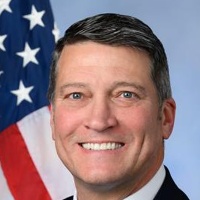
Ronny Jackson
Representative
TX
Ronny Jackson
Representative
TX
This resolution officially designates a specific week as "Special Operations Forces Week" to honor the critical service, sacrifice, and dedication of U.S. Special Operations Forces personnel and their families. It recognizes the vital role SOF plays in national security and affirms support for their continued well-being and resources.
This bill mandates the prominent display of the national motto, "In God We Trust," on every federal public building within one year of enactment.
Mary Miller
Representative
IL
Mary Miller
Representative
IL
The "In God We Trust Act" mandates the prominent display of the national motto, "In God We Trust," on every federal public building. This requirement applies to all buildings owned or leased by the federal government within one year of the bill's enactment.
This resolution designates specific dates to honor law enforcement officers killed in the line of duty and expresses support for all officers.
Michael Guest
Representative
MS
Michael Guest
Representative
MS
This resolution officially designates May 15, 2026, as Peace Officers Memorial Day and the week of May 10-16, 2026, as National Police Week. It honors the service and sacrifice of law enforcement officers killed in the line of duty, specifically recognizing 363 officers lost in 2025. The bill expresses unwavering support for law enforcement and acknowledges the need for proper resources to ensure officer safety.
This act establishes a federal crime for knowingly approaching, threatening, or harassing a federal law enforcement officer after receiving a verbal warning to stop.
Nicole Malliotakis
Representative
NY
Nicole Malliotakis
Representative
NY
The Federal Halo Act establishes a new federal crime for obstructing federal law enforcement officers. This offense specifically targets individuals who knowingly violate a verbal warning not to approach an officer performing their duties, including remaining too close, threatening harm, or harassing the officer. Violators face significant penalties, including fines and up to five years in prison.
This bill establishes the Combating Organized Retail Crime Act of 2025 to enhance federal prosecution tools against organized retail and supply chain crime and create a DHS-led coordination center to align law enforcement efforts.
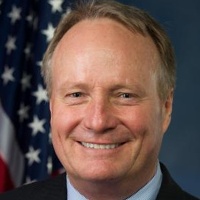
David Joyce
Representative
OH
David Joyce
Representative
OH
The Combating Organized Retail Crime Act of 2025 aims to combat sophisticated, cross-jurisdictional organized retail and supply chain theft. It achieves this by strengthening federal laws regarding money laundering and stolen property offenses, including lowering monetary thresholds for prosecution. Furthermore, the bill establishes a dedicated Center within the Department of Homeland Security to coordinate federal, state, and local enforcement efforts against these criminal organizations.
This act authorizes the use of Department of Homeland Security financial assistance for vehicle security upgrades, including bulletproof windows, for law enforcement use.
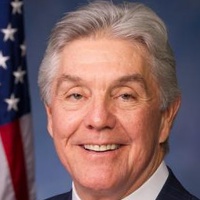
Roger Williams
Representative
TX
Roger Williams
Representative
TX
This act, the "Bulletproof Law Enforcement Vehicles Act," amends the Homeland Security Act of 2002. It requires the Secretary of Homeland Security to allow federal funding to be used for vehicle security upgrades, specifically including the installation of bulletproof windows for law enforcement vehicles.
This act establishes a rebuttable presumption favoring the authorization for service members to carry personal firearms on military installations when off-duty.
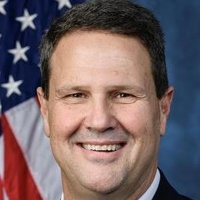
Jeff Crank
Representative
CO
Jeff Crank
Representative
CO
This bill establishes a rebuttable presumption that members of the Armed Forces should be authorized to carry personal firearms on military installations when off-duty. It amends existing law to require that requests for authorization begin with the assumption of approval. Any denial must be provided in writing and include specific, objective reasons.