Legislative Activity
Track Tim's sponsored bills, co-sponsored legislation, and voting record
This resolution supports Financial Literacy Month by recognizing widespread financial struggles and calling for increased education and awareness across the nation.
Joyce Beatty
Representative
OH
Joyce Beatty
Representative
OH
This resolution officially supports the goals of Financial Literacy Month by recognizing the widespread financial challenges facing American households. It highlights the urgent need for improved personal finance education due to low budgeting rates and high levels of household debt. The bill calls upon federal, state, and local entities to promote programs that enhance financial understanding and responsible money management.
The STABLE Act of 2025 establishes a comprehensive federal framework to regulate payment stablecoin issuers through strict reserve, transparency, and operational requirements while clarifying that these stablecoins are not securities.
Bryan Steil
Representative
WI
Bryan Steil
Representative
WI
The STABLE Act of 2025 establishes a comprehensive federal framework for regulating payment stablecoins, requiring issuers to maintain 1:1 reserves in safe assets and adhere to strict transparency and anti-money laundering standards. The bill strictly limits issuance to approved entities, whether federally or state-qualified, and clarifies that these dollar-backed digital assets are not considered securities. Furthermore, it mandates robust consumer protection rules, ensuring customer assets are segregated and prioritized in bankruptcy proceedings.
This Act promotes new bank formation by phasing in capital standards, adjusting business plan review timelines, offering temporary leverage ratio relief for rural institutions, expanding agricultural lending authority, and mandating a study on barriers to new bank creation.
Garland Barr
Representative
KY
Garland Barr
Representative
KY
The Promoting New Bank Formation Act aims to encourage the creation of new banks by providing regulatory relief for newly insured institutions. This includes a three-year phase-in period for new capital standards and streamlined processes for adjusting initial business plans. The Act also establishes temporary, favorable capital requirements for new rural depository institutions and expands lending authority for Federal savings associations to include agricultural loans. Finally, it mandates a study on barriers to new bank formation, especially in underserved areas.
This bill repeals the requirement for financial institutions to collect and report specific data on small business loans to reduce compliance costs and improve small business access to credit.
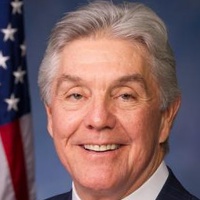
Roger Williams
Representative
TX
Roger Williams
Representative
TX
The 1071 Repeal to Protect Small Business Lending Act aims to eliminate the mandatory data collection and reporting requirements for small business loans previously established under Section 704B of the Equal Credit Opportunity Act. Proponents argue that these regulations impose unnecessary compliance costs on lenders, potentially hindering small business access to credit. This bill repeals those specific reporting mandates to reduce regulatory burdens on financial institutions.
This Act mandates a disclaimer on standard mortgage applications directing service members to inquire about VA Home Loan eligibility.
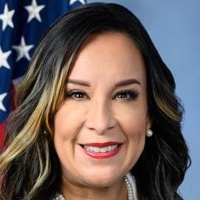
Mónica De La Cruz
Representative
TX
Mónica De La Cruz
Representative
TX
The VA Home Loan Awareness Act of 2025 mandates the addition of a disclaimer on standard mortgage applications, informing applicants who indicate military service that they may qualify for a VA Home Loan. This ensures veterans and service members are immediately directed to explore their VA loan eligibility when applying for a mortgage. The bill also requires the GAO to study the effectiveness of this new disclaimer requirement among lenders.
This Act allows governmental pension plans to include certain firefighters, EMTs, and paramedics employed by contracted public safety agencies.
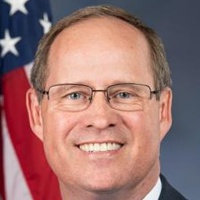
Gregory Murphy
Representative
NC
Gregory Murphy
Representative
NC
The First Responders Retirement Parity Act allows certain firefighters, EMTs, and paramedics employed by qualifying public safety agencies to participate in governmental pension plans. This ensures that these essential emergency response providers are treated similarly to other government employees under various federal retirement and benefit rules. The Act clarifies that including these specific providers will not jeopardize the tax status of the governmental pension plan.
This Act limits the FCC's authority to prohibit state and federal correctional facilities from using authorized cellphone jamming systems within their premises under specific operational and funding conditions.
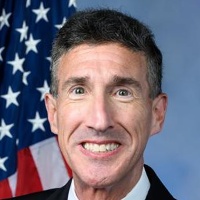
David Kustoff
Representative
TN
David Kustoff
Representative
TN
The Cellphone Jamming Reform Act of 2025 limits the FCC's authority to prohibit the use of cell phone jamming systems within jails and prisons. This legislation specifically permits state and federal correctional facilities to deploy jamming technology to block communications involving inmates or contraband devices. Any facility using these systems must adhere to strict operational limits, ensure state funding for state-run systems, and coordinate with local public safety officials beforehand.
This bill establishes national reciprocity for concealed carry permits, allowing individuals legally permitted to carry in their home state to carry a handgun in any other state that allows concealed carry.
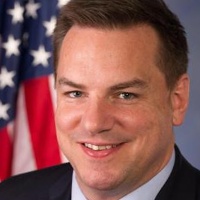
Richard Hudson
Representative
NC
Richard Hudson
Representative
NC
The Constitutional Concealed Carry Reciprocity Act of 2025 establishes a national standard for carrying concealed handguns across state lines. This act allows individuals legally permitted to carry in their home state to carry concealed in any other state that allows its residents to carry concealed firearms. The law does not override private property restrictions or prohibitions on government property, but it provides protections and legal recourse for those traveling in compliance with the new federal standard.
This act permanently establishes a 7-year recovery period for the depreciation of motorsports entertainment complexes for tax purposes.

Claudia Tenney
Representative
NY
Claudia Tenney
Representative
NY
The Motorsports Fairness and Permanency Act of 2025 makes permanent a significant tax benefit for motorsports entertainment complexes. This legislation ensures these large venues can continue to use an accelerated 7-year recovery period for depreciating their building costs. By removing the previous expiration date, the Act provides long-term financial certainty for the industry.
The Down East Remembrance Act officially designates several specific creeks with new, permanent names for use in all federal records and maps.
Gregory Murphy
Representative
NC
Gregory Murphy
Representative
NC
The Down East Remembrance Act officially designates several specific creeks with new, permanent names recognized by the U.S. government. This legislation assigns names like Noah Styron Creek and Hunter Parks Creek based on precise geographic coordinates. Moving forward, all federal records and documents must use these newly established official names for the designated waterways.
The Fair and Open Competition Act of 2025 prohibits the federal government from requiring or penalizing bidders or contractors on federally funded construction projects based on their agreement or non-agreement with labor unions.
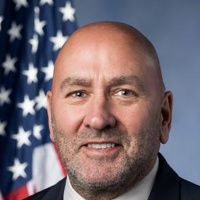
Clay Higgins
Representative
LA
Clay Higgins
Representative
LA
The Fair and Open Competition Act of 2025 ensures fair competition on federally funded construction projects by prohibiting the government from requiring or penalizing bidders based on union agreements. This legislation aims to keep federal agencies neutral in labor relations while promoting cost savings and opening opportunities for all businesses. Exceptions to this neutrality rule are strictly limited to specific public health, safety, or national security emergencies.
This bill allows investors to defer taxes on capital gain dividends from mutual funds when those dividends are automatically reinvested until the shares are sold or the investor passes away.
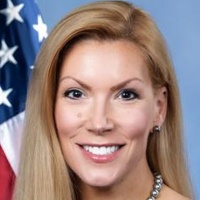
Beth Van Duyne
Representative
TX
Beth Van Duyne
Representative
TX
This bill, the Generating Retirement Ownership through Long-Term Holding Act, allows individual investors to defer paying taxes on capital gain dividends from mutual funds if those dividends are automatically reinvested into more fund shares. Taxes on these deferred gains are only due when the investor sells the shares or upon death. This provision aims to encourage long-term investment in mutual funds by providing immediate tax relief on reinvested earnings.
This Act eliminates the waiting periods for Social Security disability benefits and Medicare coverage for individuals diagnosed with metastatic breast cancer.
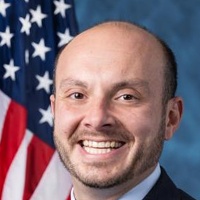
Andrew Garbarino
Representative
NY
Andrew Garbarino
Representative
NY
The Metastatic Breast Cancer Access to Care Act aims to improve support for individuals diagnosed with metastatic breast cancer. This bill eliminates the standard waiting period for receiving Social Security disability insurance benefits and waives the 24-month waiting period for Medicare coverage. These changes ensure immediate access to crucial financial and healthcare support upon diagnosis.
The REDI Act allows medical and dental interns and residents to defer both principal and interest payments on their student loans while in training.
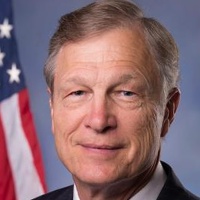
Brian Babin
Representative
TX
Brian Babin
Representative
TX
The Resident Education Deferred Interest (REDI) Act amends federal student loan regulations to provide a specific deferment for medical and dental residents. This allows borrowers currently serving in an internship or residency program to pause principal payments and prevent interest accrual on their student loans during that training period.
This bill amends the tax code to allow payments to health care sharing ministries to be treated as deductible medical expenses and clarifies that these ministries are not considered insurance for tax purposes, effective for tax years beginning after December 31, 2025.
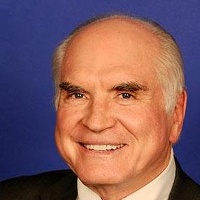
Mike Kelly
Representative
PA
Mike Kelly
Representative
PA
This bill amends the Internal Revenue Code to officially treat payments made to a qualified health care sharing ministry as a deductible medical expense for tax purposes. Furthermore, the legislation clarifies that, for federal tax purposes, these ministries will no longer be considered health insurance plans. These changes are set to take effect for tax years beginning after December 31, 2025.
Calls for Nigeria to be designated as a Country of Particular Concern due to ongoing, severe violations of religious freedom, urging U.S. action to protect religious minorities and promote human rights in the region.
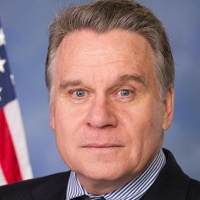
Christopher Smith
Representative
NJ
Christopher Smith
Representative
NJ
This resolution expresses the sense of Congress that Nigeria should be designated as a Country of Particular Concern due to severe violations of religious freedom. It urges the Nigerian government to protect religious minorities, prosecute those responsible for violence, and ensure religious freedom. The resolution also calls for increased U.S. diplomatic efforts and potential sanctions on individuals and groups responsible for religious freedom violations in Nigeria.
This bill mandates an annual report assessing U.S. reliance on China for critical agricultural inputs and recommends strategies to boost domestic or allied production.
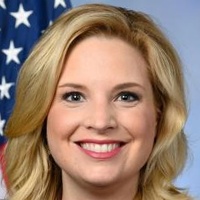
Ashley Hinson
Representative
IA
Ashley Hinson
Representative
IA
The Securing American Agriculture Act mandates an annual report from the Secretary of Agriculture detailing U.S. reliance on China for critical farming supplies like fertilizers, seeds, and veterinary drugs. This study must assess domestic production capabilities and identify supply chain vulnerabilities that China could exploit. The goal is to provide Congress with actionable recommendations for reducing dependency through onshore or nearshore production.
This bill disapproves the Bureau of Consumer Financial Protection's rule prohibiting creditors and consumer reporting agencies from using medical information.
Ralph Norman
Representative
SC
Ralph Norman
Representative
SC
This bill disapproves a recent rule issued by the Bureau of Consumer Financial Protection (BCFP) concerning the use of medical information by creditors and consumer reporting agencies. Utilizing the Congressional Review Act, Congress nullifies this specific BCFP regulation. Consequently, the rejected rule will have no legal effect.
The "Pay Our Troops Act of 2025" ensures continued pay and allowances for members of the Armed Forces, essential DOD civilians, and contractors during funding gaps until January 1, 2026, or when regular appropriations are enacted.
Jennifer Kiggans
Representative
VA
Jennifer Kiggans
Representative
VA
The "Pay Our Troops Act of 2025" ensures that members of the Armed Forces, essential Department of Defense civilians, and contractors continue to receive pay and allowances during periods when regular funding is disrupted. This act provides necessary appropriations to cover these costs for fiscal year 2025. The Act's provisions will terminate upon the enactment of regular appropriations, a continuing resolution that provides funding for the same purpose, or on January 1, 2026.
Nullifies the Consumer Financial Protection Bureau's rule on overdraft lending practices of large financial institutions.

J. Hill
Representative
AR
J. Hill
Representative
AR
This bill disapproves and invalidates the Consumer Financial Protection Bureau's rule regarding overdraft lending practices of very large financial institutions. The rule, found in the Federal Register, is nullified by this disapproval.