Legislative Activity
Track Riley's sponsored bills, co-sponsored legislation, and voting record
This Act establishes U.S. policy to pressure the Nigerian government to end systemic religious persecution, impose sanctions on perpetrators, and report annually on progress toward protecting vulnerable religious minorities.
Christopher Smith
Representative
NJ
Christopher Smith
Representative
NJ
The Nigeria Religious Freedom and Accountability Act of 2026 addresses systemic religious persecution in Nigeria, particularly against Christians, by extremist groups and certain militias. The bill outlines a strong U.S. policy to pressure the Nigerian government to end impunity, protect religious minorities, and repeal blasphemy laws. It mandates targeted sanctions against perpetrators and requires regular reporting on U.S. efforts to combat these atrocities.
This bill authorizes the minting of special $2.50 commemorative coins for the 250th anniversary of the Declaration of Independence and mandates a study on the feasibility of issuing a $2.50 coin for general circulation.
Robert Aderholt
Representative
AL
Robert Aderholt
Representative
AL
This act establishes the "$2.50 for America's 250th Act" to commemorate the 250th anniversary of the Declaration of Independence. It authorizes the Treasury to mint and issue special commemorative gold, silver, and clad $2.50 coins featuring designs from the 1926 Sesquicentennial coin. Additionally, the bill mandates a study on the feasibility of minting and issuing a $2.50 coin for wide circulation.
This bill establishes eligibility requirements for amateur athletic organizations based on biological sex, prohibiting individuals whose sex is male from competing in female-designated amateur athletic competitions.
W. Steube
Representative
FL
W. Steube
Representative
FL
This Act establishes specific definitions for "female," "male," and "sex" based on biological reproductive systems for amateur athletics. It mandates that organizations recognized by the U.S. Olympic & Paralympic Committee must prohibit individuals identified as male from competing in competitions designated for females. This aims to protect competitive opportunities specifically for biological females in amateur sports.
This bill mandates proof of U.S. citizenship for federal voter registration and requires photo identification showing citizenship status for voting in federal elections.
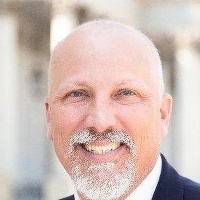
Chip Roy
Representative
TX
Chip Roy
Representative
TX
The Safeguard American Voter Eligibility Act (SAVE America Act) mandates that individuals must provide documentary proof of U.S. citizenship to register to vote in federal elections. It also establishes a federal requirement for voters to present a photo ID indicating U.S. citizenship when casting a ballot in federal elections. The bill outlines specific acceptable forms of proof and requires states to implement verification programs to ensure only citizens are registered and voting.
This resolution recognizes and celebrates the significant contributions of Catholic schools across the United States during the 52nd annual National Catholic Schools Week in January 2026.
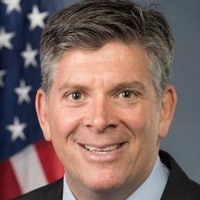
Darin LaHood
Representative
IL
Darin LaHood
Representative
IL
This resolution officially recognizes and celebrates the 52nd annual National Catholic Schools Week, taking place from January 25 to January 31, 2026. It honors the significant contributions of Catholic schools nationwide, highlighting their commitment to academic excellence, diverse student populations, and values-based education. The bill supports the goals of this week, which is cosponsored by the National Catholic Educational Association and the U.S. Conference of Catholic Bishops.
This resolution expresses support for designating the week of January 25 through January 31, 2026, as "National School Choice Week" to highlight the importance of parental choice in K-12 education.
John Moolenaar
Representative
MI
John Moolenaar
Representative
MI
This resolution expresses support for designating the week of January 25 through January 31, 2026, as "National School Choice Week." It emphasizes the importance of parental choice in selecting diverse K-12 educational options that best suit their children's needs. The bill also recognizes the contributions of students, parents, teachers, and school leaders across all educational environments.
This bill mandates that all federal contractors and their subcontractors must use the E-Verify program to confirm employee work authorization.
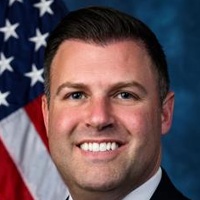
Ryan Mackenzie
Representative
PA
Ryan Mackenzie
Representative
PA
This bill amends existing law to mandate that all federal contractors and their subcontractors must participate in the E-Verify program. This requirement ensures that every entity working on a U.S. government contract verifies the employment eligibility of its workforce through the E-Verify system.
This bill amends federal law to significantly restrict non-citizen eligibility for federal public benefits, including cash assistance.
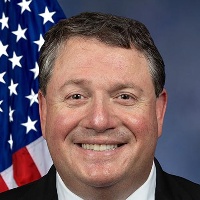
Randall Fine
Representative
FL
Randall Fine
Representative
FL
The "No Welfare for Non-Citizens Act" seeks to significantly restrict federal public benefit eligibility for non-citizens by eliminating existing exceptions and establishing a broad rule of ineligibility. The bill expands the definition of federal public benefits to explicitly include cash assistance while repealing previous provisions that allowed for limited access to federal programs.
This Act establishes federal criminal penalties for performing genital or bodily mutilation or chemical castration on minors, with specific medical exceptions.
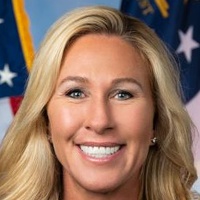
Marjorie Greene
Representative
GA
Marjorie Greene
Representative
GA
The Protect Children’s Innocence Act establishes federal criminal penalties for performing genital or bodily mutilation or chemical castration on individuals under 18 years old. This law applies when the act involves interstate commerce or occurs in U.S. territories. It explicitly prohibits procedures intended to change a minor's body to correspond with a different sex, with narrow exceptions for specific medical necessities.
This resolution honors the service and sacrifice of Specialist Sarah Beckstrom and Staff Sergeant Andrew Wolfe following a targeted assault on service members in Washington, D.C.
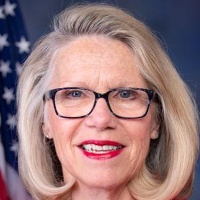
Carol Miller
Representative
WV
Carol Miller
Representative
WV
This resolution honors the service and sacrifice of Army Specialist Sarah Beckstrom, who was killed, and Air Force Staff Sergeant Andrew Wolfe, who was wounded, in a targeted assault against service members in Washington, D.C. The House of Representatives expresses its deepest condolences to Specialist Beckstrom's family and wishes Staff Sergeant Wolfe a full recovery. Furthermore, it condemns the violent attack and recognizes the bravery of all National Guard members and first responders involved.
This bill authorizes Congress to award Congressional Gold Medals to the 1980 U.S. Men's Olympic Ice Hockey team for their historic "Miracle on Ice" victory.
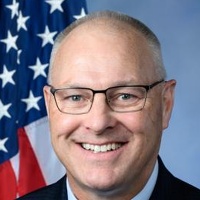
Pete Stauber
Representative
MN
Pete Stauber
Representative
MN
This bill, the Miracle on Ice Congressional Gold Medal Act, officially authorizes Congress to award Congressional Gold Medals to the 1980 U.S. Men's Olympic Ice Hockey Team for their historic "Miracle on Ice" victory. The medals will be struck by the Treasury and permanently displayed at specific national sports museums. The Act also permits the sale of duplicate bronze medals to cover production costs.
This bill establishes a federal crime and civil cause of action against anyone who knowingly administers an abortion-inducing drug to a woman without her informed consent.
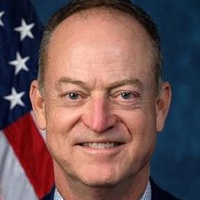
Mark Messmer
Representative
IN
Mark Messmer
Representative
IN
The Forced Abortion Prevention and Accountability Act establishes a new federal crime prohibiting the knowing and intentional administration of abortion-inducing drugs to a pregnant woman without her informed consent. This legislation creates severe criminal penalties, including up to 25 years in prison, for those who violate this prohibition or attempt to do so. Furthermore, it grants victims the right to file a civil lawsuit to recover damages for physical and psychological injuries resulting from forced abortions.
This bill designates the Muslim Brotherhood and its affiliates as terrorist organizations, imposing strict prohibitions and immigration consequences for its members.
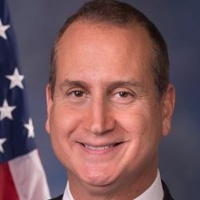
Mario Diaz-Balart
Representative
FL
Mario Diaz-Balart
Representative
FL
The Muslim Brotherhood Terrorist Designation Act of 2025 seeks to formally prohibit the operations of the Muslim Brotherhood and its affiliates within the United States by applying existing anti-terrorism restrictions. This legislation mandates the Secretary of State to annually report on all Muslim Brotherhood branches globally, leading to the imposition of sanctions by the President on those entities. Furthermore, the bill establishes immigration consequences, including visa cancellation, for members of the organization.
This bill repeals the Human Rights Sanctuary Amendment Act of 2022, restoring previous laws.
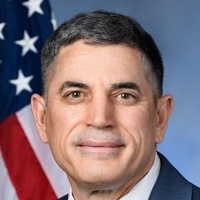
Andrew Clyde
Representative
GA
Andrew Clyde
Representative
GA
This bill, the D.C. Shield Law Repeal Act, seeks to repeal the Human Rights Sanctuary Amendment Act of 2022. By doing so, it will restore the laws and regulations that were in effect prior to the 2022 Act.
This resolution formally denounces socialism based on its historical association with totalitarianism, mass death, and economic failure, affirming the foundational principles of individual liberty and property rights.
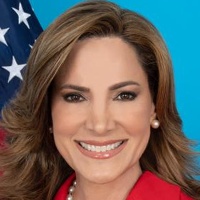
Maria Salazar
Representative
FL
Maria Salazar
Representative
FL
This Concurrent Resolution formally denounces the ideology of socialism based on its historical outcomes. It asserts that socialist principles have consistently led to totalitarian regimes, mass atrocities, and economic collapse worldwide. The resolution contrasts these failures with the founding principles of the United States, concluding with a statement opposing the implementation of socialist policies domestically.
This bill authorizes the awarding of the Congressional Gold Medal to Charles "Charlie" James Kirk in recognition of his life, service, and dedication to the United States.
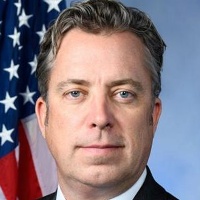
Andrew Ogles
Representative
TN
Andrew Ogles
Representative
TN
The Charlie Kirk Congressional Gold Medal Act authorizes the posthumous award of the Congressional Gold Medal to Charles "Charlie" Kirk in recognition of his life, service, and dedication to the United States. The bill honors his legacy as the founder of Turning Point USA and his commitment to promoting traditional American values, faith, and civil discourse.
This bill prohibits the use of federal funds to cover any expenses related to abortion services for individuals unlawfully present in the United States.
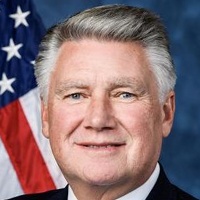
Mark Harris
Representative
NC
Mark Harris
Representative
NC
This bill, the "No Taxpayer Funded Abortion Travel for Illegal Aliens Act," prohibits the use of federal funds to cover any expenses related to abortion services for individuals unlawfully present in the United States. These prohibited expenses include travel, lodging, meals, and related support services. The legislation specifically targets federal funding for aiding unlawful immigrants in accessing abortion care.
This act prohibits Medicare-approved medical residency programs from requiring participation in abortion-related training unless the resident voluntarily opts in.
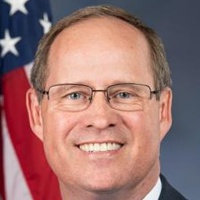
Gregory Murphy
Representative
NC
Gregory Murphy
Representative
NC
This Act prohibits Medicare-approved medical residency programs from requiring participation in abortion-related training. Programs that offer abortion training must ensure it is strictly voluntary, allowing residents to opt-in without facing discrimination. This ensures medical residents are not compelled to participate in abortion procedures, assistance, or referrals against their conscience.
This bill impeaches Chief Judge James E. Boasberg for allegedly authorizing improper nondisclosure orders that infringed upon the legislative duties of several Members of Congress.
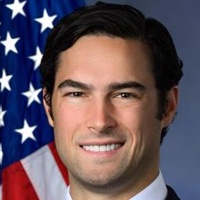
Brandon Gill
Representative
TX
Brandon Gill
Representative
TX
This resolution initiates impeachment proceedings against Chief Judge James E. Boasberg of the U.S. District Court for the District of Columbia for high crimes and misdemeanors. The core allegation is that Judge Boasberg improperly authorized nondisclosure orders related to an FBI investigation that covered Members of Congress acting under their legislative duties. These actions are cited as compromising the separation of powers and violating existing federal statute regarding notification of legal process. The resolution calls for the judge's removal from office based on these alleged improprieties.
This bill ensures that essential firearm-related government operations, such as background checks and export license processing, continue during a government shutdown.

Ben Cline
Representative
VA
Ben Cline
Representative
VA
The Firearm Access During Shutdowns Act ensures that essential firearm-related government operations continue without interruption during a federal shutdown. This legislation specifically mandates the continuation of the FBI's NICS background check system and related processing at the ATF, Department of Commerce, and Department of State. By deeming these functions essential for protecting life and property, the bill prevents delays in firearm transfers and export licensing during lapses in appropriations.