
Legislative Activity
Track Roger's sponsored bills, co-sponsored legislation, and voting record
This resolution honors the life and service of fallen Kansas City, Kansas police officer Hunter Simoncic by designating a portion of U.S. Highway 69 as the "Officer Hunter Simoncic Memorial Highway."

Jerry Moran
Senator
KS
Jerry Moran
Senator
KS
This resolution honors the life and service of fallen Kansas City, Kansas police officer Hunter Simoncic. It designates a portion of U.S. Highway 69 in Wyandotte County as the "Officer Hunter Simoncic Memorial Highway" to pay tribute to his noble sacrifice in the line of duty.
This resolution honors the life, dedicated service, and ultimate sacrifice of Hays, Kansas Police Sergeant Scott Heimann.
Jerry Moran
Senator
KS
Jerry Moran
Senator
KS
This resolution honors the life and dedicated service of Hays, Kansas Police Sergeant Scott Heimann, who was killed in the line of duty on September 27, 2025. It expresses the Senate’s deep appreciation for his contributions to the community and offers formal condolences to his surviving family. The measure also pays tribute to his noble sacrifice and calls for continued support for his loved ones.
This resolution designates March 21, 2026, as "National Women in Agriculture Day" to honor the vital contributions and leadership of women across the U.S. agricultural industry.

Joni Ernst
Senator
IA
Joni Ernst
Senator
IA
This resolution designates March 21, 2026, as "National Women in Agriculture Day" to honor the vital contributions of women across the agricultural industry. It celebrates the essential roles women play as producers, educators, and leaders, while encouraging the nation to support and empower the next generation of female agricultural professionals.
The Homegrown Fertilizer Act establishes a federal grant and loan program to expand domestic manufacturing, processing, and storage of fertilizer and nutrient alternatives to support American farmers.

Amy Klobuchar
Senator
MN
Amy Klobuchar
Senator
MN
The Homegrown Fertilizer Act establishes a grant and loan program to expand the domestic manufacturing, processing, and storage of fertilizer and nutrient alternatives. By supporting independent producers and innovative technologies, the bill aims to increase market competition, reduce price volatility, and strengthen the supply chain for American farmers.
This bill mandates that VA providers must certify a veteran's death from natural causes within 48 hours or allow local officials to step in, ensuring timely burials and benefits access.

John Boozman
Senator
AR
John Boozman
Senator
AR
The Veteran Burial Timeliness and Death Certificate Accountability Act aims to eliminate delays in certifying the deaths of veterans who pass away from natural causes. This bill mandates that VA physicians or nurse practitioners must certify a veteran's death within 48 hours, or a local official can step in. The legislation also requires the VA Secretary to annually report on compliance with this new timely certification standard.
The Stop Insider Trading Act prohibits Members of Congress and their immediate families from purchasing individual stocks and mandates a public notice period for any sales of existing holdings.
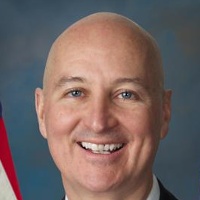
Pete Ricketts
Senator
NE
Pete Ricketts
Senator
NE
The "Stop Insider Trading Act" prohibits Members of Congress and their immediate families from purchasing individual stocks and requires advanced public notice for any sale of existing holdings. The bill establishes strict financial penalties for violations, which must be paid personally by the Member of Congress. These measures aim to increase transparency and prevent conflicts of interest by restricting personal investment activities among federal lawmakers.
The "Love Lives On Act of 2025" restores benefits to surviving spouses of veterans who remarry, including educational benefits, Dependency and Indemnity Compensation, Survivor Benefit Plan payments, and TRICARE eligibility.
Jerry Moran
Senator
KS
Jerry Moran
Senator
KS
The "Love Lives On Act of 2025" modifies eligibility rules for Dependency and Indemnity Compensation (DIC) and Survivor Benefit Plan (SBP) payments for surviving spouses who remarry. It allows remarried surviving spouses to receive certain educational benefits and DIC, and it continues annuity payments to surviving spouses who remarry, particularly those whose spouses died on active duty. Additionally, the Act expands the definition of "dependent" under the TRICARE program to include remarried widows or widowers whose subsequent marriage has ended.
This resolution officially designates February 28, 2026, as Rare Disease Day to raise awareness and support efforts for those affected by rare diseases.
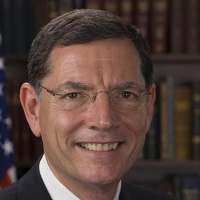
John Barrasso
Senator
WY
John Barrasso
Senator
WY
This resolution officially designates February 28, 2026, as "Rare Disease Day." It recognizes the millions of Americans affected by rare diseases and highlights the ongoing challenges in diagnosis, treatment, and research. The bill aims to raise awareness and support efforts to advance treatments and cures for these often serious and life-threatening conditions.
This resolution supports the goals of Career and Technical Education Month by recognizing its vital role in preparing a skilled workforce for in-demand careers.
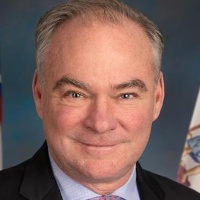
Timothy Kaine
Senator
VA
Timothy Kaine
Senator
VA
This resolution officially designates February 2026 as Career and Technical Education (CTE) Month to celebrate and support CTE programs nationwide. It recognizes CTE's vital role in preparing a skilled workforce for high-demand careers and boosting American economic competitiveness. The resolution encourages promotion of CTE as a respected educational pathway for students.
The Medical Nutrition Therapy Act of 2026 expands Medicare coverage for medical nutrition therapy services to include a broader range of chronic conditions and increases the types of healthcare providers authorized to order these services.

Susan Collins
Senator
ME
Susan Collins
Senator
ME
The Medical Nutrition Therapy Act of 2026 expands Medicare coverage to include medical nutrition therapy for a broader range of chronic conditions, such as obesity, hypertension, and cancer. The bill also increases access to these services by allowing a wider variety of healthcare professionals to order them. Additionally, it establishes a five-year pilot program to evaluate the impact of these services on patient health outcomes and overall Medicare spending.
The Living Donor Protection Act of 2025 prohibits insurance discrimination against living organ donors and guarantees job-protected leave for those undergoing donation surgery.

Tom Cotton
Senator
AR
Tom Cotton
Senator
AR
The Living Donor Protection Act of 2025 prohibits insurance companies from discriminating against living organ donors regarding life, disability, or long-term care coverage. The bill also amends the Family and Medical Leave Act (FMLA) to explicitly classify organ donation surgery as a serious health condition, ensuring job-protected leave for donors. Additionally, it mandates that the Department of Health and Human Services update public educational materials to reflect these new protections and the realities of organ donation.
The ROTOR Act reforms transparency and oversight for rotorcraft operations by narrowing exceptions to ADS-B Out requirements, mandating ADS-B In installation on certain aircraft, and establishing new FAA-DOD safety coordination and reporting mechanisms.

Ted Cruz
Senator
TX
Ted Cruz
Senator
TX
The ROTOR Act focuses on enhancing aviation safety and transparency, primarily by reforming exceptions that allow aircraft to disable their ADS-B Out tracking systems. It mandates that the FAA require most aircraft to install and use ADS-B In technology for improved situational awareness. Furthermore, the bill establishes new coordination offices and requires comprehensive safety reviews of airspace operations, particularly around major airports, involving both civil and military aviation.
The Railway Safety Act of 2026 enhances freight rail safety and hazardous materials emergency preparedness through stricter operational standards, increased oversight, and improved funding for local first responders.
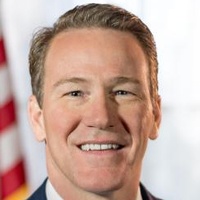
Jon Husted
Senator
OH
Jon Husted
Senator
OH
The Railway Safety Act of 2026 enhances national rail safety by mandating stricter operational standards, advanced defect detection technology, and more frequent equipment inspections for freight trains. Additionally, the legislation strengthens emergency preparedness by establishing new funding streams, improved training, and a reimbursement program to support local communities in responding to hazardous material incidents.
The GRID Act mandates that new large data centers must be powered entirely off the electric grid, while existing ones must obtain a renewable certificate or pay credits to offset their impact on residential electricity rates.
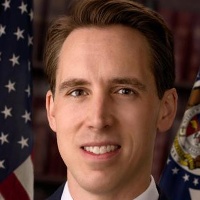
Joshua Hawley
Senator
MO
Joshua Hawley
Senator
MO
The GRID Act mandates that new large data centers (20+ MW) must secure all power, including backup, from sources completely separate from the electric grid. Existing grid-connected data centers have a 10-year transition period to obtain a "Zero Rate Effect Certificate" from the Secretary of Energy, proving they do not increase customer electricity rates. The Act also establishes public reporting requirements for utility usage, property acquisitions, and agreements related to utility service for these large data centers.
This joint resolution expresses Congressional disapproval of the D.C. Council's temporary amendment to the Income and Franchise Tax Conformity and Revision Act of 2025.
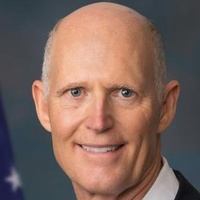
Rick Scott
Senator
FL
Rick Scott
Senator
FL
This joint resolution expresses the disapproval of Congress regarding the D.C. Income and Franchise Tax Conformity and Revision Temporary Amendment Act of 2025. It specifically targets the act approved by the D.C. Council in December 2025.
This act expands the existing carbon sequestration tax credit to include facilities that capture carbon in solid or liquid form.
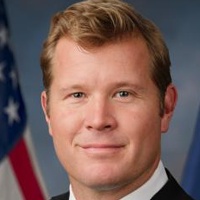
Tim Sheehy
Senator
MT
Tim Sheehy
Senator
MT
The Carbon Resource Innovation Act expands the existing tax credit for carbon capture to include facilities that capture carbon in solid or liquid form. This legislation amends the Internal Revenue Code to allow facilities capturing carbon in solid or liquid states to qualify for the carbon oxide sequestration credit. To be eligible, facilities must capture a minimum of 1,000 metric tons of qualified carbon annually.
This act reforms Medicare Advantage prior authorization by mandating an audit to standardize requirements for high-cost, evidence-supported items and services, with exemptions for providers in certain two-sided risk models.

Sheldon Whitehouse
Senator
RI
Sheldon Whitehouse
Senator
RI
The Prior Authorization Relief Act aims to streamline and standardize prior authorization requirements within Medicare Advantage plans. It mandates an audit to identify high-cost items, services, and drugs with excessive authorization steps. Based on the findings, the bill requires the standardization of these prior authorization processes across all Medicare Advantage plans, with certain exemptions for providers in two-sided financial risk models.
This bill mandates that individuals must provide documentary proof of U.S. citizenship when registering to vote in federal elections and requires photo identification containing a citizenship indicator for voting in those elections.
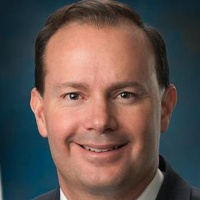
Mike Lee
Senator
UT
Mike Lee
Senator
UT
This bill, the Safeguard American Voter Eligibility Act (SAVE America Act), mandates that individuals must provide documentary proof of U.S. citizenship when registering to vote in federal elections. It also establishes a federal requirement for voters to present a photo ID containing a citizenship indicator when casting a ballot in federal elections. Furthermore, the legislation requires states to implement ongoing programs to verify and remove non-citizens from voter rolls.
This bill mandates that the Medicare Payment Advisory Commission report to Congress on agreements between pharmacy benefit managers and Medicare prescription drug plans.

Mark Warner
Senator
VA
Mark Warner
Senator
VA
The PBM Reporting Transparency Act mandates the Medicare Payment Advisory Commission (MedPAC) to analyze and report to Congress on agreements between Pharmacy Benefit Managers (PBMs) and Medicare Part D and MAPD plans. These reports will detail trends, patterns, and the impact of these agreements on enrollee costs and pharmacy reimbursement. The legislation requires both an initial and a subsequent final report to track changes over time.
This act mandates that all international climate agreements involving legally binding U.S. emission reductions must receive Senate advice and consent to be implemented.
John Barrasso
Senator
WY
John Barrasso
Senator
WY
The No Climate Treaties Act of 2026 mandates that any international climate agreement involving legally binding U.S. emissions reductions must be submitted to the Senate for treaty ratification. This ensures that such agreements, including the Paris Agreement, require the Senate's advice and consent to take effect. Furthermore, the bill prohibits the use of federal funds to implement any unratified agreement that mandates domestic emissions cuts.