
Legislative Activity
Track John's sponsored bills, co-sponsored legislation, and voting record
This Act expands sanctions, mandates entry bans for complicity in forced reproductive procedures, provides victim support, counters Chinese propaganda, restricts U.S. government contracts, and addresses forced organ harvesting and seafood procurement related to abuses against Uyghurs and other groups in China.
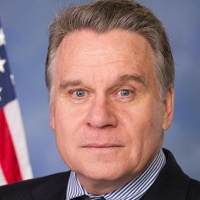
Christopher Smith
Representative
NJ
Christopher Smith
Representative
NJ
The Uyghur Genocide Accountability and Sanctions Act of 2025 aims to strengthen U.S. action against human rights abuses in China by expanding sanctions, imposing entry bans on complicit officials, and supporting victims. The bill mandates new reporting requirements regarding forced reproductive procedures and organ harvesting while restricting U.S. government contracts with entities involved in forced labor. Furthermore, it directs the State Department to counter Chinese propaganda and preserve the cultural heritage of oppressed ethnic groups.
This act establishes a strategic defense innovation partnership between the U.S. and Taiwan to boost defense technology collaboration, counter Chinese influence, and accelerate joint research and development in key areas.
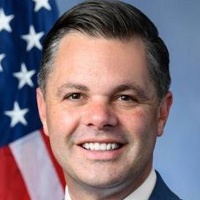
Zachary (Zach) Nunn
Representative
IA
Zachary (Zach) Nunn
Representative
IA
The U.S.-Taiwan Defense Innovation Partnership Act establishes a strategic partnership between the U.S. Department of Defense and Taiwan's defense agencies. This initiative aims to boost defense industry collaboration, accelerate joint research and development, and strengthen Taiwan's defense manufacturing capabilities. The partnership will focus on emerging technologies like AI, microchips, and drones to enhance security cooperation.
This bill prohibits the Department of Transportation from using, procuring, or contracting for LiDAR technology originating from specified foreign adversaries.
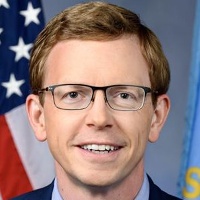
Dusty Johnson
Representative
SD
Dusty Johnson
Representative
SD
The Securing Infrastructure from Adversaries Act of 2025 prohibits the Department of Transportation (DOT) from procuring or contracting for the use of certain foreign-made LiDAR technology identified in related defense legislation. This ban applies to purchases, contracts, and the use of federal loan or grant funds for this restricted technology, generally beginning in mid-2026. The Secretary of Transportation may only waive this prohibition if it is certified to be in the national interest of the United States. Certain safety testing and regulatory exemption activities remain exempt from these restrictions.
This bill grants federal law enforcement authority and corresponding benefits to certified Tribal law enforcement officers working under federal contracts, while also establishing DOJ oversight for public safety coordination in Indian communities.
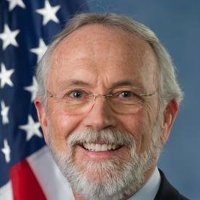
Dan Newhouse
Representative
WA
Dan Newhouse
Representative
WA
The Parity for Tribal Law Enforcement Act aims to grant qualified Tribal law enforcement officers the authority to enforce federal law within their jurisdiction under specific federal contracts or compacts. This requires Tribal officers and their departments to meet rigorous federal training and procedural standards comparable to those of Bureau of Justice Services employees. When acting under this authority, these Tribal officers will receive the same legal protections and benefits as federal law enforcement officers. The bill also mandates the Department of Justice to improve coordination and accountability for public safety efforts on tribal lands.
This act establishes a new two-part test under the Fair Labor Standards Act and the National Labor Relations Act to determine when an individual is classified as an independent contractor rather than an employee.
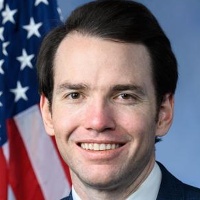
Kevin Kiley
Representative
CA
Kevin Kiley
Representative
CA
The Modern Worker Empowerment Act establishes a new, two-part test under federal law to determine if a worker is an independent contractor rather than an employee. This test focuses on the degree of control exercised over the work's details and whether the worker has the risks and opportunities of entrepreneurship. The Act applies this updated classification standard to both the Fair Labor Standards Act and the National Labor Relations Act.
This Act prohibits the Federal Reserve from directly or indirectly issuing a Central Bank Digital Currency (CBDC) and bars the Fed from developing or using one for monetary policy without explicit Congressional authorization.
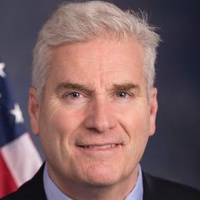
Tom Emmer
Representative
MN
Tom Emmer
Representative
MN
The Anti-CBDC Surveillance State Act strictly prohibits the Federal Reserve from directly or indirectly issuing a Central Bank Digital Currency (CBDC) to individuals. This legislation prevents the Fed from developing, testing, or implementing any digital currency that functions as a direct liability of the Federal Reserve. Furthermore, Congress asserts that any authority to create such a digital asset must explicitly come from Congress itself.
The STOP Shells Act expands export licensing requirements to subsidiaries of foreign entities listed on U.S. trade restriction lists if U.S. interests hold a majority stake.
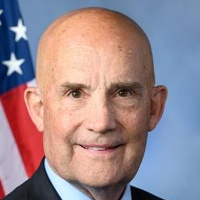
Keith Self
Representative
TX
Keith Self
Representative
TX
The STOP Shells Act strengthens U.S. export controls by requiring the Secretary of Commerce to apply licensing rules to subsidiaries of foreign entities already on restricted lists, provided U.S. interests own a controlling stake. Before listing an entity, the Secretary must assess the impact of applying the Foreign Direct Product Rule on national security. Any subsequent waivers to these new licensing requirements must be justified to Congress within two days.
The Equal Shot Act of 2025 prohibits the Small Business Administration from denying financial assistance to qualified applicants solely based on their involvement in the firearms industry.
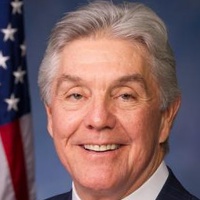
Roger Williams
Representative
TX
Roger Williams
Representative
TX
The Equal Shot Act of 2025 prohibits the Small Business Administration (SBA) from denying financial assistance to otherwise qualified applicants solely based on their involvement in the firearms industry. This legislation ensures that businesses defined as "firearm entities," their affiliates, or trade associations are not unfairly rejected for SBA loans or guarantees. The Act clearly defines these terms to prevent discrimination against businesses involved in manufacturing, selling, or servicing firearms and related accessories.
This Act mandates that VA medical staff promptly certify the deaths of veterans who died from natural causes within 48 hours to expedite burial and survivor benefits.
Tom Emmer
Representative
MN
Tom Emmer
Representative
MN
The Veteran Burial Timeliness and Death Certificate Accountability Act addresses significant delays in obtaining death certificates for veterans who die from natural causes, often due to VA medical staff delays. This bill mandates that VA medical providers must certify a veteran's death within 48 hours or allow the local medical examiner to step in. Furthermore, the VA must annually report on its compliance with this new timely certification requirement.
This bill reauthorizes funding for monitoring, assessing, and researching the Great Lakes Basin through fiscal year 2030.

Mike Quigley
Representative
IL
Mike Quigley
Representative
IL
This bill, the Great Lakes Fishery Research Reauthorization Act, extends the authorization for federal funding dedicated to monitoring, assessing, and researching the Great Lakes Basin. It pushes the current funding expiration date from 2025 to the end of fiscal year 2030. This ensures continued support for vital Great Lakes protection and study programs for an additional five years.
This act prioritizes research funding for utilizing commercial weather information within agricultural research grants.
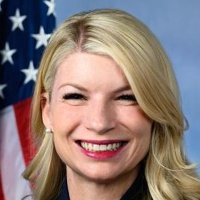
Brittany Pettersen
Representative
CO
Brittany Pettersen
Representative
CO
The Satellite-Based Agricultural Data Act prioritizes research utilizing commercial weather information within the existing agricultural research grant programs. This amendment specifically encourages the use of data and tools from private weather companies in federally funded agricultural research projects. The goal is to integrate cutting-edge commercial weather technology into agricultural science priorities.
This bill mandates that elementary, secondary, and higher education institutions must certify compliance with biological fairness requirements in women's sports to receive federal funding, with penalties for non-compliance.
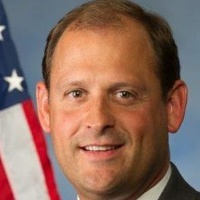
Garland Barr
Representative
KY
Garland Barr
Representative
KY
The Defend Girls Athletics Act mandates that elementary, secondary, and higher education institutions must certify compliance with Executive Order 14201 regarding biological fairness in women's sports to receive federal funding. This certification must be renewed annually for K-12 districts and by July 1st for colleges and universities. Failure to comply or report results in the immediate requirement to return unobligated federal funds and ineligibility for future federal financial assistance until compliance is restored.
This bill authorizes the creation and sale of commemorative coins for the 2028 Los Angeles and 2034 Salt Lake City Olympic and Paralympic Games to help fund the events, with all surcharges going to the respective organizing committees after covering production costs.
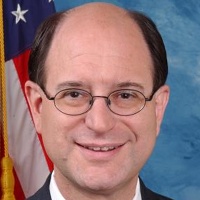
Brad Sherman
Representative
CA
Brad Sherman
Representative
CA
This Act authorizes the Secretary of the Treasury to mint and sell special commemorative coins for the 2028 Los Angeles Olympic and Paralympic Games and the 2034 Salt Lake City Winter Olympic and Paralympic Games. The coins will feature designs celebrating American athletes and the Games themselves. All surcharges collected from the sale of these coins will be directed to the respective organizing committees to help fund the events and related youth sports programs. The entire program must be conducted at no cost to the U.S. Government.
This Act updates the Higher Education Act of 1965 to explicitly include Head Start and Early Head Start programs under the definition of eligible community services.
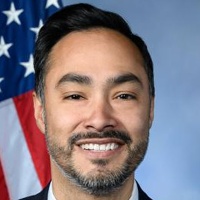
Joaquin Castro
Representative
TX
Joaquin Castro
Representative
TX
The Head Start for Our Future Act updates the Higher Education Act of 1965 by replacing the term "literacy training" with "child development and early learning" when describing eligible community services. This change explicitly ensures that Head Start and Early Head Start programs are recognized under this section of the law. The bill aims to better reflect the comprehensive nature of early childhood education services.
The Employee Rights Act mandates secret ballot elections for union representation, restricts voting eligibility to lawfully present workers, tightens rules on employer-employee data sharing during elections, limits union spending of member dues, clarifies independent contractor and joint employer standards, extends NLRA coverage to tribal entities, allows for independent negotiation in certain states, bans non-job-related DEI clauses in contracts, and limits federal prosecution for minor acts of violence during labor disputes.
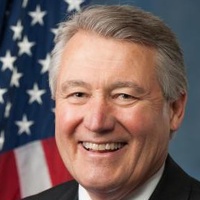
Rick Allen
Representative
GA
Rick Allen
Representative
GA
The Employee Rights Act fundamentally reforms U.S. labor law by mandating secret ballot elections for union representation and restricting union access to employee contact information. It also clarifies definitions for independent contractors and joint employers under federal wage and labor relations statutes. Furthermore, the bill prohibits Diversity, Equity, or Inclusion (DEI) clauses in collective bargaining agreements and establishes federal penalties for violence during labor disputes, while prioritizing state authority for minor incidents.
This bill mandates that any final World Health Organization pandemic preparedness agreement resulting from the International Negotiating Body must be treated as a treaty requiring two-thirds Senate approval before the U.S. can adopt it.
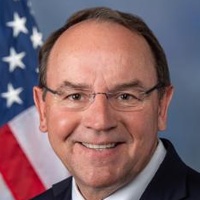
Thomas Tiffany
Representative
WI
Thomas Tiffany
Representative
WI
This bill, the No WHO Pandemic Preparedness Treaty Without Senate Approval Act, declares that any final pandemic agreement resulting from the World Health Organization's negotiations must be treated as a formal treaty. This ensures that the United States cannot implement such an agreement without receiving the advice and consent of two-thirds of the Senate. Furthermore, the policy of the United States is established to fully support Taiwan's participation in the WHO.
This bill nullifies the Department of Labor's recently published final rule updating the Davis-Bacon and Related Acts regulation.
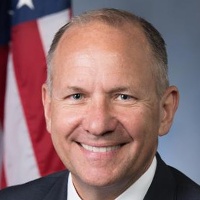
Lloyd Smucker
Representative
PA
Lloyd Smucker
Representative
PA
This bill seeks to immediately nullify the Department of Labor's recently published final rule updating the Davis-Bacon and Related Acts regulation. If enacted, the measure would ensure that the new wage rule, published on August 24, 2023, has no force or legal effect. Essentially, this legislation cancels the Department of Labor's latest changes to the prevailing wage requirements for federally funded construction projects.
This resolution expresses support for designating June 2025 as "National Dairy Month" to recognize the dairy industry's vital contributions to American health, family farming, and the national economy.

Claudia Tenney
Representative
NY
Claudia Tenney
Representative
NY
This resolution expresses support for designating June 2025 as "National Dairy Month" to recognize the vital role of the dairy industry. It highlights the industry's significant contributions to American health, noting that dairy is a key source of essential nutrients like calcium and Vitamin D. Furthermore, the resolution commends the nation's family-owned dairy farms for their economic impact and agricultural heritage. It also strongly opposes unfair regulations that hinder dairy farmers.
This resolution affirms U.S. support for Israel's actions to dismantle Iran's nuclear capabilities and condemns Iran's retaliatory attacks on Israeli civilians.
Claudia Tenney
Representative
NY
Claudia Tenney
Representative
NY
This resolution expresses the strong support of the U.S. Congress for Israel's recent military actions aimed at dismantling Iran's nuclear enrichment capabilities. It condemns Iran's advancement toward nuclear weapons and its retaliatory attacks against Israeli civilians. Furthermore, the bill urges Iran to immediately cease all nuclear activities and reaffirms the United States' commitment to Israel's security.
This bill prohibits Community Development Block Grants from being awarded to any state or local jurisdiction officially defined as a "sanctuary jurisdiction."
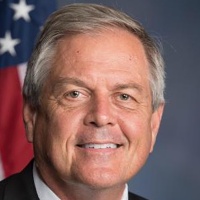
Ralph Norman
Representative
SC
Ralph Norman
Representative
SC
This bill proposes to prohibit federal Community Development Block Grants (CDBG) from being awarded to any state or local jurisdiction officially designated as a "sanctuary jurisdiction." A jurisdiction is defined as one that restricts its employees from sharing immigration status information or complying with lawful requests from the Department of Homeland Security. To receive CDBG funding, applicants must certify they are not a sanctuary jurisdiction and agree to remain compliant throughout the grant period.