
Legislative Activity
Track Thomas's sponsored bills, co-sponsored legislation, and voting record
This bill prohibits the United States from providing any assessed or voluntary financial contributions to the World Health Organization.

Chip Roy
Representative
TX
Chip Roy
Representative
TX
The "No Taxpayer Funding for the World Health Organization Act" prohibits the United States government from providing any assessed or voluntary financial contributions to the World Health Organization. This legislation effectively ends all U.S. taxpayer funding for the organization upon the bill's enactment.
This bill proposes a constitutional amendment to repeal the 16th Amendment, thus removing Congress's authority to levy income taxes, except in times of war, with implementation details to be reported by the Secretary of the Treasury.
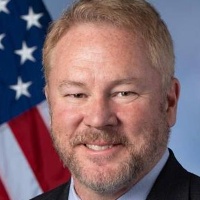
Warren Davidson
Representative
OH
Warren Davidson
Representative
OH
This bill proposes a constitutional amendment to repeal the 16th Amendment, which would eliminate the federal income tax, except during times of war. The repeal would take effect two years after the amendment's ratification. The Secretary of the Treasury would be required to submit a report to Congress with recommendations for implementing legislation within 180 days of ratification.
The Matthew Lawrence Perna Act of 2025 establishes new protections for nonviolent political protesters regarding pretrial detention and speedy trials, creates remedies for malicious overprosecution, and limits the government's use of national security authority against U.S. citizens.

Marjorie Greene
Representative
GA
Marjorie Greene
Representative
GA
The Matthew Lawrence Perna Act of 2025 aims to protect individuals charged with nonviolent political protest activities by prohibiting pretrial detention for such offenses and ensuring speedy trials. The bill also establishes new legal avenues for citizens to sue the government for malicious overprosecution and unnecessary detention following dropped charges. Furthermore, it restricts the government's use of national security authorities against U.S. citizens and mandates greater disclosure regarding personal surveillance records.
This bill mandates the formal abolishment of the Bureau of Alcohol, Tobacco, Firearms and Explosives (ATF).
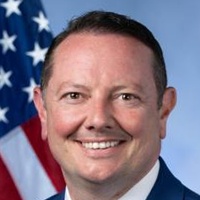
Eric Burlison
Representative
MO
Eric Burlison
Representative
MO
The Abolish the ATF Act is a legislative proposal that mandates the immediate dissolution of the Bureau of Alcohol, Tobacco, Firearms and Explosives. This bill seeks to formally terminate the agency and eliminate its federal oversight functions.
This bill proposes a constitutional amendment to limit members of the House of Representatives to three terms and Senators to two terms, with specific provisions for partial terms. Terms served before the amendment's ratification would not be counted towards these limits, and the amendment must be ratified within seven years to be valid.
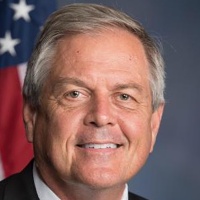
Ralph Norman
Representative
SC
Ralph Norman
Representative
SC
This bill proposes a constitutional amendment to limit the number of terms a member of Congress can serve. Representatives would be limited to 3 terms and Senators to 2 terms, with specific rules for partial terms. Terms served before the amendment's ratification would not be counted. The amendment must be ratified by three-fourths of the states within seven years to be valid.
The Regulations from the Executive in Need of Scrutiny (REINS) Act of 2025 increases congressional accountability by requiring federal agencies to obtain legislative approval for all "major" rules before they can take effect.

Katherine Cammack
Representative
FL
Katherine Cammack
Representative
FL
The Regulations from the Executive in Need of Scrutiny (REINS) Act of 2025 aims to increase federal regulatory accountability by requiring Congress to approve any "major" rule before it can take effect. Under this legislation, rules with a significant economic impact require a joint resolution of approval from both chambers of Congress to become law. By shifting this authority back to the legislative branch, the Act seeks to ensure greater transparency and oversight of the federal rulemaking process.
The First Amendment Accountability Act allows individuals to sue federal executive branch employees for civil damages when their First Amendment rights are violated under color of federal authority.
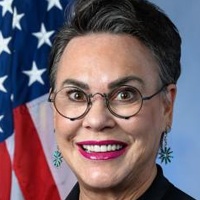
Harriet Hageman
Representative
WY
Harriet Hageman
Representative
WY
The First Amendment Accountability Act empowers individuals to sue federal executive branch employees for violating their First Amendment rights while acting under federal authority. This legislation allows victims to seek monetary damages and legal remedies, while explicitly excluding internal federal employment disputes from its scope. Additionally, it provides for the recovery of attorney’s fees for successful plaintiffs to ensure greater accountability for government actions.
The "WHO Withdrawal Act" withdraws the United States from the World Health Organization, prohibits funding to the WHO, and repeals the act that authorized U.S. participation.

Andy Biggs
Representative
AZ
Andy Biggs
Representative
AZ
The WHO Withdrawal Act withdraws the United States from the World Health Organization (WHO) upon enactment. It also prohibits any federal funds from being used to support the WHO or any successor organization. Finally, the act repeals the Act of June 14, 1948, which previously authorized U.S. participation and funding of the WHO.
The "Keep Your Coins Act of 2025" prevents federal agencies from restricting individuals from using virtual currency for personal transactions or from self-custody of their digital assets. This ensures individuals retain control over their convertible virtual currency for lawful transactions.
Warren Davidson
Representative
OH
Warren Davidson
Representative
OH
The Keep Your Coins Act of 2025 prevents federal agencies from restricting individuals using convertible virtual currency (digital currency) for personal transactions. It ensures individuals can use self-hosted wallets or other methods to maintain control over their digital assets for any lawful transaction. This protects the right of individuals to use digital currencies to purchase goods and services for personal use.