
Legislative Activity
Track Tom's sponsored bills, co-sponsored legislation, and voting record
This joint resolution disapproves the Fish and Wildlife Service rule that listed the San Francisco Bay-Delta population segment of the Longfin Smelt as endangered or threatened.
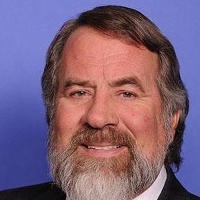
Doug LaMalfa
Representative
CA
Doug LaMalfa
Representative
CA
This joint resolution expresses the disapproval of Congress regarding a recent rule from the U.S. Fish and Wildlife Service. Specifically, it rejects the Service's decision to list the San Francisco Bay-Delta Distinct Population Segment of the Longfin Smelt as an endangered or threatened species. By disapproving the rule, Congress nullifies the listing status for this specific smelt population.
The Safeguard American Voter Eligibility (SAVE) Act mandates that individuals registering to vote in federal elections must present documentary proof of U.S. citizenship.

Chip Roy
Representative
TX
Chip Roy
Representative
TX
The Safeguard American Voter Eligibility Act (SAVE Act) significantly amends federal law to require individuals registering to vote in federal elections to present documentary proof of U.S. citizenship. This legislation mandates that states actively clean their voter rolls and cooperate with federal agencies to verify citizenship status. It establishes new criminal penalties for officials who fail to enforce these documentation requirements.
This Act redefines immediate relatives for immigration, caps family-sponsored visas, and creates a new, non-work, temporary visa for parents of adult U.S. citizens.
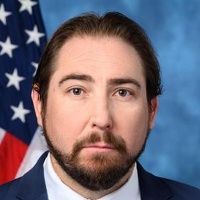
Eli Crane
Representative
AZ
Eli Crane
Representative
AZ
The Nuclear Family Priority Act significantly restructures U.S. family-based immigration by redefining "immediate relatives" to only include spouses and children of U.S. citizens, removing parents from that top category. It also establishes a new, temporary nonimmigrant visa for parents of adult U.S. citizens, which prohibits work and public benefits. Furthermore, the bill revises the annual cap for family-sponsored visas and makes numerous technical amendments across immigration law to align with these changes.
This bill establishes strict deadlines for states to count ballots and certify federal election results, with penalties for non-compliance unless specific emergency exceptions apply.
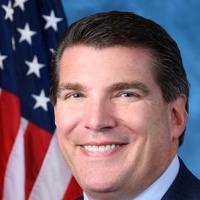
Jay Obernolte
Representative
CA
Jay Obernolte
Representative
CA
The Election Results Accountability Act establishes strict, new deadlines for states to count and officially certify the results of federal elections. States must release initial results within 72 hours and finalize certification within two weeks of poll closure. Penalties for missing these deadlines include the loss of federal election assistance funds, unless the delay is due to specific, agreed-upon emergencies or technical issues.
This bill completely repeals the Renewable Fuel Standard program established under the Clean Air Act and makes necessary conforming amendments to related laws.
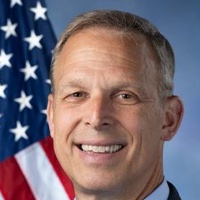
Scott Perry
Representative
PA
Scott Perry
Representative
PA
The Eliminating the RFS and Its Destructive Outcomes Act completely repeals the Renewable Fuel Standard (RFS) program established under Section 211(o) of the Clean Air Act. This legislation removes all references to the repealed standard throughout related environmental and petroleum marketing laws. In essence, the bill eliminates the federal renewable fuel mandate.
This act prohibits all federal funding for the National Public Radio (NPR) and the Public Broadcasting Service (PBS).
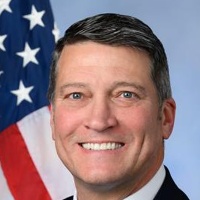
Ronny Jackson
Representative
TX
Ronny Jackson
Representative
TX
The No Partisan Radio and Partisan Broadcasting Services Act (NPR and PBS Act) prohibits all federal funding, direct or indirect, for the National Public Radio (NPR) and the Public Broadcasting Service (PBS). This measure immediately ends government financial support for these two national broadcasting entities. The restriction also applies to any successor organizations.
The SHORT Act redefines "firearm" to exclude certain collector's items, eliminates disparate federal treatment of short-barreled rifles and shotguns, preempts state and local registration/tax burdens on these items, and mandates the destruction of certain existing NFA records.
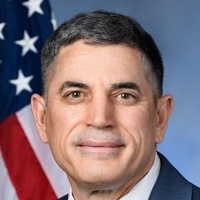
Andrew Clyde
Representative
GA
Andrew Clyde
Representative
GA
The SHORT Act aims to reform federal firearms regulations by redefining what constitutes a "firearm" for tax purposes, largely excluding antique or collector's items. It eliminates disparate federal treatment for short-barreled rifles and shotguns used lawfully and preempts state and local governments from imposing special taxes or registration requirements on these specific weapons. Furthermore, the bill mandates the destruction of certain existing federal registration and transfer records related to defined firearms.
This act eliminates the Optional Practical Training (OPT) program, ending work authorization for F-1 visa students unless explicitly authorized by future Congressional action.

Paul Gosar
Representative
AZ
Paul Gosar
Representative
AZ
The Fairness for High-Skilled Americans Act of 2025 aims to eliminate the Optional Practical Training (OPT) program, which currently allows F-1 student visa holders to gain temporary work authorization after completing their studies. This bill removes the government's authority to grant such work permission unless explicitly authorized by a future Act of Congress.
This bill establishes national reciprocity for concealed carry permits, allowing individuals legally permitted to carry in their home state to carry a handgun in any other state that allows concealed carry.
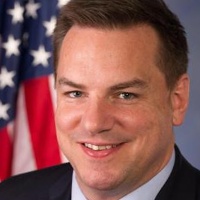
Richard Hudson
Representative
NC
Richard Hudson
Representative
NC
The Constitutional Concealed Carry Reciprocity Act of 2025 establishes a national standard for carrying concealed handguns across state lines. This act allows individuals legally permitted to carry in their home state to carry concealed in any other state that allows its residents to carry concealed firearms. The law does not override private property restrictions or prohibitions on government property, but it provides protections and legal recourse for those traveling in compliance with the new federal standard.
The Major Richard Star Act ensures that military retirees with combat-related disabilities can concurrently receive their full military retirement pay and VA disability compensation without reduction.

Gus Bilirakis
Representative
FL
Gus Bilirakis
Representative
FL
The Major Richard Star Act ensures that military retirees with combat-related disabilities can receive both their military retirement pay and VA disability compensation concurrently without reduction. This law removes previous restrictions that caused military retirement pay to be offset by VA disability payments for these specific cases. The changes take effect on the first day of the month following the Act's enactment.
The Fair and Open Competition Act of 2025 prohibits the federal government from requiring or penalizing bidders or contractors on federally funded construction projects based on their agreement or non-agreement with labor unions.
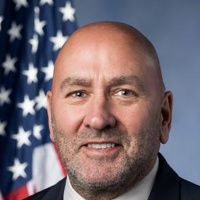
Clay Higgins
Representative
LA
Clay Higgins
Representative
LA
The Fair and Open Competition Act of 2025 ensures fair competition on federally funded construction projects by prohibiting the government from requiring or penalizing bidders based on union agreements. This legislation aims to keep federal agencies neutral in labor relations while promoting cost savings and opening opportunities for all businesses. Exceptions to this neutrality rule are strictly limited to specific public health, safety, or national security emergencies.
The FISH Act of 2025 shifts authority over anadromous and catadromous fish species from the Department of Commerce to the Department of the Interior.
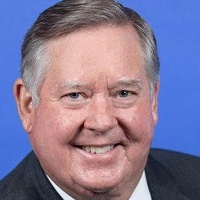
Ken Calvert
Representative
CA
Ken Calvert
Representative
CA
The FISH Act of 2025 transfers authority over anadromous and catadromous fish species from the Secretary of Commerce to the Secretary of the Interior. It redefines anadromous and catadromous species within the Endangered Species Act of 1973. The Act allows for reconsideration of certain past administrative decisions and addresses administrative and legal details related to the transfer, ensuring continuity in existing legal documents, proceedings, and lawsuits. It also defines key terms like "function" and "office" to clarify the scope and implementation of the transfer.
This resolution disapproves and nullifies the Internal Revenue Service’s rule regarding supervisory approval of penalties.
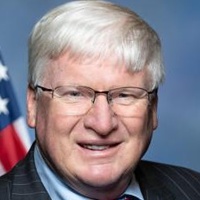
Glenn Grothman
Representative
WI
Glenn Grothman
Representative
WI
This joint resolution invokes the Congressional Review Act to formally disapprove and nullify the Internal Revenue Service’s rule regarding supervisory approval of penalties. By passing this measure, Congress declares the rule void and prevents it from having any legal force or effect.
The "Death Tax Repeal Act" eliminates estate and generation-skipping transfer taxes, adjusts gift tax calculations, and sets a $10,000,000 lifetime gift exemption.
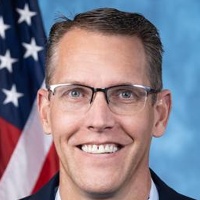
Randy Feenstra
Representative
IA
Randy Feenstra
Representative
IA
The "Death Tax Repeal Act" eliminates both estate and generation-skipping transfer taxes, effective from the date of enactment. It adjusts gift tax calculations by setting the lifetime gift exemption at $10,000,000, with inflation adjustments after 2011. The Act also includes transitional rules for applying certain sections of the Internal Revenue Code during the enactment year.
Prohibits federal funding for disinformation research grants and related programs.

Thomas Massie
Representative
KY
Thomas Massie
Representative
KY
This bill prohibits federal funds from being used for disinformation research grants. It also blocks funding for Secure and Trustworthy Cyberspace grants. Additionally, the bill defunds programs within the National Science Foundation's Track F: Trust and Authenticity in Communications Systems.
The SAFE for America Act of 2025 eliminates the diversity visa program, effective October 1, 2025.
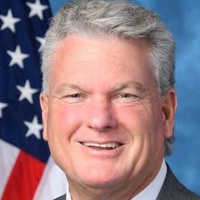
Mike Collins
Representative
GA
Mike Collins
Representative
GA
The SAFE for America Act of 2025 eliminates the Diversity Visa Program, which makes visas available to persons from countries with low rates of immigration to the United States. This is achieved through repealing subsection (c) of Section 203 of the Immigration and Nationality Act. The Act also makes corresponding technical amendments to other sections of the Immigration and Nationality Act to reflect this change. These changes would take effect beginning October 1, 2025.
The Safe Passage on Interstates Act of 2025 establishes federal criminal penalties for individuals who knowingly obstruct, interfere with, or endanger the normal flow of traffic on interstate highways.
Mike Collins
Representative
GA
Mike Collins
Representative
GA
The Safe Passage on Interstates Act of 2025 establishes federal criminal penalties for knowingly obstructing or interfering with the normal use of an interstate highway. The bill imposes significant fines and prison sentences for activities that delay traffic, endanger motorists, or impede emergency vehicles. Lawful activities authorized by government entities remain exempt from these prohibitions.
This bill requires the Congressional Budget Office and the Joint Committee on Taxation to include debt servicing costs in their official cost estimates for proposed legislation.
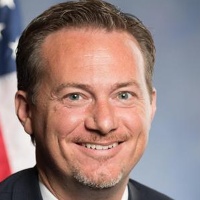
Michael Cloud
Representative
TX
Michael Cloud
Representative
TX
The Cost Estimates Improvement Act requires the Congressional Budget Office (CBO) and the Joint Committee on Taxation (JCT) to include the impact of debt servicing costs in their official legislative cost estimates. This legislation aims to provide a more comprehensive view of the long-term fiscal consequences of proposed federal spending and tax policies.
The American Music Fairness Act of 2025 mandates that terrestrial radio stations pay performance royalties for playing sound recordings while establishing a fair licensing framework that includes special protections for small broadcasters.
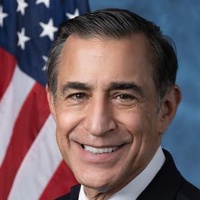
Darrell Issa
Representative
CA
Darrell Issa
Representative
CA
The American Music Fairness Act of 2025 updates copyright law to require terrestrial AM/FM radio stations to pay royalties for the music they broadcast, ensuring performers and record labels are compensated similarly to digital platforms. The bill establishes a new royalty framework while providing special, reduced rates for small and noncommercial broadcasters to protect their operations. Additionally, it includes safeguards to ensure these changes do not negatively impact songwriter royalties and mandates that the promotional value of radio airplay be considered during rate-setting proceedings.
The Born-Alive Abortion Survivors Protection Act requires health care practitioners to provide the same level of care to infants born alive after an abortion attempt as they would to any other newborn, mandating immediate hospitalization and imposing penalties for violations, while protecting the mother from prosecution. It also allows the mother of a child born alive to file a civil action against anyone who violated the act.
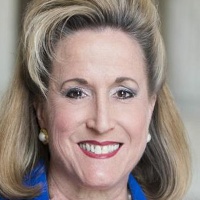
Ann Wagner
Representative
MO
Ann Wagner
Representative
MO
The "Born-Alive Abortion Survivors Protection Act" ensures that infants born alive after an abortion receive the same medical care as any other newborn, mandating immediate hospitalization and requiring healthcare practitioners to report any failures to comply. Violators face fines, imprisonment, and potential prosecution for homicide or attempted homicide, while the mother of the child cannot be prosecuted. The bill also allows the woman who had the abortion to file a civil action against anyone who violated the act. It defines abortion and attempts at abortion, and renames "Partial-Birth Abortions" to "Abortions" in relevant sections of the U.S. Code.