
Legislative Activity
Track Jeff's sponsored bills, co-sponsored legislation, and voting record
This Act ensures continuous funding for all Head Start programs through fiscal year 2026 until regular appropriations are enacted or September 30, 2026, whichever comes first.

Tammy Baldwin
Senator
WI
Tammy Baldwin
Senator
WI
The Keep Head Start Funded Act of 2025 ensures the uninterrupted continuation of all Head Start projects and activities throughout fiscal year 2026, even if full appropriations are delayed. This legislation provides necessary continuing funding based on the terms of existing 2025 continuing resolutions. Funding authority under this Act will terminate upon the enactment of regular 2026 appropriations or by September 30, 2026.
This bill, the Restoring Access for Detainees Act, mandates the provision of free telephone, email, and video communication services for individuals in ICE custody to ensure access to legal counsel and family contact.

Christopher Murphy
Senator
CT
Christopher Murphy
Senator
CT
This bill, the Restoring Access for Detainees Act, mandates that U.S. Immigration and Customs Enforcement (ICE) provide detained individuals with free, limited telephone and electronic communication services. It aims to ensure detainees can consult with legal counsel and maintain essential family ties at no cost. The legislation specifies minimum free calling minutes, required access for legal consultation, and prohibits monitoring of confidential communications with attorneys.
This Act allows certain retail food stores to offer incentives to SNAP participants during periods when benefit payments are interrupted or reduced due to expired appropriations.
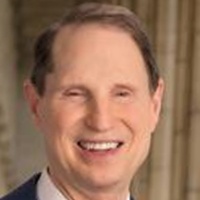
Ron Wyden
Senator
OR
Ron Wyden
Senator
OR
The Emergency Relief for Hungry Families Act of 2025 temporarily exempts certain retail food stores from standard equal treatment requirements during specific budget shortfalls. This allows stores to offer incentives to Supplemental Nutrition Assistance Program (SNAP) participants when benefits are delayed or reduced. These temporary incentives will not be considered violations of existing federal regulations.
This bill provides continuing appropriations for the pay and allowances of Armed Forces members and certain intelligence community civilian employees for Fiscal Year 2026 if regular appropriations are not enacted.
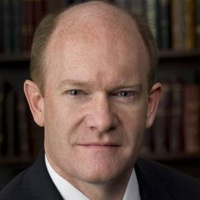
Christopher Coons
Senator
DE
Christopher Coons
Senator
DE
The Armed Forces Pay Act of 2025 ensures continued funding for the pay and allowances of members of the Armed Forces and certain civilian intelligence employees through fiscal year 2026, should full appropriations bills not be enacted. This temporary measure provides necessary financial continuity until regular appropriations legislation is passed or until September 30, 2026. The Act also authorizes intelligence-related funds for FY 2026 until the relevant Intelligence Authorization Act is signed into law.
This bill suspends federal student loan payments, stops interest accrual, and counts payments toward forgiveness for federal employees affected by a government shutdown lasting at least 14 days.

Angela Alsobrooks
Senator
MD
Angela Alsobrooks
Senator
MD
The Shutdown Student Loans for Feds Act provides relief for federal employees and certain contractors affected by government shutdowns lasting 14 days or more, starting in fiscal year 2026. During these lapses in appropriations, federal student loan payments must be suspended, and no interest will accrue on those loans. Furthermore, suspended payment periods will count toward loan forgiveness requirements and be reported positively to credit agencies.
This bill ensures uninterrupted funding for SNAP and WIC benefits through fiscal year 2026, covering any missed payments during a funding lapse.
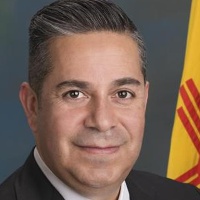
Ben Luján
Senator
NM
Ben Luján
Senator
NM
The Keep SNAP and WIC Funded Act of 2025 ensures that essential nutrition programs, including SNAP and WIC, continue to provide benefits without interruption if full appropriations for the Department of Agriculture are not enacted for Fiscal Year 2026. This legislation immediately makes funds available to cover benefits and state operating costs during any funding lapse, retroactive to September 30, 2025. These special appropriations terminate once the standard FY 2026 funding bill is passed or by September 30, 2026.
This resolution commemorates the seventh anniversary of Jamal Khashoggi's murder while calling on Saudi Arabia to hold those responsible accountable and cease its transnational repression against dissidents.
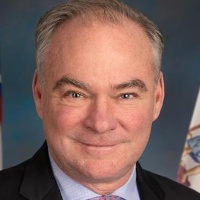
Timothy Kaine
Senator
VA
Timothy Kaine
Senator
VA
This resolution commemorates the seventh anniversary of Jamal Khashoggi's murder and addresses ongoing transnational repression by the Government of Saudi Arabia. It calls for accountability for those responsible for Khashoggi's death and urges Saudi Arabia to release all wrongfully detained individuals. Furthermore, the resolution emphasizes that these human rights abuses strain the strategic relationship between the U.S. and Saudi Arabia.
This bill appropriates funds to ensure military and federal employees and contractors receive full compensation for work performed or time furloughed during a lapse in government appropriations between October 1, 2025, and the date of enactment.
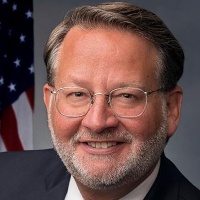
Gary Peters
Senator
MI
Gary Peters
Senator
MI
The Military and Federal Employee Protection Act ensures that federal employees, military members, and covered contractors receive their full standard compensation for work performed or time furloughed during a lapse in government appropriations occurring after September 30, 2025. This bill appropriates necessary funds for agencies to make these retroactive payments. Payments must be made promptly, generally within seven days of enactment for furloughed individuals. This legislation guarantees that no covered individual loses pay due to a government shutdown during the specified period.
This resolution condemns President Trump's pardon of Binance founder Changpeng Zhao for violating anti-money laundering laws and calls on Congress to prevent such corruption.
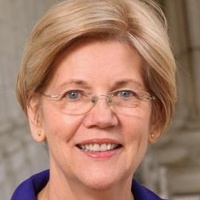
Elizabeth Warren
Senator
MA
Elizabeth Warren
Senator
MA
This resolution formally condemns President Trump's pardon of Binance founder Changpeng Zhao, who previously pleaded guilty to violating U.S. anti-money laundering laws. The measure expresses strong disapproval of the pardon, citing potential conflicts of interest related to the Trump family's financial dealings with Binance. Finally, it calls upon Congress to utilize its authority to prevent similar acts of corruption in the pardon process moving forward.
The TREATS Act allows a single telehealth evaluation to satisfy the in-person requirement for prescribing certain Schedule III, IV, or V controlled substances approved for substance use disorder treatment.

Lisa Murkowski
Senator
AK
Lisa Murkowski
Senator
AK
The TREATS Act modifies existing law to expand access to medication-assisted treatment for substance use disorders. Specifically, it allows a single telehealth evaluation to satisfy the prior in-person evaluation requirement for prescribing certain Schedule III, IV, or V controlled substances approved for addiction treatment. This change aims to improve the delivery of necessary therapy services via remote care.
This Act ensures back pay for federal employees, contractors, and service members affected by a government shutdown beginning October 1, 2025, and prohibits agency staffing reductions during such lapses.

Chris Van Hollen
Senator
MD
Chris Van Hollen
Senator
MD
The True Shutdown Fairness Act ensures that federal employees, contractors, and service members affected by a government funding lapse starting October 1, 2025, receive retroactive back pay for the period they worked without funding. Additionally, the bill prohibits agencies from initiating permanent staffing reductions or furloughs during such a lapse. These provisions are designed to provide financial security and stability to essential government personnel during periods of lapsed appropriations.
This bill establishes a PRC Sanctions Task Force to prepare for and coordinate immediate sanctions against entities supporting PRC aggression or actions against Taiwan.

James Risch
Senator
ID
James Risch
Senator
ID
This Act mandates the immediate preparation for sanctions against any entity supporting People's Republic of China (PRC) aggression against Taiwan, including actions like invasion or blockade. It establishes an interagency PRC Sanctions Task Force to identify potential targets and develop comprehensive strategies for imposing and coordinating economic measures with allies. The Task Force must also brief Congress and submit annual reports detailing sanctions plans, economic impact assessments, and coordination efforts.
This resolution extends the enforcement of specific budgetary points of order in the Senate until September 30, 2027.
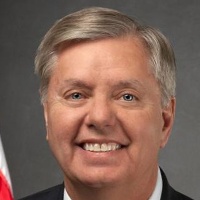
Lindsey Graham
Senator
SC
Lindsey Graham
Senator
SC
This resolution extends the enforcement of specific budgetary points of order within the Senate. It ensures that key enforcement mechanisms under the Congressional Budget Act of 1974 remain fully active through September 30, 2027. Essentially, this keeps certain Senate budget rules in place for a longer period.
This joint resolution directs the President to immediately remove U.S. Armed Forces from hostilities within or against Venezuela unless explicitly authorized by Congress.
Timothy Kaine
Senator
VA
Timothy Kaine
Senator
VA
This joint resolution directs the President to immediately remove United States Armed Forces from any hostilities within or against Venezuela that lack explicit authorization from Congress. It asserts that only Congress has the constitutional authority to declare war or approve such military actions. The bill ensures that U.S. forces can only remain if acting in self-defense against an armed attack.
This resolution designates the week beginning October 12, 2025, as National Wildlife Refuge Week to recognize the critical conservation, economic, and recreational value of the National Wildlife Refuge System.
Christopher Coons
Senator
DE
Christopher Coons
Senator
DE
This resolution officially designates the week beginning October 12, 2025, as "National Wildlife Refuge Week." It recognizes the critical role of the National Wildlife Refuge System in conserving over 850 million acres of vital habitat for threatened and endangered species. The resolution also highlights the refuges' significant contributions to local economies, public recreation, and community access to nature. Ultimately, it reaffirms Congress's commitment to supporting the conservation mission of the U.S. Fish and Wildlife Service.
This resolution expresses the Senate's support for designating the second Monday in October 2025 as Indigenous Peoples' Day to honor the history, culture, and contributions of Indigenous Peoples.
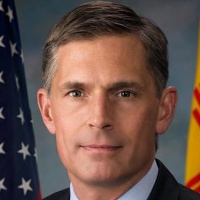
Martin Heinrich
Senator
NM
Martin Heinrich
Senator
NM
This resolution expresses the Senate's support for designating the second Monday in October 2025 as "Indigenous Peoples' Day." It formally recognizes the invaluable contributions of Indigenous Peoples to the United States and encourages public observance to celebrate their history and culture. The measure also voices support for establishing this day as an official Federal holiday.
This act directs federal financial regulators to issue guidance encouraging financial institutions to offer flexible relief to consumers and businesses impacted by a government shutdown.
Chris Van Hollen
Senator
MD
Chris Van Hollen
Senator
MD
The Shutdown Guidance for Financial Institutions Act requires federal financial regulators to issue guidance encouraging banks and lenders to support consumers and businesses impacted by a government shutdown. This guidance must promote flexible loan modifications and prevent negative credit reporting for those experiencing lost income. Furthermore, regulators must quickly inform the public when a shutdown occurs and report on the effectiveness of the guidance afterward.
The Voter Purge Protection Act establishes strict federal standards for removing registered voters, prohibits purging based solely on moving within a state, and allows voters to update their address on Election Day.
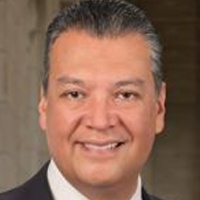
Alejandro Padilla
Senator
CA
Alejandro Padilla
Senator
CA
The Voter Purge Protection Act aims to safeguard voter registration by preventing states from removing individuals from voter rolls solely because they moved within the state. This legislation establishes strict standards for voter list maintenance, requiring objective proof before removal and allowing registered voters to update their address up to Election Day. Furthermore, it ensures that voters who move within a state can easily cast their ballot by updating their address at the polls.
This resolution expresses Congress's strong opposition to the growing trend of book banning and threats to freedom of expression in the United States.
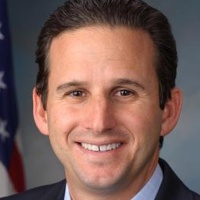
Brian Schatz
Senator
HI
Brian Schatz
Senator
HI
This resolution expresses deep concern over the rising trend of book banning and threats to freedom of expression across the United States. It strongly opposes censorship in schools and libraries, citing constitutional rights and the harm done to democratic discourse. The measure urges local entities to protect students' access to diverse viewpoints and calls for the reversal of restrictive orders impacting educational materials.
This Act temporarily halts certain legal and administrative actions that could harm the civil rights of federal employees and contractors during a government shutdown.
Brian Schatz
Senator
HI
Brian Schatz
Senator
HI
The Federal Employees Civil Relief Act temporarily halts certain legal and administrative actions that could negatively affect the civil rights of federal employees and contractors during a government shutdown. This protection includes pausing evictions, foreclosures, lien enforcement, and providing relief for student loan and income tax obligations. The law also ensures that seeking these protections will not negatively impact an employee's credit or future financial standing.