Legislative Activity
Track Tracey's sponsored bills, co-sponsored legislation, and voting record
The "Accelerating Kids’ Access to Care Act of 2025" streamlines Medicaid and CHIP enrollment for out-of-state providers, increasing healthcare access for children.
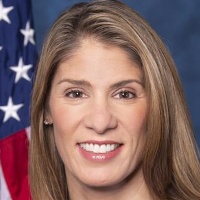
Lori Trahan
Representative
MA
Lori Trahan
Representative
MA
The "Accelerating Kids Access to Care Act of 2025" streamlines the enrollment process for out-of-state healthcare providers in Medicaid and CHIP, ensuring children under 21 have access to care from eligible providers across state lines. By reducing administrative burdens and unnecessary screening requirements, the Act aims to improve healthcare access for children while maintaining necessary safeguards against fraud and abuse. Participating providers will be enrolled for a 5-year period, and the changes will take effect three years after the Act's enactment.
This bill expands and codifies the Department of Agriculture's Rural Health Care Facility Technical Assistance Program to improve the financial stability and healthcare delivery in rural facilities.
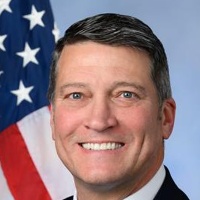
Ronny Jackson
Representative
TX
Ronny Jackson
Representative
TX
The Rural Health Care Facility Technical Assistance Program Act expands and codifies a Department of Agriculture program to provide technical assistance and training to rural health care facilities. This program aims to improve financial stability, prevent closures, and strengthen health care delivery in rural areas. The Act authorizes up to $2,000,000 annually from 2026-2030 for these activities and requires annual reports to Congress. It prioritizes outreach to facilities at risk and those serving underserved populations.
The "Collision Avoidance Systems Act of 2025" mandates the Department of Transportation to update safety standards to allow and set performance standards for pulsating brake lights on vehicles to help prevent rear-end collisions.
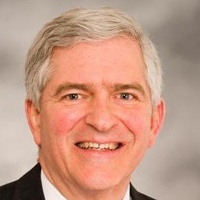
Daniel Webster
Representative
FL
Daniel Webster
Representative
FL
The "Collision Avoidance Systems Act of 2025" permits and sets performance standards for pulsating light systems on vehicles to help prevent rear-end collisions. It mandates the Secretary of Transportation to update Federal Motor Vehicle Safety Standard Number 108 within 180 days to include these systems. The bill defines a pulsating light system as a high-mounted stop lamp that pulses rapidly up to 4 times within 1.2 seconds upon braking before converting to a continuous light.
This bill prohibits the Secretary of Health and Human Services from enforcing the CMS minimum staffing standards for nursing homes published on May 10, 2024.
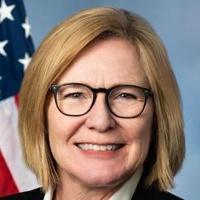
Michelle Fischbach
Representative
MN
Michelle Fischbach
Representative
MN
The Protecting America’s Seniors’ Access to Care Act prohibits the Secretary of Health and Human Services from implementing the minimum staffing level rules for nursing homes that were published by CMS on May 10, 2024. This legislation effectively blocks the enforcement of those specific staffing mandates.
The "Death Tax Repeal Act" eliminates estate and generation-skipping transfer taxes, adjusts gift tax calculations, and sets a $10,000,000 lifetime gift exemption.
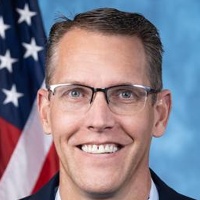
Randy Feenstra
Representative
IA
Randy Feenstra
Representative
IA
The "Death Tax Repeal Act" eliminates both estate and generation-skipping transfer taxes, effective from the date of enactment. It adjusts gift tax calculations by setting the lifetime gift exemption at $10,000,000, with inflation adjustments after 2011. The Act also includes transitional rules for applying certain sections of the Internal Revenue Code during the enactment year.
Prohibits securities exchanges from processing transactions involving securities issued by "natural asset companies" that manage land for conservation and ecological performance.
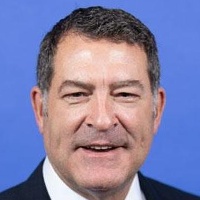
Mark Green
Representative
TN
Mark Green
Representative
TN
The "Protect America's Lands Act" prevents national securities exchanges from handling transactions of securities issued by "natural asset companies." These companies manage land for conservation and aim to enhance the value of natural assets and ecosystem services. The bill defines specific criteria for what constitutes a "natural asset company" to ensure the prohibition is appropriately applied.
The "One Flag for All Act" would generally require only the U.S. flag to be displayed on the exterior and in public areas of federal buildings, with specific exceptions for POW/MIA flags, flags of visiting dignitaries, state flags of members of congress, armed forces flags, flags of historical significance, public safety flags, flags commemorating national observances, flags representing religious organizations during religious events at military facilities, flags representing a Federal agency, flags representing an Indian Tribe, and flags representing the State, territory, county, city, or local jurisdiction where the public building is located.
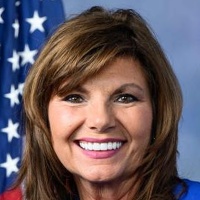
Diana Harshbarger
Representative
TN
Diana Harshbarger
Representative
TN
The "One Flag for All Act" generally prohibits the display of flags other than the U.S. flag on the exterior or in public areas of covered federal buildings. There are explicit exceptions for flags such as POW/MIA flags, state flags displayed at a Member of Congress's office, flags representing the Armed Forces, flags of historical significance, and flags representing local jurisdictions where the building is located. The bill defines "covered public buildings" broadly, including federal buildings, Senate and House buildings, military installations, and U.S. embassies and consulates.
The "More Homes on the Market Act" increases the tax exclusion for profit from the sale of a primary residence, incentivizing homeowners to sell and increasing housing supply.
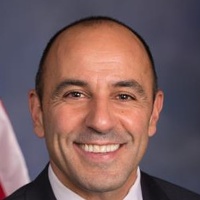
Jimmy Panetta
Representative
CA
Jimmy Panetta
Representative
CA
The "More Homes on the Market Act" increases the tax exclusion for profit from the sale of a primary residence, raising it to $500,000 for single filers and $1,000,000 for married couples filing jointly. These amounts will be adjusted for inflation starting in 2025. This change encourages homeowners to sell their properties, thereby increasing the availability of homes on the market.
This resolution expresses Congressional opposition to imposing new performance fees or royalties on local radio stations and businesses for broadcasting or playing music.
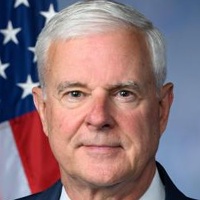
Steve Womack
Representative
AR
Steve Womack
Representative
AR
The Local Radio Freedom Act expresses Congressional opposition to imposing new performance fees, taxes, or royalties on local radio stations and businesses for playing music. It argues that the current system of free airplay provides essential promotional value to artists and that new fees would threaten the financial viability of local broadcasters and the vital community services they provide.
This bill mandates payment and performance security for construction projects receiving federal water infrastructure funding, ensuring subcontractors are paid and projects are completed.
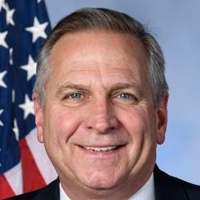
Mike Bost
Representative
IL
Mike Bost
Representative
IL
The Water Infrastructure Subcontractor and Taxpayer Protection Act of 2025 amends the Water Infrastructure Finance and Innovation Act of 2014 to ensure payment and performance security for construction projects receiving federal assistance. It allows the Secretary of Transportation or the Administrator to consider state or local laws mandating payment and performance security as fulfilling this requirement if they cover at least 50% of the construction contract. If state or local laws don't apply or meet the 50% threshold, adherence to federal bond requirements under 40 U.S.C. 3131(b)(1) and (2) is required.
The "Alternatives to PAIN Act" aims to improve Medicare Part D coverage for non-opioid pain management drugs by reducing cost-sharing and removing barriers like step therapy and prior authorization, starting in 2026.
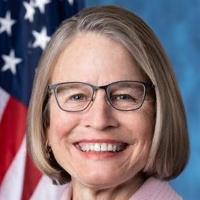
Mariannette Miller-Meeks
Representative
IA
Mariannette Miller-Meeks
Representative
IA
The "Alternatives to PAIN Act" amends Medicare Part D to improve access to non-opioid pain management drugs by waiving deductibles and ensuring they are placed on the lowest cost-sharing tier starting in 2026. The Act also prohibits the use of step therapy and prior authorization requirements for these drugs, further easing access for patients. These changes aim to provide more accessible alternatives for pain management, reducing reliance on opioids.
The "Fair SHARE Act of 2025" introduces a tax on the sale of electric vehicles and heavy battery modules to support the Highway Trust Fund.
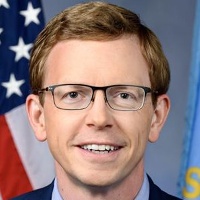
Dusty Johnson
Representative
SD
Dusty Johnson
Representative
SD
The "Fair SHARE Act of 2025" introduces a tax on the sale of electric vehicles and heavy battery modules to support the Highway Trust Fund. It taxes $1,000 on each electric vehicle and $550 on heavy battery modules (over 1,000 pounds). This act defines electric vehicles and light-duty vehicles, ensuring hybrid vehicles are excluded. The tax revenue will be dedicated to the Highway Trust Fund, with changes effective for sales after December 31, 2025.
This Act allows schools participating in the National School Lunch Program to offer organic or non-organic whole milk alongside other options, while clarifying saturated fat accounting and restricting milk sourcing from China state-owned enterprises.
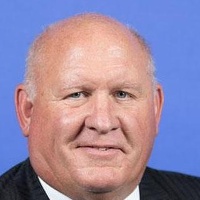
Glenn Thompson
Representative
PA
Glenn Thompson
Representative
PA
The Whole Milk for Healthy Kids Act of 2025 expands milk options available to students in the National School Lunch Program by allowing schools to offer organic or non-organic whole milk. This legislation provides greater flexibility for schools in providing fluid milk choices while maintaining accommodations for students with special dietary needs. Importantly, the saturated fat content of these offered milk options will not count toward the meal's overall saturated fat limits.
The "National Right-to-Work Act" prohibits mandatory union membership as a condition of employment, protecting employees' rights to choose whether or not to join or support a labor union.
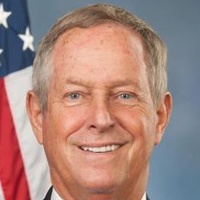
Joe Wilson
Representative
SC
Joe Wilson
Representative
SC
The "National Right-to-Work Act" amends both the National Labor Relations Act and the Railway Labor Act to protect an employee's right to choose whether or not to join or support a labor union. It eliminates the possibility of mandatory union membership or dues payments as a condition of employment, ensuring that employees cannot be forced to join or support a union against their will.
The Investing in Rural America Act of 2025 expands Farm Credit System institutions' ability to finance essential community facilities in rural areas, fostering partnerships with local lenders and increasing transparency through public reporting.
Michelle Fischbach
Representative
MN
Michelle Fischbach
Representative
MN
The Investing in Rural America Act of 2025 amends the Farm Credit Act of 1971, enabling Farm Credit System institutions to finance essential community facilities in rural areas, with a limit of 15% of their total outstanding loans. These institutions must offer participation in financing to other domestic lenders, especially community banks, and report these offers to the Farm Credit Administration. The Farm Credit Administration will then provide an annual report to Congress on these activities. This amendment aims to support rural development by leveraging the resources of the Farm Credit System.
The Freight RAILCAR Act of 2025 incentivizes freight railcar modernization by establishing a tax credit for qualified newly built replacement railcars and qualified railcar modernization expenditures.
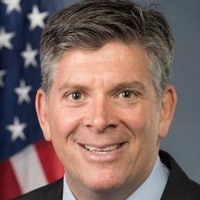
Darin LaHood
Representative
IL
Darin LaHood
Representative
IL
The "Freight RAILCAR Act of 2025" introduces a tax credit for modernizing freight railcars, encouraging investments in newer, more efficient railcars. Taxpayers can claim a credit equal to 10% of their freight railcar fleet modernization expenses, with a limit of 1,000 qualified freight railcars per year. The credit applies to railcars that increase capacity, improve fuel efficiency, or meet updated performance standards, and is available for three years after the Act's enactment. The Secretary of the Treasury is required to submit a report to Congress detailing the credit's usage and impact on railcar modernization and scrapping.
The "Improve and Enhance the Work Opportunity Tax Credit Act" modifies the Work Opportunity Tax Credit by adjusting wage limitations, removing age restrictions for certain beneficiaries, and revising credit calculations to incentivize employment.
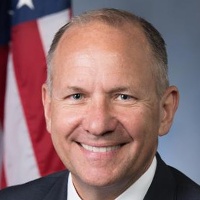
Lloyd Smucker
Representative
PA
Lloyd Smucker
Representative
PA
The "Improve and Enhance the Work Opportunity Tax Credit Act" amends the Internal Revenue Code to modify the Work Opportunity Tax Credit, changing the calculation and wage limitations based on employee categories and hours worked. It increases wage limitations for qualified veterans and revises rules for summer youth employees and long-term family assistance recipients. Additionally, the act removes the age limit for qualified supplemental nutrition assistance program benefits recipients, with these changes taking effect for individuals starting work after December 31, 2024.
The "Freedom to Invest in Tomorrow's Workforce Act" expands the use of 529 savings accounts to cover expenses related to postsecondary credentialing programs, including tuition, fees, books, supplies, equipment, and testing fees.
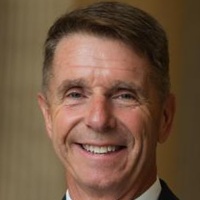
Robert Wittman
Representative
VA
Robert Wittman
Representative
VA
The "Freedom to Invest in Tomorrow's Workforce Act" amends Section 529 savings accounts to include expenses related to postsecondary credentialing programs. This allows 529 funds to cover costs like tuition, fees, books, supplies, and testing fees for recognized programs and credentials, as defined by the bill. These changes would apply to distributions made after the bill is enacted.
The Marc Fischer Memorial Act mandates the implementation of a comprehensive digital mail scanning strategy across all federal prisons to detect and interdict synthetic drugs like fentanyl.
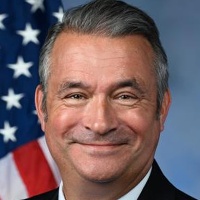
Don Bacon
Representative
NE
Don Bacon
Representative
NE
The Marc Fischer Memorial Act mandates that the Bureau of Prisons implement a comprehensive strategy to achieve 100% digital scanning of all inmate mail to interdict fentanyl and other synthetic drugs. By transitioning to digital mail processing, the Act aims to protect staff and inmates from lethal exposure, improve institutional security, and alleviate the administrative burden on correctional personnel.
This resolution expresses the sense of Congress that the United States should formally recognize Taiwan as an independent nation, establish full diplomatic relations, negotiate a free trade agreement, and support its membership in international organizations.
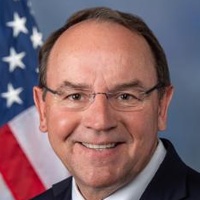
Thomas Tiffany
Representative
WI
Thomas Tiffany
Representative
WI
This resolution expresses the sense of Congress that the United States should formally recognize Taiwan as an independent, sovereign nation and abandon the obsolete "One China Policy." It calls for the normalization of diplomatic relations, the negotiation of a bilateral free trade agreement, and active U.S. support for Taiwan’s membership in international organizations.