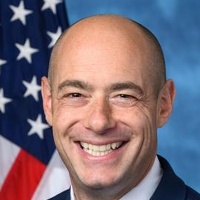
Legislative Activity
Track Greg's sponsored bills, co-sponsored legislation, and voting record
The Food Deserts Act establishes a federal grant program to help states provide low-interest loans for opening and operating grocery stores in underserved communities.

André Carson
Representative
IN
André Carson
Representative
IN
The Food Deserts Act establishes a federal grant program to help states create revolving loan funds for grocery stores in underserved communities. These funds provide affordable financing to support the opening and operation of stores that prioritize healthy, affordable food. By incentivizing local hiring and community-focused business practices, the Act aims to increase access to nutritious food in areas that need it most.
The Chiropractic Medicare Coverage Modernization Act of 2025 expands Medicare coverage to include all services provided by doctors of chiropractic that are within the scope of their state licensure.
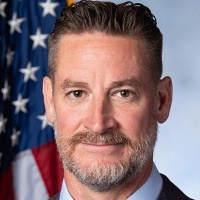
W. Steube
Representative
FL
W. Steube
Representative
FL
The Chiropractic Medicare Coverage Modernization Act of 2025 expands Medicare coverage to include all services legally authorized under a chiropractor’s state license, moving beyond the current restriction limited to manual spinal manipulation. This legislation aligns Medicare benefits with private insurance and other federal health programs to better reflect modern chiropractic practice. To provide these expanded services, chiropractors will be required to complete a one-time training program verified by the Secretary of Health and Human Services.
This bill authorizes the presentation of a Congressional Gold Medal to Muhammad Ali in recognition of his extraordinary athletic achievements and humanitarian contributions to the United States.
André Carson
Representative
IN
André Carson
Representative
IN
The Muhammad Ali Congressional Gold Medal Act authorizes the presentation of a Congressional Gold Medal to Muhammad Ali in recognition of his extraordinary athletic achievements and lifelong humanitarian contributions. The bill directs the Secretary of the Treasury to design and strike the medal for presentation to his wife, Lonnie Ali, and authorizes the production and sale of bronze duplicates.
This bill recognizes the 96th anniversary of Dr. Martin Luther King, Jr.'s birth, celebrates diversity and tolerance, and condemns hate and discrimination against minority groups and individuals. It calls on everyone to uphold Dr. King's values of justice, equality, and peace.

Shontel Brown
Representative
OH
Shontel Brown
Representative
OH
This bill recognizes the 96th anniversary of Dr. Martin Luther King, Jr.'s birth and reaffirms his teachings on diversity, tolerance, and civil rights. It condemns hate, discrimination, and prejudice against minority groups and individuals based on gender or sexual orientation. The bill honors Dr. King's legacy and calls for upholding his values of justice, equality, and peace.
The Combating Cartels on Social Media Act of 2025 directs federal agencies to assess and develop a national strategy to counter the use of social media and digital platforms by transnational criminal organizations for illicit recruitment and operations.
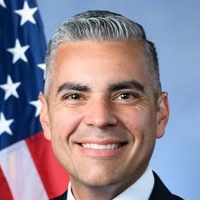
Juan Ciscomani
Representative
AZ
Juan Ciscomani
Representative
AZ
The Combating Cartels on Social Media Act of 2025 directs federal agencies to assess and counter the use of social media and digital platforms by transnational criminal organizations for illicit recruitment and operations. The bill mandates the development of a comprehensive national strategy to improve interagency coordination, enhance intelligence analysis, and foster community outreach. This initiative aims to disrupt criminal activities—such as human and narcotics trafficking—while ensuring the protection of civil rights, privacy, and civil liberties.
The Saving the Civil Service Act protects the merit-based federal workforce by restricting the ability of agencies to reclassify competitive service positions into the excepted service.

Gerald Connolly
Representative
VA
Gerald Connolly
Representative
VA
The Saving the Civil Service Act protects the merit-based federal workforce by restricting the ability of agencies to reclassify competitive service positions into the excepted service. The bill establishes strict oversight, limits the number of positions that can be transferred, and mandates employee consent for such reclassifications. These measures ensure that federal staffing remains professional and protected from arbitrary political interference.
This bill prohibits the Department of Education from using appropriated funds to reorganize, decentralize, or reduce its current staffing and operational structure.

Jahana Hayes
Representative
CT
Jahana Hayes
Representative
CT
The Department of Education Protection Act prohibits the Department of Education from using federal funds to reorganize, decentralize, or reduce its staffing and operations. This legislation mandates that the Department must maintain the structure, authority, and functions that were in place as of January 1, 2025.
This bill amends the International Emergency Economic Powers Act to prohibit the President from using emergency authorities to impose import duties or quotas.

Suzan DelBene
Representative
WA
Suzan DelBene
Representative
WA
The Prevent Tariff Abuse Act amends the International Emergency Economic Powers Act to restrict the President's authority to impose import duties or quotas. This bill clarifies that emergency economic powers do not include the ability to levy trade restrictions on goods entering the United States.
The TRUST in Congress Act requires Members of Congress, their spouses, and their dependent children to place certain investment assets into qualified blind trusts to prevent conflicts of interest.
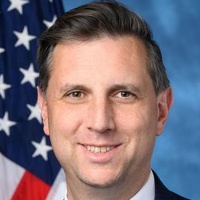
Seth Magaziner
Representative
RI
Seth Magaziner
Representative
RI
The TRUST in Congress Act requires Members of Congress, their spouses, and their dependent children to place covered financial investments into qualified blind trusts to prevent conflicts of interest. The bill establishes strict deadlines for asset transfers and mandates public certification of compliance. These measures ensure that lawmakers cannot influence or benefit from their personal investments while serving in office.
This bill establishes a federal grant program and dedicated emergency funds to support the rescue, rehabilitation, and rapid response efforts for stranded sea turtles.
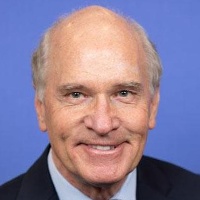
William Keating
Representative
MA
William Keating
Representative
MA
The Sea Turtle Rescue Assistance and Rehabilitation Act of 2025 establishes a dedicated grant program and emergency fund to support the rescue and rehabilitation of stranded sea turtles. By amending the Marine Mammal Protection Act, this legislation provides critical resources and standardized support for organizations dedicated to sea turtle conservation. The act ensures that both marine mammals and sea turtles have the necessary financial backing to respond effectively to stranding events.
Goldie’s Act strengthens the Animal Welfare Act by mandating more frequent USDA inspections, requiring the prompt confiscation of suffering animals, and increasing financial penalties for violators.
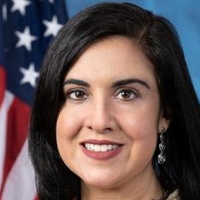
Nicole Malliotakis
Representative
NY
Nicole Malliotakis
Representative
NY
Goldie’s Act strengthens the Animal Welfare Act by mandating more rigorous USDA inspections and requiring the prompt confiscation of animals suffering from neglect. The bill increases financial penalties for violators, ensures the immediate sharing of violation records with local law enforcement, and establishes stricter oversight to prevent future animal abuse.
This bill prohibits Members of Congress, their spouses, and their dependents from owning or trading individual stocks and other financial assets to prevent conflicts of interest.

Brian Fitzpatrick
Representative
PA
Brian Fitzpatrick
Representative
PA
The Bipartisan Restoring Faith in Government Act prohibits Members of Congress, their spouses, and their dependents from owning or trading individual stocks, commodities, and other specified financial instruments. To comply, covered individuals must divest these assets or place them into a qualified blind trust. The bill establishes strict oversight, reporting requirements, and civil penalties for non-compliance to prevent conflicts of interest.
The Health Care Affordability Act of 2025 expands access to premium tax credits by removing income eligibility caps and implementing a new sliding-scale contribution formula.

Lauren Underwood
Representative
IL
Lauren Underwood
Representative
IL
The Health Care Affordability Act of 2025 expands access to health insurance by removing the 400% federal poverty level income cap for premium tax credits. It also introduces a new sliding-scale contribution formula to ensure that insurance costs remain affordable for households across all income levels. These changes are set to take effect for taxable years beginning after December 31, 2025.
Allows Members of the House of Representatives, Delegates, and the Resident Commissioner to designate a proxy to vote on their behalf in the House, in committee, and in the Committee of the Whole for a period of 12 weeks following the birth of a child or in the event of a pregnancy-related serious medical condition.

Brittany Pettersen
Representative
CO
Brittany Pettersen
Representative
CO
The "Proxy Voting for New Parents Resolution" allows Members of the House, Delegates, and the Resident Commissioner who have recently given birth or whose spouse has given birth to designate another Member to vote on their behalf in the House, in committee, and in the Committee of the Whole for a period of 12 weeks. This proxy voting authority can begin before the birth if a doctor advises that the pregnancy presents a serious medical condition or that she is unable to travel safely. The resolution outlines specific procedures for designating, changing, and revoking proxy designations, ensuring transparency and adherence to instructions. Members whose votes are cast by proxy will not be counted for quorum purposes.
The Veterans Infertility Treatment Act of 2025 mandates that the VA provide comprehensive infertility treatments and fertility preservation services to enrolled veterans and their chosen partners.
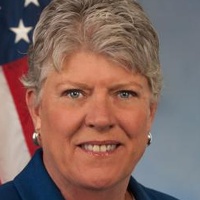
Julia Brownley
Representative
CA
Julia Brownley
Representative
CA
The Veterans Infertility Treatment Act of 2025 mandates that the VA provide comprehensive infertility treatments and fertility preservation services to enrolled veterans and their chosen partners. This legislation expands access to assisted reproductive technology, including IVF and gamete storage, regardless of marital status. It also provides coverage for partner travel expenses and establishes clear guidelines for consent and implementation.
This bill mandates a comprehensive GAO study and report on the quality and accessibility of menopause care within the VA, requiring the Department to develop a strategic plan to implement necessary improvements.
Julia Brownley
Representative
CA
Julia Brownley
Representative
CA
The Improving Menopause Care for Veterans Act of 2025 mandates a comprehensive GAO study to evaluate the quality, accessibility, and effectiveness of menopause-related care provided by the Department of Veterans Affairs. Following this assessment, the VA is required to develop a strategic plan to implement improvements and address gaps in care. This legislation aims to ensure veterans receive high-quality, informed support throughout all stages of menopause.
This bill proposes a constitutional amendment to limit members of the House of Representatives to three terms and Senators to two terms, with specific provisions for partial terms. Terms served before the amendment's ratification would not be counted towards these limits, and the amendment must be ratified within seven years to be valid.
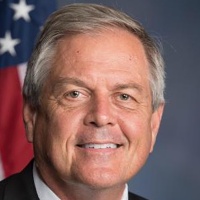
Ralph Norman
Representative
SC
Ralph Norman
Representative
SC
This bill proposes a constitutional amendment to limit the number of terms a member of Congress can serve. Representatives would be limited to 3 terms and Senators to 2 terms, with specific rules for partial terms. Terms served before the amendment's ratification would not be counted. The amendment must be ratified by three-fourths of the states within seven years to be valid.
The "Dental Care for Veterans Act" expands dental care benefits for veterans, phasing in eligibility over four years to mirror the provision of other medical services within the Department of Veterans Affairs.
Julia Brownley
Representative
CA
Julia Brownley
Representative
CA
The Dental Care for Veterans Act aims to improve veterans' access to dental care by integrating it more closely with other medical services provided by the Department of Veterans Affairs. This bill removes specific limitations and updates existing code to allow the Secretary to provide comprehensive dental care, including dentures and appliances. The implementation of these expanded benefits will be phased in over four years, prioritizing veterans based on existing eligibility criteria. Additionally, the bill makes necessary clerical updates to reflect these changes in the U.S. Code.
The "Equal Access to Contraception for Veterans Act" ensures veterans do not overpay for contraception, aligning their costs with what the Secretary pays or providing it without cost-sharing if required by the Public Health Service Act.
Julia Brownley
Representative
CA
Julia Brownley
Representative
CA
The Equal Access to Contraception for Veterans Act ensures veterans do not pay more for contraception than the Secretary of Veterans Affairs pays for the medication. Additionally, it eliminates copayments for contraceptive items if health insurance coverage is required without cost-sharing under the Public Health Service Act.
Establishes a commission to study the history and impact of slavery and discrimination against African Americans from 1619 to the present and to develop proposals for reparations, including recommending appropriate remedies and educating the public on the commission's findings. The commission will submit its findings to Congress within 18 months of its first official meeting.
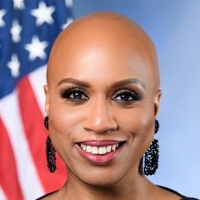
Ayanna Pressley
Representative
MA
Ayanna Pressley
Representative
MA
The "Commission to Study and Develop Reparation Proposals for African Americans Act" establishes a commission to examine the history of slavery and discrimination in the United States from 1619 to the present. The commission will study the lingering negative effects of these injustices on living African Americans and U.S. society, and recommend appropriate remedies, including how to educate the American public on its findings to promote racial healing and understanding. The commission will submit a written report of its findings and recommendations to Congress within 18 months of its first official meeting, and the act authorizes the appropriation of $20,000,000 to implement the provisions of this act.