Legislative Activity
Track Greg's sponsored bills, co-sponsored legislation, and voting record
This act increases the maximum loan amounts available to small businesses under certain SBA programs and mandates annual reporting on the distribution of those enhanced loans.
Jason Crow
Representative
CO
Jason Crow
Representative
CO
The Small Business Energy Loan Enhancement Act significantly increases the maximum loan amounts available to eligible small businesses under specific Small Business Administration (SBA) programs, raising the limit from $\$5.5$ million to $\$10$ million. This legislation also mandates that the SBA report annually to Congress detailing the industries and geographic areas benefiting from these enhanced loan categories. The goal is to provide greater financial resources for small businesses through SBA lending.
The Gas-Operated Semi-Automatic Firearms Exclusion (GOSAFE) Act prohibits the manufacture, sale, and possession of certain gas-operated semi-automatic firearms and large-capacity ammunition feeding devices, while establishing a formal process for firearm determinations and funding buy-back programs.
Lucy McBath
Representative
GA
Lucy McBath
Representative
GA
The Gas-Operated Semi-Automatic Firearms Exclusion Act (GOSAFE Act) prohibits the manufacture, sale, and possession of certain gas-operated semi-automatic firearms and large-capacity ammunition feeding devices (over 10 rounds). The bill establishes a formal process managed by the Attorney General and ATF to list prohibited firearms, while grandfathering existing possessions under strict transfer rules. Furthermore, it permits states to use federal Byrne grants for voluntary buy-back programs targeting these newly restricted items. Violations carry significant fines and potential prison sentences.
This bill establishes the American Family Act, which revamps the Child Tax Credit into a system of refundable monthly advance payments for qualifying children and a separate credit for other dependents.

Rosa DeLauro
Representative
CT
Rosa DeLauro
Representative
CT
The American Family Act fundamentally overhauls the Child Tax Credit by replacing the annual lump sum with a system of advance, refundable monthly payments delivered directly to families. These monthly allowances vary based on the child's age, with higher amounts provided for younger children. The bill also establishes a separate, smaller credit for other dependents and outlines procedures for annual renewal and reconciliation of advance payments when filing taxes.
This act bans bump stocks and similar devices that increase the firing rate of semi-automatic firearms, requiring registration for any previously modified weapons.
Dina Titus
Representative
NV
Dina Titus
Representative
NV
The Closing the Bump Stock Loophole Act of 2025 seeks to amend federal gun laws by banning devices and modifications that significantly increase the rate of fire of semiautomatic firearms, effectively treating them like machineguns. The bill specifically prohibits the manufacture, sale, or possession of such accessories and modified firearms after 120 days of enactment. Existing owners of previously modified firearms must register them under the National Firearms Act within that same timeframe to legally keep them.
The National Biotechnology Initiative Act of 2025 establishes a coordinated federal effort, led by a new Coordination Office, to advance U.S. national security, economic productivity, and competitiveness through biotechnology research, development, and commercialization.
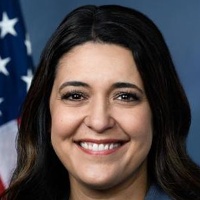
Stephanie Bice
Representative
OK
Stephanie Bice
Representative
OK
The National Biotechnology Initiative Act of 2025 establishes a comprehensive, whole-of-government effort to advance U.S. leadership in biotechnology for national security and economic competitiveness. This Act creates the National Biotechnology Initiative, overseen by a new National Biotechnology Coordination Office within the Executive Office of the President. Participating federal agencies are mandated to coordinate strategies across research, data management, biomanufacturing, regulatory streamlining, and workforce development. The law also establishes mechanisms for interagency coordination, public reporting, and the development of a national biotechnology strategy.
This bill prevents Congress from using the reconciliation process to cut funding or eligibility for Medicaid and SNAP until January 20, 2029.
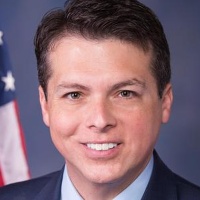
Brendan Boyle
Representative
PA
Brendan Boyle
Representative
PA
The Hands Off Medicaid and SNAP Act of 2025 prevents Congress from using the budget reconciliation process to cut funding or eligibility for Medicaid and the Supplemental Nutrition Assistance Program (SNAP). This protection establishes a significant procedural roadblock against reducing benefits for these essential social programs. However, this restriction is temporary and is set to expire on January 20, 2029.
This Act establishes federal minimum standards for public employee collective bargaining rights, allowing states to maintain their own laws if they meet or exceed these standards, otherwise the Federal Labor Relations Authority will enforce federal rules.
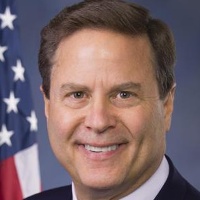
Donald Norcross
Representative
NJ
Donald Norcross
Representative
NJ
The Public Service Freedom to Negotiate Act of 2025 establishes federal minimum standards for collective bargaining rights for public employees across the nation. It requires the Federal Labor Relations Authority (FLRA) to review state laws to ensure they substantially provide these minimum rights, including the right to organize and bargain collectively. If a state fails to meet these standards, the FLRA will administer federal labor relations rules for the uncovered employees. The Act also prohibits strikes or lockouts that would measurably disrupt emergency or public safety services.
This Act prevents the executive branch from deferring or transferring congressionally appropriated VA funds and establishes specific protections for VA personnel against hiring freezes and certain removals.
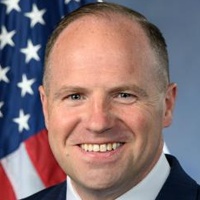
Timothy Kennedy
Representative
NY
Timothy Kennedy
Representative
NY
The VA Funding and Workforce Protection Act ensures that congressionally appropriated funds for the Department of Veterans Affairs cannot be unilaterally withheld or transferred without explicit new authorization from Congress. This legislation also provides significant protections for VA personnel by exempting the agency from presidential hiring freezes for a four-year period and establishing strict notification requirements before layoffs or removals of probationary employees can occur. Finally, the Secretary of the VA must regularly certify compliance with these new funding and personnel mandates to relevant Congressional committees.
The No Tax Breaks for Union Busting Act denies businesses tax deductions for expenses incurred while influencing employees regarding union organization and activities.
Donald Norcross
Representative
NJ
Donald Norcross
Representative
NJ
The No Tax Breaks for Union Busting (NTBUB) Act aims to disallow businesses from deducting federal income taxes for expenses incurred while attempting to influence employees regarding union organization or activities. This change is intended to stop companies from subsidizing anti-union campaigns through tax write-offs. The bill also establishes new, significant reporting requirements and penalties for businesses and third-party consultants who engage in these influence expenditures.
This Act allows employees to fully deduct union dues above the line and restores the itemized deduction for certain other job-related business expenses.
Brendan Boyle
Representative
PA
Brendan Boyle
Representative
PA
The Tax Fairness for Workers Act restores key federal tax deductions for employees, effective after 2024. This legislation makes union dues fully deductible "above the line," meaning they reduce Adjusted Gross Income without itemizing. Additionally, it allows itemizers to deduct certain other job-related business expenses that were previously limited.
This resolution expresses the House's sense that paraprofessionals and education support staff deserve fair compensation, benefits, job security, and safe working conditions.
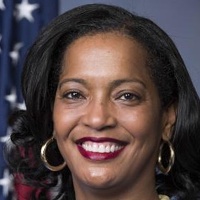
Jahana Hayes
Representative
CT
Jahana Hayes
Representative
CT
This resolution expresses the sense of the House of Representatives that paraprofessionals and education support staff deserve fair compensation, comprehensive benefits, and improved working conditions. It highlights the critical role these essential workers play in supporting millions of students nationwide. Ultimately, the bill calls for livable wages, job security, safe workplaces, and meaningful input into school policies for these staff members.
This Act overhauls federal firearm dealer regulations by mandating enhanced physical security, stricter inventory tracking, increased licensing fees, and new oversight for online firearm facilitators.
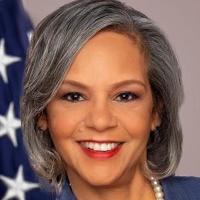
Robin Kelly
Representative
IL
Robin Kelly
Representative
IL
The Federal Firearm Licensee Act significantly overhauls federal regulation of gun dealers by mandating enhanced physical security, stricter inventory tracking, and increased record-keeping requirements. The bill repeals outdated restrictions on the ATF, increases licensing fees, and establishes new regulations for online firearm transfer facilitators. Furthermore, it strengthens enforcement by increasing penalties for compliance failures and mandating more frequent inspections for high-risk dealers.
The IDEA Full Funding Act establishes mandatory, increasing funding levels for the Individuals with Disabilities Education Act (IDEA) from 2026 through 2035, contingent upon offsetting budget cuts.
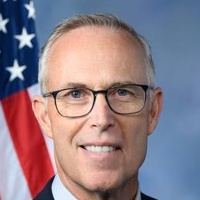
Jared Huffman
Representative
CA
Jared Huffman
Representative
CA
The IDEA Full Funding Act establishes mandatory, increasing funding levels for the Individuals with Disabilities Education Act (IDEA) programs through fiscal year 2035. This legislation sets specific appropriation targets based on student counts and national average spending to ensure greater financial support for special education services. Furthermore, the bill requires that these new IDEA appropriations adhere to "cut-as-you-go" budget offset rules.
This bill establishes comprehensive U.S. strategies to support democratic transition in Iran by bolstering internet freedom, seizing Iranian assets for democracy promotion, countering regime censorship, and encouraging official defections.
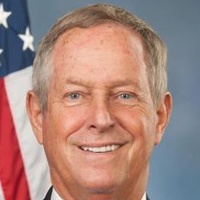
Joe Wilson
Representative
SC
Joe Wilson
Representative
SC
The Maximum Support Act declares the U.S. policy to provide maximum support for the Iranian people seeking a democratic, rights-respecting political system. The bill establishes strategies to enhance internet freedom in Iran by countering censorship and ensuring sanctions do not impede access to technology. Furthermore, it mandates the seizure of Iranian government assets to fund democracy promotion efforts and supports encouraging defections from the regime.
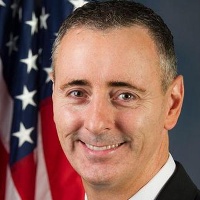
This Act imposes sweeping, mandatory sanctions, tariffs, and investment prohibitions on the Russian Federation and its affiliates until Russia negotiates a lasting peace with Ukraine.
Brian Fitzpatrick
Representative
PA
Brian Fitzpatrick
Representative
PA
The Sanctioning Russia Act of 2025 imposes sweeping economic penalties on the Russian Federation in response to its aggression against Ukraine. This legislation mandates severe, immediate sanctions against key Russian officials, financial institutions, and energy sector entities, including asset freezes and trade prohibitions. Furthermore, the Act dramatically increases import duties on Russian goods and requires the President to review and reimpose these measures until Russia negotiates a lasting peace with Ukraine.
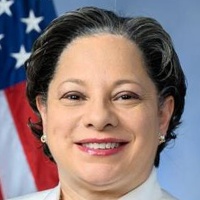
This bill prohibits the use of federal funds for the removal of 3 percent or more of the Department of Health and Human Services (HHS) employees or any of its sub-agencies within any 60-day period.
Jennifer McClellan
Representative
VA
Jennifer McClellan
Representative
VA
This bill restricts the use of federal funds to carry out large-scale removals of employees within the Department of Health and Human Services (HHS). Specifically, it prohibits using federal money for terminations if 3% or more of the total HHS workforce, or 3% or more of any individual sub-agency's staff, are removed within a 60-day period. This measure aims to prevent sudden, mass layoffs across the department and its major divisions.
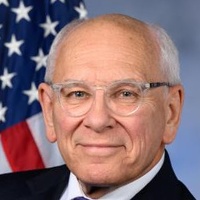
The Reentry Act of 2025 allows inmates to receive Medicaid assistance during the 30 days preceding their release and mandates a comprehensive report on healthcare standards within correctional facilities.
Paul Tonko
Representative
NY
Paul Tonko
Representative
NY
The Reentry Act of 2025 allows incarcerated individuals to receive medical assistance through Medicaid during the 30 days immediately preceding their release. This legislation also mandates a comprehensive report from MACPAC analyzing current healthcare standards within correctional facilities. The report will examine the impact of this coverage change and offer recommendations for improving healthcare access for those transitioning back into the community.
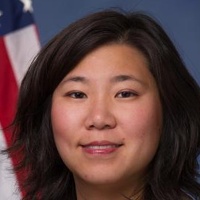
The Hot Foods Act of 2025 lifts the general ban on purchasing ready-to-eat hot foods with SNAP benefits while imposing a sales cap on retailers that primarily sell such items.
Grace Meng
Representative
NY
Grace Meng
Representative
NY
The Hot Foods Act of 2025 removes the general federal ban on using Supplemental Nutrition Assistance Program (SNAP) benefits to purchase hot, ready-to-eat foods. This legislation clarifies that hot foods are now eligible for purchase with SNAP benefits, while also setting a new rule that limits SNAP-participating retailers to deriving no more than 50% of their gross sales from these ready-to-eat hot items. The act updates existing statutes to reflect this expanded purchasing power for recipients.
This Act establishes a federal grant program to fund specialized mental health crisis response training for state, local, and Tribal law enforcement and corrections officers.

Marcy Kaptur
Representative
OH
Marcy Kaptur
Representative
OH
The Law Enforcement Training for Mental Health Crisis Response Act of 2025 establishes a grant program to fund specialized behavioral health crisis response training for state, local, and Tribal law enforcement and corrections officers. This initiative aims to improve officer and public safety by equipping personnel with the necessary skills to safely de-escalate encounters involving individuals experiencing mental health emergencies. Grants will be administered by the Attorney General to supplement existing agency funds dedicated to this critical training.
This Act establishes federal grant programs to improve medical education, expand community health center capacity, and increase rural provider training in gender-affirming care for transgender individuals.
Becca Balint
Representative
VT
Becca Balint
Representative
VT
The Transgender Health Care Access Act aims to improve access to gender-affirming care by addressing critical gaps in medical education and provider capacity. The bill establishes grant programs to develop and implement comprehensive training curricula for medical professionals across various settings, including rural areas. Furthermore, it provides funding to expand the ability of community health centers to deliver culturally competent and necessary care to transgender individuals. Ultimately, this legislation seeks to ensure that healthcare providers are adequately trained and equipped to meet the medical needs of the transgender population.